Surveillance Giant Under Siege: Flock Safety Offers Mass Buyouts Amidst Privacy Scandals and Contract Hemorrhaging
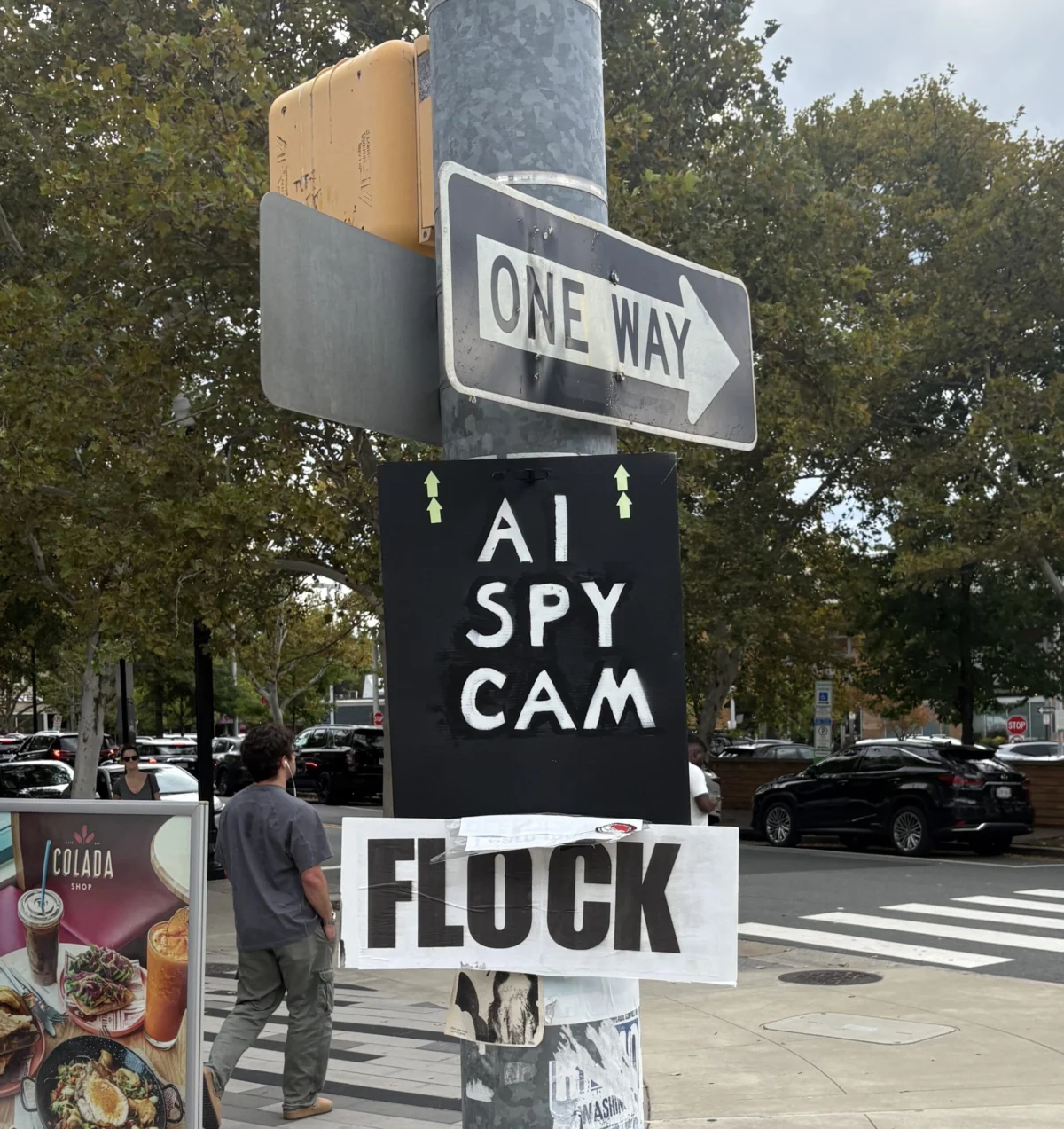
ATLANTA, GA — Flock Safety, the once-unassailable leader in the automated license plate recognition (ALPR) industry, has entered a period of profound internal and external restructuring. On Friday, September 19, 2026, the company officially unveiled what leadership described as a "generous" voluntary severance package aimed at its 1,500-person workforce. The move follows a catastrophic summer for the technology firm, characterized by a staggering loss of municipal contracts, high-profile reports of police misuse, and a burgeoning national debate over the ethics of private surveillance networks.
The internal announcement, first reported by Wired, signals a pivotal moment for a company that previously enjoyed a meteoric rise by promising to "eliminate crime" through a pervasive network of interconnected cameras. Now, however, the company appears to be bracing for a leaner, more uncertain future as it attempts to flush out "demoralized" staff and stabilize its remaining operations.
Main Facts: A Strategic Retreat in the Face of Turmoil
The voluntary buyout program is not merely a budgetary measure; it is a cultural and strategic pivot. Flock Safety management reportedly expects a significant portion of its staff to take the offer. By opting for voluntary departures rather than mandatory layoffs, the company is attempting to mitigate the negative PR associated with "downsizing" while simultaneously purging the organization of employees who have grown disillusioned by the company’s recent controversies.
The core facts of the current situation include:
- The Buyout Offer: Described as the "most generous" in the company’s history, the package is available to a majority of the 1,500 employees, with the company indicating it will grant the request to most who apply.
- The Morale Crisis: CEO Garrett Langley recently admitted that the "biggest damage" to the company has not been financial, but internal, citing a collapse in employee morale following public protests and media scrutiny.
- Market Contraction: In August 2026 alone, 90 cities terminated their contracts with Flock, a 400% increase in the rate of cancellations compared to the previous month.
- Regulatory Backlash: Major states, including Texas and Florida, have moved to block or severely restrict the use of Flock’s technology, citing constitutional and privacy concerns.
Chronology: The Rapid Descent of a Surveillance Unicorn
To understand the severity of the current buyout offer, one must look at the timeline of events that led Flock Safety from being a Silicon Valley darling to a target of national outcry.
The Growth Phase (2021–2025)
For several years, Flock Safety was the fastest-growing name in public safety tech. Their value proposition was simple: low-cost, solar-powered cameras that could be installed in neighborhoods and on city streets to capture license plates and vehicle characteristics. These cameras were linked to a centralized database, allowing police to track "vehicles of interest" across jurisdictional lines. By early 2026, the company’s cameras were active in thousands of cities across the United States.
The Investigation (August 2, 2026)
The turning point occurred in early August when The Washington Post published a bombshell investigative report. The report identified at least 46 documented cases where law enforcement officers were accused of misusing the Flock system for personal reasons. The allegations were chilling: officers allegedly used the vast camera network to stalk ex-wives, track girlfriends, and monitor individuals with whom they had personal vendettas. This shattered the company’s primary defense—that its technology was a neutral tool for public safety.
The August Exodus (August 2026)
Following the Post report, the "Flock-out" began. Advocacy groups, led by anti-surveillance organizations, began a concerted effort to lobby city councils. By the end of August, 90 cities had formally moved to terminate their contracts. The speed of the exodus was unprecedented for a government contractor of this scale.
The State-Level Blow (Early September 2026)
The crisis moved from the local level to the state level when Florida and Texas—two of Flock’s largest markets—announced they would stop or suspend the use of the technology. State officials cited a lack of transparency and the potential for the technology to be used as a "dragnet" that violated the Fourth Amendment rights of citizens.
The Buyout Announcement (September 19, 2026)
With internal leaks suggesting that employees were questioning the company’s mission and external pressure mounting, Flock leadership issued the buyout offer. It was a clear admission that the company could no longer sustain its previous growth trajectory.
Supporting Data: Quantifying the Backlash
The scale of Flock’s current predicament is best understood through the data points that emerged during the August-September period.
Contract Cancellations
The "90 cities in one month" statistic is the most glaring indicator of market rejection. Prior to August, Flock typically saw fewer than 10 contract terminations per month, usually due to budget constraints rather than policy shifts. The 400% increase indicates a systemic shift in how local governments view the liability of private surveillance.

The "Misuse" Metric
The 46 cases of police misuse identified by The Washington Post are believed by many privacy advocates to be just the "tip of the iceberg." Because Flock’s audit logs were often opaque or inaccessible to the public, critics argue that thousands of other instances of "low-level" stalking or unauthorized tracking may have gone unnoticed.
Workforce Dynamics
Flock Safety’s workforce grew to 1,500 people during its peak expansion. Industry analysts suggest that without these buyouts, the company would have faced a "burn rate" that would have exhausted its remaining venture capital within 18 months, given the loss of recurring revenue from canceled municipal contracts.
Official Responses: Deflection and Damage Control
The response from Flock Safety leadership has shifted from defiant optimism to a more somber acknowledgment of the "internal damage" the company has sustained.
Garrett Langley, CEO:
In a recent appearance on the All-In podcast, Langley was candid about the toll the controversy has taken on the company’s culture. "The biggest damage we’ve seen is to internal morale," Langley stated. He argued that the company’s mission—to solve crime—is still valid, but admitted that the "noise" surrounding privacy concerns has made it difficult for employees to focus on their work.
Internal Communications:
The memo sent to employees on Friday regarding the buyouts emphasized that the company wanted to ensure that those who stayed were "fully committed to the mission." By framing the buyouts as a "generous" opportunity, the company is attempting to maintain a positive public image while effectively reducing its headcount.
Public Relations:
When reached for comment by TechCrunch, Flock Safety representatives reiterated their commitment to privacy, pointing to their "Transparency Portals" as evidence of their good faith. However, they did not directly address the specific allegations of stalking or the reasons behind the mass contract terminations in Florida and Texas.
Implications: The Future of Private Surveillance
The crisis at Flock Safety has implications that extend far beyond a single company’s balance sheet. It represents a potential "reckoning" for the entire ALPR and surveillance industry.
1. The End of the "Wild West" of ALPR
For years, ALPR companies operated in a regulatory vacuum. The Flock Safety scandal is likely to accelerate the passage of state and federal laws that mandate strict audit trails, limit data retention periods, and prohibit the sharing of data with third-party private entities.
2. The Liability of "Big Data" for Police
Police departments are beginning to realize that while "more data" can help solve crimes, it also creates a massive liability. The 46 cases of misuse have shown that without rigorous oversight, surveillance tools can become tools for domestic abuse and personal harassment, leading to costly lawsuits and a loss of public trust.
3. The Chilling Effect on Tech Recruitment
Flock’s struggle to maintain morale suggests that the "ethical cost" of working in surveillance is rising. As engineers and data scientists become more selective about the social impact of their work, companies in the "surveillance-industrial complex" may find it increasingly difficult to attract and retain top-tier talent.
4. A Shift to Publicly Owned Infrastructure
The backlash against Flock is, in part, a backlash against the privatization of surveillance. There is a growing movement to ensure that if cameras are to be used, they must be owned and operated by the public, with clear democratic oversight, rather than by a private corporation with a profit motive and proprietary algorithms.
Conclusion
Flock Safety’s decision to offer mass buyouts is a defensive maneuver intended to stop the bleeding. However, the underlying issues—a loss of public trust, a crumbling client base, and a workforce in crisis—cannot be solved by severance checks alone. As the company attempts to reinvent itself in a more hostile regulatory environment, the tech industry as a whole is watching. The story of Flock Safety may well serve as a cautionary tale for the next generation of AI and surveillance startups: in the pursuit of "eliminating crime," one must be careful not to eliminate the very privacy and civil liberties that underpin a free society.