A Radical Hard-Reset: Zach Cregger’s ‘Resident Evil’ and the New Frontier of Video Game Cinema
The landscape of video game adaptations has long been a battlefield between two losing factions: the "lore-purists" who demand slavish devotion to source material, and the "brand-exploiters" who strip-mine intellectual property for recognizable names while ignoring the core appeal of the medium. Into this fray steps Zach Cregger, the director who redefined modern horror with Barbarian and Weapons. His latest project, a lean and mean reimagining of Resident Evil, suggests that the only way to save a legacy franchise is to set its expectations on fire.
Cregger’s film, simply titled Resident Evil, is a massive, rapidly mutating middle finger to the "Comic-Con-brained" philosophy that adaptations must serve as interactive encyclopedias for the fans. Instead, Cregger has delivered a singular, madcap, arcade-style riff on the survival-horror series that prioritizes the feeling of playing the game over the lore of the franchise.
Main Facts: A Lean, Mean Survival Machine
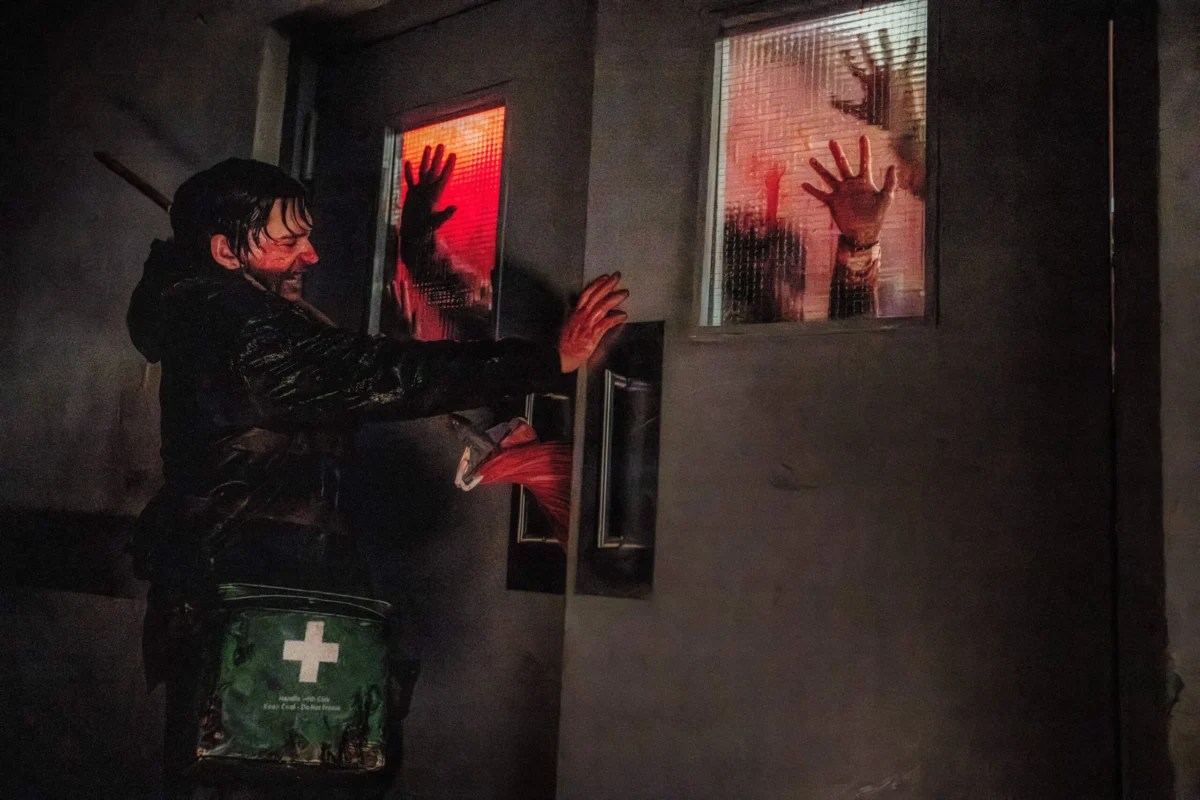
Scheduled for a theatrical release by Sony Pictures on September 18, 2026, Cregger’s Resident Evil is a startling departure from its predecessors. Starring Austin Abrams (Whalefall, Euphoria) as Bryan, a frazzled everyman delivery driver, the film eschews the global bioterrorism plots of past entries for a claustrophobic, "side-quest-sized" narrative.
The film’s primary characteristics include:
- A Compact Runtime: At a brisk 85 minutes, the film rejects the bloat of modern blockbuster cinema, dropping the audience into the middle of the action and ending with a sudden, visceral title card.
- Original Protagonist: Austin Abrams plays Bryan, a twentysomething courier who finds himself in the wrong place—Raccoon City—at the worst possible time.
- Minimalist Lore: There is no Leon Kennedy, no Jill Valentine, and no Albert Wesker. The "Umbrella Corporation" is mentioned briefly, but the film functions as a standalone experience.
- Practical Horror: Favoring animatronics and "The Thing"-style practical effects over CGI spectacle, the movie features grotesque, evolving creatures that more closely resemble the "infected" of The Last of Us than the traditional slow-moving zombies of the 1990s.
Chronology: From Nü-Metal Action to Gothic Survival
To understand the impact of Cregger’s vision, one must look at the erratic history of the Resident Evil cinematic universe. For over a decade, the franchise was defined by Paul W.S. Anderson’s high-octane, nü-metal-infused action films. While commercially successful, they moved further and further away from the series’ horror roots, eventually becoming gravity-defying superhero spectacles starring Milla Jovovich.
In 2021, the studio attempted a "course-correction" with Resident Evil: Welcome to Raccoon City. Directed by Johannes Roberts, the film was a piece of "miserable cosplay" that attempted to combine the stories of the first two games into one narrative. It was a film built on fan service—recreating specific rooms and camera angles from the original PlayStation games—but it lacked a soul or a cohesive tension.

Cregger’s 2026 film pivots back in the opposite direction. If the Anderson movies were about the "superhero" fantasy and the 2021 reboot was about "museum-curated" nostalgia, Cregger’s movie is about the "player experience." It is a "hard-reset" that treats the franchise not as a story to be retold, but as a genre to be inhabited. By moving away from the melodrama of the game’s mythology, Cregger finds the essence of what made the original 1996 game a cultural phenomenon: the white-knuckled helplessness of being trapped in a house with things that want to eat you.
Supporting Data: Translating Gameplay Mechanics to Cinema
While the film lacks the characters of the games, it is the first Resident Evil movie that actually evokes the visceral sensation of playing the games. Critics have noted several key "sense memories" that Cregger has successfully translated to the screen:
The Architecture of Fear
Cregger uses camera framing to emphasize the "blind spots" of a room. Much like the fixed-camera angles of the early PlayStation titles, the film forces the audience to look where the monster could be, rather than where it is. This creates a "queasy tug-of-war" between the viewer’s desire to see what’s next and the instinct to look away.
Item Management and Puzzles
One of the most praised elements of the film is its focus on the mundane stresses of survival. The hero, Bryan, isn’t a trained soldier; he’s a guy with shaky hands trying to load a gun in real-time. The film derives its greatest tension not from massive explosions, but from simple obstacles. A padlocked gate or a broken ladder becomes a life-or-death puzzle. This mirrors the "Resident Evil" gameplay loop: find the key, manage your limited resources, and solve the puzzle under extreme pressure.
The Mutation Factor
The film’s creature design, handled with a heavy emphasis on slimy animatronics and ropelike tentacles, pays homage to the "body horror" of the games. A notable sequence involves a villager being shot, only for tentacles to sprout from the neck hole as the creature mutates into a more powerful form—a direct nod to the "Las Plagas" mechanics of Resident Evil 4.
Official Responses: A Vision of "Postmodern Glee"
While Sony Pictures has remained largely tight-lipped during the production, the creative direction of the film speaks volumes about the studio’s willingness to let Cregger run wild. In recent interviews, Cregger has discussed his "DLC-like" approach to the IP, suggesting that the film should feel like an expansion or a side story rather than a core "main quest."

The casting of Austin Abrams was a deliberate choice to ground the film in relatability. Bryan is a man running away from his own life—specifically, the anxiety of his girlfriend’s pregnancy—only to be confronted by a literal "mutating rat king" and other domestic horrors. Cregger, known for his work on Barbarian, has stated that he is less interested in "themizing a clear lesson" and more interested in "gruesomely perverting domestic idyll."
Early reactions from test screenings suggest that while the film’s "mean" streak—including a shocking scene involving a shotgun and a monster-child—might alienate those looking for a traditional hero’s journey, it has been met with "postmodern glee" by horror aficionados.
Implications: The Future of I.P. Cinema
Cregger’s Resident Evil arrives at a critical juncture for Hollywood. As "IP fatigue" begins to set in among general audiences, the success of this film could provide a blueprint for how to handle legacy brands.
1. The Death of the "Slavish" Adaptation
The failure of Welcome to Raccoon City and the success of Cregger’s radical departure suggest that audiences are tired of "cosplay" movies. By stripping away the baggage of 30 years of lore, Cregger has made the franchise accessible to newcomers while capturing the "spirit" for long-time fans.
2. The Rise of the Mid-Budget Visionary
Zach Cregger represents a new wave of horror directors who are being given the keys to major franchises. Much like Fede Álvarez with Alien: Romulus or Dan Trachtenberg with Prey, Cregger is using a known brand to deliver a high-concept, director-driven vision. This suggests a shift toward "vision and verve" over "committee-driven" blockbusters.
3. Merging Media DNA
The film proves that movies and video games can merge in a way that makes them both stronger. It doesn’t try to be a video game (with health bars or HUDs), but it understands the psychology of the player. It turns the "hard mode" of survival horror into a cinematic language.

Conclusion: A B+ Grade for a Bold Experiment
While the film occasionally falters when it slows down—critics have noted that the air "leaks out of the tires" whenever Bryan encounters other living humans—it remains a "fucking blast" for its insistence on doing its own thing. It is a movie that leverages brand recognition to put butts in seats, but once those butts are in the seats, it delivers a standalone nightmare that requires no prior knowledge of Umbrella Corp or the T-Virus.
Cregger’s Resident Evil is a reminder that the best way to honor a legendary franchise is to stop treating it like a holy text and start treating it like a sandbox. It is lean, gripping, and relentless—a 85-minute sprint through a snowy Midwestern hell that proves there is still life in the undead.
Grade: B+
Sony Pictures Releasing will release ‘Resident Evil’ in theaters on Friday, September 18, 2026.