
The Luminous Judge: Unveiling Utu-Shamash, Ancient Mesopotamia’s Enduring Sun God
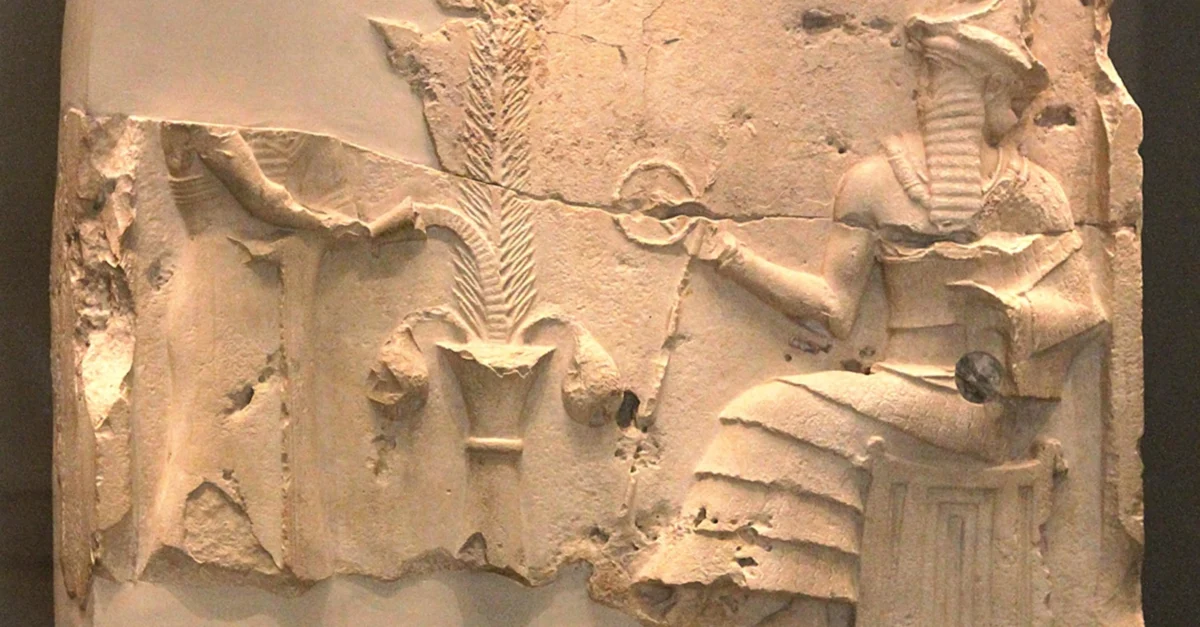
Baghdad, Iraq (Ancient Mesopotamia) – In the annals of ancient Mesopotamian civilization, few deities commanded as much reverence and influence as Utu-Shamash. Known by the Sumerians as Utu and to the Akkadians, Assyrians, and Babylonians as Shamash (or Samas), this potent deity transcended linguistic and cultural boundaries to become the preeminent god of the sun and divine justice. From the dawn of recorded history, he illuminated not only the physical world but also the moral and legal fabric of societies spanning millennia, embodying the very principles of light, truth, and equity.
Utu-Shamash’s dual identity underscores the rich tapestry of Mesopotamian belief systems. As Utu, the Sumerian sun god, he was intrinsically linked to the fertility of the earth and the rhythmic passage of time, born of the moon god Nanna and the fertility goddess Ningal. This lineage placed him squarely within a natural, cyclical understanding of the cosmos. However, as Shamash, the Akkadian interpretation elevated his paternal origins, often attributing his fatherhood to the supreme sky god Anu or the formidable lord of wind and storm, Enlil. This shift reflected a more hierarchical and centralized pantheon, yet his core attributes remained unwavering: he was the bringer of light and the unwavering arbiter of justice.
His divine family was equally illustrious, further cementing his importance. In the Sumerian tradition, he was the twin brother to Inanna, the complex goddess of war, love, and sexuality—a pairing that juxtaposed the structured order of the sun with the chaotic passions of human experience. He also shared kinship with Ereshkigal, the formidable Queen of the Dead, and Ishkur (Adad), the god of storms. This interconnectedness positioned Utu-Shamash at the heart of the Mesopotamian pantheon, a cosmic constant whose light touched all realms, from the heavens to the underworld. His presence is attested in the earliest Sumerian writings, dating back to approximately 3500 BCE, indicating a foundational role in humanity’s earliest complex spiritual frameworks, albeit seemingly appearing slightly after his lunar father, Nanna.
A Pantheon’s Luminary: Chronological Evolution and Divine Lineage
Ancient Origins and Shifting Genealogies
The journey of Utu-Shamash through Mesopotamian history is a testament to his enduring power and adaptability. His earliest appearances in Sumerian cuneiform, circa 3500 BCE, place him at the very genesis of recorded human civilization. Initially, his worship was likely localized, focusing on the immediate benefits of the sun—warmth, light, and agricultural vitality. Over time, as Sumerian city-states evolved and interacted, his cult grew, and his attributes expanded to encompass broader societal concerns, particularly justice and truth.
The divergence in his lineage—Sumerian tradition linking him to Nanna and Ningal, while Akkadian narratives ascribed his paternity to Anu or Enlil—reflects not merely theological differences but also shifting cultural and political landscapes. The Sumerian genealogy, emphasizing his birth from the moon god, might symbolize the intimate connection between celestial bodies governing the natural cycles. The Akkadian re-framing, associating him with paramount deities like Anu or Enlil, likely sought to align Shamash with the supreme authority of a more centralized, empire-building culture, thereby enhancing his divine prestige and reinforcing his role as the ultimate legal authority. Despite these variations, his core identity as the sun god and divine judge remained the unwavering anchor of his veneration.
His siblings further contextualize his divine persona. As the twin of Inanna, he provided a crucial counterpoint to her often volatile nature, symbolizing order and impartiality against her passionate intensity. His brother Ishkur (Adad) represented the destructive power of storms, while his sister Ereshkigal ruled the chilling realm of the dead. Within this divine family, Utu-Shamash served as a beacon of cosmic balance, ensuring that even the darkest corners of existence were subject to his illuminating gaze and ultimate judgment.
Enduring Worship Through Millennia
The continuity of Utu-Shamash’s worship is remarkable, spanning well over three thousand years from the advent of cuneiform writing around 3600/3500 BCE until its eventual abandonment circa 100 BCE. This extraordinary longevity speaks volumes about his fundamental importance to Mesopotamian peoples. The earliest literary hymns specifically addressed to him by the name Shamash (Samas) date from approximately 2600 BCE, indicating a formalized and sophisticated cult by the Early Dynastic period. These hymns often lauded his life-giving properties, his capacity to dispel darkness, and his unwavering commitment to justice.
Throughout the Sumerian, Akkadian, Old Babylonian, Kassite, Assyrian, and Neo-Babylonian periods, Utu-Shamash remained a consistently revered figure. His name, symbols, and myths permeated religious texts, legal codes, royal inscriptions, and personal seals, testifying to his pervasive presence in daily life and state affairs. This sustained veneration highlights not only the stability of his divine attributes but also the enduring human need for a deity embodying cosmic order, fairness, and the promise of a new day.
Emblems of Divinity: Iconography, Cults, and Sacred Spaces
Visual Manifestations of Power
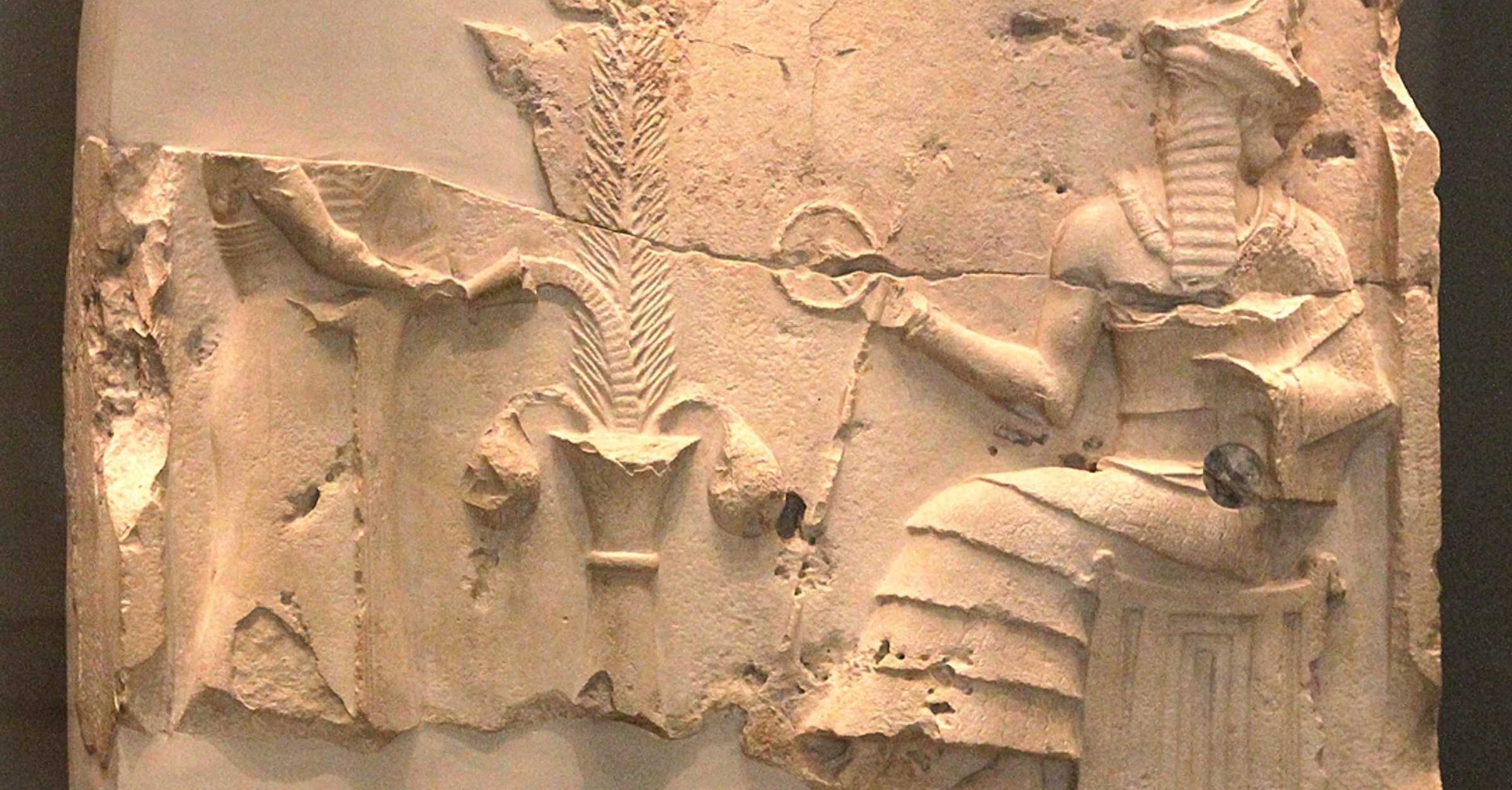
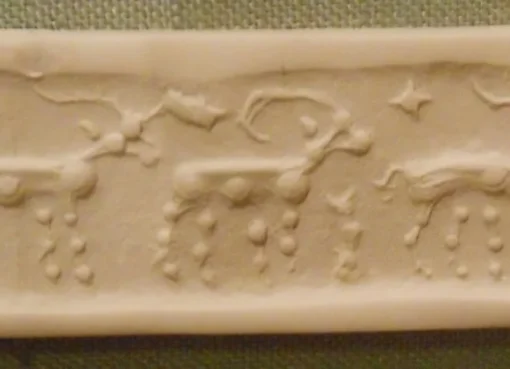
The iconography of Utu-Shamash provides a vivid window into how Mesopotamians perceived his essence. He was most commonly depicted as a venerable old man, distinguished by a long, flowing beard, from whose shoulders emanated brilliant rays of light, symbolizing his intrinsic connection to the sun and his illuminating power. This anthropomorphic representation emphasized his wisdom, authority, and benevolent nature.
Beyond human form, his divine essence was frequently captured by the solar disc, a potent symbol universally understood as representing the sun itself. In the Neo-Assyrian period (circa 912-612 BCE), this evolved into a winged disc, often suggesting his celestial journey and omnipresent watchfulness. This symbol, with its four points extending towards the cardinal directions and four wavy lines radiating diagonally outwards, was meticulously crafted to convey the full spectrum of his power: the light that reveals all, the warmth that sustains life, and the pervasive reach that ensures no act, good or ill, escapes his notice. This intricate design not only served as an emblem but also as a cosmological map, reinforcing his dominion over the entire world.
Centers of Devotion: E-babbar Temples and the Naditu
The worship of Utu-Shamash was centralized in powerful cult centers across Mesopotamia. In Sumer, his primary sites of veneration were the ancient cities of Larsa and Eridu, both significant religious and intellectual hubs. To the north, in Akkad, the city of Sippar rose to prominence as a major center for his cult, becoming a focal point for Shamash worship during the Akkadian and later periods.
His temples were universally known by the distinctive name E-babbar, meaning "White House" or "Shining House." This name perfectly encapsulated the essence of the sun god—a place of purity, illumination, and divine presence. So profound was this association that Babbar itself became an epithet for the god, signifying "the illuminating one." These temples were not merely places of worship but complex institutions, serving as economic centers, scriptoria, and legal courts, reflecting Shamash’s multi-faceted domain.
A unique aspect of Shamash’s cult was its association with his wife, Serida (known as Aya in Akkadian), the goddess of the dawn. Her role complemented her husband’s, bringing the gentle light that precedes the full radiance of the sun. By the Old Babylonian period (circa 1894-1595 BCE), Aya had become the patroness of the naditu, a distinct order of cloistered women. These women, often from prominent families, dedicated themselves to the divine, living within temple complexes and participating in religious rites, while also managing their own property and engaging in business. While routinely linked to Utu-Shamash due to their cloisters being attached to his temples, their primary devotion and service were directed towards Aya, highlighting the distinct yet intertwined roles of divine couples in Mesopotamian religion. Their existence, somewhat akin to Catholic nuns in later eras, underscores the diverse forms of religious dedication prevalent in ancient Mesopotamia.
The Incorruptible Arbiter: Justice, Law, and Moral Authority
Divine Oversight and Earthly Judgment
At the core of Utu-Shamash’s identity was his role as the arbiter of divine justice. The Mesopotamians believed that the sun, in its daily journey across the vast expanse of the sky, possessed an unparalleled vantage point, capable of observing every human action, every secret deed, and every whispered lie. From this omnipresent perspective, Utu-Shamash was uniquely positioned to distinguish truth from falsehood, righteousness from iniquity. He was not merely a witness but an active participant in maintaining cosmic and social order.
Scholar Jeremy Black notes this dual role, stating that Utu-Shamash "represents the brilliant light of the sun which returns every day to illuminate the life of mankind, as well as giving beneficial warmth which causes plants to grow." This intrinsic connection between light, life, and moral clarity meant that his light was perceived as capable of penetrating even the deepest shadows of the earth, reaching into the human heart itself. Nothing, therefore, could remain hidden from his all-seeing eye.
E.A. Wallis Budge further elaborates on this benevolent yet authoritative aspect: "In primitive times he was supposed to stride over the heavens on foot but in later times to do so in a fiery chariot which was drawn by animals driven by one Bunene. He was regarded as a gracious god for he helped all who were in trouble, gave life to the dead, and set free him that was in bonds. Possessing the power to see everywhere, he knew all things, and judged men rightly." This depiction highlights his compassion and his unwavering commitment to fairness. His son, Bunene, a minor deity, often accompanied him and was also venerated as a god of justice in cities like Sippar, Uruk, and Ashur, further solidifying the family’s association with law and order. While traditionally listed in a secondary position to his father Nanna, Utu-Shamash’s influence on matters of justice was arguably unparalleled, his symbols and myths among the most numerous and significant in Mesopotamian artifacts and literature.
Hammurabi’s Endorsement: Law and Legitimacy
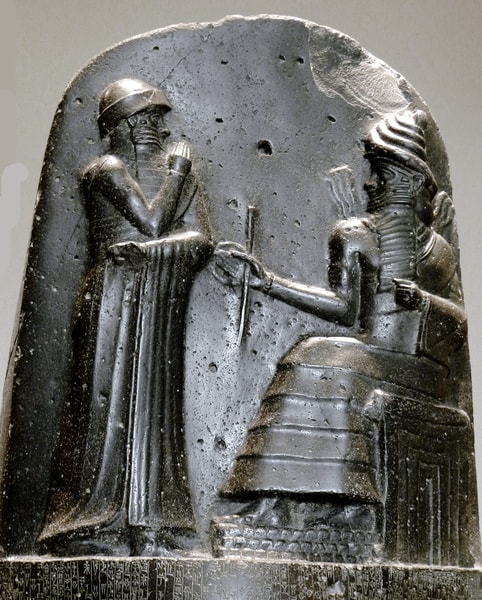
The profound societal impact of Utu-Shamash’s role as the god of justice is perhaps best exemplified by the famous Code of Hammurabi (reigned 1792-1750 BCE). This monumental legal document, one of the earliest and most comprehensive law codes in human history, explicitly invokes Shamash by name, claiming that it was he who divinely inspired and provided humanity with these laws. The iconic stele depicting Hammurabi receiving the laws from a seated Shamash is a powerful visual declaration of divine sanction.
King Hammurabi, a ruler renowned for his administrative acumen and political astuteness, made a calculated and effective choice in associating his law code with Shamash. While he could have chosen Marduk, the patron god of his capital city Babylon and a deity of immense power, or Enki, the god of wisdom and crafts, Shamash presented a unique and undeniable authority. His daily, visible presence in the sky made his power and oversight irrefutable. To transgress Hammurabi’s laws was not merely to defy the king, but to offend Shamash himself, invoking divine retribution. This linkage imbued the legal system with an unassailable moral authority, ensuring its acceptance and enforcement across his vast empire. It demonstrated a sophisticated understanding of how religious belief could underpin and legitimize secular governance, transforming human decrees into sacred mandates.
The Celestial Journeyer: Sun, Underworld, and the Cycle of Life
Daily Traverse and Cosmic Order
The daily routine of Utu-Shamash was a cornerstone of Mesopotamian cosmology, dictating the very rhythm of existence. Each morning, as the first light touched the eastern horizon, two lesser gods would swing open the celestial doors of heaven, allowing Utu-Shamash to emerge. Stepping into his fiery chariot, he would embark on his magnificent journey across the sky, bringing warmth, light, and life to the world below. As evening approached, he would reach the western gates, where two other divine attendants awaited to open the way for his descent into the underworld. There, he would rest until awakened by his wife, Aya, at dawn, ready to begin his cosmic traverse anew.
This cyclical journey was more than a simple explanation for day and night; it represented cosmic order, predictability, and the continuous renewal of life. It also reinforced his omnipresence, as he literally traveled over and through every part of the known world, including the mysterious realm beneath.
Judgment Beyond the Veil
The belief in Utu-Shamash’s daily descent into the underworld introduced a fascinating and somewhat divergent concept into Mesopotamian eschatology: the judgment of the dead. While the prevailing view in ancient Mesopotamia often depicted the underworld as a universally dim, bleak realm where all souls—kings and beggars alike—existed in a state of equal, shadowy sustenance (eating dust and drinking muddy water), Sumerian traditions, in certain eras, presented a more nuanced perspective.
It was believed that upon entering the netherworld, the souls of the departed would face judgment from Utu-Shamash. This judgment, though its precise mechanisms and lasting impact remain somewhat obscure, was thought to affect their afterlife. Orientalist Samuel Noah Kramer elaborates: "The deceased were not treated all alike; there was a judgment of the dead by the sun god, Utu, and to a certain extent by the moon-god Nanna, and if the judgment was favorable the dead man’s soul would presumably live in happiness and contentment and have all it desired."
However, Kramer also cautions that "the indications are that the Sumerians had but little trust in hopes of a blissful life in the nether world even for the good and deserving. By and large the Sumerians were convinced that life in the nether world was but a dismal, wretched, reflection of life on earth." Despite this pervasive pessimism, the very notion of judgment offered a glimmer of hope. If the sun’s light could penetrate even the deepest recesses of the underworld, perhaps Utu-Shamash could reach and touch the souls of the departed, offering some solace or distinction. In this capacity, much like his father Nanna, Utu-Shamash served as a crucial bridge between the living and the dead, ensuring that even in the ultimate transition, divine order and oversight remained. This belief also underscored the importance of continued offerings to the dead, as their souls, though bodiless, still existed and required sustenance, and their worthiness of divine notice implicitly demanded ongoing mortal remembrance.
Myths and Mortals: Utu-Shamash’s Interventions
Benefactor of Heroes and Humanity
Utu-Shamash’s portrayal in Mesopotamian myths predominantly emphasizes his kindness, generosity, and direct involvement in the affairs of mankind. He was often depicted as a divine benefactor, ready to assist those in need, particularly heroes and kings who sought his divine guidance and protection.
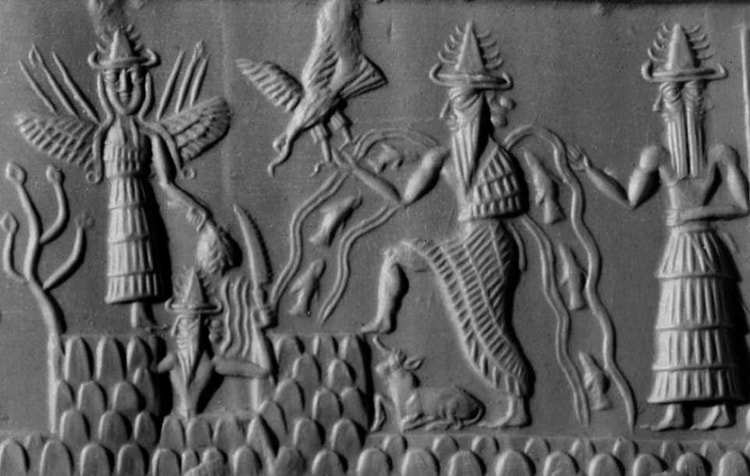
In the ancient Myth of Etana, a tale predating the reign of Sargon of Akkad (2334-2279 BCE), the hero Etana, desperate for an heir, petitions Shamash for aid. Simultaneously, an eagle and a serpent, locked in a bitter feud, also seek his divine intervention. Shamash, demonstrating his impartiality and wisdom, justly addresses each request, showcasing his role as a fair arbiter even in complex disputes. His benevolence is further highlighted in The Epic of Gilgamesh, where he plays a crucial role in assisting the hero Gilgamesh and his companion Enkidu in their perilous quest to conquer Humbaba, the monstrous guardian of the Cedar Forest. Shamash provides divine winds to trap Humbaba, enabling the heroes to overcome the formidable beast. This act solidified his image as a protector of those who embarked on noble, if dangerous, endeavors.
Jeremy Black reinforces this aspect, stating: "A third aspect of Utu was his direct interest in the affairs of mankind. One of the early legendary kings of Uruk is described as a ‘son of Utu’ in the composition called the Sumerian King List, and Utu acted as a special protector of some of the later heroic kings of the city, for instance Gilgamesh." He also notes Shamash’s assistance to Dumuzi in Dumuzi’s Dream, helping him escape from the galla-demons who sought to drag him to the underworld. Throughout The Epic of Gilgamesh, Shamash’s consistent watchfulness and support for Gilgamesh led him to be revered as the patron god of travelers and vagabonds, offering divine protection on arduous journeys. He was even considered a benefactor of the gods themselves, providing them with a celestial home.
The Complexities of Divine Will
While largely benevolent, Utu-Shamash was not without his complexities, demonstrating that even divine figures had their own cosmic duties and limitations. This nuanced aspect of his personality is subtly revealed in the myth of Inanna and the Huluppu-Tree. In this tale, the goddess Inanna plants a sacred huluppu-tree (possibly a willow) in her city of Uruk, intending to fashion a throne and couch from its wood. However, unwanted inhabitants—a snake, an Indugud-bird, and the demon Lillitu—take refuge in its roots, branches, and trunk. Distraught, Inanna weeps through the night. At dawn, she calls out to her twin brother, Utu-Shamash, seeking his help. However, Utu-Shamash, bound by his daily celestial duties, cannot halt his journey and, moreover, declares that he feels no obligation to intervene in her plight. It is Gilgamesh, not Utu-Shamash, who ultimately comes to Inanna’s rescue, vanquishing the tree’s unwanted occupants.
This narrative, also partially recounted in Gilgamesh, Enkidu, and the Netherworld, implies that Inanna’s request was not selfish. From the tree, she intended to create sacred items for Gilgamesh, a drum and drumsticks, which he later misused for war, leading to their descent into the underworld. In the latter myth, after Enkidu becomes trapped in the underworld while attempting to retrieve these items, Utu-Shamash does intervene, parting the veil between worlds to allow Gilgamesh to speak with his deceased friend one last time. This later intervention, following an initial refusal, highlights that while Utu-Shamash adhered strictly to cosmic order, his compassion could ultimately prevail, particularly when a greater cosmic or moral imperative was at stake. It underscores his role not just as a god of light and justice, but as a crucial mediator between the realms of the living and the dead.
Enduring Echoes: Implications and Legacy
A Guiding Light for Civilizations
The worship of Utu-Shamash had profound implications for Mesopotamian civilization. His role as the god of justice provided a crucial ethical framework for society, influencing legal codes, judicial practices, and personal morality. The belief that a divine, omnipresent being oversaw all human actions fostered a sense of accountability and encouraged righteous conduct. Kings and rulers, like Hammurabi, leveraged his authority to legitimize their rule and enforce laws, effectively blending spiritual and temporal power. This divine sanction elevated legal statutes from mere human decrees to sacred commands, ensuring greater compliance and stability within the empire.
Beyond justice, Utu-Shamash embodied the essential life-giving force of the sun. His daily journey was a metaphor for the triumph of light over darkness, order over chaos, and life over death. This constant renewal provided hope and a sense of cosmic regularity, essential for an agricultural society reliant on predictable natural cycles. He offered solace as a protector of travelers and a benefactor in times of trouble, making him a deeply personal as well as a public deity. His influence permeated every aspect of life, from the grand pronouncements of kings to the daily prayers of common folk, shaping their understanding of the world, their place within it, and their moral obligations.
The Eternal Flame
Although the name Utu-Shamash eventually faded from common worship with the rise of later monotheistic traditions like Christianity, his symbolic legacy proved remarkably enduring. The attributes he embodied—the light of the world, the impartial judge, the divine son, the bringer of truth and life, and the bridge between realms—are universal archetypes that resonate across cultures and millennia. The concept of a benevolent, all-seeing divine entity who judges humanity and illuminates the path to righteousness found new expressions in subsequent religious frameworks. The "light of the world" motif, so central to many spiritual traditions, directly echoes the fundamental essence of Utu-Shamash.
The words of Gilgamesh, contemplating human mortality against divine eternity, remain poignant: "Where is the man who can clamber to heaven? Only the gods live forever with glorious Shamash, but as for us men, our days are numbered, our occupations are a breath of wind." (Sanders, 71). This sentiment captures the Mesopotamian understanding of human fragility contrasted with the timeless majesty of the divine. Utu-Shamash represented that enduring, unchanging power, a constant in a world of fleeting existence. While his specific name may have been forgotten, the profound spiritual concepts he embodied—justice, truth, light, and divine oversight—continued to illuminate the human search for meaning, proving that the sun god’s influence, in essence, truly shone forever.


Leave a Comment