Aerial Superiority Arrives in VR: Forefront’s Experimental Fighter Jet Update and the New Karst Frontier
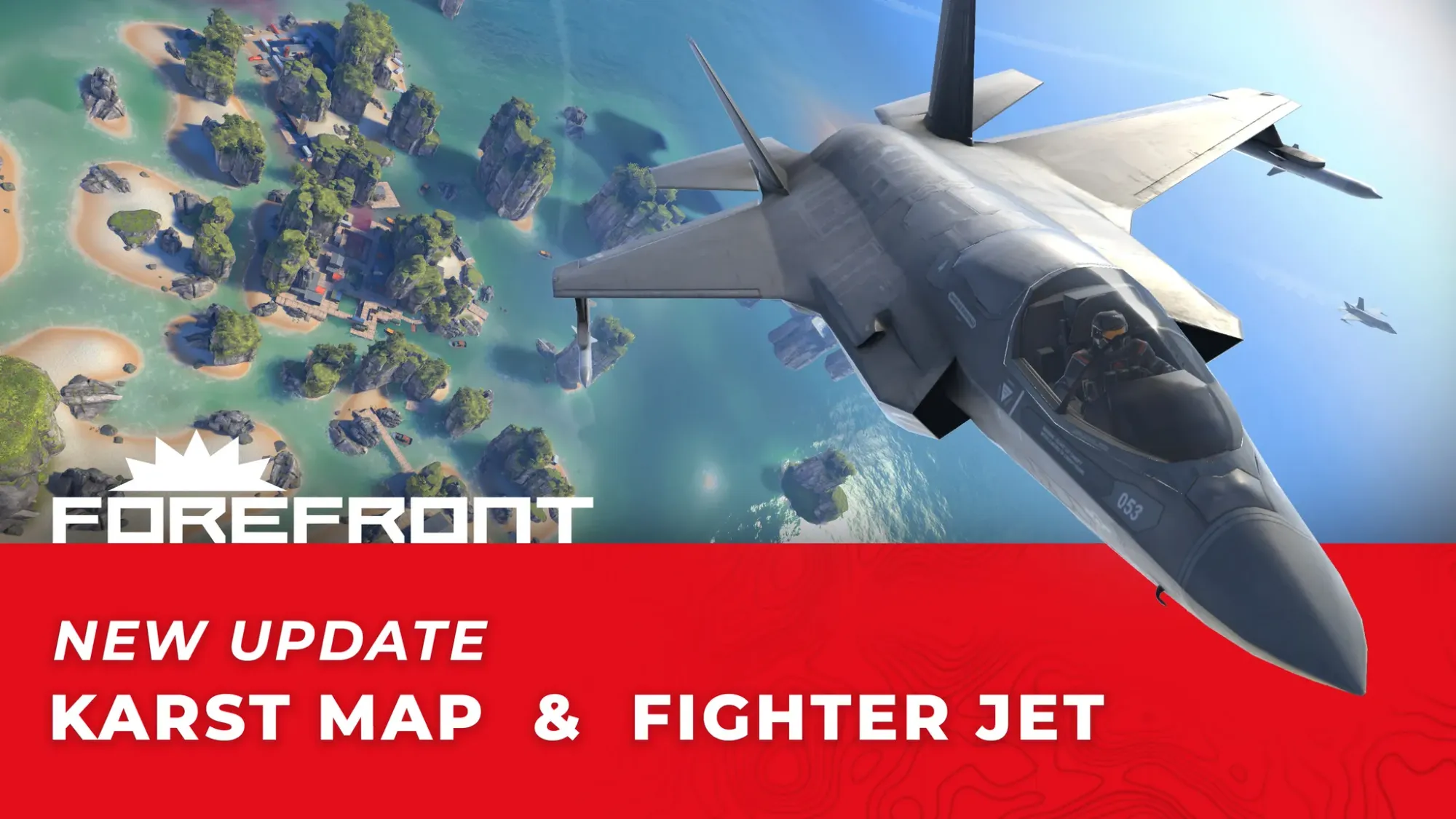
The landscape of virtual reality tactical shooters is undergoing a seismic shift as Triangle Factory, the developers behind the ambitious large-scale PVP FPS Forefront, releases its most transformative update to date. In a move that challenges the technical boundaries of standalone VR hardware, the studio has introduced functional fighter jets and a sprawling new map titled "Karst." This update, delivered free of charge to all players across Meta Quest, SteamVR, and Pico platforms, marks a pivotal moment for the title as it attempts to capture the "combined arms" essence of classic military shooters like the Battlefield series within a fully immersive medium.
Main Facts: Breaking the Sound Barrier in Virtual Reality
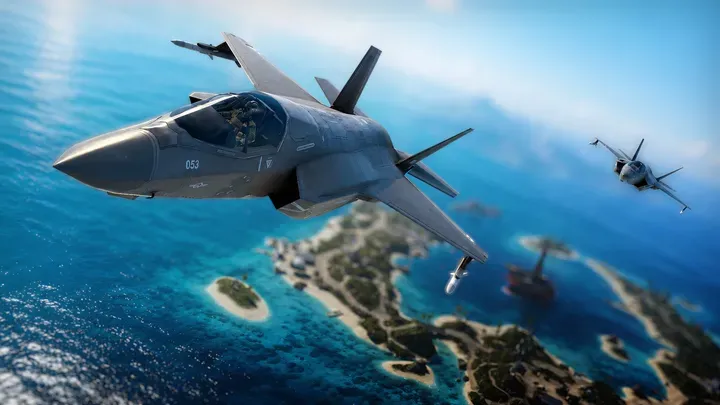
The headline of the latest Forefront update is the introduction of fighter jets, a feature that many—including the developers themselves—previously deemed too complex for the current generation of VR hardware. These aircraft are currently categorized as "experimental vehicles," a designation that suggests Triangle Factory is still fine-tuning the balance and performance of aerial dogfighting.
The Experimental Fleet
The jets are not merely cosmetic additions; they represent a sophisticated simulation of aerial combat. Players can spawn these vehicles directly from the spawn menu on designated maps. Key features of the new aircraft include:
- VTOL Capabilities: The jets support Vertical Take-Off and Landing, allowing players to hover or transition into high-speed forward flight, adding a layer of tactical flexibility during ground assaults.
- Lock-on Weaponry: To facilitate high-stakes dogfights, the jets come equipped with lock-on missile systems, requiring pilots to manage heat signatures and flares while maneuvering through the clouds.
- Dual Control Schemes: Catering to both simulation enthusiasts and casual players, the update offers a choice between "Physical" controls (where the player’s hand interacts directly with a virtual flight stick) and "Arcade" controls (utilizing thumbsticks for more traditional input).
The Karst Expansion
Accompanying the aerial hardware is a brand-new map, Karst. Set against the backdrop of a Vietnamese fishing village, the map is characterized by towering limestone cliffs and dense tropical flora. Karst has been specifically designed to accommodate the verticality of the new jets while maintaining tight, infantry-focused corridors within the village itself. This map, along with a specially modified version of the existing Paradise map, serves as the exclusive playground for the new fighter jets.
Chronology: From Tactical Infantry to Combined Arms
The journey to the "Fighter Jet Update" has been one of rapid iteration and community-driven development. Understanding the significance of this update requires a look at the game’s trajectory over the past year.
The 1.0 Milestone
Forefront officially transitioned out of its early development phase earlier this year with its 1.0 release. At launch, the game was praised for its scale, offering 20-versus-20 combat on maps that dwarfed the typical "killbox" arenas found in other VR shooters like Breachers or Pavlov. However, at the time of the 1.0 release, the developers were hesitant about fixed-wing aircraft, citing concerns over motion sickness and the technical limitations of the Meta Quest’s mobile processor.
The Post-Launch Content Stream
Since the 1.0 release, Triangle Factory has maintained a relentless update schedule. The "Clearwater" update earlier this year introduced significant graphical overhauls, particularly for the PC VR version, and refined the gunplay mechanics. Following this, the community began vocalizing a desire for more diverse vehicle play. While tanks and transport vehicles were already staples of the Forefront experience, the "ceiling" of the game remained relatively low.
The Strategic Pivot
The decision to label the jets as "experimental" marks a shift in Triangle Factory’s philosophy. Rather than waiting for a "perfect" implementation that might never arrive due to hardware constraints, the studio chose to release the feature early to gather telemetry data. This "community-first" testing phase allows the developers to see how 40-player servers handle multiple high-speed assets moving through 3D space simultaneously.

Supporting Data: Technical Hurdles and Lore Integration
The integration of fighter jets into a VR environment is a significant technical feat. Unlike traditional flat-screen gaming, VR requires a consistent 72Hz to 90Hz refresh rate to prevent nausea. High-speed vehicles like jets exacerbate this challenge because the game engine must render distant terrain and assets much faster than it would for an infantryman on the ground.
Optimization for Standalone VR
To maintain performance on the Meta Quest and Pico 4, Triangle Factory utilized several optimization techniques:
- Dynamic LOD (Level of Detail): The Karst map employs aggressive LOD scaling, where the limestone cliffs and village structures simplify their geometry when viewed from the cockpit of a jet at high altitudes.
- Spatial Audio Culling: To reduce CPU load, the game prioritizes the audio of the jet’s engine and incoming missile warnings over distant ground-level gunfire.
Narrative Framework: The O.R.E. Conflict
The update also deepens the game’s world-building. Forefront is set in a near-future where the world is governed by the O.R.E. (Orpiment Renewable Energy) corporation. The lore explains that the Karst region became a flashpoint after O.R.E. discovered that local villagers were illegally trading "Red Orpiment"—a highly volatile but potent clean energy source.
The invasion of the fishing village by O.R.E. forces and the subsequent intervention by the "Coalition Force" provides the context for the map’s destruction. This narrative layer helps justify the presence of high-tech fighter jets in a seemingly low-tech rural environment, as both factions vie for control over the world’s most valuable resource.
Official Responses: Triangle Factory’s Vision
While official press releases have been concise, the developer’s communications through community channels like Discord provide insight into the "experimental" nature of the jets.
Triangle Factory representatives have noted that the jets were a "highly requested but technically daunting" feature. By offering both physical and arcade controls, the studio aims to bridge the gap between "hardcore sim" fans and those who simply want to experience the thrill of flight without a steep learning curve.
"The Karst update isn’t just about adding a new vehicle; it’s about changing the scale of the battle," one developer noted in a recent community Q&A. "We wanted players to feel the transition from the claustrophobic alleys of a fishing village to the vast, open skies above the limestone peaks. It’s about creating those ‘only in VR’ moments."
The studio has also confirmed that the jets will remain in the "experimental" phase for the foreseeable future. This allows them to adjust the damage values of lock-on missiles and the maneuverability of the craft based on player feedback without the pressure of a "final" balance pass.
Implications: The Future of Large-Scale VR Warfare
The release of the Fighter Jet update for Forefront has broader implications for the VR industry and the tactical shooter sub-genre.
1. Challenging the Standalone Bottleneck
For years, the consensus was that standalone VR (Quest/Pico) could only handle small-scale tactical shooters. Forefront is proving that with clever optimization, the "Battlefield" experience—complete with jets, tanks, and 40 players—is possible on mobile chipsets. This may encourage other developers to move away from 5v5 "hero shooters" and toward more expansive, vehicle-centric warfare.
2. The Comfort vs. Realism Trade-off
Aerial combat in VR is a known trigger for motion sickness. By including VTOL capabilities and arcade controls, Triangle Factory is testing whether they can make flight accessible to the "average" VR user. If successful, this could pave the way for more flight-sim elements in mainstream VR action games.
3. Competitive Positioning
Forefront now occupies a unique niche. While Onward focuses on mil-sim realism and Contractors focuses on fast-paced moddability, Forefront is positioning itself as the premier destination for "Combined Arms" combat. The addition of jets gives it a feature set that few other VR titles can match, potentially drawing in players who are tired of purely infantry-based combat.
4. Long-term Monetization and Support
As a free update, the Fighter Jet expansion relies on the continued growth of the player base to remain sustainable. By constantly adding high-value content like new maps and experimental vehicles, Triangle Factory is betting on a long-tail engagement model. The success of this update will likely dictate the roadmap for 2025, with fans already speculating about the addition of attack helicopters or naval combat.
In conclusion, Forefront’s latest update is more than just a content drop; it is a statement of intent. By bringing fighter jets to the Karst fishing village, Triangle Factory is attempting to fulfill the long-held promise of VR: to put the player in the center of a massive, cinematic warzone where the ground, the sea, and now the sky are all part of the theatre of war. Whether the "experimental" jets become a permanent fixture or remain a niche curiosity will depend on how the community adapts to the new verticality of the battlefield. For now, the skies of Forefront are open, and the dogfights have officially begun.