The High Stakes of High Fidelity: A Comprehensive Analysis of Valve’s Steam Frame Launch

The virtual reality landscape shifted significantly this week as the embargo lifted on the first wave of reviews for Valve’s long-anticipated "Steam Frame" headset. Positioned as the spiritual and technical successor to the aging Valve Index, the Steam Frame represents the company’s most ambitious hardware venture to date—a hybrid device capable of both high-end PC VR streaming and standalone operation.
However, the initial critical reception has painted a picture of a device caught between two worlds. While the technical prowess of its wireless streaming capabilities has been lauded as a "new gold standard," the Steam Frame’s steep entry price, underwhelming battery life, and curious design choices—such as monochrome passthrough in an era of full-color mixed reality—have polarized the industry’s leading critics.
1. Main Facts: The Steam Frame Value Proposition
The Valve Steam Frame enters the market at a premium price point that signals a shift away from the mass-market accessibility sought by competitors like Meta. The base 256GB model is priced at $1,059 in the United States, a figure that places it firmly in the "prosumer" or enthusiast category.
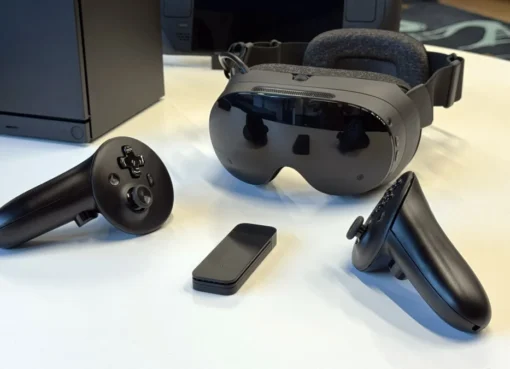
Technical Specifications at a Glance
- Processor: Qualcomm Snapdragon 8 Gen 3 (optimized for standalone tasks).
- Connectivity: Proprietary 6GHz wireless adapter (included) for ultra-low latency PC streaming.
- Display: High-resolution optics featuring advanced foveated rendering capabilities.
- Battery: 21.6 Wh rear-mounted battery.
- Passthrough: Monochrome (greyscale) tracking cameras.
- Software: Integrated SteamOS environment with a standalone port of Half-Life: Alyx.
The consensus among major outlets is a "split verdict." PC Gamer awarded the device an 80/100, praising the user experience while lamenting the cost. Tom’s Hardware followed with a 4 out of 5, highlighting the "excellent" streaming performance. On the more critical end of the spectrum, Engadget issued a 6.5 out of 10, citing the headset’s lack of comfort for glasses-wearers and poor value relative to the Meta Quest 3. Road to VR opted for a scoreless, deep-dive technical review, characterizing the device as a "tinkerer’s dream" rather than a consumer-ready "plug-and-play" miracle.
2. Chronology: From Backend Leaks to the Purchase Window
The road to the Steam Frame’s launch has been marked by Valve’s signature "stealth" marketing approach. Unlike the loud, multi-month campaigns typical of Silicon Valley, Valve’s rollout relied on community discovery and sudden official updates.
- September 7, 2026: Enthusiasts discovered updates to the Steam backend suggesting that a reservation system for new hardware was being finalized. This sparked a flurry of speculation regarding the "Deckard" or "Steam Frame" nomenclature.
- September 16, 2026: Review embargoes lifted globally. Major tech outlets published comprehensive hands-on evaluations, revealing the final specs and the $1,059 price tag.
- September 18, 2026: Valve is scheduled to send out the first wave of "purchase invitation" emails to those in the reservation queue. Each user will have a strict 72-hour window to complete their transaction before the slot is passed to the next person in line.
Despite the imminent payment window, a specific shipping and delivery date remains elusive. Valve has yet to name a concrete arrival date for units in the US or Europe, leaving early adopters in a state of "paid anticipation."
3. Supporting Data: Performance Benchmarks and Real-World Testing
The Steam Frame’s performance can be bifurcated into two distinct categories: its role as a wireless PC VR peripheral and its functionality as a standalone gaming console.

The 6GHz Streaming Revolution
The standout feature across all reviews is the included 6GHz wireless adapter. In an industry plagued by compressed video artifacts and "micro-stuttering" over standard Wi-Fi, Valve’s proprietary solution appears to have cracked the code.
- Road to VR noted that even experienced users would struggle to differentiate the wireless stream from a tethered DisplayPort connection.
- PC Gamer confirmed that the connection remained stable even in "noisy" wireless environments, such as offices packed with competing signals.
Standalone Struggles and Emulation
The standalone experience, powered by the Snapdragon 8 Gen 3, received a more lukewarm reception. Because much of the Steam library is built for x86 architecture, the Steam Frame must utilize an emulation layer for many titles.
- Tom’s Hardware reported a noticeable performance "hit" during standalone play, suggesting that the hardware is being pushed to its thermal and computational limits.
- The Half-Life: Alyx Port: Valve’s decision to include a standalone version of its VR masterpiece was seen as a bold move. Engadget described the port as "noticeably less sharp" than its PC counterpart, though it maintained the "premium feel" of the original. PC Gamer was more critical, noting that the foveated rendering—a technique that reduces resolution in the user’s peripheral vision—was distractingly aggressive in the standalone version.
The Battery Life Deficit
Perhaps the most significant "data fail" for the Steam Frame is its endurance. Valve’s spec sheet omitted an estimated runtime, and reviewer testing explained why:
- High-Intensity Gaming: In Half-Life: Alyx, reviewers reported as little as 60 to 90 minutes of play.
- Local 120Hz Play: PC Gamer observed a 50% battery drop in just 30 minutes while playing Eleven Table Tennis.
- Recharge Times: Using the standard adapter, the headset takes nearly two and a half hours (142 minutes) to reach a full charge, creating a frustrating "play-to-charge" ratio.
4. Official Responses: Valve’s Engineering Philosophy
In the wake of the reviews, Valve engineers have been proactive in explaining the design trade-offs inherent in the Steam Frame. Speaking to the media, software engineer Jeremy Selan and hardware engineer Joy Lyons provided context for the device’s limitations.
Thermals and Battery Constraints
Selan admitted that the battery and thermal management were the "ultimate limits" of the device. The decision to place the battery in the rear strap was an effort to balance the weight, but it also limited the physical size of the cell. "We are pushing the silicon as hard as it can go," Selan noted, acknowledging that the current battery life is a compromise for the sake of the headset’s relatively slim profile.
The "Pro" Strap Solution
Valve’s official response to the battery and audio complaints is a forthcoming "Premium Strap." This accessory, which does not yet have a price or firm release date, will feature:
- Hot-swappable batteries: Allowing for infinite play sessions by swapping cells mid-game.
- Index-style Off-ear Audio: Addressing the "integrated" audio of the base model, which some reviewers found lacking compared to the original Index’s legendary speakers.
Hardware engineer Joy Lyons emphasized that while these features weren’t ready for the September launch, they are "coming soon." Selan jokingly remarked that his previous confidence in an early 2026 launch had "cost him his credibility," suggesting that the company is taking extra time to ensure the accessory meets their standards.

5. Implications: The Future of High-End VR
The launch of the Steam Frame raises critical questions about the direction of the VR industry.
The Abandonment of the "Entry Level"
By pricing the Frame at over $1,000, Valve has effectively conceded the entry-level market to Meta. The Quest 3, priced at approximately $600 (and often discounted), offers color passthrough and a more robust standalone library. Valve’s strategy appears to be a retreat to the high ground—focusing on the "hardcore" PC gamer who demands fidelity above all else.
The Passthrough Paradox
The decision to use monochrome passthrough in 2026 is an industry anomaly. With the Apple Vision Pro and Quest 3 making "Mixed Reality" (MR) a household term, Valve’s "greyscale and grainy" view (as described by Road to VR) suggests they view the Steam Frame strictly as a Virtual Reality device, rather than a Mixed Reality one. This could limit the device’s appeal to developers interested in the burgeoning MR software market.
A Modular Future?
The promise of a hot-swappable battery strap suggests that Valve is moving toward a modular hardware ecosystem. If the "core" of the Steam Frame can be upgraded or augmented with first-party accessories, it may extend the lifespan of the $1,059 investment. However, as Engadget pointed out, asking users to pay over $1,000 and then requiring an additional "Ergonomic Kit" ($59) or a "Premium Strap" (Price TBD) just to achieve basic comfort and battery parity with cheaper devices is a "tough sell."
Conclusion: A Masterpiece for a Niche
The Steam Frame is a triumph of wireless engineering, finally cutting the cord for high-fidelity PC VR without the usual compromises in latency. Yet, it is also a reminder of the physical and economic hurdles that still face the medium. For the "power-user" with a high-end gaming rig and a deep wallet, the Steam Frame is likely the best headset ever made. For the average consumer, it remains a luxury curiosity, proving that while the future of VR is wireless, it is not yet cheap—or particularly long-lasting.