The intersection of legendary artistry and cutting-edge technology has found a new pioneer. A.R. Rahman, the world-renowned composer celebrated for his transcendent scores in Slumdog Millionaire and 127 Hours, has officially entered the era of spatial computing. With the launch of "ARR Immersive" on the Apple Vision Pro, Rahman is not merely releasing an app; he is attempting to redefine the boundaries of how human beings experience music, dance, and storytelling.
With a career spanning decades, over 150 million records sold, and a trophy cabinet boasting two Academy Awards, two Grammy Awards, and a BAFTA, Rahman has long been considered a futurist in the music industry. His latest venture into the Apple ecosystem represents a significant milestone for the Indian creative industry and the global VR/AR landscape, offering a high-fidelity window into the soul of Indian culture and global performance art.
Main Facts: A New Frontier in Spatial Audio and Visuals
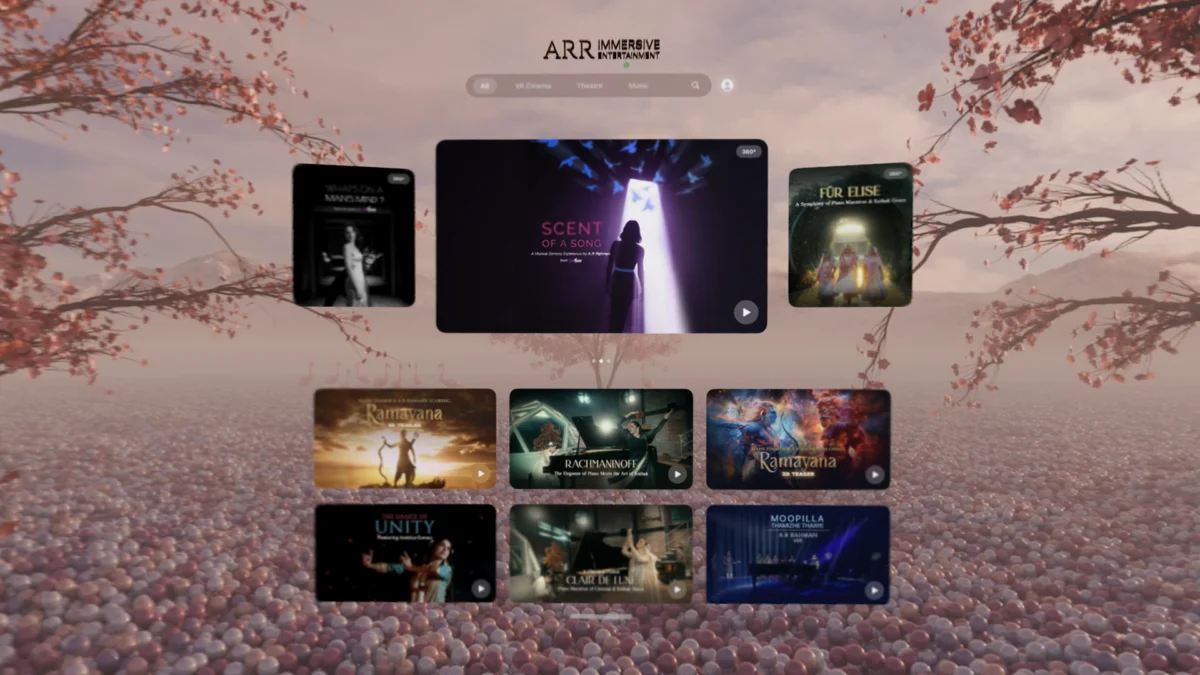
The "ARR Immersive" app, now available on the visionOS App Store, serves as a curated gallery of high-definition, immersive video content. The platform blends traditional Indian art forms—such as Kathak dance—with Western classical music and cinematic previews, all captured using sophisticated multi-camera arrays.
Key features of the launch include:
Format Diversity: The app hosts both 180-degree and 360-degree immersive experiences, optimized for the Apple Vision Pro’s ultra-high-resolution displays.
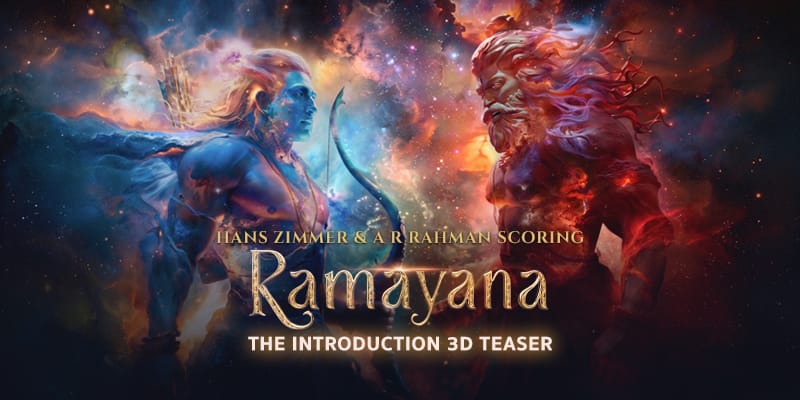
Exclusive Content: Featured works include the "Kathak Piano Series," "The Dance of Unity," and an exclusive 3D teaser for the upcoming cinematic epic Ramayana.
Technical Sophistication: Content is captured at 60 frames per second (fps) using a bespoke rig of professional-grade cinema cameras to ensure fluid motion and realistic depth.
Monetization Model: While the app is free to download and offers several complimentary experiences, it utilizes a premium "pay-per-view" model for its headline content, signaling a shift toward high-value, niche digital media consumption.
Chronology: From the "Mozart of Madras" to VR Visionary
To understand the launch of ARR Immersive, one must look at Rahman’s long-standing obsession with technological innovation.
The Early Years (1990s–2000s): Rahman rose to fame by integrating electronic sounds and synthesizers with traditional Indian orchestral arrangements. His studio, KM Music Conservatory, became a hub for technical experimentation in Chennai.
The VR Genesis (2017): Rahman began experimenting with virtual reality long before the current "spatial computing" trend. In 2017, he commenced work on Le Musk, a world-first multisensory cinematic VR experience. This project involved not just 360-degree visuals but also scent-integration technology, proving Rahman’s commitment to "full-body" immersion.
The Cannes Milestone (2022):Le Musk premiered at the Cannes XR, receiving critical acclaim for its ambition. This served as the testing ground for many of the techniques now seen in the ARR Immersive app.
The Apple Vision Pro Era (2024): Following the release of Apple’s spatial headset, Rahman’s team spent months optimizing their existing library and filming new content specifically for the device’s M2 and R1 chips. The result is the current app, which acts as a permanent home for his expanding digital universe.
Supporting Data: The Technical Architecture of Immersion
Rahman’s approach to content creation for the Vision Pro is grounded in technical rigor. During the development process, his team moved away from standard consumer VR setups in favor of a "multi-rig" philosophy.
According to technical specifications revealed by Rahman’s production team, the content is created using:
Custom Panasonic Rigs: Designed to capture high-bitrate 4K-per-eye footage at 60fps, reducing the "screen door effect" and motion blur common in lower-end VR.
Blackmagic VR Infrastructure: Used for high-dynamic-range (HDR) color grading, ensuring that the vibrant colors of Indian textiles and landscapes are preserved.
Specialized Macro Lensing: Using Canon and Sony VR lenses for "cutaway" shots, the team captures intricate details—such as the movement of a pianist’s fingers or the precise footwork of a dancer—to create a sense of physical proximity.
This "layering" of multiple capture points allows for a depth of field that mimics human ocular focus, a necessity for the "presence" Rahman seeks to evoke.
Official Responses: Rahman on the "Presence" of Art
In describing his motivation for the project, A.R. Rahman emphasized the psychological impact of immersive media. He noted that unlike traditional cinema or television, which are "passive" mediums, spatial computing demands "your full presence in a way no other medium does."
One of the most striking aspects of the app is Rahman’s preference for 180-degree 3D video over the more common 360-degree format. Rahman provided a compelling philosophical and biological justification for this choice:
"With 360, you’re constantly wondering if you missed something; you keep looking behind you. But we only have 180-degree vision as humans, so it goes beyond us. 360 is beautiful for a place or a monument, something you want to look around. But for storytelling, 180 3D is where it’s at."
This focus on 180-degree storytelling is designed to direct the viewer’s attention, allowing the "director" to maintain narrative control while still providing the "volume" and depth that makes the viewer feel as though they are standing in the room with the performer.
Regarding specific content, such as the fusion of Western classical piano with Indian Kathak dance, Rahman explained the serendipitous nature of his creative process:
"I found extraordinary young Western classical piano players from my conservatory… I saw a Kathak dancer and a piano in the same room and thought: what if we put these together? It was fascinating to see how these two worlds collide."
The Business of Immersive Art: Pricing and Accessibility
While the artistic merit of the app is high, early adopters have noted the "premium" nature of the experience. The ARR Immersive app follows a model where individual high-quality videos require separate purchases.
Current industry analysis suggests that Rahman is positioning this content as "Digital Collectibles" or high-end art installations rather than mass-market social media clips. However, some critics have pointed out that the lack of a "bundle" discount or a subscription model may be a barrier for some users, given the high entry price of the Apple Vision Pro hardware itself.
The free content—which includes live concert snippets and short 3D tests—serves as a "taster" to demonstrate the hardware’s capabilities, while the "making-of" documentaries and cinematic teasers (like Ramayana) are aimed at the hardcore fanbase and cinephiles.
Implications: A New Era for Indian Cinema and Beyond
The launch of ARR Immersive has broader implications for the global entertainment industry:
1. The Global Export of Indian Culture
For the first time, intricate Indian rituals, "carnivals," and "rare talents" are being preserved in a format that transcends geographical boundaries. A user in New York or London can now experience a "live" Indian classical performance with the same spatial intimacy as someone sitting in a front-row seat in Chennai.
2. The Zimmer-Rahman Collaboration
The inclusion of the Ramayana teaser is particularly significant. Featuring music from both A.R. Rahman and the legendary Hans Zimmer, this project represents a "clash of titans." By debuting this in 3D on the Vision Pro, the creators are signaling that the future of the "blockbuster" is no longer confined to the silver screen—it is spatial.
3. A Blueprint for Other Artists
Rahman is one of the first major global artists to launch a dedicated, branded app on the Vision Pro. His success (or failure) in monetizing this content will likely serve as a blueprint for other musicians and filmmakers—such as Björk or James Cameron—who have expressed interest in immersive storytelling.
4. Preserving the "Human" Element
By focusing on "fingers, close details, and rituals," Rahman is using technology to bring us closer to the human element of performance, rather than using it to create artificial CGI environments. It is a human-centric approach to a digital-first medium.
Conclusion
A.R. Rahman’s "ARR Immersive" is more than just a tech demo; it is a manifesto for the future of the arts. By combining his musical genius with a sophisticated understanding of human biology and optical physics, Rahman is inviting his audience to step inside his compositions.
As the Apple Vision Pro ecosystem grows, the library of ARR Immersive is expected to expand, potentially including live-streamed concerts and interactive musical environments. For now, it stands as a bold, expensive, and beautiful experiment in what happens when a master of sound decides to conquer the world of sight.
The virtual reality (VR) landscape is currently undergoing a significant transition. As hardware capabilities evolve—transitioning from the tethered reliance of early PC VR to the high-performance sta
The landscape of spatial computing is poised for a significant shift as Pico, the XR subsidiary of ByteDance, moves closer to the commercial release of its most ambitious hardware to date. Recently su
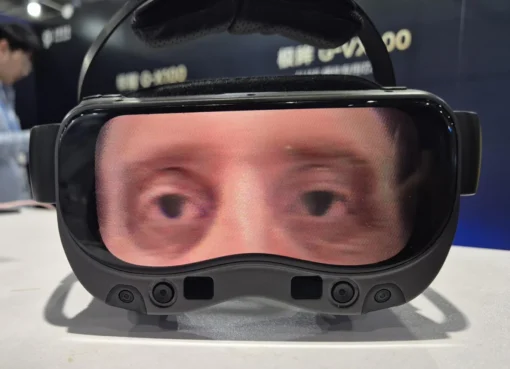
SHANGHAI — In the rapidly evolving landscape of spatial computing, the "isolation problem"—the physical and social barrier created by wearing a bulky headset—remains one of the industry̵