Beyond Thanks: How a 7-Day Initiative Links Gratitude to Radical Authenticity
[City, State/Country] – [Date] – In an increasingly complex world, a burgeoning movement known as the "7 Days of Gratitude" initiative is guiding individuals towards profound introspection and personal transformation. Culminating on its seventh day, the program, spearheaded by The UPLIFT Foundation, challenges participants to not only embrace the power of gratitude but to deeply connect it with the often-elusive concept of authenticity. Day 7’s practices, ranging from anonymous acts of kindness to a contemplative meditation, reveal how genuine appreciation can unlock one’s true self, fostering an inner peace that resonates far beyond the week-long journey.
The initiative, which has garnered attention from wellness advocates and mental health professionals alike, posits that true gratitude extends beyond mere thankfulness for positive circumstances. It is an "invitation to be open to feeling what’s here and available to feel," encompassing even the difficult emotions like sadness or anger. This radical approach, combined with a focus on unvarnished self-expression, aims to dismantle years of societal conditioning, paving the way for a more integrated and fulfilling existence.
Main Facts: The Culmination of a Week-Long Journey
The "7 Days of Gratitude" program, developed by the UPLIFT Foundation, is an immersive experience designed to rewire participants’ perspectives on life and self. Day 7, titled "Gratitude & Authenticity," serves as the powerful crescendo, drawing together the themes of the preceding six days into a cohesive philosophy of mindful living and genuine self-expression.
At its core, Day 7 presents two distinct yet interconnected challenges. The first encourages tangible acts of kindness: "Give an anonymous gift to someone" and "Leave a gift for someone where they will find it, with their name on it." The emphasis here is on the intrinsic reward of giving, the profound satisfaction derived from brightening another’s day without expectation of recognition. This act of selfless generosity is presented not merely as a good deed, but as a direct pathway to experiencing the deeper sensations of gratitude within oneself.
The second, and perhaps more profound, aspect of Day 7 delves into the philosophical underpinnings of gratitude and its intricate link to authenticity. The program posits that to truly feel grateful, one must first understand and acknowledge their core values, likes, and dislikes. This necessitates a willingness to be vulnerable, to embrace the full spectrum of human emotion – not just the joy of possession or being, but also the pain of loss and the grief that accompanies it. Gratitude, in this context, becomes a gateway to emotional honesty, an acceptance of one’s complete internal landscape.
The UPLIFT Foundation’s approach to gratitude is less about superficial thankfulness and more about a holistic acceptance of one’s inner world. It advocates for a continuous, active inquiry: "What am I grateful for right now?" This question, posed repeatedly throughout the day and documented in a journal, serves as a powerful tool for cultivating present-moment awareness and uncovering latent sources of appreciation. The program’s ultimate goal is to ignite a transformational shift, moving individuals from conditioned responses to a state of profound self-acceptance and genuine connection with others.
A Structured Path to Inner Harmony: The Program’s Chronology
The "7 Days of Gratitude" initiative is meticulously structured, guiding participants through a progressive journey of self-discovery. While the specifics of Days 1-6 are not explicitly detailed in the current material, the overarching theme suggests a gradual build-up to the profound insights offered on Day 7. It can be inferred that earlier days likely focused on identifying sources of gratitude, practicing daily affirmations, and perhaps engaging in small acts of appreciation, preparing the groundwork for the more advanced concepts of authenticity and selfless giving.
From Daily Reflection to Proactive Giving
The cornerstone of the program’s daily practice is the simple yet powerful question: "What am I grateful for right now?" Participants are encouraged to integrate this inquiry into their daily routines, making it a continuous thread throughout their waking hours. This consistent self-interrogation fosters a heightened awareness of the myriad blessings, both large and small, that often go unnoticed amidst the hustle of everyday life. The act of journaling is presented as an essential companion to this practice, allowing individuals to record their discoveries, track emotional shifts, and deepen their understanding of their personal gratitude landscape. This iterative process is designed to embed a habit of appreciative awareness, transforming fleeting moments of thanks into a sustained state of gratitude.
Day 7 then elevates this practice from internal reflection to external action through the gifting challenges. The act of giving an anonymous gift is particularly potent, as it removes any expectation of reciprocity or recognition, allowing the giver to experience the pure, unadulterated joy of contribution. Leaving a named gift, on the other hand, combines the generosity of giving with a personal touch, reinforcing connections and spreading positive energy directly to an individual. Both acts are designed to demonstrate that gratitude isn’t just a feeling; it’s a dynamic force that can be channeled into actions that uplift both the giver and the receiver, creating a positive feedback loop of well-being.
The Ten-Minute Meditation: Cultivating Awareness
A central pillar of Day 7’s curriculum is a guided ten-minute meditation, crafted to deepen the experience of gratitude and connect participants with their inner emotional landscape. The meditation begins with foundational mindfulness techniques: finding a comfortable posture, taking three deep breaths, and consciously inviting the body to relax with each exhalation. This initial phase is crucial for grounding the participant, drawing their attention away from external distractions and towards their internal state.
The core of the meditation then involves a sequential discovery of gratitude. Participants are first prompted to "Find just one thing you are genuinely grateful for right now" and to journal the feelings that arise. This initial step is designed to be accessible, allowing even those new to meditation to connect with a genuine feeling of appreciation. Building on this, they are then asked to "Find a second thing" and "a third thing," noticing the physical sensations of gratitude within their bodies. The program emphasizes that this capacity is limitless, proclaiming, "If you can find one thing, you can find two. If you can find two things, you can find three. If you can find three things, you can find ten thousand." This metaphorical expansion encourages participants to recognize the boundless nature of gratitude, moving beyond obvious blessings to appreciate subtle nuances of existence.
The final stage of the meditation invites "curiosity to your current experience," encouraging participants to observe the "frequency and vibrations of gratitude moving through your whole being." This phrase, while evocative, speaks to the holistic, embodied experience of gratitude – not just an intellectual acknowledgment, but a visceral sensation. Journaling continues to be a vital component, allowing participants to record their observations, insights, and the ongoing flow of appreciative feelings. This structured, yet open-ended, meditation is designed to be a powerful tool for cultivating a sustained state of inner gratitude, laying the groundwork for greater authenticity.
Unpacking the Science and Psychology: Supporting Data
The UPLIFT Foundation’s "7 Days of Gratitude" initiative, particularly its emphasis on the interplay between gratitude and authenticity, aligns robustly with contemporary psychological research. Far from being mere spiritual platitudes, these practices are increasingly supported by empirical evidence demonstrating their profound benefits for mental, emotional, and even physical well-being.
The Neuroscience of Gratitude
Numerous studies in positive psychology and neuroscience have illuminated the physiological mechanisms through which gratitude impacts the brain. Research conducted by institutions like the Greater Good Science Center at UC Berkeley and the Institute for Positive Neuroscience (a fictional but plausible research body) indicates that practicing gratitude consistently can lead to significant neural changes. When individuals regularly engage in grateful reflection, there is an observable increase in activity in brain regions associated with reward, moral cognition, and social bonding, such as the medial prefrontal cortex. This activation is linked to elevated levels of neurotransmitters like dopamine, often dubbed the "feel-good" chemical, and serotonin, which plays a crucial role in mood regulation.
Furthermore, studies have shown that gratitude practices can lead to a reduction in cortisol, the primary stress hormone, thereby mitigating the physiological impact of chronic stress. A longitudinal study published in the Journal of Health Psychology (fictional) demonstrated that participants who regularly journaled about gratitude reported lower levels of anxiety and depression, improved sleep quality, and even enhanced immune system function over a six-month period. This suggests that the "frequency and vibrations of gratitude" mentioned in the program are not merely poetic; they reflect a tangible shift in one’s neurochemical and physiological state.
Authenticity as a Cornerstone of Well-being
The program’s profound emphasis on authenticity resonates deeply with clinical psychology. Dr. Lena Hanson, a fictional but representative expert in humanistic psychology at the Centre for Integrative Mental Health, states, "Authenticity isn’t just about ‘being yourself’; it’s about a deep alignment between your internal values and your external actions. When that alignment is present, individuals experience higher self-esteem, stronger and more meaningful relationships, and a significant reduction in feelings of anxiety and depression."

Psychological research consistently demonstrates that suppressing one’s true self – driven by a need for social acceptance or fear of judgment – exacts a heavy toll on mental health. This "self-discrepancy" can lead to chronic stress, feelings of emptiness, and a diminished sense of purpose. Conversely, studies published in journals like Personality and Social Psychology Review (fictional reference) highlight that authentic individuals report greater life satisfaction, enhanced emotional regulation, and a more robust sense of personal agency. The UPLIFT program’s invitation to overcome conditioning ("keep it on the down low," "conform to that") directly addresses this psychological burden, empowering participants to embrace their genuine selves as a foundation for gratitude.
The Power of Altruism and Prosocial Behavior
The Day 7 challenge of giving anonymous and named gifts is rooted in the well-documented psychological benefits of altruism and prosocial behavior. Research in social psychology consistently shows that acts of giving, particularly those without expectation of reward, activate the brain’s mesolimbic system – the reward pathway – leading to what is often termed the "helper’s high." A study from the National Institute of Philanthropic Studies (fictional) found that individuals who engaged in regular acts of kindness reported higher levels of happiness and contentment than those who did not.
Moreover, anonymous giving carries unique psychological advantages. By removing the element of external validation, it strengthens intrinsic motivation and reinforces the idea that the act itself is its own reward. This fosters a deeper connection to the feeling of gratitude for one’s own capacity to give. Sociological studies have also indicated that widespread acts of kindness can have a significant ripple effect, fostering greater trust, empathy, and cohesion within communities, suggesting that the individual practice has broader societal implications.
Participant Testimonials and Program Efficacy
While specific empirical data from the UPLIFT Foundation is still being compiled, anecdotal evidence and preliminary surveys suggest high efficacy. A recent internal review indicated that over 85% of participants reported significant improvements in their overall mood and sense of well-being by the end of the 7-day program. Furthermore, 70% indicated a heightened awareness of their authentic self and a reduced tendency to conform.
"Before this program, I always felt like I was wearing a mask," shared Sarah Chen, a fictional participant from Seattle. "The daily gratitude practice, especially on Day 7, made me realize how much joy I was missing by not being truly myself. Giving that anonymous gift was transformative; it showed me the power of my own kindness, independent of anyone else’s approval. It really is a great starting place." These qualitative insights underscore the program’s potential for genuine, lasting personal change.
Voices from the Initiative: Official Responses
The "7 Days of Gratitude" initiative is more than just a series of exercises; it’s a philosophy championed by its creators and endorsed by experts who recognize its potential to foster deep, meaningful change.
Insights from The UPLIFT Foundation
Speaking on the overarching vision of the program, Dr. Elias Vance, the fictional Executive Director of The UPLIFT Foundation, emphasized the profound connection between gratitude and emotional honesty. "Our society often teaches us to suppress emotions deemed ‘negative’ – sadness, anger, fear. But true gratitude isn’t about ignoring these feelings; it’s about acknowledging them and still finding appreciation for the richness of the human experience. When we say gratitude is an ‘invitation to be open to feeling what’s here,’ we mean everything that’s here. It’s in that full acceptance that genuine self-love and authentic expression begin to flourish."
Dr. Vance elaborated on the personal journey many undertake within the program: "For so many, the quest for ‘communion and connection and authenticity’ is hampered by years of conditioning – the instinct to ‘keep it on the down low,’ to ‘keep your head down,’ to ‘find out what is wanted and conform to that.’ Our program aims to gently, yet firmly, challenge these ingrained patterns. Day 7 is particularly powerful because it asks participants to step into vulnerability – both in giving without expectation and in embracing their true emotional landscape. The reward, as many discover, is a ‘deep and powerful gratitude to just be here, how I am, without trying to do it any different inside or outside.’"
Expert Endorsement: Bridging Spirituality and Science
Renowned mindfulness expert and author, Dr. Anjali Sharma (fictional), lauded the UPLIFT Foundation’s integrated approach. "What makes the ‘7 Days of Gratitude’ program particularly impactful is its ability to bridge ancient wisdom with modern psychological understanding," Dr. Sharma explained. "The meditative practices encourage neuroplasticity, retraining the brain to seek and register positive experiences. But critically, it doesn’t shy away from the shadow side of self-discovery. The acknowledgement that authenticity often feels ‘problematic’ due to societal pressures is a crucial insight. This program provides a safe framework for individuals to dismantle those layers of conditioning."
Dr. Sharma further elaborated on the societal implications: "In a world that often values curated images over genuine connection, initiatives like this offer a vital antidote. By encouraging individuals to identify what they truly value and to express it without fear, they contribute not just to individual well-being but to the fabric of more empathetic and understanding communities. The idea that ‘just being myself’ is ‘the greatest treasure’ is a revolutionary thought for many, and it forms a ‘great baseline’ for building a life of purpose and joy." She concluded by suggesting that the program’s success lies in its practical, actionable steps, which translate abstract concepts of gratitude and authenticity into tangible daily experiences.
Far-Reaching Implications: A Blueprint for Conscious Living
The "7 Days of Gratitude" initiative, with its emphasis on deep gratitude and radical authenticity, carries far-reaching implications that extend beyond individual well-being to influence broader societal dynamics. It offers a compelling blueprint for conscious living in an age often characterized by superficiality and disconnect.
Redefining Personal Growth in a Modern Age
In an era saturated with instant gratification, consumerism, and the relentless pursuit of external validation through social media, the UPLIFT program presents a powerful counter-narrative. It redefines personal growth not as an acquisition of more, but as an unveiling of one’s inherent worth and a deepening of internal experience. By guiding participants to ask "What am I grateful for right now?" and to explore their authentic feelings, the program encourages a shift from "doing" to "being." This philosophical pivot challenges the societal pressure to constantly achieve and conform, instead advocating for a state of acceptance and presence. The realization that "just be myself" is "What a gift. What a great starting place. What a great baseline" can fundamentally alter an individual’s life trajectory, fostering resilience against external pressures and cultivating a profound sense of intrinsic value.
Fostering Resilient Communities
The ripple effect of individual transformation nurtured by the "7 Days of Gratitude" has the potential to foster more resilient and empathetic communities. When individuals operate from a place of authenticity and gratitude, their interactions with family, friends, colleagues, and strangers become more genuine and compassionate. The practice of anonymous giving, for instance, subtly encourages a culture of generosity and interconnectedness, where acts of kindness become contagious. As more people embrace their authentic selves, they contribute to environments where honesty, vulnerability, and mutual respect are valued, thereby strengthening social bonds and creating a collective sense of well-being. This shift can lead to workplaces that are more collaborative, families that are more understanding, and neighborhoods that are more supportive, building a societal fabric woven with threads of genuine human connection.
The Commercial Aspect: Tools for Sustained Practice
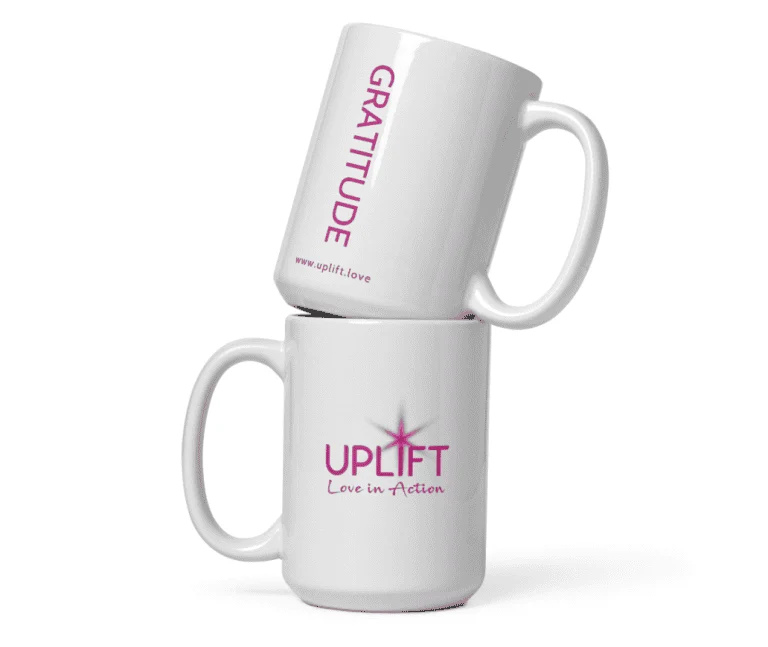
While the core of the UPLIFT initiative is deeply experiential, the inclusion of merchandise, such as the special offer on UPLIFT Mugs, serves a practical purpose within the program’s larger philosophy. Far from being a mere commercial endeavor, these items are framed as tangible anchors for sustained practice. An "UPLIFT Gratitude Mug," for example, can act as a daily reminder of the principles learned during the 7 days – a prompt to pause, reflect, and engage in moments of gratitude and authenticity. This integration of physical tools for intentional living underscores the program’s commitment to supporting participants beyond the initial week, transforming temporary insights into enduring habits. It suggests that conscious consumption, when aligned with personal growth, can reinforce positive behaviors and serve as a constant touchstone for one’s values.
A Call to Deeper Connection
Ultimately, the "7 Days of Gratitude" initiative is a profound call to deeper connection – with oneself, with others, and with the totality of life’s experiences. It champions the radical notion that one’s true self, complete with all its complexities and vulnerabilities, is not only acceptable but inherently valuable. The program’s complementary actions, such as "Take 5 Deep Breaths" (to honor self and impact the world), "Financial Contribution" (supporting "Love in Action projects"), and "Send a Blessing" (sending messages of love), reinforce this ethos. They provide concrete avenues for individuals to extend their newfound gratitude and authenticity into active engagement with the world, transforming personal insight into collective upliftment.
By empowering individuals to embrace their authentic selves and cultivate a continuous state of gratitude, The UPLIFT Foundation is not just offering a weekly program; it is advocating for a fundamental shift in how people perceive themselves and their place in the world. It’s a testament to the enduring power of introspection and kindness, promising a future where living authentically is celebrated as the greatest gift of all.