The $100 Million Vindication: How ‘Coyote vs. Acme’ Outran the Tax Write-Off Grave
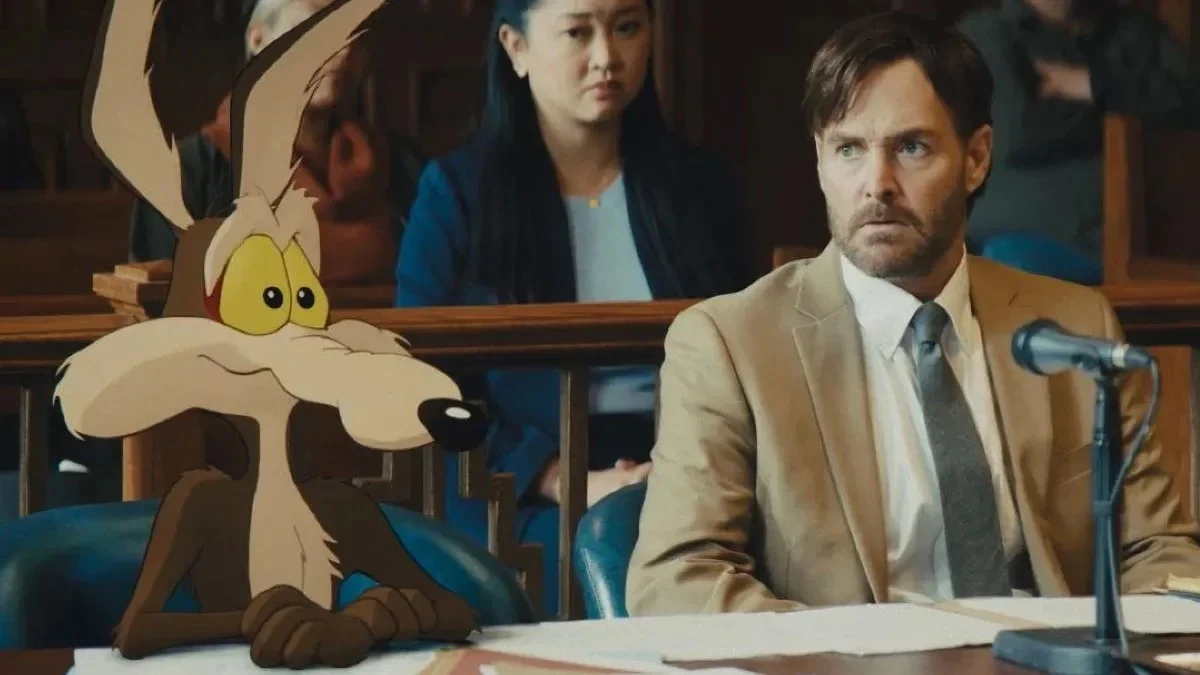
In an industry often defined by spreadsheet-driven caution and the cold calculus of corporate accounting, the story of Coyote vs. Acme has emerged as a rare, high-stakes drama with a triumphant third act. Once condemned to the shadows of a corporate vault as a tax write-off, the hybrid live-action/animated feature has officially crossed the $100 million mark at the global box office.
This milestone is more than just a financial success for its distributor, Ketchup Entertainment; it is a stinging rebuke to the current leadership at Warner Bros. Discovery, who famously deemed the film "unreleasable." As the film prepares for its digital debut, its journey from a discarded asset to a box-office survivor offers a profound look into the volatile state of modern Hollywood distribution.
Main Facts: A Defiant Box Office Run
According to the latest data from Rentrak, Coyote vs. Acme has secured its place as a legitimate commercial hit. As of the close of business this past Sunday, the film has amassed a global total of $100 million, comprised of $54.7 million from international markets and a sturdy $44.3 million domestically.
The path to these numbers was anything but traditional. The film, which stars John Cena and features the iconic Wile E. Coyote in a legal battle against the Acme Corporation, was produced by Warner Bros. for an estimated $70 million. However, in a move that sparked a firestorm of controversy across the creative community, the studio initially opted to shelve the project entirely to claim a tax write-down of approximately $30 million.
The film’s life was saved when Ketchup Entertainment stepped in, purchasing the rights for a reported $50 million. To mitigate the inherent risks of a project once labeled a "dud" by its creators, Ketchup strategically sold off various foreign distribution rights, a move that now looks like a masterstroke of independent film financing.
Chronology: From Production to Resurrection
The timeline of Coyote vs. Acme is a rollercoaster of corporate pivots and public relations battles.
- 2022–2023: Production and Completion: The film was developed under the previous Warner Bros. regime as a high-concept "Looney Tunes" reboot. Directed by Dave Green and produced by Chris DeFaria and James Gunn, the project combined the slapstick energy of classic animation with a legal procedural parody.
- November 2023: The "Death Sentence": Warner Bros. Discovery, led by CEO David Zaslav, announced that the film would be shelved. This followed the precedent set by the cancellation of Batgirl and Scoob! Holiday Haunt. The studio argued that the film did not fit the "global theatrical scale" required for their brand.
- Late 2023 – Early 2024: The Backlash: The announcement triggered an unprecedented wave of protest from filmmakers, animators, and fans. Reports emerged that the film had tested exceptionally well with audiences, leading to accusations that the studio was sacrificing art for accounting "gymnastics." Under pressure, WB allowed the filmmakers to shop the movie to other distributors.
- 2025: The Ketchup Acquisition: After a period of uncertainty where streamers like Netflix and Amazon reportedly balked at WB’s $70–$80 million asking price, Ketchup Entertainment emerged as the dark horse. They secured the film for $50 million, betting on the "offbeat" charm that WB feared.
- Summer 2026: Theatrical Release: Released against a backdrop of underperforming major studio sequels, Coyote vs. Acme found a dedicated audience, finally crossing the $100 million threshold this week.
- September 28, 2026: The film is scheduled to launch on digital platforms at 9 p.m. PT, marking the final stage of its theatrical-to-home-video journey.
Supporting Data: Warner Bros.’ Summer of Discontent
To understand the magnitude of Coyote vs. Acme’s success, one must look at the wreckage of the Warner Bros. 2026 slate. While the studio enjoyed a "sizzling" 2025 with hits like Sinners and Weapons, 2026 has been a year of expensive miscalculations.

The studio’s decision to prioritize "traditional" blockbusters over "offbeat" projects like Coyote vs. Acme has resulted in a string of high-profile failures:
- The Bride!: With a production budget of $90 million, the film managed a dismal $23.9 million worldwide, failing to even cover its marketing costs.
- Supergirl: Despite a massive $180 million investment, the superhero epic stalled at $126.4 million globally, a catastrophic result for a tentpole intended to anchor a cinematic universe.
- The End of Oak Street: This $85 million production earned only $120.6 million, barely reaching its break-even point after accounting for the exhibitors’ share and advertising.
- Practical Magic 2: The most recent release earned $76.8 million in its first two weeks. However, with production costs nearing that same figure, it faces an uphill battle to profitability.
In a shocking shift of power, Variety recently reported that the independent powerhouse A24 actually outgrossed Warner Bros. during the summer 2026 window. A24 captured 5.5% of the domestic market share ($237 million), largely fueled by the viral success of Backrooms, while Warner Bros. slumped to a 5% share ($165 million).
If Warner Bros. had retained and properly marketed Coyote vs. Acme, the $44.3 million domestic haul would have significantly narrowed that gap, potentially sparing the studio the embarrassment of being outpaced by an indie distributor.
Official Responses and Industry Sentiment
While Warner Bros. has remained largely silent regarding the film’s success under a rival banner, the industry’s response has been vocal. At the time of the initial shelving, the studio’s official stance was that the decision was "consistent with the company’s strategy to focus on theatrical releases that we believe will have the greatest impact."
However, insiders suggest the "impact" WB was looking for was purely fiscal. By writing off the film, the studio could immediately improve its balance sheet, a move favored by Wall Street in the short term but criticized by creatives as "short-sighted."
Ketchup Entertainment, conversely, has leaned into the film’s "underdog" status. A spokesperson for Ketchup noted after the $100 million milestone: "We believed in the vision of Dave Green and the enduring appeal of Wile E. Coyote. This performance proves that audiences are hungry for original, clever storytelling that doesn’t always follow a standard blockbuster template."
The creative community has also weighed in. Many directors have pointed to the film’s success as a cautionary tale against "shelving culture." The fact that a film deemed "unreleasable" outperformed a $180 million Supergirl movie suggests that studio algorithms for predicting success may be fundamentally flawed.

Implications: A Turning Point for Mid-Budget Cinema?
The success of Coyote vs. Acme carries several significant implications for the future of the film industry:
1. The Death of the "Safe" Write-Off
This event may make studios think twice before using tax write-offs as a primary financial tool. The public relations damage, coupled with the visible proof of lost revenue (as seen in the $100 million WB "gave away"), makes the strategy far riskier than it appeared in the Batgirl era.
2. The Resurgence of the Mid-Budget Hybrid
For years, the industry has claimed that mid-budget movies—those costing between $50 million and $90 million—are a "dead zone." Coyote vs. Acme proves that with the right hook and a lean distribution model, these films can still find a path to profitability, especially when they appeal to both nostalgic adults and new younger audiences.
3. The Power of Independent Distributors
Ketchup Entertainment’s ability to take a "discarded" studio asset and turn it into a $100 million hit signals a shift in the distribution landscape. If major studios continue to focus only on billion-dollar "mega-hits," they leave a lucrative vacuum for agile independents to fill.
4. Looney Tunes’ Checkered Legacy
The history of Looney Tunes on the big screen has been notoriously inconsistent, from the heights of the original Space Jam to the disappointment of Back in Action. Coyote vs. Acme suggests that the key to modernizing these characters is not just bigger CGI, but a clever, self-aware script that subverts expectations.
Conclusion: The Coyote Finally Catches the Bird
As Coyote vs. Acme transitions to digital platforms on September 28, it does so as a symbol of creative resilience. Wile E. Coyote, a character defined by his inability to win, has ironically provided one of the most significant "wins" for independent cinema in 2026.
The film’s $100 million milestone serves as a reminder that in Hollywood, "unreleasable" is often just a matter of perspective. While Warner Bros. counts its losses on $180 million spectacles, the Coyote is having the last laugh, proving that sometimes, the most "offbeat" ideas are exactly what the box office needs. In the battle of accounting vs. art, the Acme Corporation might have lost the court case, but the film won the war.