Day 7: The Pinnacle of Purpose – Cultivating Gratitude and Embracing Authentic Self
A Week That Can Change Your Life: Unlocking Profound Connection and Self-Discovery
The "7 Days of Gratitude" challenge culminates in a powerful exploration on Day 7, drawing together themes of selfless giving, profound self-reflection, and the intricate dance between gratitude and authenticity. This final day is not merely an endpoint but a launchpad, inviting participants to embed these transformative practices into the fabric of their daily existence, promising a shift that resonates far beyond the confines of a single week. From anonymous acts of kindness to deep introspective journeys, Day 7 serves as a poignant reminder that true well-being stems from a harmonious blend of outward generosity and inward integrity.
The journey through the "7 Days of Gratitude" has been meticulously designed to foster a renewed sense of appreciation and presence. Each day has likely built upon the last, progressively deepening the participant’s understanding and experience of gratitude. Day 7, however, introduces a unique and profound dimension, pushing individuals to transcend conventional notions of thankfulness and delve into the core of their being. The overarching promise — "One week that can change your life!" — underscores the potent capacity of these practices to recalibrate perspectives and ignite personal transformation.
Main Facts: Day 7’s Blueprint for Transformation
Day 7 of the gratitude challenge is structured around three core pillars: an act of anonymous generosity, a continuous daily inquiry into gratitude, and a guided meditation that grounds these insights. These elements are designed to synergistically deepen one’s experience and understanding.
The Call to Anonymous Generosity:
The primary directive for Day 7 is remarkably simple yet profoundly impactful: "Give an anonymous gift to someone. Leave a gift for someone where they will find it, with their name on it. Discover how good that feels!" This instruction moves beyond passive appreciation, urging participants into active, selfless service. The anonymity is key; it strips away any expectation of reciprocation or recognition, focusing solely on the joy of giving and the impact on the recipient. Whether a thoughtful note, a small token, or a pre-paid coffee, the act is designed to create a ripple effect of positivity, with the giver experiencing the intrinsic reward that flows from genuine altruism. The emphasis on "discovering how good that feels" highlights the often-underestimated psychological benefits of generosity, linking the act directly to the cultivation of personal well-being.
The Continuous Daily Gratitude Inquiry:
Throughout the day, participants are encouraged to engage in a repetitive, yet ever-deepening, self-inquiry: "Ask yourself, ‘What am I grateful for right now?’" This simple question serves as a powerful mindfulness tool, continuously redirecting attention towards positive aspects of one’s immediate experience. It’s a practice in present-moment awareness, designed to counteract the mind’s natural inclination towards problems or deficiencies. By repeatedly posing this question, individuals train their minds to actively seek out and acknowledge blessings, fostering a persistent state of appreciation. The recommendation to "write in your journal as you keep discovering what happens for you and around you" reinforces the importance of reflection, allowing participants to track shifts in their perception and emotional landscape.
The Ten-Minute Meditation: Anchoring Gratitude:
A guided ten-minute meditation offers a structured approach to internalizing the day’s themes. The steps are clear and progressive:
- Comfort and Breath: "Make yourself comfortable, take 3 deep breaths, feel your body, and invite yourself to relax with each exhalation." This initial phase establishes a foundation of calm and bodily awareness, essential for deep introspection.
- First Genuine Gratitude: "Find just one thing you are genuinely grateful for right now and write down what you are feeling in your journal." This step encourages focused attention, allowing the participant to connect deeply with a single source of appreciation.
- Second Genuine Gratitude: "Find a second thing you are genuinely grateful for right now. Notice the feelings of gratitude in your body. Write down what you are feeling in your journal." Expanding the focus, this step emphasizes the somatic experience of gratitude, recognizing how emotions manifest physically.
- Third and Infinite Gratitude: "Find a third thing you are genuinely grateful for right now. If you can find one thing, you can find two. If you can find two things, you can find three. If you can find three things, you can find ten thousand." This powerful affirmation illustrates the expansive and self-perpetuating nature of gratitude. Once the door to appreciation is opened, the potential for finding more reasons to be grateful becomes limitless.
- Curiosity and Embodiment: "Bring curiosity to your current experience as you notice the frequency and vibrations of gratitude moving through your whole being. Write down what you notice as you continue to feel gratitude. Keep noticing all the things you are grateful for." The final step encourages a deeper, more embodied experience, inviting participants to observe the subtle energetic shifts that accompany a state of profound thankfulness, integrating it fully into their consciousness.
Chronology: The Journey Towards Self-Discovery
While Day 7 stands as a distinct practice, its power is magnified when viewed as the culmination of a week-long immersion. The "7 Days of Gratitude" likely began with simpler exercises, perhaps focusing on identifying broad areas of appreciation, expressing thanks to loved ones, or recognizing the blessings in everyday routines. Each preceding day would have gently chipped away at cynicism or habitual negativity, gradually expanding the participant’s capacity for positive perception.
Day 1 might have involved simply listing three things one was grateful for. Day 2 could have focused on expressing gratitude directly to someone. Day 3 perhaps encouraged acknowledging challenges and finding lessons within them, thereby reframing difficulties as opportunities for growth. By Day 7, the foundation has been laid for a more sophisticated and deeply personal exploration. The anonymous gift, for instance, represents an advanced stage of giving, where the focus is entirely on the recipient’s well-being without expectation of personal gain. This progressive layering of practices allows participants to build resilience, cultivate a positive mindset, and, by the final day, arrive at a point where they are ready to tackle the profound connection between gratitude and their authentic self. The journey is designed to move from superficial acknowledgment to deeply embodied appreciation, culminating in the liberating embrace of one’s true nature.
Supporting Data: The Symbiotic Relationship Between Gratitude and Authenticity
The article’s most profound insight lies in its exploration of how gratitude acts as a crucial gateway to authenticity. This isn’t just a philosophical musing but a concept supported by a growing body of psychological research and therapeutic understanding.
The Societal Pressure to Conform:
The text poignantly describes the common human experience of feeling compelled "to not be authentic," "to get along and not rock the boat." This conditioning often begins in childhood, as individuals learn to adapt to social norms, parental expectations, and peer pressures. Phrases like "keep it on the down low," "keep your head down," "don’t make eye contact," "keep your thoughts to yourself," and "find out what is wanted and conform to that" vividly illustrate the pervasive fear of judgment or rejection that can lead to a suppression of one’s true self. The consequence of this constant self-monitoring is a significant emotional and psychological cost, leading to feelings of disconnect, anxiety, and a diminished sense of self-worth. When authenticity "seemed problematic," individuals often chose the path of least resistance, inadvertently building walls around their true desires, values, and emotions.
Gratitude as a Mirror to the Self:
The article poses the critical question: "What does that have to do with gratitude?" The answer is illuminating. "To really feel gratitude, you have to know what you’re grateful for, know what you like, and know what you value, and things of that nature." This statement underscores a fundamental truth: genuine gratitude is inherently self-referential. It requires an honest assessment of one’s inner landscape. If one doesn’t know what genuinely brings joy or aligns with their core values, their expressions of gratitude will remain superficial or performative. Practicing gratitude, therefore, becomes an act of self-discovery, forcing an individual to tune into their internal compass and identify what truly resonates with their soul.

Vulnerability and Emotional Wholeness:
Furthermore, true gratitude demands vulnerability. It requires one to "be willing to feel yourself, willing to be vulnerable to not just the joy of having or being, but the pain of losing, the grief of losing something." This is a crucial point. An inauthentic self often attempts to shield itself from painful emotions. However, authentic gratitude recognizes that joy and sorrow are two sides of the same coin. To deeply appreciate something is to also acknowledge its impermanence and the potential for loss. This willingness to embrace the full spectrum of human emotion – joy, sadness, anger – is a hallmark of an authentic existence. Gratitude, in this context, becomes an "invitation to be open to feeling what’s here and available to feel. Even if it’s sad, or mad, or anything it turns out." It advocates for emotional honesty, where all feelings are acknowledged and processed, rather than suppressed.
The Quest for Communion and Connection:
The author’s personal quest for "communion and connection and authenticity" directly contrasts with the "conditioning" of keeping one’s true self hidden. This highlights the inherent human need for genuine connection, which can only truly flourish when individuals present their authentic selves. When we wear masks, our connections, however numerous, remain shallow. The journey of "inquiry and inquiry and inquiry" to shed "layers of conditioning" speaks to the ongoing process of self-actualization, a continuous peeling back of societal impositions to reveal the core self.
The Liberation of Being:
The profound outcome of this journey is described as "moments of deep and powerful gratitude to just be here, how I am, without trying to do it any different inside or outside." This is the ultimate liberation – the freedom to exist without internal or external pretense. It’s a state of radical self-acceptance, where one’s inherent worth is recognized regardless of external validation. The simple, yet powerful, declaration, "Just be myself. What a gift. What a great starting place. What a great baseline," encapsulates the profound peace and strength found in authenticity. It suggests that this baseline of self-acceptance is not just a personal comfort, but a foundation from which one can truly live, connect, and even "dance."
From a psychological perspective, research consistently shows that authentic individuals experience higher levels of self-esteem, greater life satisfaction, and stronger, more meaningful relationships. They are less prone to anxiety and depression because they are not expending energy on maintaining a false persona. Similarly, studies in positive psychology have firmly established gratitude as a predictor of well-being, resilience, and even physical health. When these two forces – gratitude and authenticity – converge, they create a powerful synergy that propels individuals towards holistic flourishing.
Official Responses: The Uplift Initiative’s Vision
The article, originating from "Uplift.love," represents the "official response" or programmatic philosophy of an organization dedicated to fostering positive change. Their approach, as evidenced by the "7 Days of Gratitude" challenge, is multifaceted, blending guided self-reflection with tangible community engagement.
The UPLIFT Mugs Offer:
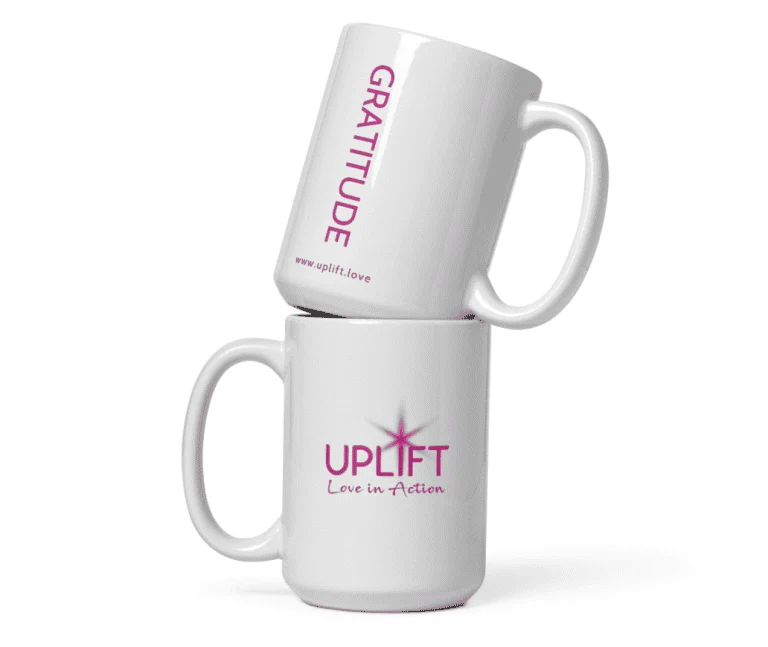
The "Special Offer for 7 DAYS OF GRATITUDE" – "20% OFF on any 2 or more MUGS* & FREE SHIPPING" – might appear as a commercial component, but it’s framed within the larger mission of Uplift. These mugs, coming in "3 sizes, 6 colors, and many different intentions," serve as physical reminders of the gratitude journey. They are not just products; they are tools designed to extend the practice beyond the challenge, perhaps used for daily mindful reflection or as gifts to spread the message of gratitude to others. This commercial offering, therefore, aligns with the broader goal of making gratitude a more tangible and shareable experience.
Love in Action Projects and Community Engagement:
Beyond individual practice, Uplift provides channels for collective impact, embodying their "Love in Action" ethos:
- "Take 5 Deep Breaths": This simple invitation to "Pause and take 5 deep breaths to honor yourself and impact the world" serves as a mini-mindfulness practice. It reinforces the idea that self-care is not selfish but essential for being able to contribute positively to the world. It’s a moment of grounding, linking individual well-being to collective impact.
- "Financial Contribution": The transparency that "100% of your contributions go towards supporting our Love in Action projects" highlights Uplift’s commitment to community welfare. This provides participants with a direct way to translate their newfound gratitude and generosity into tangible support for initiatives that spread love and positivity, creating a virtuous cycle of giving and receiving.
- "Send a Blessing": "Send a message of love through our blessings portal" offers a digital platform for spreading kindness. This mechanism allows participants to actively engage in the spirit of generosity and connection, extending their positive intentions to a wider community, thereby amplifying the collective impact of the gratitude challenge.
These "official responses" from Uplift demonstrate a holistic approach to well-being, recognizing that personal transformation is deeply intertwined with community engagement and altruistic action. They provide practical tools and avenues for participants to integrate the lessons of gratitude and authenticity into a broader lifestyle of conscious living and positive contribution.
Implications: A Transformed Self, A Better World
The implications of embracing the lessons of Day 7, and indeed the entire "7 Days of Gratitude" challenge, are far-reaching, impacting not only individual lives but also the collective consciousness of communities.
Individual Transformation:
For the individual, consistent practice of gratitude and authenticity leads to a profound shift in mental and emotional well-being. Psychologically, it fosters resilience, equipping individuals to navigate life’s inevitable challenges with greater equanimity. By regularly acknowledging what is good, the mind’s negativity bias is retrained, leading to reduced stress, anxiety, and symptoms of depression. Authentic living cultivates deeper self-esteem and self-acceptance, as the energy once spent on maintaining a false persona is redirected towards genuine self-expression and growth. Relationships become more meaningful, built on trust and genuine connection rather than superficial interactions. This journey leads to a heightened sense of purpose and fulfillment, as individuals align their actions with their true values and desires. The "one week that can change your life" isn’t an exaggeration; it’s an invitation to embark on a lifelong path of self-discovery and joyful living.
Societal Impact:
The ripple effect of individual transformation extends outwards, impacting families, workplaces, and broader communities. Imagine a society where more individuals operate from a place of genuine gratitude and authenticity.
- Increased Empathy and Compassion: When individuals are secure in their authentic selves and regularly practice gratitude, they are more likely to extend empathy and compassion to others, recognizing shared humanity and struggles.
- Stronger Social Fabric: Authentic connections foster stronger, more supportive communities. When people feel safe to be themselves, collaboration thrives, and collective well-being improves.
- Positive Work Environments: In workplaces, leaders and team members who embody gratitude and authenticity create environments of trust, psychological safety, and innovation. This leads to higher job satisfaction, reduced turnover, and greater productivity.
- Reduced Conflict: A collective emphasis on understanding one’s own values and appreciating the present can lead to a reduction in unnecessary conflict, both interpersonally and on a larger scale. When individuals are content with their authentic selves, they are less likely to seek external validation through power struggles or divisive rhetoric.
- A Culture of Generosity: The anonymous gift exercise, if widely adopted, could foster a pervasive culture of selfless giving, reminding people of the intrinsic joy in contributing to others’ happiness without expectation of reward.
Ultimately, the "7 Days of Gratitude" challenge, particularly its culminating Day 7, offers a powerful vision for personal and collective betterment. It posits that by consciously cultivating gratitude and courageously embracing authenticity, individuals can not only transform their own lives but also contribute to the creation of a more compassionate, connected, and genuinely uplifting world. The message is clear: the journey inward is the path to outward impact, and a grateful, authentic heart is the greatest treasure one can find.