The Curse of Genius: Reevaluating Lewis Trondheim’s ‘The Hoodoodad’ and the Legacy of Kim Thompson
Introduction: The Irony of a Cursed Masterpiece
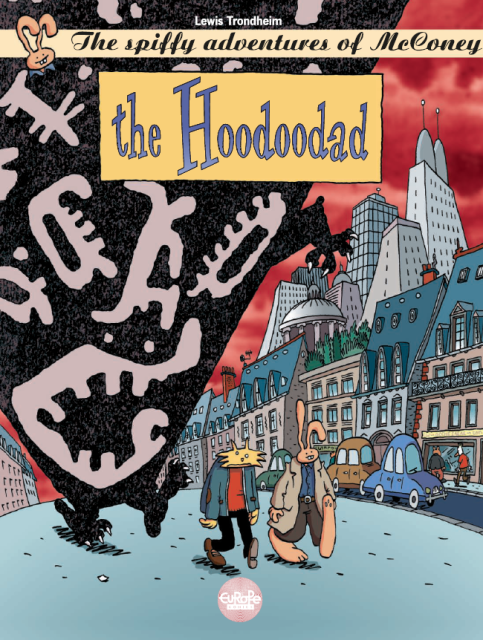
In the world of international comics, some failures are more baffling than others. Call it irony, or perhaps a literary instance of mise-en-abyme, but the history of the English-language release of The Hoodoodad is a story of misfortune nested within a narrative about misfortune. It is as if the central conceit of the book—a "hoodoo" cast upon a "doodad"—leaked from the ink-stained pages into the very ledgers of its American publisher.
Despite being penned by Lewis Trondheim, arguably France’s most prolific and influential modern star of bande dessinée, and translated by the legendary Kim Thompson of Fantagraphics, The Hoodoodad failed to find its footing in the United States. Released in the late 1990s, it was a commercial disappointment that stalled the momentum of Trondheim’s work in the West for years. Yet, nearly three decades later, the book stands as a towering achievement in cartooning and a masterclass in the art of translation. This report examines the facts, the chronology, and the enduring implications of this "minor classic."
Main Facts: A Convergence of Talents
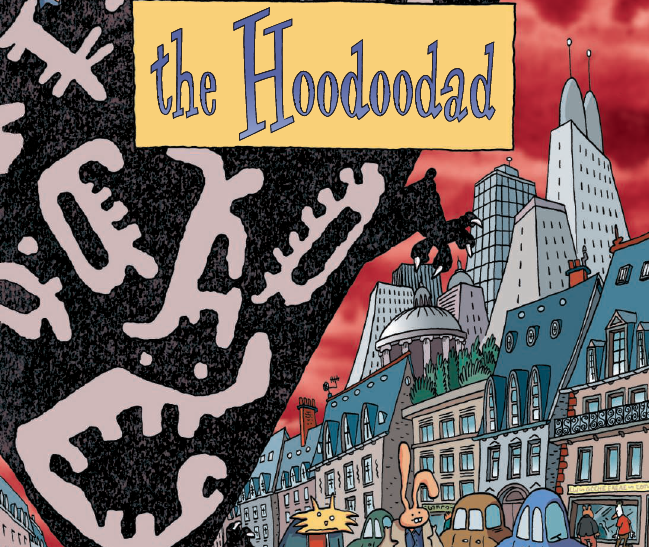
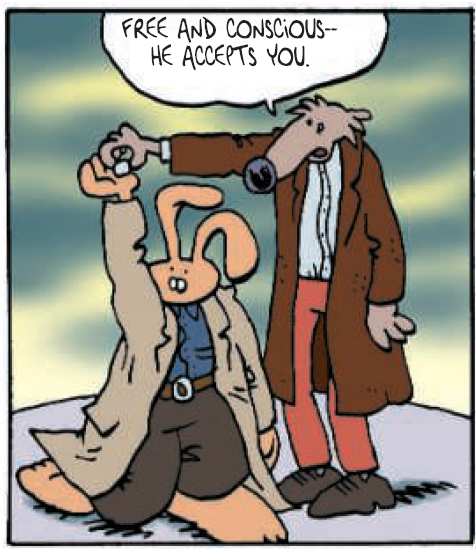
The Hoodoodad (originally Les Pichenettes) is a pivotal volume in Lewis Trondheim’s celebrated McConey (Lapinot) series. On paper, the book possessed every ingredient for a crossover hit:
- The Creator: Lewis Trondheim was the "hottest" star of the French nouvelle bande dessinée movement. Known for his simple yet expressive anthropomorphic style, Trondheim’s work bridged the gap between traditional European albums and the indie-sensibilities of the 1990s.
- The Narrative Style: Often compared to Seinfeld for its focus on the minutiae of daily life, the story blends high-concept farce with grounded, witty dialogue. It carries the DNA of Hergé’s The Castafiore Emerald, where the plot is less about the destination and more about the chaotic, character-driven journey.
- The Translation: Handled by Kim Thompson, the co-founder of Fantagraphics, the translation is widely regarded by scholars as a "creative" translation—one that improved upon the original French by localizing humor and character voices with surgical precision.
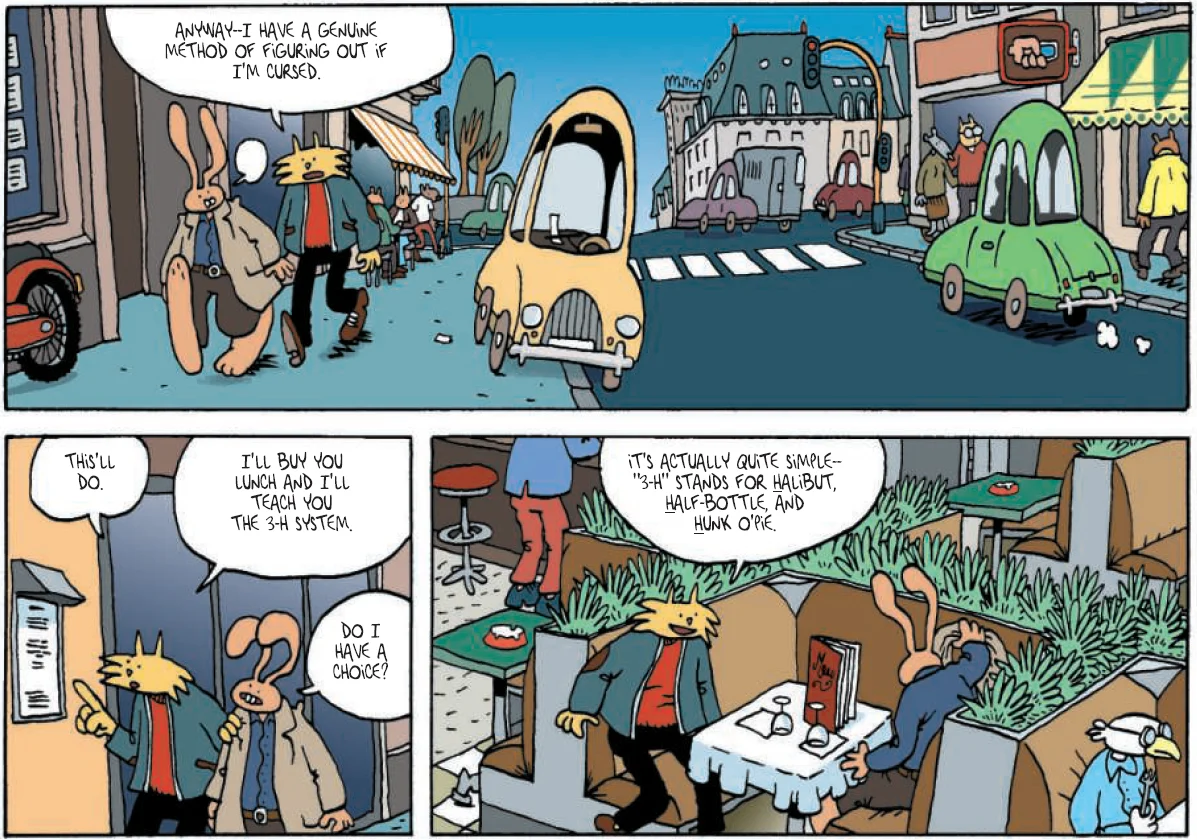
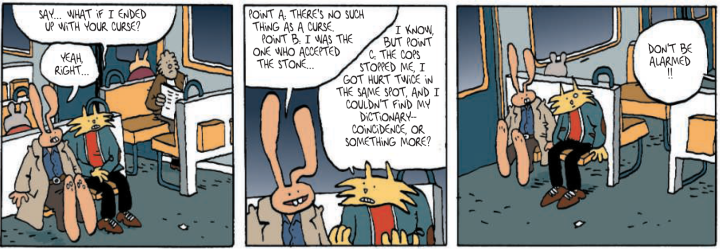
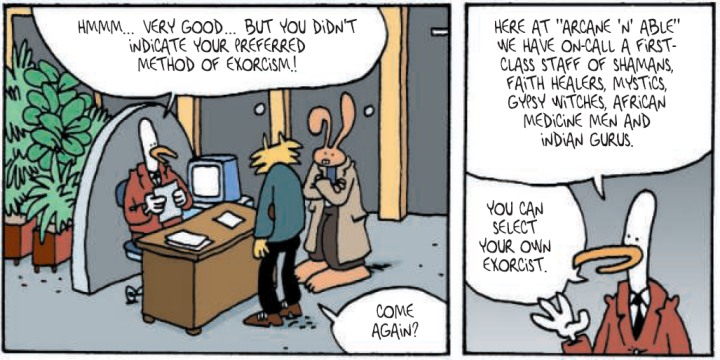
- The Premise: The story follows McConey (a rabbit) and his friend Richie (a cat) as they attempt to assist a suicidal man. The man believes he is cursed by a carved rock from the imaginary Mi’shgo’sh dynasty. McConey, ever the skeptic, accepts the rock and the curse to prove it isn’t real. Predictably, chaos ensues as the characters navigate a series of unfortunate events that blur the line between coincidence and destiny.
Chronology: The Rise and Stall of Trondheim in America
The timeline of The Hoodoodad is a study in the volatile nature of the international comics market:

- 1991–1995: Lewis Trondheim emerges as a powerhouse in France, co-founding the influential publisher L’Association and releasing over two dozen books across multiple genres.
- 1996: Les Pichenettes is released by Dargaud in France to critical and commercial acclaim.
- 1998: Fantagraphics releases the English translation, The Hoodoodad, translated by Kim Thompson. It is the second book in the series to be localized, following Harum Scarum.
- 1999: The book receives a nomination for the Harvey Award for Best American Edition of Foreign Material. Despite the critical nod, sales are dismal. Kim Thompson famously laments in an editorial that Fantagraphics is "losing their shirts" on the series.
- 2000–2010: While Trondheim’s career explodes in Europe—eventually reaching a staggering output of over 150 titles—his presence in the US remains niche. Fantagraphics attempts a pamphlet series titled The Nimrod to showcase his work, but the McConey series never fully crosses the Atlantic again.
- 2011–2012: A brief resurgence occurs with the publication of the autobiographical Approximate Continuum Comics and the first volume of Ralph Azham, but the momentum remains limited.
- 2018: Europe Comics releases a digital version of The Hoodoodad, bringing the work back into the public eye for a new generation of digital readers.
Supporting Data: The Mechanics of a "Holy Shit" Moment
The genius of The Hoodoodad lies in its deceptively simple cartooning and its profound understanding of character dynamics.
The Visual Language
Trondheim’s use of anthropomorphic animals—a cat, a rabbit, a dog—is not merely a stylistic choice but a functional one. As noted by critics, these characters are "immediately recognizable" from any angle and under any emotional distress. This simplicity allows Trondheim to experiment with complex layouts. He frequently employs low-angle street scenes with a "fisheye" effect, compressing buildings and curving horizons to create a sense of urban claustrophobia that mirrors the characters’ mounting anxiety.
The Power of Dialogue
The data of the book’s success is found in its dialogue rather than its sales figures. Bart Beaty, writing for The Comics Journal #201, highlighted that the exchanges between Richie and McConey are among the best Trondheim has ever written. Scenes that should be "throwaways"—ordering food at a restaurant, an interaction with a beggar on the metro, or a game of Scrabble involving "dirty words"—are elevated to minor classics through sharp characterization and impeccable timing.
Prolificacy vs. Penetration
While Trondheim’s output is estimated at over 150 titles, fewer than 15% of these have seen a traditional print release in the United States. This discrepancy highlights a significant "cultural gap" in the reception of French bande dessinée versus American "indie" comics.
Official Responses and Critical Perspectives
The reception of The Hoodoodad is inextricably linked to the philosophy of its translator, Kim Thompson.
The Thompson Philosophy
Kim Thompson was not a literalist. He believed in the "spirit" of the work over the "word." Influenced by Art Spiegelman (who advised Thompson to write as if the author had originally written it in English), Thompson took significant liberties.
- Naming: The original protagonist "Lapinot" (French for "little rabbit") was changed to "McConey." Thompson argued that "Lapinot" would be unpronounceable and feminine-sounding to American ears, whereas "McConey" (using the 12th-century word for rabbit, coney) felt masculine and distinct.
- The The French title Les Pichenettes translates roughly to "Flicks." Thompson felt this was an unsatisfying allusion and instead coined The Hoodoodad—a portmanteau that perfectly captured the whimsical yet ominous nature of the plot.
The Critical Consensus
Bart Beaty, while a fan of the work, initially lamented that Thompson took "a number of liberties." However, the broader critical community has come to view Thompson’s work alongside the greats, such as Anthea Bell (Asterix) and Leslie Lonsdale-Cooper (Tintin). These translators are credited with "improving" the original works by making them feel native to the English language. Thompson himself was eventually recognized with two Harvey awards and five Eisner awards over his career, cementing his status as the premier bridge between European and American comics.
Implications: Why The Hoodoodad Still Matters
The failure of The Hoodoodad to become a commercial hit in 1998 carries several implications for today’s comics market:
- The "Funny Animal" Bias: Despite the success of Maus, American audiences in the late 90s still struggled to associate anthropomorphic characters with sophisticated, adult-oriented comedy. The Hoodoodad fell into a marketing "no-man’s land" between children’s books and underground comix.
- The Importance of Localized Voice: The success of the 2018 digital re-release suggests that Thompson’s translation was ahead of its time. Modern readers, accustomed to the conversational tone of webcomics and contemporary graphic novels, find the dialogue in The Hoodoodad remarkably fresh and "un-dated."
- The Lost Trondheim Library: The commercial stall of the McConey series in the US means that a vast library of Trondheim’s work remains untranslated or out of print. This represents a significant hole in the American understanding of contemporary European art.
- Translation as Co-Creation: The legacy of Kim Thompson, highlighted by his work on The Hoodoodad, reinforces the idea that a translator is a co-creator. A "faithful" translation that is "impossible to read" (as Thompson’s early work on Hermann’s The Survivors was described) is a failure, whereas an "unfaithful" translation that captures the soul of the work is a masterpiece.
Conclusion
The Hoodoodad remains a paradoxical artifact: a commercial failure that is a creative triumph. It serves as a testament to Lewis Trondheim’s visual wit and Kim Thompson’s linguistic genius. For the reader who discovers it today, 28 years after its initial release, the experience is often one of "holy shit" realization—a discovery of a world where fate, bad luck, and everyday conversation collide in a work of pure genius. The "hoodoo" may have affected the sales, but it could not diminish the brilliance of the "doodad" itself.