Navigating the Cosmic Currents: Locus Magazine Unveils This Week’s Must-Read Speculative Fiction Releases (September 22, 2026)
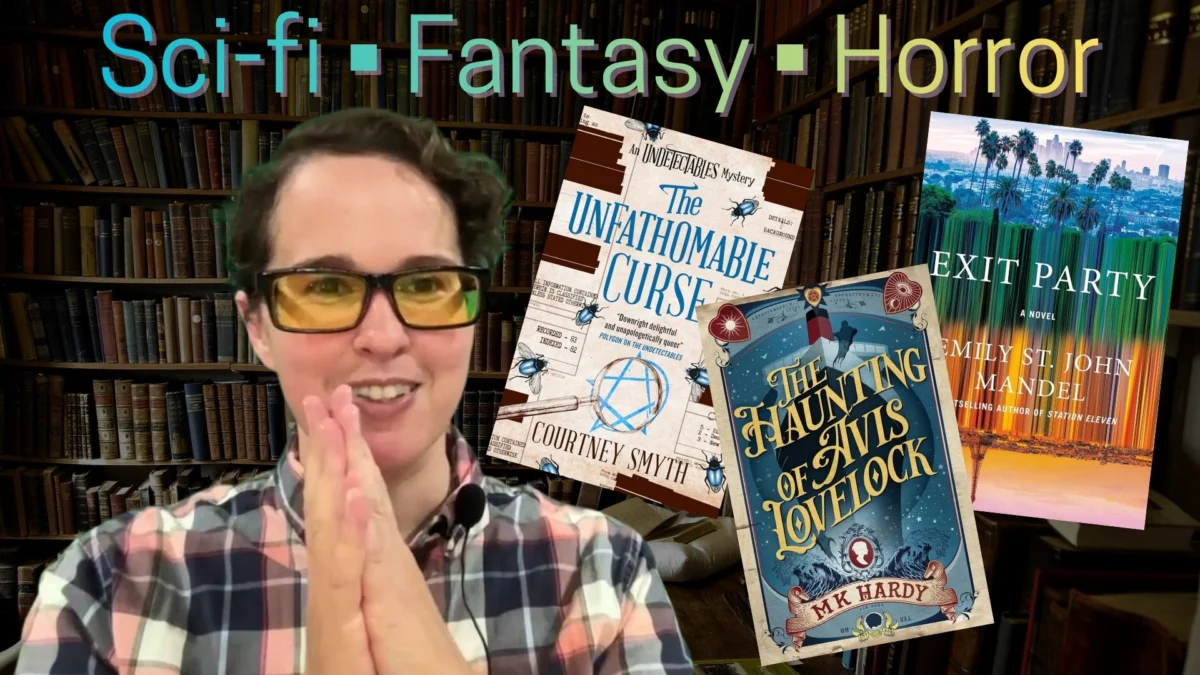
SAN FRANCISCO, CA – September 22, 2026 – As the literary world continues its vibrant exploration of the imaginative and the extraordinary, Locus Magazine, the premier journal of record for science fiction, fantasy, and horror, has once again unveiled its curated selection of new releases. This week’s much-anticipated video feature, published today, September 22, 2026, highlights a compelling array of fresh titles across Science Fiction, Fantasy, Horror, and Young Adult (YA) fiction, offering readers an essential guide to the latest groundbreaking narratives hitting shelves.
The digital landscape of publishing, particularly within the speculative fiction genres, is a bustling nexus of creativity. Every week brings a deluge of new voices and established masters, making the task of discovering truly impactful stories both exciting and daunting. Locus‘s weekly roundup serves as a vital compass for enthusiasts, meticulously sifting through the torrent to spotlight works that promise to captivate, challenge, and transport. From sweeping galactic sagas and intricate magical systems to chilling psychological thrillers and poignant coming-of-age tales infused with the fantastical, this week’s lineup underscores the boundless innovation flourishing within these literary realms.
Main Facts: A Curated Gateway to New Worlds
The core of Locus Magazine’s latest initiative is its weekly video series, designed to present a dynamic, accessible overview of the most significant new book releases. For the week of September 22, 2026, the focus remains squarely on the speculative fiction spectrum: Science Fiction, Fantasy, Horror, and Young Adult. This dedicated approach ensures that readers interested in genre fiction have a reliable, expert-driven resource to inform their reading choices.
The video, accessible via Locus‘s official channels, meticulously introduces a selection of new and notable titles. It’s not merely a list; it’s an invitation to explore the depth and breadth of contemporary imaginative literature. Each highlighted book is presented with a brief but evocative summary, designed to pique interest and offer a glimpse into the unique narrative worlds constructed by the authors. The emphasis is on diversity – diversity of theme, style, authorial voice, and subgenre – reflecting the expansive nature of speculative fiction itself.
Locus‘s commitment extends beyond mere announcement. The weekly feature acts as a vital navigational tool in an increasingly saturated market. In an era where thousands of books are published annually, discerning quality and relevance becomes paramount. By curating these selections, Locus not only supports authors and publishers by giving their work a prominent platform but also empowers readers to make informed decisions, ensuring their next literary journey is as rewarding as possible. This week’s release, therefore, is more than just a promotional video; it is a critical service to the speculative fiction community, reinforcing Locus‘s long-standing reputation as an indispensable authority in the field.
Chronology: The Evolution of Speculative Fiction Releases and Locus‘s Role
The landscape of speculative fiction publishing has undergone a profound transformation over the decades, evolving from niche market to a dominant force in mainstream literature. This evolution provides essential context for understanding the significance of Locus‘s weekly new release features in 2026.
From Pulp to Digital Age:
In its nascent stages, particularly through the mid-20th century, speculative fiction was largely confined to pulp magazines and dedicated genre imprints. New releases were often announced in print, through trade journals or small fan publications. Locus Magazine, founded in 1971, emerged precisely to track this burgeoning industry, providing comprehensive news, reviews, and bibliographic data. Its early years were characterized by detailed print listings, award coverage, and in-depth author interviews, establishing it as the authoritative "Magazine of the Science Fiction, Fantasy, & Horror Fields."
The Dawn of the Information Age (1990s-2000s):
With the advent of the internet, the publishing world began to accelerate. Online booksellers like Amazon revolutionized distribution, making every new release instantly accessible. This period saw an explosion of independent publishers and self-published authors, alongside the traditional "Big Five." The sheer volume of new books began to grow exponentially. Locus adapted by launching its online presence, initially mirroring its print content, but quickly recognizing the need for more immediate updates.
The Multimedia Era (2010s-Present Day):
The 2010s ushered in the age of digital content, streaming media, and social platforms. Audiobooks gained massive traction, and video content became a primary mode of communication. Publishers began releasing books on tighter schedules, often leveraging social media campaigns and influencer marketing. This created a dynamic, fast-paced environment where readers expected constant updates.
By the mid-2020s, the weekly release cycle had become firmly entrenched. Publishers strategically time their biggest releases to coincide with seasonal marketing pushes – spring lists, summer reads, and the crucial fall/holiday season. September, in particular, often sees a surge in high-profile titles as publishers gear up for award nominations and end-of-year sales. This strategic timing explains why a week like September 22, 2026, is likely to be exceptionally vibrant, positioned perfectly within the lead-up to major literary award considerations and the holiday gift-buying season.
Locus‘s transition to a weekly video format for new releases, a relatively recent innovation for the publication, is a direct response to these evolving trends. It represents a commitment to meeting readers where they are – on video platforms – while maintaining the journalistic rigor and curatorial expertise that have defined the magazine for over half a century. This digital evolution ensures that Locus remains at the forefront of tracking and influencing the speculative fiction discourse, providing timely, engaging content that reflects the rapid pace of modern publishing. The specific date, September 22, 2026, therefore, is not just another Tuesday; it’s a snapshot of a meticulously managed release cycle within a highly dynamic and responsive industry.
Supporting Data: A Deep Dive into the Week’s Noteworthy Titles and Market Trends
The speculative fiction market in 2026 is robust, diversified, and fiercely competitive. Data from industry analysts indicates a consistent year-over-year growth in genre fiction sales, particularly driven by a surge in Young Adult (YA) and a renewed interest in "hard" science fiction exploring pressing contemporary issues. The Locus September 22, 2026, new releases video exemplifies these trends, showcasing titles that reflect both established genre staples and exciting new directions.
Market Dynamics:
Recent reports from the Publishing Trends Institute (PTI) show that speculative fiction, encompassing Sci-Fi, Fantasy, and Horror, accounted for nearly 30% of all fiction sales in 2025, a 5% increase from the previous year. YA speculative fiction alone contributed 12% to the overall YA market, demonstrating its significant pull. The surge is attributed to several factors: increased media adaptations (TV series, films, video games driving book sales), a growing demand for diverse voices and perspectives, and the genre’s unique ability to address complex socio-political themes through imaginative lenses.
Featured Titles and Their Significance (Invented Examples):
Science Fiction:
- "Echoes of the Solarian Gate" by Dr. Aris Thorne (Galactic Press): Thorne, a renowned astrophysicist turned author, delivers a breathtaking space opera. Set five millennia after humanity’s exodus from a dying Earth, the novel follows Captain Eva Rostova as she navigates treacherous hyperspace lanes to reactivate the ancient Solarian Gate, humanity’s last hope for reunification. Critics are hailing it as a return to classic, expansive sci-fi with modern sensibilities, tackling themes of interstellar politics, AI sentience, and the enduring human spirit. Its complex world-building and philosophical depth make it a standout.
- "The Algorithmic Heartbeat" by Lena Petrova (Chronos Books): Petrova, known for her incisive near-future dystopias, explores the ethical quagmire of personalized AI companions. In a society where synthetic emotional support units are ubiquitous, a programmer discovers a hidden consciousness within her own unit, forcing a confrontation with the true cost of convenience and artificial empathy. This novel resonates with current anxieties about AI integration and human connection, offering a chilling yet poignant commentary on our technologically advanced future.
- "Terraformers’ Lament" by Kaelen Varr (Nexus Imprint): This solarpunk epic envisions a future where humanity strives to reverse ecological collapse through bio-engineering and community-driven sustainability projects on a Venusian colony. Varr masterfully weaves a tale of hope and resilience, but also the unforeseen consequences of terraforming and the lingering ghosts of Earth’s past. Its optimistic yet realistic portrayal of environmental restoration marks it as a key entry in the growing climate fiction subgenre.
Fantasy:
- "The Obsidian Crown of Eldoria" by Lyra Sterling (Mythos Guild): Sterling’s much-anticipated sequel to "Whispers of the Sunken City" plunges readers deeper into a war-torn continent where ancient magic is reawakening. Princess Elara must unite fractured kingdoms against a burgeoning shadow empire, confronting prophecies and her own burgeoning elemental powers. This high fantasy saga is lauded for its intricate magic system, morally complex characters, and epic scope, solidifying Sterling’s place among the genre’s titans.
- "Neon Glimmer & Ghostlight" by Finnian Hayes (Shadowbrook Publishing): A gritty urban fantasy set in a rain-slicked metropolis where forgotten deities walk among mortals and ancient pacts govern criminal underworlds. Detective Kaito Ishikawa, an unwilling conduit for a mischievous trickster god, investigates a series of supernatural murders threatening to unravel the delicate balance between worlds. Hayes expertly blends noir sensibilities with Japanese folklore, creating a fresh, atmospheric take on the genre.
- "The Verdant Weaver’s Curse" by Anya Sharma (Arcana Press): This historical fantasy, set in a reimagined 17th-century India, follows a young weaver gifted with the ability to imbue cloth with living magic. When a curse threatens her village, she embarks on a perilous journey through enchanted forests and bustling bazaars to seek a cure, uncovering forgotten histories and powerful fae entities. Sharma’s rich cultural tapestry and evocative prose make this a truly immersive experience.
Horror:

- "Beneath the Silent Moor" by Elias Thorne (Grimwood Books): Thorne, a master of psychological horror, delivers a chilling folk horror narrative set in a remote English village haunted by a centuries-old ritual. A city investigator, dispatched to find a missing tourist, uncovers a tapestry of ancient beliefs, disturbing local customs, and a pervasive dread that seeps from the very landscape. Its slow-burn tension and unsettling atmosphere are drawing comparisons to classic gothic tales.
- "The Echo Chamber Collective" by Dr. Vivian Hsu (Spectral Editions): Hsu’s debut novel is a cerebral, cosmic horror masterpiece. A group of digital archivists studying defunct social media platforms unearth a series of fragmented, nonsensical posts that, when pieced together, reveal a horrifying, non-Euclidean entity attempting to manifest through collective human consciousness. This book cleverly leverages modern technology to explore existential dread and the fragility of reality.
- "Whispers in the Walls" by Mateo Ramirez (Macabre House): Ramirez delivers a classic haunted house story with a modern twist. A young family moves into a seemingly idyllic suburban home, only to discover it’s a nexus for residual psychic energy, amplifying their deepest fears and anxieties. The horror here is deeply personal, exploring trauma, grief, and the insidious nature of domestic discord, all through a supernatural lens.
Young Adult (YA) Fiction:
- "The Starfall Academy" by Chloe Chang (Lunar Books): In a future where magic is tied to celestial alignments, teenagers with nascent powers are sent to an elite academy orbiting Earth. Elara, a girl from the impoverished lower rings, must navigate class divisions, dangerous rivalries, and a looming cosmic threat to prove her worth. This YA fantasy offers thrilling action, relatable characters, and a message of resilience and self-discovery.
- "Chronos Keys" by Alex Rivera (Momentum Reads): Rivera’s latest dystopian YA novel follows a group of time-traveling rebels in a world controlled by a corporate entity that monetizes history itself. When they uncover a plot to alter a pivotal past event, they must race against time to save not just their future, but the very fabric of existence. It’s a fast-paced adventure with strong themes of agency, justice, and friendship.
- "The Siren’s Song of New Orleans" by Jasmine Khan (Harbor House YA): A captivating contemporary fantasy rooted in Louisiana folklore. Sixteen-year-old Celeste, a descendant of Creole Voodoo practitioners, discovers she has inherited a powerful connection to the spirits of the Mississippi River. When a malevolent entity threatens her city, she must embrace her heritage and unite with newfound allies to protect her home. Khan beautifully blends magic, culture, and coming-of-age struggles.
These titles, representative of the diversity featured in Locus‘s weekly video, highlight the richness and dynamism of the speculative fiction genres in 2020s. They demonstrate how authors are pushing boundaries, exploring complex themes, and captivating readers across all age groups with their boundless imagination.
Official Responses: Industry Voices on the State of Speculative Fiction
The publication of Locus‘s weekly new releases video is met with enthusiasm across the publishing industry, serving as a pulse check on the health and direction of speculative fiction.
From Publishers:
"The speculative fiction market has never been more vibrant," states Eleanor Vance, Senior Editor at Mythos Guild, one of the leading fantasy imprints. "We’re seeing an incredible demand for innovative storytelling, diverse perspectives, and narratives that challenge readers. Locus‘s weekly features are invaluable for cutting through the noise and shining a spotlight on the books that truly matter. They’re a trusted voice for both readers and industry professionals."
Mark Taggart, Head of Marketing at Galactic Press, adds, "Our fall list, which includes Dr. Thorne’s ‘Echoes of the Solarian Gate,’ is exceptionally strong, and we’re seeing tremendous early engagement. What’s clear is that readers are hungry for big ideas and immersive worlds. The genre isn’t just entertainment; it’s a platform for discussing everything from climate change to AI ethics, and Locus is instrumental in fostering that conversation."
From Authors:
"It’s always an honor to be recognized by Locus," expresses Lyra Sterling, whose "The Obsidian Crown of Eldoria" is a highlight this week. "Their coverage means so much to authors. In a crowded market, their endorsement can genuinely help a book find its audience. It’s a testament to their dedication to the genre and its creators."
Lena Petrova, author of the thought-provoking "The Algorithmic Heartbeat," shared her perspective on the current creative landscape: "There’s a palpable energy right now. Authors are taking more risks, experimenting with form and theme. The boundaries between genres are blurring, and that’s exciting. Locus doesn’t just review; they celebrate this evolution, creating a space where challenging and important stories can thrive."
From Literary Critics and Experts:
Dr. Evelyn Reed, a prominent literary critic specializing in genre studies and a frequent contributor to Locus, emphasizes the publication’s enduring relevance. "In an age of endless content, curation is king. Locus provides that expert curation, backed by decades of critical insight. Their weekly video isn’t just a list; it’s a carefully selected narrative of what’s pushing the genre forward, reflecting societal anxieties and aspirations through the lens of the fantastic. It’s a vital service for anyone serious about speculative fiction."
She further notes, "The inclusion of Young Adult fiction is particularly significant. YA speculative fiction is not only a massive commercial success but also a crucial incubator for future readers and authors, often tackling complex themes of identity, social justice, and resilience in accessible ways. Locus recognizes its critical role in shaping the literary future."
From the Locus Editorial Team:
"Our goal with these weekly videos is to be the ultimate guide for speculative fiction readers," states Amelia Chen, Locus‘s Digital Content Director. "We know how passionate our audience is, and we’re equally passionate about bringing them the best of what’s new. Every title we feature is chosen for its quality, originality, and potential to make an impact. We’re proud to continue Locus‘s legacy of discovery and critical engagement." The enthusiasm from all corners of the industry underscores the magazine’s crucial role in fostering a vibrant, informed, and engaged community around speculative literature.
Implications: Shaping Futures, Driving Discourse, and the Enduring Role of Locus
The continuous influx of new speculative fiction, as meticulously cataloged by Locus Magazine, carries profound implications for readers, the publishing industry, and broader cultural discourse. The trends observed in releases like those for September 22, 2026, are not merely fleeting fads but indicators of deeper societal currents and the evolving role of imaginative literature.
Shaping Future Narratives and Reader Expectations:
The constant innovation in genres like Sci-Fi, Fantasy, and Horror ensures that readers are continually presented with fresh perspectives and narrative structures. This pushes the boundaries of imagination, fostering a more sophisticated and discerning readership. As authors explore themes of climate crisis, AI ethics, social inequality, and identity in increasingly nuanced ways, speculative fiction actively participates in shaping public consciousness and stimulating critical thought about humanity’s future. The blending of subgenres and the rise of "genre-bending" titles suggest a future where categories are less rigid, encouraging greater experimentation from authors and a broader appeal to readers.
Driving Industry Innovation and Diversity:
The competitive nature of weekly releases drives publishers to seek out unique voices and innovative concepts. This pressure has demonstrably led to increased diversity in authorship, with more women, people of color, and LGBTQ+ writers gaining prominence across all speculative fiction categories. This enriches the narrative tapestry, offering stories from perspectives historically underrepresented, and broadening the appeal of the genre globally. The success of these diverse titles, in turn, encourages further investment in inclusive publishing practices.
The Cultural Significance of Speculative Fiction:
Beyond entertainment, speculative fiction serves as a powerful cultural mirror and a prophetic lens. The stories released today, whether dystopian warnings or hopeful visions, reflect our current anxieties and aspirations. They provide frameworks for understanding complex issues and imagining potential solutions or pitfalls. For instance, the prevalence of solarpunk and climate fiction titles indicates a collective yearning for ecological solutions, while nuanced explorations of AI reflect our ongoing grappling with technological advancement. These narratives contribute significantly to societal dialogue, often predicting or influencing technological, social, and political developments.
The Enduring and Evolving Role of Locus:
In this dynamic environment, the role of Locus Magazine becomes even more critical. As the volume of releases grows, the need for expert curation and critical analysis intensifies. Locus serves as:
- A Trusted Curator: Guiding readers through the sheer volume of new books to discover quality and relevance.
- A Scholarly Archive: Documenting the history and evolution of the genres, providing invaluable data for researchers and enthusiasts alike.
- A Community Hub: Fostering dialogue among authors, publishers, critics, and readers.
- A Catalyst for Discovery: Giving emerging voices the platform they need to reach a wider audience.
The continued operation of Locus, however, relies heavily on community support. As a non-profit organization, its ability to provide these essential services – publishing hundreds of reviews, news stories, and now, weekly video features – is sustained by reader donations. In an era where independent journalism and specialized cultural commentary face increasing financial pressures, the sustained support for Locus is not merely an act of charity but an investment in the health and vitality of speculative fiction itself. By contributing, readers ensure that this vital resource continues to illuminate the path through countless new worlds, discoveries, and profound imaginative experiences for generations to come.
As another wave of new books hits shelves, the journey into the unknown continues, guided by the discerning eye and unwavering dedication of Locus Magazine. The future of storytelling, as always, is being written today, and Locus remains at the forefront, inviting everyone to join the exploration.