The Digital Canvas Reimagined: Jacob Holster and the Rise of Painterly AI Aesthetics
In an era where generative artificial intelligence is often synonymous with clinical precision, hyper-realistic renders, and a certain "uncanny valley" gloss, a new movement is emerging that prioritizes texture, soul, and the human touch. At the forefront of this movement is Jacob Holster, known to the digital art community as @bandyquantguy. A scholar, educator, and filmmaker, Holster is redefining the boundaries of generative media by infusing it with the tactile warmth of traditional fine art. His work represents a significant departure from the trend of "perfection" in AI, opting instead for a "painterly" aesthetic that bridges the gap between 19th-century Impressionism and 21st-century neural networks.
Main Facts: The Intersection of Pedagogy and Pixels
Jacob Holster occupies a unique position in the contemporary art world. While many AI artists come from backgrounds in graphic design or computer science, Holster’s roots are firmly planted in academia and music. Currently serving as an Assistant Teaching Professor of Music Education at Penn State University, his primary research focuses on the convergence of artificial intelligence, pedagogy, and creative practice.
This academic foundation is not merely a side note; it is the engine that drives his artistic output. Holster does not view AI as a shortcut to an end product, but as a pedagogical tool—a medium through which to explore how humans learn, create, and perceive beauty. His Instagram presence, under the handle @bandyquantguy, has become a gallery for what he terms "Paint World," a series of visual experiments that challenge the standard output of generative models.

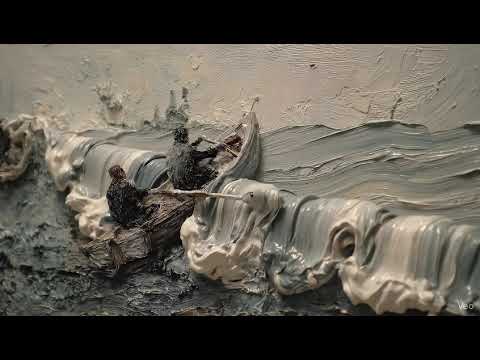
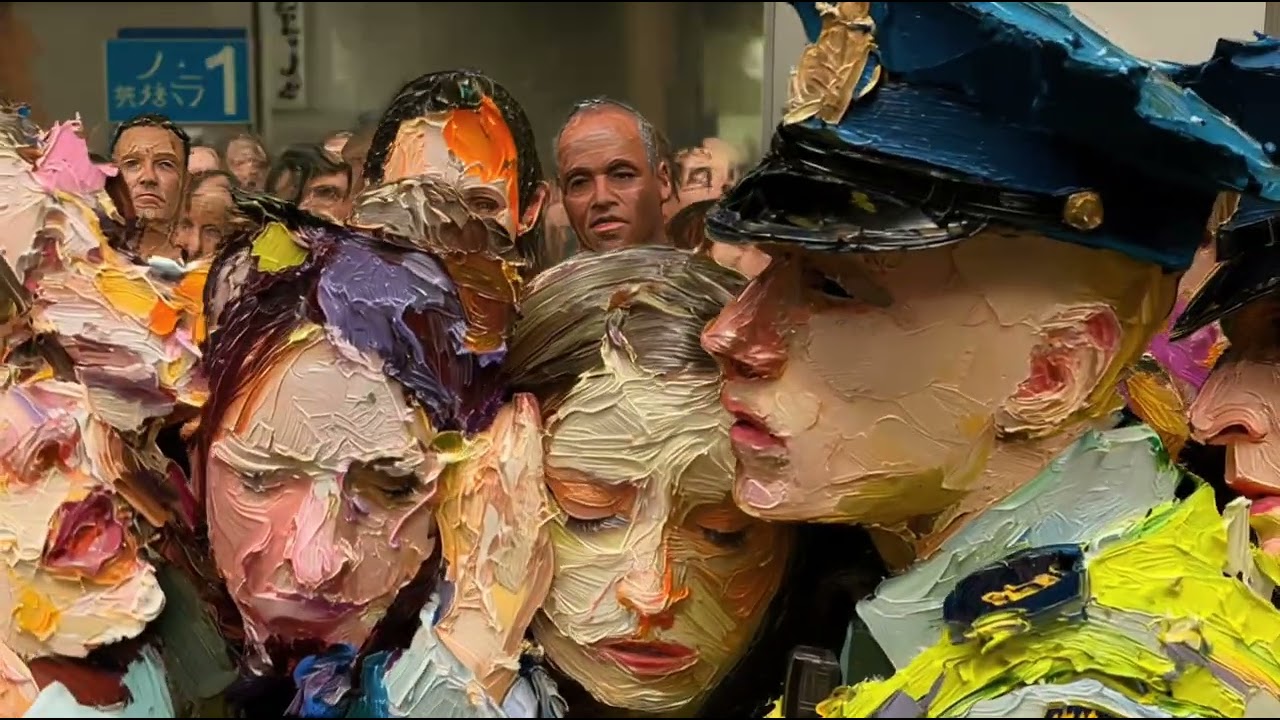
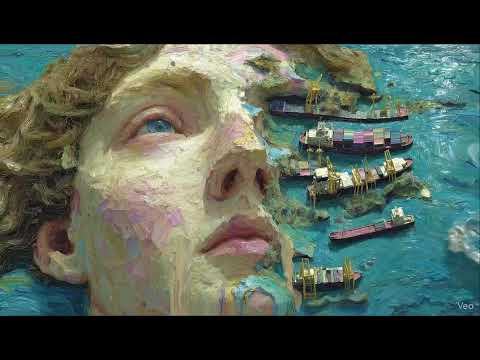
The hallmark of Holster’s style is its "painterly" quality. Unlike the sharp, often sterile images produced by standard AI prompts, Holster’s films—such as Art Is Human Terrain and Recipe for Consciousness—feature thick, visible brushstrokes, rich color palettes, and a sense of movement that mimics the flow of oil on canvas. By prioritizing texture over resolution, Holster creates a sense of nostalgia and human presence within a medium that is frequently criticized for being "soulless."
Chronology: The Evolution of "Paint World"
The journey of @bandyquantguy is one of iterative discovery, marked by the progression of his "Paint World" series. To understand the depth of his current work, one must look at the timeline of his creative and academic evolution.
The Academic Genesis
Before the public emergence of his AI films, Holster’s work was centered on the mechanics of music education. At Penn State, he began investigating how machine learning could assist in music pedagogy. This early exposure to the "logic" of AI provided him with a unique perspective on the technology: he saw it not as a magic wand, but as a complex instrument that required a "performer’s" touch to master.
The Emergence of the "Paint World" Series
As generative video tools began to mature, Holster started experimenting with the translation of musical concepts—rhythm, harmony, and texture—into visual media. The "Paint World" series began as a sequence of vignettes.
- Early Milestones (Paint World 1-15): These initial works were explorations of movement. Holster was testing the limits of how AI could handle "low-fidelity" aesthetics, moving away from the high-definition realism that dominated early AI art forums.
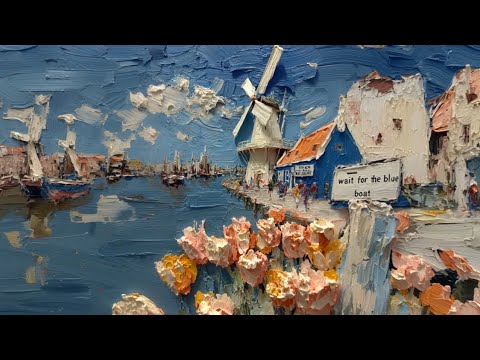
- The Breakthrough (Paint World 18): In the piece wait for the blue boat, Holster achieved a synthesis of narrative and texture. The work demonstrated that AI could evoke a sense of longing and atmosphere through soft edges and muted tones, a far cry from the vibrant, saturated "AI look" of the time.
- The Maturation (Paint World 28-38): By the time he released Le Voyage [Paint World 28] and Recipe for Consciousness [Paint World 38], Holster had refined a workflow that allowed for consistent "brushwork" across frames. This period marked his transition from a digital artist to an AI filmmaker.
The Contemporary Era: Art Is Human Terrain
His recent work, Art Is Human Terrain [Paint World 33], serves as a manifesto for his current philosophy. It is a work that explicitly links the digital landscape to the "human terrain" of emotion and experience. It represents the pinnacle of his effort to prove that technology can be employed as a medium for profound humanistic inquiry.
Supporting Data: Deconstructing the Aesthetic
To understand why Holster’s work resonates, one must look at the technical and philosophical data points that differentiate his output from the broader AI landscape.
1. The Texture Variable
Data from digital art trends indicates that "texture-heavy" AI art has a higher engagement rate among traditional art enthusiasts compared to hyper-realistic renders. Holster leverages this by using specific "style-tuning" techniques. While the exact technical details of his stack remain proprietary to his creative process, his work shows evidence of sophisticated "denoising" manipulation, where the AI is encouraged to leave "artifacts" that resemble physical paint rather than digital noise.
2. The Sound-Image Duality
As a Professor of Music Education, Holster’s films are not silent. The auditory component of his work is as curated as the visual. Research into "cross-modal perception" suggests that viewers perceive visual textures as more "real" or "tangible" when accompanied by specific acoustic frequencies. Holster uses his background in music to score his films in a way that reinforces the "painterly" feel, creating a holistic sensory experience.
3. Narrative Depth vs. Prompt Engineering
A common critique of AI art is the "shallow prompt" syndrome, where an image is generated based on a simple string of keywords. Holster’s work is supported by a deeper conceptual framework. In Recipe for Consciousness, the visuals are tied to a philosophical exploration of what it means to be aware. This "conceptual data" adds a layer of value that distinguishes his work in a saturated market.
Official Responses: Academia and the Creative Industry
The reception of Holster’s work has been significant within both the academic and artistic communities, sparking a dialogue about the role of the "Professor-Artist" in the age of automation.
Academic Recognition
At Penn State University, Holster’s work is seen as a vital case study in how AI can be integrated into the arts without displacing the artist. Faculty members and researchers in the field of music education have noted that Holster’s approach provides a roadmap for students. Instead of fearing AI as a replacement for skill, Holster’s pedagogy suggests that AI requires a new kind of skill: the ability to curate, direct, and infuse machine output with human intentionality.
The Digital Art Community
On platforms like Instagram, the response to @bandyquantguy has been one of relief. Commentators often describe his work as "breathable" or "organic." In a landscape where many AI creators are racing toward the highest possible resolution, Holster’s decision to move toward the "blurred" and "textured" has earned him a following among those who value the "Wabi-sabi" (the beauty of imperfection) in art.
Industry Implications
Film critics and digital curators have pointed to Art Is Human Terrain as a precursor to a new genre of "Analog-AI" filmmaking. The industry is beginning to recognize that the future of AI in cinema may not lie in replacing CGI departments, but in creating entirely new visual languages that were previously impossible to achieve with traditional animation or live action.
Implications: The Future of Human-Centric AI
The work of Jacob Holster carries profound implications for the future of creative labor and the definition of "art" in the 21st century.
1. The Shift from "Prompting" to "Directing"
Holster’s success suggests that the next generation of successful AI artists will not be those who are best at typing prompts, but those who possess a deep understanding of traditional art history and theory. His ability to evoke the feeling of an oil painting comes from an understanding of light, shadow, and composition that predates the computer. This implies that traditional art education is more relevant than ever in the age of AI.

2. Democratization of High-Concept Filmmaking
Holster’s "Paint World" series demonstrates that a single individual, equipped with academic knowledge and AI tools, can produce works of significant narrative and visual complexity. This levels the playing field, allowing independent creators to compete with large studios in terms of "visual spectacle," provided they have a unique artistic voice.
3. The Humanistic Shield
Perhaps the most significant implication of Holster’s work is the idea of "technology as a humanistic medium." By using AI to explore "human terrain," Holster is effectively reclaiming the technology from the purely commercial and technical spheres. He proves that the machine can be used to tell stories about the soul, about consciousness, and about the very things that make us human.
Conclusion: The Enduring Hand of the Artist
Jacob Holster (@bandyquantguy) stands as a testament to the idea that the "ghost in the machine" is actually the artist themselves. Through his work at Penn State and his evocative "Paint World" films, he has shown that the future of AI art is not a departure from the past, but a continuation of the long human tradition of using tools to mirror the complexity of the internal world. In the textured brushstrokes of an AI-generated boat or the hazy light of a digital landscape, we find not just a calculation, but a reflection of a human sensibility—proving that even in a world of algorithms, art remains, at its core, human terrain.