The Infinity Vision Gamble: Inside Disney’s Strategic Move to Redefine the Premium Cinema Experience
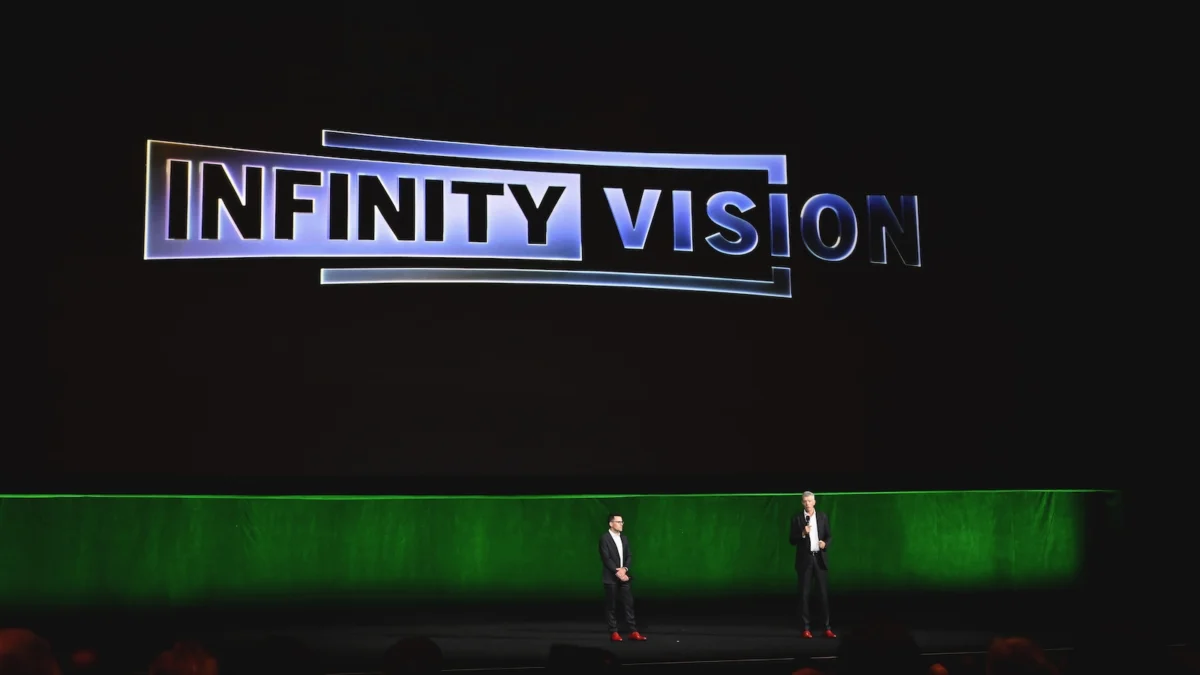
The domestic box office recently witnessed a statistical anomaly that has sent ripples through the film industry. Seven years after its initial record-breaking debut, Avengers: Endgame returned to the top of the charts. Re-released as Avengers: Endgame: Encore, the Marvel Cinematic Universe (MCU) cornerstone grossed a staggering $26 million over its opening weekend, securing the No. 1 spot in America. However, for the executives at the Walt Disney Studios, the headline figure was merely a secondary victory. The data point they were truly scrutinizing was $13.5 million—the amount generated specifically from "Infinity Vision" screens.
This figure represents more than just a successful re-release; it serves as a proof-of-concept for Disney’s latest and perhaps most ambitious theatrical branding experiment. Infinity Vision is Disney’s proprietary certification for theater screens, a move born of necessity and tactical maneuvering in an increasingly crowded marketplace for premium cinematic experiences. As the industry looks toward the December release of Avengers: Doomsday, the success of the Endgame re-release suggests that Disney may have found a way to maintain its "event-movie" status even when the industry’s gold standard—IMAX—is unavailable.
Main Facts: Defining the Infinity Vision Standard
To understand the significance of the recent box office numbers, one must first understand what Infinity Vision is—and, perhaps more importantly, what it is not.
Infinity Vision is not a technical format in the vein of IMAX, Dolby Cinema, or ScreenX. It does not require proprietary cameras, specific aspect ratios, or specialized projection hardware owned by Disney. Instead, it is a quality-control "seal of approval" bestowed by Disney upon existing theater screens that meet its internal audio and visual standards. To be certified as an Infinity Vision screen, a theater must demonstrate a high level of brightness, color accuracy, and sound configuration (typically requiring at least Dolby 7.1 surround sound or higher).
The branding serves as a psychological cue for the consumer. In a theatrical landscape where audiences are increasingly discerning about where they spend their money, the Infinity Vision logo signifies that a specific auditorium offers a "premium" experience, regardless of whether it is a designated Premium Large Format (PLF) screen.
Crucially, Disney does not mandate a surcharge for Infinity Vision. While exhibitors may choose to charge more if the screen is already part of their own PLF branding (such as Cinemark’s XD or Regal’s RPX), the Infinity Vision designation itself is a marketing tool designed to steer "event" audiences toward the best available screens in a multiplex.
Chronology: From the Arrakis Conflict to the "Encore" Experiment
The genesis of Infinity Vision can be traced back to a scheduling conflict that shook the foundations of theatrical distribution. When Disney slated Avengers: Doomsday for a December 18 release, they assumed the film would command every IMAX screen in the world. However, they were met with a rare obstacle: Denis Villeneuve and Warner Bros.
Dune: Part Three is scheduled to open on the exact same day. Because Villeneuve’s epic was shot entirely with IMAX-certified digital cameras and has a long-standing "filmed for IMAX" pedigree, IMAX Corp. granted the desert epic exclusive rights to its screens for the holiday window. For the first time in the modern era of the MCU, a flagship Avengers movie found itself locked out of the world’s most recognizable premium format.

Faced with the prospect of Avengers: Doomsday being perceived as "lesser" than its predecessors, Disney’s distribution team, led by Andrew Cripps, conceived Infinity Vision. The timeline of the rollout was calculated to minimize risk:
- Early 2026: Disney recognizes the IMAX lockout and begins internal development of a "Disney-certified" premium brand.
- CinemaCon 2026: Disney quietly introduces the concept of Infinity Vision to exhibitors, offering it as a way to bolster "event" status for non-IMAX screens.
- Late Summer 2026: Disney announces the Avengers: Endgame: Encore re-release, specifically positioning it as the debut vehicle for Infinity Vision.
- September 2026: Endgame: Encore launches on 3,000 screens, with 1,300 certified as Infinity Vision, providing the first hard data on consumer behavior regarding the brand.
Supporting Data: Analyzing the "Endgame" Stress Test
The financial results of the Endgame: Encore weekend provide a compelling argument for the efficacy of Disney’s branding strategy. The $26 million total was impressive for a re-release, but the breakdown of the Infinity Vision performance reveals a significant trend in consumer preference.
Out of the 3,000 screens playing the film, 1,300 were certified Infinity Vision—approximately 43% of the total screen count. Yet, these screens accounted for $13.5 million, or 52%, of the total weekend gross. This indicates a "punching above its weight" class for the Infinity Vision brand. Even without a mandatory price hike, the screens saw higher occupancy rates, suggesting that when presented with a choice on ticketing apps like Fandango or Atom Tickets, audiences actively sought out the Infinity Vision logo.
Furthermore, the data for the upcoming Avengers: Doomsday is even more aggressive. Of the $50 million already generated in pre-sales for the December blockbuster, a staggering 73% of those tickets have been sold for Infinity Vision screens.
Disney’s strategy of "windowing" the pre-sales has played a major role in these numbers. By making Infinity Vision tickets available several days before standard tickets, Disney effectively funneled the most enthusiastic "Superfans"—those most likely to purchase tickets months in advance—into these premium-certified auditoriums. This not only secures high-margin revenue early but also ensures that the first wave of word-of-mouth comes from audiences who saw the film in the best possible technical environment.
Official Responses: Disney’s Vision for the Future
In an exclusive discussion with IndieWire, Andrew Cripps, Disney’s head of theatrical distribution, emphasized that Infinity Vision is a long-term play rather than a one-off solution for the Doomsday crisis.
"I think we’re all going to learn more about this," Cripps stated. "This is the first time out for Infinity Vision. We have marketed it, and we’ve had our exhibitor partners very engaged with this. If you go on the ticketing websites, there’s Infinity Vision banners on them. We’ve set up an Infinity Vision website with frequently asked questions so people can understand."
Cripps acknowledged the challenges of launching a new brand in a crowded market, noting that "it takes a while to launch a brand and a new concept." However, he expressed optimism that the "Encore" experiment proved that audiences are hungry for guidance on screen quality.

The response from exhibitors has been equally telling. According to Cripps, at least two major theater circuits are currently in the process of upgrading their hardware specifically to meet Infinity Vision standards. This includes a significant push by Cinemark in Latin America to upgrade several dozen auditoriums to Dolby 7.1 audio to ensure they can carry the Infinity Vision badge for the Doomsday release. This represents a shift in power dynamics: rather than theaters demanding content, the studio is using its content to demand higher technical standards from the theaters.
"We want those first audiences to see it in the best possible environment," Cripps added. "The fact that they’re snapping up the biggest and best screens is a very positive thing."
Implications: A New Era of Studio-Driven Exhibition?
The success of Infinity Vision carries profound implications for the future of the moviegoing experience and the relationship between studios and theater owners.
1. The Decentralization of "Premium"
For decades, IMAX has held a near-monopoly on the "premium" label. By creating Infinity Vision, Disney is essentially "democratizing" the premium experience—or at least decoupling it from a single third-party provider. If Infinity Vision becomes a recognized brand, Disney gains immense leverage. They can certify their own "premium" experience on any screen that meets their specs, reducing their reliance on IMAX’s limited footprint and high revenue-share demands.
2. Studio-Specific Quality Control
Infinity Vision could set a precedent where other major studios—Universal, Warner Bros., or Paramount—launch their own certification programs. While this could lead to "logo fatigue" for consumers, it also forces exhibitors to maintain higher technical standards across all auditoriums, not just the flagship PLF rooms. This "rising tide" could improve the baseline moviegoing experience globally.
3. The Psychology of the "Event" Movie
Disney has recognized that in the streaming age, a movie must be an "event" to justify the cost of a theater ticket. By branding the screen itself, Disney is extending the "event" from the content of the film to the environment in which it is consumed. The 52% revenue share for Endgame: Encore suggests that the "Infinity Vision" tag acts as a quality assurance marker that reduces "buyer’s remorse" for the modern consumer.
4. The Future of the Disney-IMAX Relationship
Despite the birth of Infinity Vision, Disney insists the move is not "anti-IMAX." Several 2027 titles are already confirmed for IMAX releases. However, Infinity Vision provides Disney with a "Plan B." In any future scenario where a competitor outbids them for IMAX space, Disney now has a proven infrastructure to create their own "premium" tier on the fly.
As Avengers: Doomsday approaches its December debut, the industry will be watching closely. If the 73% pre-sale trend holds, Infinity Vision will no longer be seen as a temporary fix for a scheduling conflict—it will be recognized as a formidable new pillar in Disney’s global distribution empire. The message to the industry is clear: Disney no longer just wants to provide the movie; they want to define the very light and sound through which you experience it.