The Void That Binds: An In-Depth Analysis of ‘Shil’ and the Evolution of Minimalist VR Horror
In the rapidly evolving landscape of virtual reality (VR) gaming, there is a persistent trend toward hyper-realism. Developers often compete to produce the highest polygon counts, the most intricate textures, and the most lifelike lighting effects to achieve immersion. However, every so often, a title emerges that rejects the maximalist philosophy, proving that the most profound psychological impact often comes from what is left out rather than what is put in.
Shil, the latest offering from OSM Games, is a psychological horror puzzler that champions this "less is more" approach. Released on October 8, 2026, for the Meta Quest platform (with a PC VR version on the horizon), Shil has quickly distinguished itself as a masterclass in atmospheric tension. By stripping the sensory experience down to a stark, two-tone aesthetic, it forces the player’s own imagination to become the primary engine of terror.
Main Facts: The Core Components of Shil
Before diving into the psychological nuances of the game, it is essential to establish the foundational data points that define the Shil experience.
| Feature | Details |
|---|---|
| Title | Shil |
| Developer | OSM Games |
| Primary Genre | Psychological Horror / Puzzle |
| Platform(s) | Meta Quest (Quest 2, 3, Pro); PC VR (Upcoming) |
| Release Date | October 8, 2026 |
| Price Point | $14.99 USD |
| Visual Style | Minimalist Two-Tone (High Contrast) |
| Endings | Seven unique narrative conclusions |
| Average Run Time | ~60 minutes per successful run |
At its core, Shil is an exploration of a "shattered mind." Players find themselves trapped within an abstract void, guided by an Artificial Intelligence whose motives remain perpetually shrouded in ambiguity. The game’s primary loop involves navigating a series of increasingly complex rooms, reclaiming lost memories, and surviving environmental hazards that challenge both the player’s reflexes and their spatial reasoning.
Chronology of the Experience: From Silence to Subversion
The progression of Shil is designed to mimic the stages of psychological disorientation. The experience does not begin with a cinematic explosion or a frantic chase; instead, it begins with an oppressive, all-encompassing silence.
The Initial Descent
In the opening stages, players are introduced to the basic mechanics of movement and interaction. The world is a literal void—a vast expanse of "nothingness" where the only visible structures are the ones the player interacts with. The AI guide provides the initial narrative hook: you are here to piece together a broken psyche. The early puzzles are deceptive in their simplicity, often requiring the player to bridge gaps or move pillars.

The Escalation of Complexity
As the player moves deeper into the psyche, the game introduces its signature "two-tone" logic. This isn’t just an artistic choice; it is a fundamental gameplay mechanic. Objects, enemies, and pathways are rendered in only two colors (often black and a high-contrast secondary color like yellow or white).
By the mid-game, the "comfort" of the void is replaced by "dread of the unseen." The introduction of kinetic hazards—such as the massive pistols that fire one-shot-kill projectiles—marks a shift in the chronological pacing. The player is no longer just a visitor; they are a target.
The Branching Climax
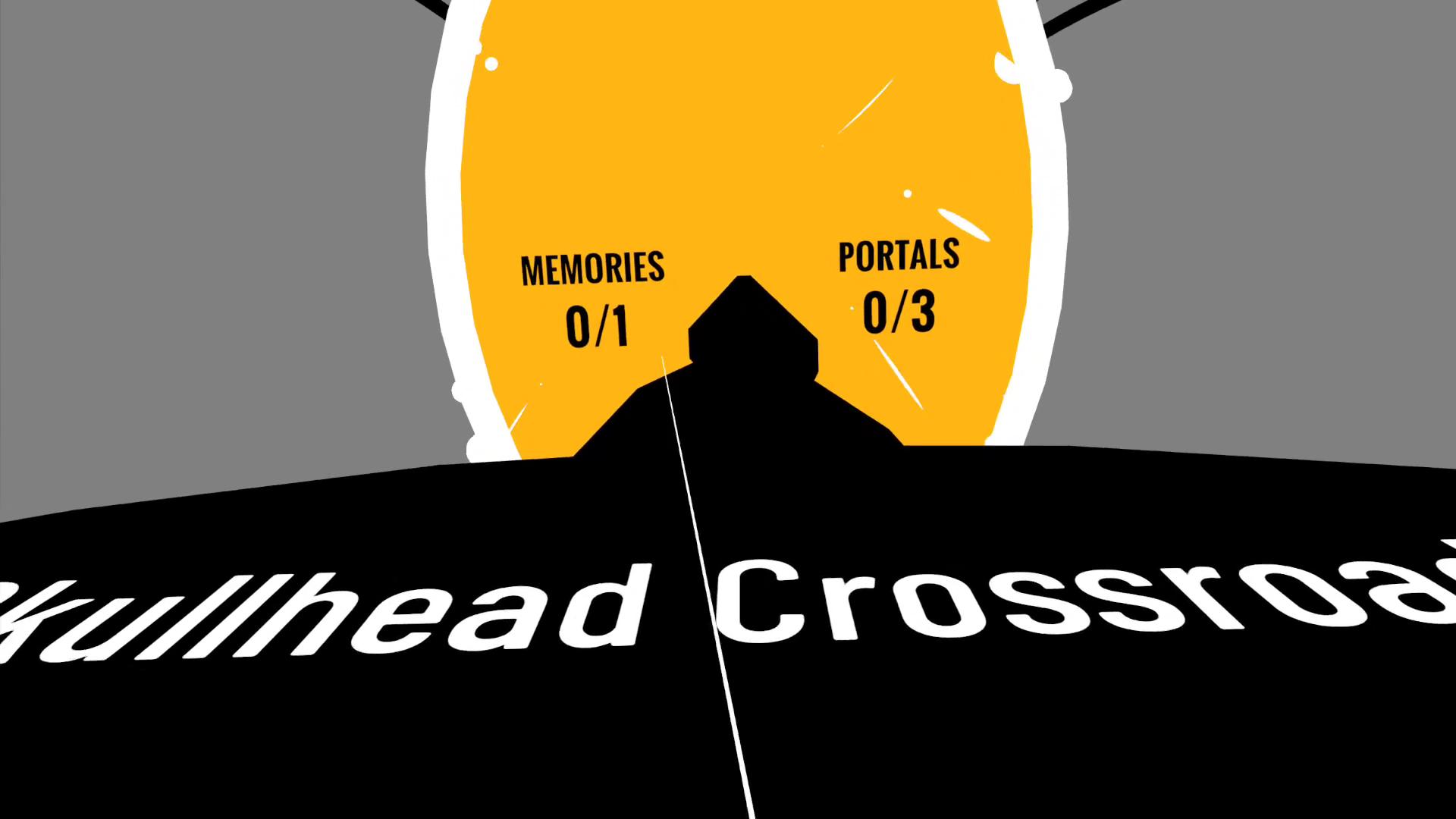
Unlike linear horror titles, Shil utilizes a non-linear pathing system. Each room contains portals that lead to different "recesses" of the mind. Depending on the choices made and the memories recovered, the narrative branches significantly. This leads to a finale that is determined by the player’s curiosity and their willingness to risk the "unknown" paths over the "safe" ones.
Supporting Data: The Mechanics of Dread
To understand why Shil is effective, one must look at the specific design choices that OSM Games implemented to weaponize the VR medium.
The Ball Launcher and Visual Manipulation
The primary tool at the player’s disposal is a ball launcher. This device is used to "paint" the environment, revealing pathways that are otherwise invisible against the void. This creates a constant tension between visibility and safety.
A prime example of this is the "Pistol Room" logic. If a player paints a giant gun to make it visible, the bullets it fires also take on that color. If the bullet crosses a path of the same color, it becomes invisible. The player is then forced to choose:
- Visual Clarity: Keep the gun visible but lose track of the lethal projectile.
- Intuitive Timing: Keep the gun invisible and rely on the rhythmic sound of the firing mechanism to time their movement.
Toolsets for Traversal
As the game progresses, the player’s arsenal expands beyond the ball launcher:
- Magnets: These allow for the manipulation of floating platforms and the temporary freezing of environmental hazards, such as "giant chopping knives."
- Slingshots: Primarily used for combat against the "silhouetted" enemies that roam the void and for triggering distant switches.
Auditory Architecture
In a world with minimal visual data, sound design becomes the primary source of information. Shil utilizes spatial audio to ground the player. The hum of a distant machine, the "click" of a gun cocking, and the distorted voiceovers of memories provide the only texture in an otherwise flat world. This reliance on audio heightens the player’s sense of hearing, making every unexpected noise a potential heart-stopping moment.
Official Responses and Developer Philosophy
While OSM Games has maintained a relatively low profile during the development of Shil, the game itself serves as a manifesto for their design philosophy.
Industry analysts suggest that OSM Games intentionally avoided the "jump-scare" tropes of modern horror. By pricing the game at a competitive $14.99, the developer has positioned Shil as an accessible entry point for VR users who want a "boutique" horror experience—one that focuses on atmosphere rather than gore.
The inclusion of seven different endings is a strategic move to address the common criticism of VR titles being "one-and-done" experiences. By creating a map that shows missed memories and unexplored portals, OSM Games encourages a "completionist" mindset, effectively tripling or quadrupling the potential playtime for the average user.
Implications: What ‘Shil’ Means for the Future of VR
The success and critical reception of Shil carry several significant implications for the VR industry and the horror genre at large.
1. The Validation of Minimalist Design
Shil proves that high-end graphical fidelity is not a prerequisite for immersion. In fact, by removing realistic textures, the game avoids the "Uncanny Valley" effect, where slightly-off human faces or environments can break a player’s sense of presence. Shil embraces its abstraction, allowing the brain to fill in the gaps with its own fears.
2. Psychological vs. Visceral Horror
The "doctor’s office waiting room" metaphor used by early reviewers highlights a shift in horror gaming. There is a growing market for games that evoke "distress" rather than "disgust." Shil taps into existential fears—loss of memory, the betrayal of one’s own mind, and the isolation of the void. This suggests that future VR horror may lean more into psychological manipulation than traditional monster-chase sequences.
3. Accessibility and Comfort Standards
OSM Games has set a high bar for comfort settings. By including teleportation features, snap-turning, and motion vignettes, Shil ensures that its "distressing" nature comes from its content, not from motion sickness. This is crucial for the long-term viability of the Quest platform, which caters to a wide range of physiological tolerances.
4. The Indie VR "Middle Class"
At $14.99, Shil represents the "sweet spot" for indie VR development. It is polished enough to feel like a premium product but priced low enough to encourage impulse buys. This model provides a blueprint for small studios to succeed without the massive budgets of AAA developers like Valve or Meta’s internal studios.
Final Verdict
Shil is a testament to the power of creative constraint. It is a game that understands the unique strengths of the VR medium—the way it can isolate a player and force them to confront their own perceptions. While its two-tone world may appear "basic" on a flat screen, inside the headset, it becomes an engrossing, terrifying, and deeply satisfying puzzle box.
For players seeking a game that will linger in their thoughts long after they have removed the headset, Shil is an essential experience. It is not merely a game about escaping a room; it is a game about escaping the darkest corners of one’s own consciousness. As OSM Games prepares to bring this title to the PC VR market, the legacy of Shil as a pioneer of "minimalist dread" seems firmly secured.