Digital Fame and the Roll of the Dice: An In-Depth Look at ‘Influencer Solitaire’
The dream of digital stardom—characterized by viral fame, a dedicated legion of followers, and the allure of brand deals—has become a cornerstone of modern cultural aspirations. However, the reality of the "influencer grind" is often a grueling cycle of content creation, algorithm chasing, and financial instability. A new indie title, Influencer Solitaire, seeks to distill this complex modern phenomenon into a strategic, dice-based management simulation. Currently available on Steam, the game offers a stylized, albeit mechanically dense, exploration of what it takes to build a brand from a bedroom.
Main Facts: The Gamification of Social Media Ambition
Influencer Solitaire is a deck-building resource management game that leverages dice-rolling mechanics to simulate the daily life of an aspiring content creator. Unlike traditional solitaire games that rely on standard playing cards and specific sequencing, this title uses the "solitaire" moniker to describe its focused, single-player puzzle nature. Players are tasked with balancing the mundane requirements of survival—such as paying rent through a traditional day job—with the high-risk, high-reward world of digital content creation.
The game’s core loop revolves around three primary pillars:
- Dice Allocation: Every "day" in the game begins with a fresh roll of dice, which act as the player’s primary currency for action.
- Resource Management: Players must track multiple metrics simultaneously, including liquid capital (money), follower counts, video libraries, and "super fans."
- Deck Progression: Through "research," players unlock new content cards that offer better rewards but often require more specific or higher-value dice rolls to activate.
Developed with a focus on accessibility, the game is currently offered as a free-to-play title on Steam. It recently gained traction following a showcase at Gamescom, where players and critics alike noted its addictive "just one more turn" gameplay, despite its modest production values.
Chronology: From Bedroom Amateur to Digital Icon
The progression in Influencer Solitaire is designed to mirror the actual trajectory of a rising internet star. The journey is broken down into a daily cycle that forces the player to make difficult tactical decisions under the pressure of escalating costs.
The Morning Roll: Setting the Intent
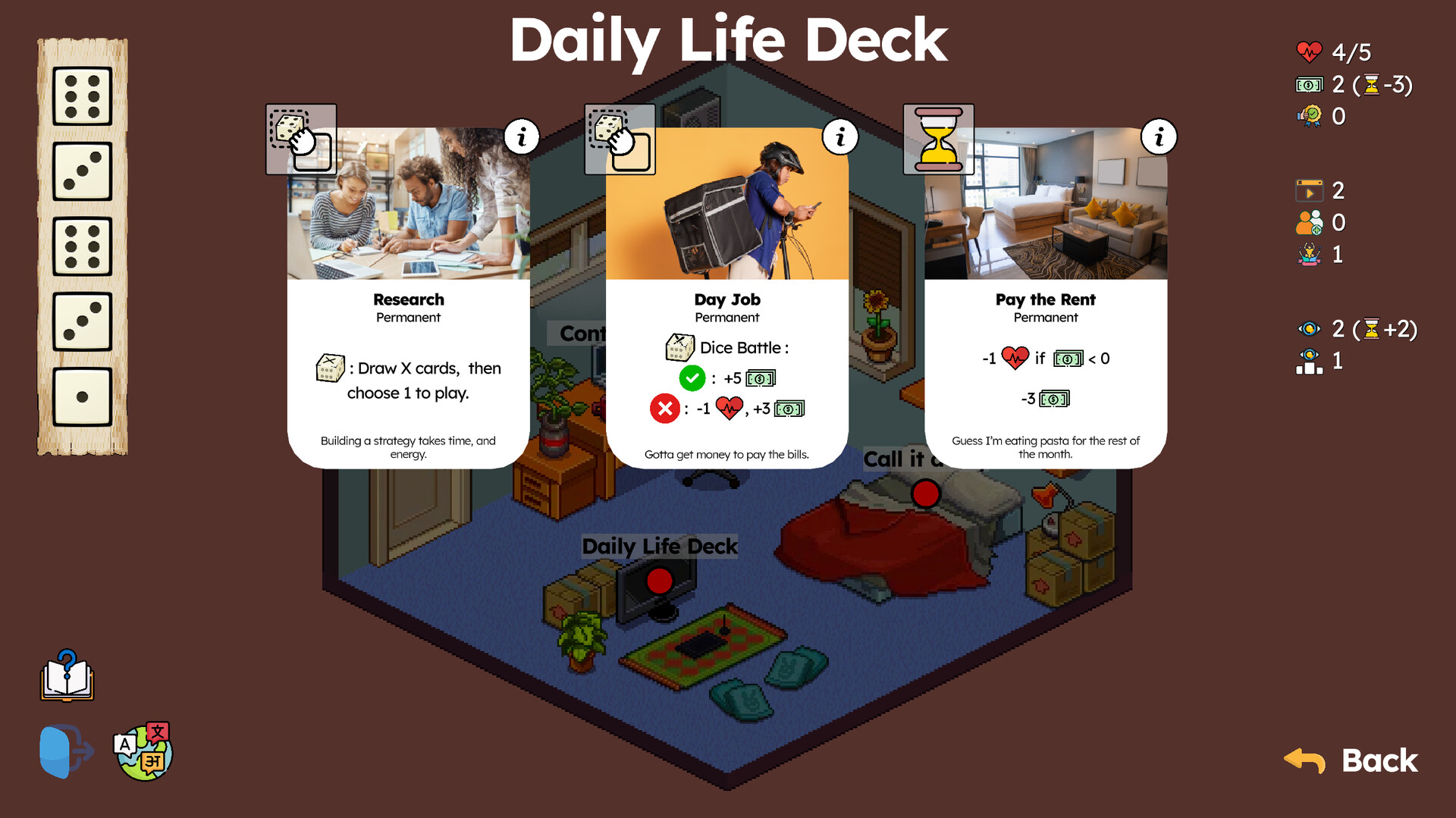
Each gameplay session begins with the "Morning Roll." The number and variety of dice available to the player are determined by their current level and the upgrades they have invested in. This initial roll dictates the potential of the day. A high roll might allow for a "viral" video attempt, while a low roll might force the player to spend the day "grinding" at their day job just to keep the lights on.
Mid-Day Management: The Balancing Act
Once the dice are cast, the player enters the management phase. This is where the "solitaire" elements are most apparent. The screen is filled with various cards representing different life and career paths.
- The Day Job: These cards are the safety net. They usually accept any die value but offer low financial returns.
- Content Creation: These cards are the engine of growth. Some require specific dice (e.g., a "4" or a "6") to represent the precision needed for editing or filming.
- Research and Development: By placing dice into research cards, players simulate the act of studying the algorithm. This leads to the "unlocking" of more advanced cards, representing the evolution from simple vlogs to high-production-value documentaries or risky "stunt" content.
The Evening Reflection: Growth and Evolution
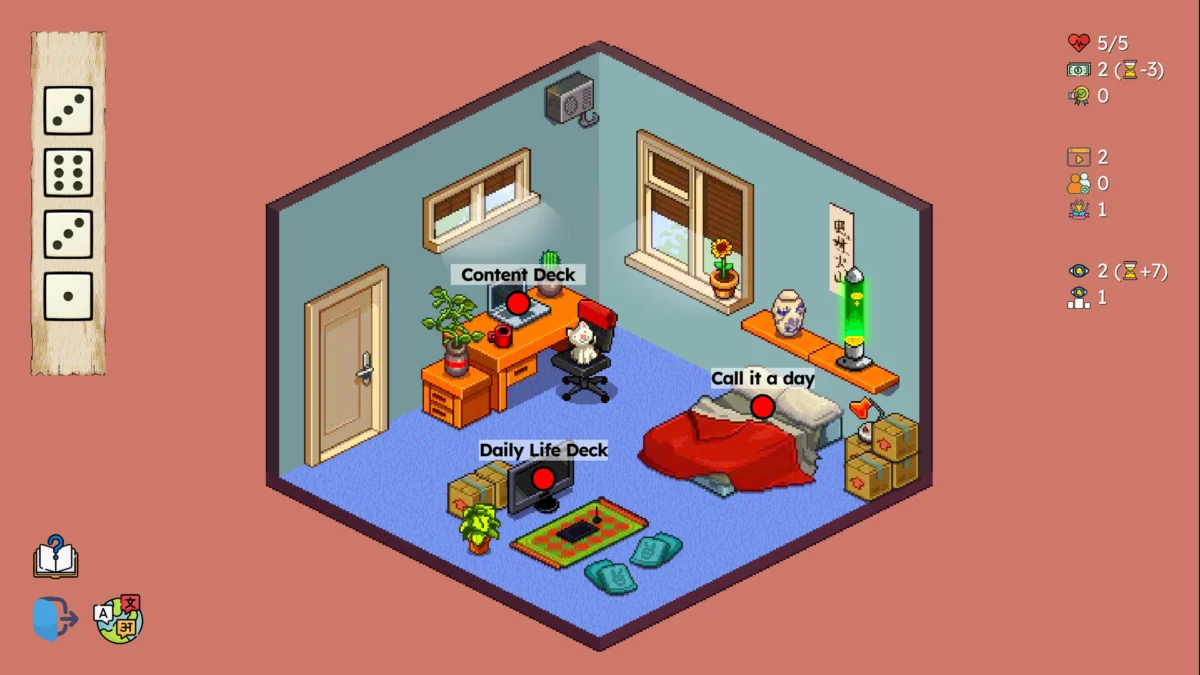
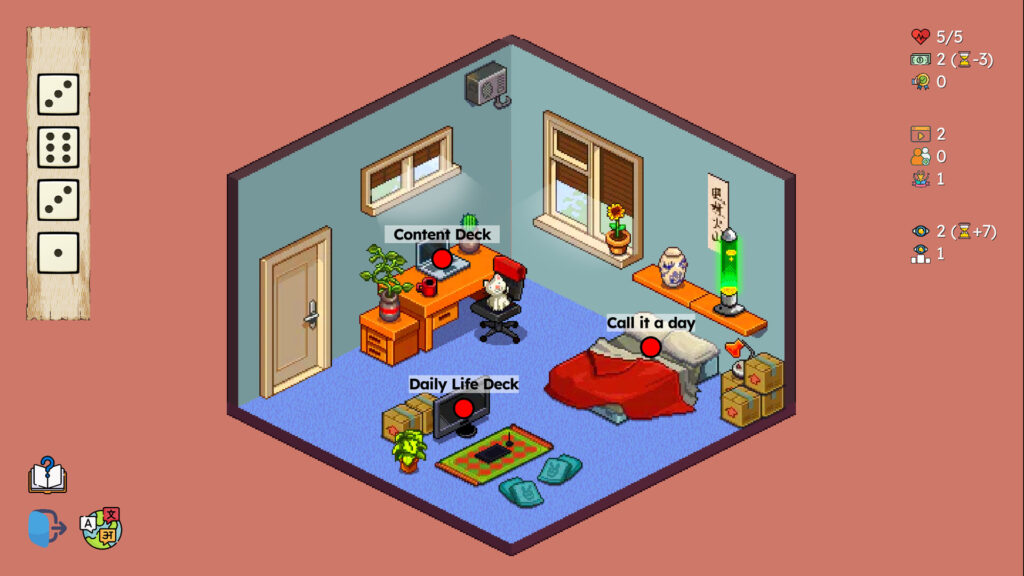
As the player successfully allocates dice and completes cards, their resources tick upward. One of the most praised features of the game is the visual feedback loop. As the player’s follower count grows and their bank account swells, their in-game environment—the bedroom—undergoes a transformation. The clutter of a starter apartment gradually gives way to high-end cameras, professional lighting rigs, and more luxurious surroundings. This provides a tangible sense of achievement that complements the abstract numbers on the UI.
Supporting Data: Mechanics and Technical Composition
To understand why Influencer Solitaire stands out in a crowded market of "simulators," one must look at the mathematical tension of its dice mechanics. The game utilizes several different card requirements to keep the player engaged:
- Fixed Requirements: Cards that require an exact number (e.g., a "2"). These represent tasks that require a specific "vibe" or niche focus.
- Threshold Requirements: Cards that yield better results based on the value of the die. A "6" placed on a "High-Quality Thumbnail" card will generate significantly more followers than a "1."
- Activation Slots: Some cards simply need a die to function, representing the basic expenditure of time.
Resource Interconnectivity
The game tracks four main data points that the player must optimize:
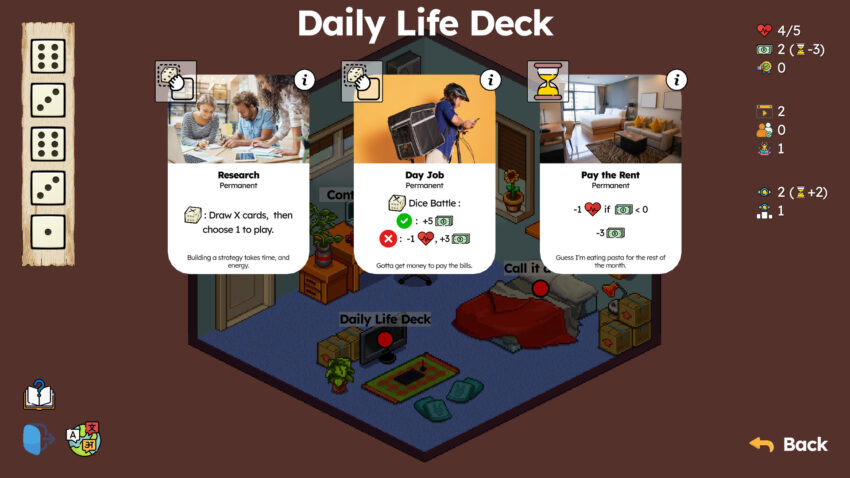
- Followers: The primary "score." This dictates the player’s tier and unlocks new tiers of cards.
- Super Fans: A secondary, more stable resource. Unlike general followers, super fans provide passive bonuses and are harder to lose during "scandal" cards or unsuccessful campaigns.
- Videos: A cumulative stat that represents the player’s "back catalog." A larger library often provides passive income or follower growth.
- Money: The survival metric. Failure to meet rent requirements can lead to a "Game Over" state, forcing a restart of the current run.
Visual Disparity
Critics and players have noted a distinct "jarring" quality between the game’s two main visual styles. The card-playing interface uses a clean, 2D aesthetic reminiscent of modern mobile deck-builders. In contrast, the "room" view utilizes a different graphical style that feels somewhat disconnected from the sleekness of the cards. However, in the context of an indie, free-to-play title, most users have found this to be a minor grievance compared to the depth of the gameplay.
Official Responses and Developer Philosophy
While the developers of Influencer Solitaire have remained relatively low-profile, the game’s presence at Gamescom allowed for some insight into its design philosophy. The developers have indicated that the game is intended to be both a tribute to and a satire of the creator economy.
The inclusion of "risky content ideas" in the card shuffle—which can either result in a massive spike in followers or a "cancellation" that drains resources—is a deliberate choice to highlight the volatility of internet fame. During the Gamescom showcase, playtesters noted that the game feels less like a traditional "Solitaire" game and more like a "Roguelike Resource Manager." When questioned about the title, the developers suggested that "Solitaire" refers to the solitary nature of the influencer’s life—sitting alone in a room, trying to make the "numbers go up" through a combination of skill and luck.
The decision to release the game for free on Steam was a strategic move to build a community and gather data for potential future expansions or sequels. It reflects a growing trend in the indie scene where "proof of concept" games are released to the public to gauge interest before committing to a full-scale commercial launch.
Implications: The Rise of the "Micro-Simulator"
The success and reception of Influencer Solitaire point to several broader trends in the gaming industry and digital culture.
The Gamification of Labor
We are seeing an influx of games that take "modern jobs"—from power washing and lawn mowing to being a social media influencer—and turn them into satisfying loops of mechanical progression. Influencer Solitaire succeeds because it takes the abstract stress of the "algorithm" and turns it into a manageable puzzle. It allows players to experience the "upward curve" of success without the real-world risk of burnout or financial ruin.
The "Free-to-Play" Indie Model
By offering the game for free on a platform like Steam, the developers are tapping into a massive audience of casual gamers who are looking for high-quality "bite-sized" experiences. This model challenges the traditional $20-$60 price point for indie titles and suggests that for certain genres, building a large, active player base is more valuable than immediate sales.
The Psychological Hook of Metrics
The game’s reliance on "number-go-up" psychology mirrors the very platforms it simulates. By tracking followers and super fans, the game creates a dopamine loop that is remarkably similar to the one experienced by real-world influencers. This meta-commentary is perhaps the game’s most profound achievement; it isn’t just a game about being an influencer; it is a game that makes you feel the same compulsions that drive the creator economy.
Conclusion
Influencer Solitaire is a compelling addition to the "job simulator" genre. While it may lack the graphical polish of AAA titles, its core mechanics are robust, challenging, and deeply reflective of the modern digital landscape. By combining the luck of the dice with the strategy of a deck-builder, it provides a unique perspective on the grind behind the glamour. For those curious about the mechanics of fame—or those who simply enjoy a well-crafted resource management puzzle—this title is a must-play, particularly given its current price point of zero dollars. As the game continues to evolve post-Gamescom, it stands as a testament to the power of simple, well-executed indie ideas.