TFL Ad Sparks Outrage: Ambiguous Artwork Ignites Controversy and Raises Questions About Public Messaging
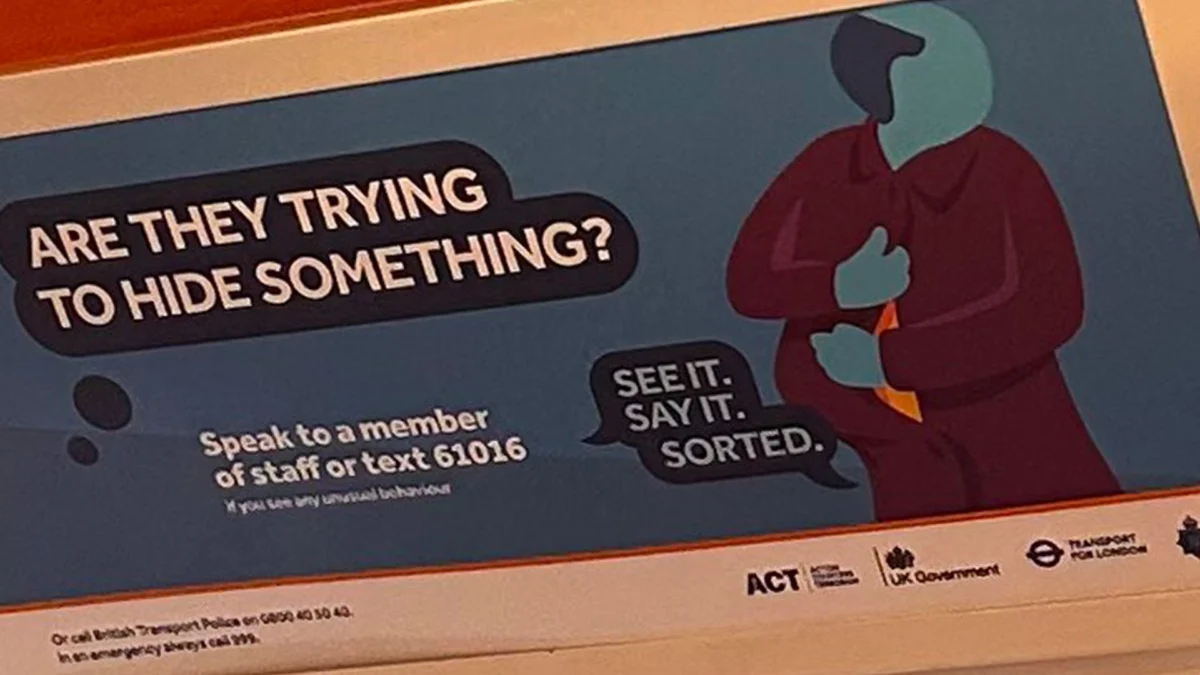
London, UK – Transport for London (TfL) has found itself at the center of a public relations storm following the appearance of a controversial public safety advertisement on its network. The ad, featuring a minimalist design and a loaded tagline, has been widely interpreted as offensive and Islamophobic, prompting swift condemnation from commuters and sparking a debate about the impact of artistic style on public perception. The incident highlights the critical importance of careful messaging and thoughtful design in public service announcements, particularly in a diverse and sensitive urban environment.
The Controversial Campaign and Initial Reactions
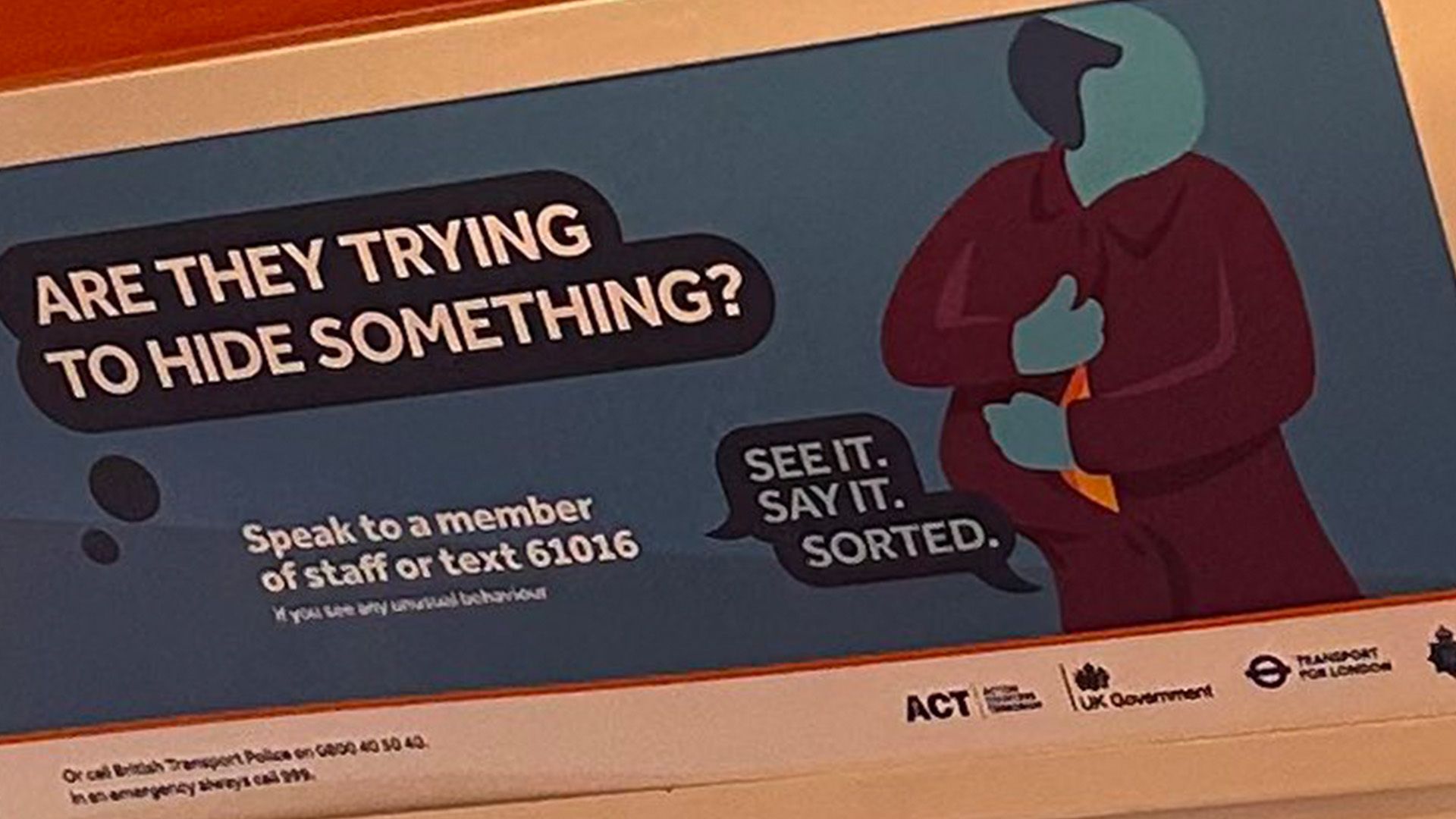
The advertisement in question, a stark, abstract illustration, features a figure whose gaze is directed over their shoulder. It is accompanied by the tagline, "Are they trying to hide something?" This seemingly innocuous combination has, for many, taken on a deeply unsettling and discriminatory connotation. Social media platforms, particularly X (formerly Twitter), erupted with confusion and anger as commuters shared images of the poster, detailing their dismay at its perceived message.
One prominent reaction, shared by user @cantworkitout, described the ad as containing "Disgusting insinuation in this campaign. Absolutely appalling." This sentiment was echoed by numerous others who felt the ad promoted suspicion and paranoia, particularly targeting individuals who wear religious head coverings, such as hijabs. The ambiguity of the "Corporate Memphis" art style, characterized by its flat, simplified, and often featureless figures, proved to be its undoing in this context. Instead of conveying a clear safety message, the ad became a Rorschach test for public anxieties, with many interpreting it as a veiled accusation against Muslim commuters.
Another user commented, "Suspicion, paranoia and ethnically ambiguous abstract art – 1984 is here in full force," drawing a chilling parallel to Orwellian themes of surveillance and suspicion. The abstract nature of the artwork, intended perhaps to be universally relatable, instead allowed for deeply personal and, in this case, negative interpretations to take root. The irony of a public safety campaign inadvertently fostering a sense of unease and prejudice was not lost on observers.
A Chronology of Controversy and Confusion
The timeline of events surrounding the TFL ad reveals a rapid escalation of public outcry and a subsequent attempt by TfL to distance itself from the campaign.
Initial Sighting and Social Media Outcry: Commuters began spotting the advertisement on the TfL network in late October 2026. Images and criticisms quickly circulated on social media, gaining significant traction. The hashtag #TFLAdControversy began trending as more people shared their negative reactions and called for an explanation from the transport authority.
TfL’s Initial Response: Faced with a growing wave of criticism, TfL issued a statement on X acknowledging the concerns. The statement, which was later deleted, indicated that the poster was under investigation and that TfL was working to remove any unauthorized advertisements. The organization stated, "Our media partner, our teams and contractors have been instructed to inspect trains and remove any unauthorised posters that are found on our network. The incident has been reported to [British Transport Police] as flyposting is an illegal activity."
Escalation and Accusations of Flyposting: The claim that the poster was "unauthorized flyposting" was met with skepticism by many, including the user who had initially highlighted the controversy. This user pointed out that official news sources, including variants of the same poster, had reportedly covered its installation. Furthermore, they noted the peculiar situation where the British Transport Police (BTP), the very authority to whom TfL claimed to have reported the incident, appeared to have been involved in the campaign’s dissemination. This suggested a potential internal miscommunication or an attempt to deflect responsibility.
Official Statements and Investigations: The conflicting accounts and the deleted social media posts fueled further speculation and distrust. TfL maintained its position that the poster was unauthorized, while the public grappled with the possibility that the campaign, if indeed authorized, had been severely mishandled in its conceptualization and execution. The exact origin and authorization status of the advertisement remained a point of contention.
Supporting Data: The Power of Ambiguity and Art Style
The TFL ad controversy serves as a potent case study in the impact of artistic style and messaging on public perception. The "Corporate Memphis" aesthetic, while popular in corporate branding for its perceived approachability and modernity, has been criticized for its tendency towards blandness and ambiguity. In this instance, its lack of specific detail allowed for a vacuum to be filled by pre-existing societal biases and anxieties.
The Corporate Memphis Effect: This art style, characterized by flat, simplified, and often generic figures, aims for a universal appeal. However, when applied to sensitive topics, this universality can become a liability. The featureless faces and generic body shapes can be interpreted in myriad ways, leading to unintended meanings. In the case of the TFL ad, the abstract depiction of a person looking over their shoulder, coupled with the accusatory tagline, resonated with individuals who felt targeted by such imagery. The style failed to provide a clear, unambiguous context for the message, opening the door for misinterpretation.
The Psychology of Suspicion: The tagline "Are they trying to hide something?" is inherently suggestive and plays on a fundamental human psychological tendency towards suspicion, particularly when presented with ambiguity. When this tagline is paired with an image that can be easily associated with a specific demographic, the effect is amplified. The ad tapped into existing societal anxieties and prejudices, making it a potent, albeit unintended, tool for reinforcing negative stereotypes.
User-Generated Interpretations: The widespread nature of the misinterpretation is evidenced by the numerous social media posts that articulated alternative readings of the ad. The "Rorschach test" analogy used by one user perfectly captures how the ad’s abstract nature invited subjective interpretation. For some, it was a clear instance of Islamophobia; for others, it was a commentary on general paranoia. The fact that so many found it difficult to see the intended message – a balding man looking over his shoulder – underscores the design’s failure.
Official Responses and Damage Control
TfL’s response to the controversy has been characterized by a degree of defensiveness and a swift attempt to disassociate itself from the advertisement. The organization’s initial statements on X, though later deleted, indicated a commitment to investigating the matter and removing unauthorized posters. However, the subsequent claim of "flyposting" has cast a shadow of doubt over the transparency of their communication.
Denial of Authorization: The assertion that the poster was installed without TfL’s permission serves as a primary defense mechanism. By framing the incident as an act of illegal flyposting, TfL seeks to absolve itself of responsibility for the content and impact of the advertisement. This approach, however, raises further questions about the security of the TfL network and its ability to prevent unauthorized materials from appearing.
Reporting to British Transport Police: The involvement of the British Transport Police (BTP) in the investigation is a standard procedure for cases of illegal advertising. However, the user who initially brought the ad to light pointed out the peculiar situation of the BTP themselves potentially being involved in the campaign’s dissemination. This contradiction has led to further scrutiny of TfL’s account of events.
The Deleted Statement and Its Implications: The decision to delete the initial X post by TfL is often interpreted as an attempt to control the narrative and mitigate further damage. However, in the age of digital archiving and social media memory, such actions can often backfire, leading to accusations of censorship and a further erosion of public trust. The deleted statement, now a point of reference for those questioning TfL’s narrative, has become a symbol of their attempts to manage the crisis.
Lack of Proactive Communication: The absence of a more proactive and empathetic initial response from TfL allowed the controversy to fester and gain momentum. A more direct acknowledgment of the public’s concerns, even while an investigation was underway, might have helped to diffuse some of the anger and confusion.
Broader Implications for Public Messaging and Advertising
The TfL ad controversy extends beyond a single incident, highlighting critical issues relevant to all public service campaigns and advertising efforts. The case serves as a stark reminder of the responsibilities that come with communicating with the public, particularly through visual mediums.
The Perils of Ambiguity in Public Service Announcements: Public safety campaigns must strive for clarity and avoid any potential for misinterpretation that could lead to unintended offense or harm. The TfL ad demonstrates how even well-intentioned campaigns can falter when artistic choices overshadow the core message, leading to confusion and backlash. The use of abstract or minimalist art styles requires careful consideration of context and potential interpretations, especially when dealing with sensitive social issues.
The Importance of Diverse Perspectives in Design: The incident underscores the need for diverse voices and perspectives to be involved in the creative process of public advertising. Had a wider range of individuals reviewed the ad’s concept and design, the potential for misinterpretation and offense might have been identified and addressed before its public release. This includes ensuring that creative teams are equipped with an understanding of cultural sensitivities and potential biases.
Accountability and Transparency in Advertising: TfL’s handling of the controversy, particularly the deleted statement and the conflicting accounts of the ad’s origin, raises questions about accountability and transparency. In an era where public trust is paramount, organizations must be prepared to address criticism openly and honestly, even when it involves acknowledging missteps. The incident also brings to the fore the issue of "flyposting" and the challenges faced by authorities in controlling unauthorized advertising, which can often carry problematic messages.
The Role of Social Media in Amplifying Concerns: The rapid dissemination of the TFL ad controversy on social media highlights the power of these platforms as a tool for public accountability. Commuters, armed with their smartphones and a desire for clarity, were able to quickly mobilize and voice their concerns, forcing TfL to respond. This dynamic underscores the need for organizations to be prepared for real-time public scrutiny and to engage constructively with online feedback.
Lessons Learned for Future Campaigns: The TfL ad incident offers valuable lessons for any organization involved in public messaging. It emphasizes the critical need for:
- Rigorous review processes: Implementing comprehensive review stages for all advertisements, involving diverse stakeholders and sensitivity checks.
- Clear and unambiguous messaging: Ensuring that the intended message is easily understood and avoids any room for negative interpretation.
- Thoughtful artistic choices: Selecting artistic styles that are appropriate for the message and the target audience, considering potential cultural and social implications.
- Open communication and accountability: Responding to public concerns promptly, transparently, and with a willingness to acknowledge and address errors.
Ultimately, the controversy surrounding the TFL ad serves as a potent reminder that in the realm of public communication, perception is reality. What may be intended as a harmless or even beneficial message can, through poor execution or unfortunate interpretation, devolve into a public relations crisis. The incident compels a closer examination of how we communicate, what messages we choose to convey, and the lasting impact of our visual language on the diverse communities we serve.