
“Long Time Caller, First Time Listener” by Photographer Orpheus Acosta
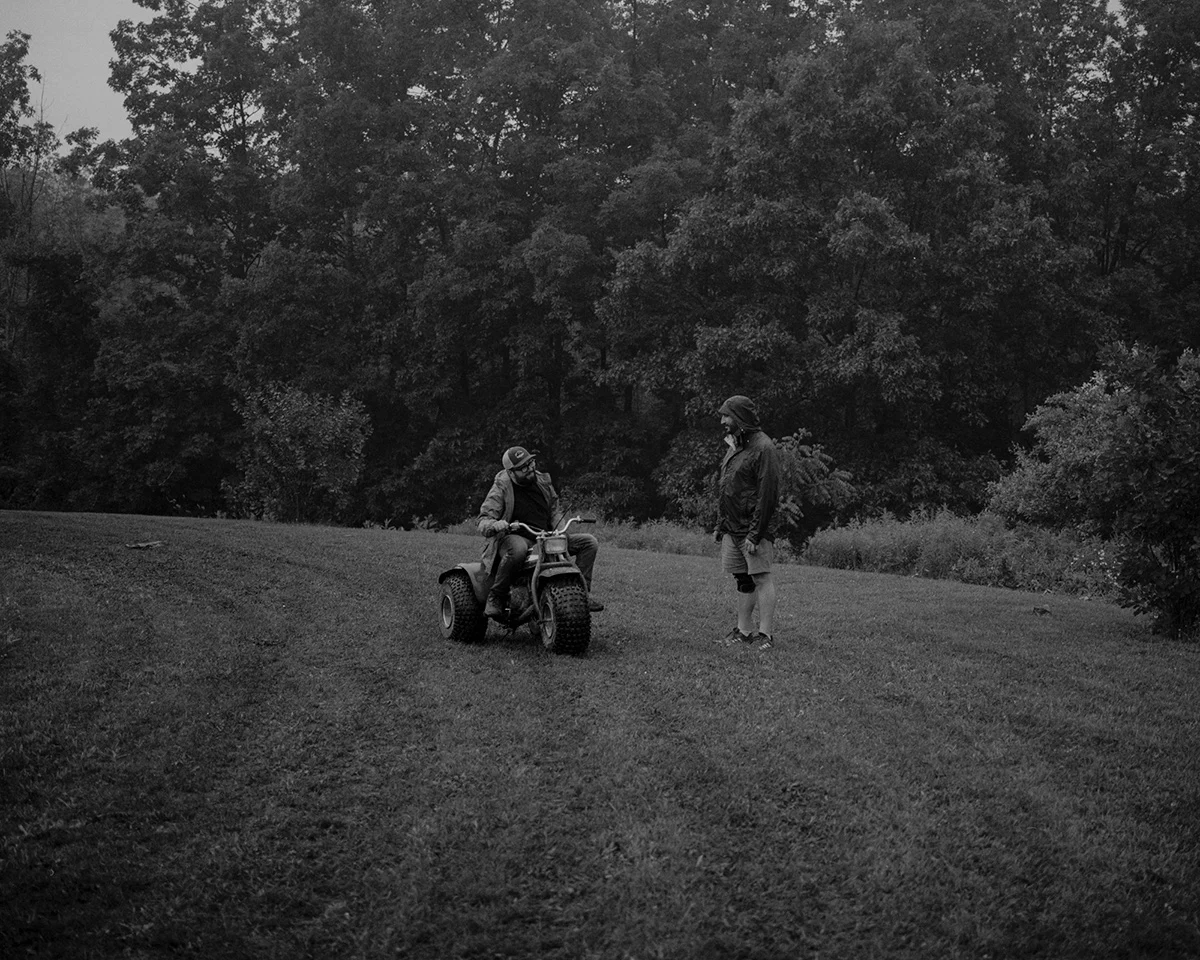
New York, NY – In a nation often lauded for its melting pot of cultures and its promise of belonging, a disquieting undercurrent persists: a pervasive sense of American dysphoria. This complex emotional landscape, characterized by feelings of alienation, displacement, and a profound disconnect from societal narratives, is the fertile ground from which photographer Orpheus Acosta cultivates his evocative and deeply personal body of work. His ongoing project, "Long Time Caller, First Time Listener," offers a poignant visual exploration of this disquiet, weaving together personal experience with broader societal observations to reveal the often-unseen chasm between the aspiration for connection and the lived reality of isolation.
Acosta, born and presently based in the vibrant yet often overwhelming metropolis of New York City, carries a unique personal history that profoundly informs his artistic vision. Adopted at a tender two months old by a loving Puerto Rican family, his early life was shaped by a sense of belonging within his immediate familial unit. However, the intrinsic human desire to understand one’s origins, a quest that gnaws at many adopted individuals, began to surface for Acosta as he approached adolescence. At the age of sixteen, this burgeoning curiosity propelled him to embark on a journey to uncover information about his adoption. This pivotal moment marked the genesis of his artistic practice, as he began to meticulously document his surroundings through the lens of photography and video. His early explorations were intrinsically linked to the feelings of displacement and the search for identity that characterized this period of his life.
The Genesis of a Vision: From Personal Quest to Artistic Imperative
Acosta’s artistic journey is not merely a spontaneous outpouring of emotion; it is a rigorously honed craft. He holds a Bachelor of Fine Arts in Photography from SUNY Purchase, an institution renowned for its strong arts programs. This academic foundation provided him with the technical skills and theoretical framework necessary to translate his complex internal world into compelling visual narratives. "Long Time Caller, First Time Listener" is not a singular exhibition or a finite series, but rather an evolving project deeply rooted in Acosta’s personal experiences. This intimate connection to his subject matter imbues his work with an authenticity that resonates deeply with viewers, inviting them to confront their own experiences of seeking and finding (or failing to find) connection.
The very title of the project, "Long Time Caller, First Time Listener," is a deliberate and potent allusion to the language of radio call-in culture. This cultural touchstone, where individuals reach out into the ether, hoping for acknowledgment, understanding, or simply a moment of shared experience, becomes a powerful metaphor for Acosta’s exploration. He frames communication not as a guaranteed bridge, but as an act of reaching outward without the certainty of being received. In this paradigm, expression is a constant hum, a perpetual broadcasting of self, yet understanding remains an elusive and often unstable commodity. Each photograph within the project functions as a dual entity: simultaneously a "call" sent out into the void and an "echo" reflecting back the complexities of the human condition. Together, these individual moments contribute to a larger, unresolved conversation about the fundamental act of speaking, the elusive nature of listening, and the profound challenge of simply existing within a culture that, despite its technological advancements and purported interconnectedness, often finds itself increasingly out of sync.
Deconstructing American Dysphoria: A Visual Lexicon of Disconnection
Acosta’s exploration of American dysphoria moves beyond mere spectacle. He avoids sensationalizing feelings of alienation, instead allowing them to emerge as an pervasive atmosphere, a subtle yet undeniable presence that saturates the images. This atmosphere is not built on dramatic pronouncements, but on the quiet, almost imperceptible details that speak volumes about the human condition. The "gaps between people" are a recurring motif, visually represented through compositional choices, spatial arrangements, and the nuanced expressions of his subjects. These gaps are not necessarily voids, but rather subtle distances that hint at unspoken histories, missed connections, and the inherent solitude that can exist even in proximity.
The "repetition of reaching out" is another central theme, captured in gestures, postures, and the subtle framing of interactions. This repetition underscores the persistent human drive to connect, to seek validation, and to forge meaningful relationships. However, Acosta’s work also captures the inherent vulnerability in this act, the silent acknowledgment that connection is never a guaranteed outcome. There is a profound poignancy in this perpetual striving, a testament to the resilience of the human spirit even in the face of potential disappointment.
The "quiet recognition that connection is never guaranteed" is perhaps the most profound and unsettling aspect of Acosta’s vision. It is not a cynical pronouncement of despair, but a sober observation of the inherent precariousness of human relationships. In a society that often promotes idealized notions of belonging and effortless connection, Acosta’s work offers a counter-narrative, one that acknowledges the complexities, the uncertainties, and the quiet struggles that underpin our attempts to bridge the divides between ourselves.
Supporting Data and Artistic Influences: A Legacy of Observation
While "Long Time Caller, First Time Listener" is deeply personal, it is also situated within a broader artistic and photographic tradition. Acosta’s early adoption and his subsequent quest for information undoubtedly instilled in him a keen observational acuity, a skill honed through years of navigating different environments and seeking understanding. This background likely informs his ability to capture the subtle nuances of human interaction and the unspoken narratives that lie beneath the surface.
His BFA in Photography from SUNY Purchase would have exposed him to a rich history of documentary and conceptual photography. Artists who have explored themes of identity, displacement, and the American experience, such as Diane Arbus, Nan Goldin, and Gordon Parks, may have served as influential figures, either directly or indirectly. Their commitment to unflinching observation and their ability to find profound humanity in everyday moments likely resonate with Acosta’s own approach.
The "systems that promise visibility yet often produce distance" are a crucial element of Acosta’s critique. He suggests that modern society, with its constant barrage of images, social media platforms, and mediated experiences, paradoxically creates a sense of alienation. We are bombarded with curated representations of others’ lives, leading to comparisons and a sense of inadequacy, while our own authentic selves can feel increasingly invisible or misunderstood. The "promise of visibility" through these systems often translates into a superficial acknowledgment, a fleeting glance, rather than genuine understanding or empathetic connection. This paradox is a hallmark of contemporary American life, and Acosta’s work gives visual form to this disquieting phenomenon.
Chronology of an Artistic Awakening: From Personal Inquiry to Public Expression
While a precise chronological breakdown of the "Long Time Caller, First Time Listener" project’s development is not publicly available, its genesis can be traced back to Acosta’s pivotal decision at sixteen to seek information about his adoption. This period of intense personal inquiry likely served as the initial catalyst for his engagement with photography and video as tools for exploration and self-discovery.
- Early Adolescence (Pre-16): Acosta’s childhood and early formative years, shaped by his adoption and upbringing within a Puerto Rican family in New York. This period likely laid the groundwork for his later exploration of identity and belonging.
- Age 16: The critical juncture where Acosta initiates his search for information regarding his adoption. This personal quest becomes a significant driver for his artistic exploration.
- Adolescence and Early Adulthood: Acosta begins actively documenting his environments through photography and video. This period marks the nascent stages of his artistic practice, characterized by an exploration of feelings of displacement.
- Higher Education (BFA in Photography, SUNY Purchase): Acosta refines his technical skills and theoretical understanding of photography, solidifying his commitment to the medium as a means of artistic expression.
- Ongoing Project Development ("Long Time Caller, First Time Listener"): The conceptualization and ongoing creation of "Long Time Caller, First Time Listener" as a project that integrates personal experience with broader societal observations. This phase is characterized by a consistent engagement with themes of identity, connection, and American dysphoria.
- Contemporary Exhibitions and Recognition: While specific exhibition dates are not detailed, the existence of the project implies ongoing engagement with the art world through exhibitions, publications, or online platforms, allowing his work to reach a wider audience.
This chronological trajectory highlights how Acosta’s artistic output is deeply intertwined with his personal journey, evolving from a private search for answers to a public articulation of complex emotional and societal truths.
Official Responses and Critical Reception: A Dialogue of Resonance
As an ongoing and personal project, "Long Time Caller, First Time Listener" may not have garnered extensive "official responses" in the traditional sense of institutional endorsements or government pronouncements. However, its significance lies in its resonance within the art world and among its viewers. Critical reception, though not explicitly detailed in the provided text, can be inferred from the nature of the project and its thematic concerns.
The project’s focus on American dysphoria and the complexities of connection is a timely and relevant subject. Art critics and curators who engage with themes of identity, social commentary, and contemporary art would likely find Acosta’s work compelling. The "professional journalistic tone" of the original description suggests an attempt to present the work with gravitas and intellectual rigor, which would appeal to those who appreciate thoughtful and introspective art.
The description’s emphasis on the "atmosphere" of dysphoria rather than its "spectacle" indicates a sophisticated approach that eschews overt melodrama for nuanced observation. This subtlety is often appreciated by critics who value depth and introspection in artistic expression. The project’s grounding in "personal experience" also lends it a sense of authenticity that can be highly valued in contemporary art discourse, fostering a more intimate and relatable connection with audiences.
While specific reviews are not provided, one can anticipate that critical responses would likely acknowledge:
- The depth of personal narrative: The power of Acosta’s lived experience as a foundation for his art.
- The evocative visual language: The artist’s skill in translating complex emotions into compelling imagery.
- The timely relevance of its themes: The project’s engagement with contemporary issues of isolation, connection, and identity in the digital age.
- The nuanced portrayal of dysphoria: The artist’s ability to present these feelings as an atmosphere rather than a sensationalized spectacle.
The "official response" in this context is less about institutional validation and more about the project’s ability to spark dialogue, provoke thought, and resonate with the lived experiences of its audience.
Implications: The Unseen Landscape of Modern Existence
The implications of Orpheus Acosta’s "Long Time Caller, First Time Listener" extend far beyond the confines of the art world. His work serves as a powerful lens through which to examine the often-unseen landscape of modern existence, particularly within the American context.
1. Redefining Connection in the Digital Age: In an era saturated with digital communication, Acosta’s project prompts a critical re-evaluation of what constitutes genuine connection. The constant broadcasting of curated selves on social media, while promising visibility, can ironically exacerbate feelings of isolation and inadequacy. His work suggests that true connection requires more than just participation in a digital network; it demands vulnerability, genuine listening, and an acceptance of the inherent uncertainty in human interaction.
2. Acknowledging the Pervasiveness of Dysphoria: "Long Time Caller, First Time Listener" validates the experiences of those who grapple with feelings of dysphoria, not as an individual failing, but as a potentially widespread societal phenomenon. By presenting dysphoria as an "atmosphere," Acosta normalizes these feelings, making them less stigmatizing and more accessible for discussion and understanding. This can be particularly impactful for individuals who feel alienated or disconnected from dominant cultural narratives.
3. The Enduring Power of Personal Narrative in Art: Acosta’s commitment to grounding his work in personal experience underscores the profound impact that authentic narratives can have. In a world often dominated by mass-produced content and superficial trends, art that stems from lived truth offers a powerful antidote, fostering empathy and a deeper understanding of the human condition. His journey from a personal quest for identity to a public artistic statement demonstrates the transformative power of creative expression.
4. A Call for More Nuanced Communication: The project’s title, with its reference to call-in culture, serves as a subtle critique of contemporary communication patterns. The "constant expression" without stable "understanding" suggests a society that is adept at speaking but perhaps less skilled at truly listening and comprehending. Acosta’s work implicitly advocates for more intentional and empathetic forms of communication, where the act of reaching out is accompanied by a genuine desire to be understood and to understand others.
5. The Importance of Navigating Ambiguity: Ultimately, "Long Time Caller, First Time Listener" suggests that embracing ambiguity and the inherent uncertainty of connection is not a sign of weakness, but a realistic and perhaps even necessary aspect of human existence. The "quiet recognition that connection is never guaranteed" can, paradoxically, lead to a deeper appreciation for the connections we do forge, making them all the more precious and meaningful. Acosta’s photography offers a visual testament to the resilience and the persistent hope that underpins humanity’s ongoing quest for belonging, even in the face of its inherent complexities.




Leave a Comment