The Kinetic Spectacle: A Deep Dive into the High-Octane World of ‘Showrunners’
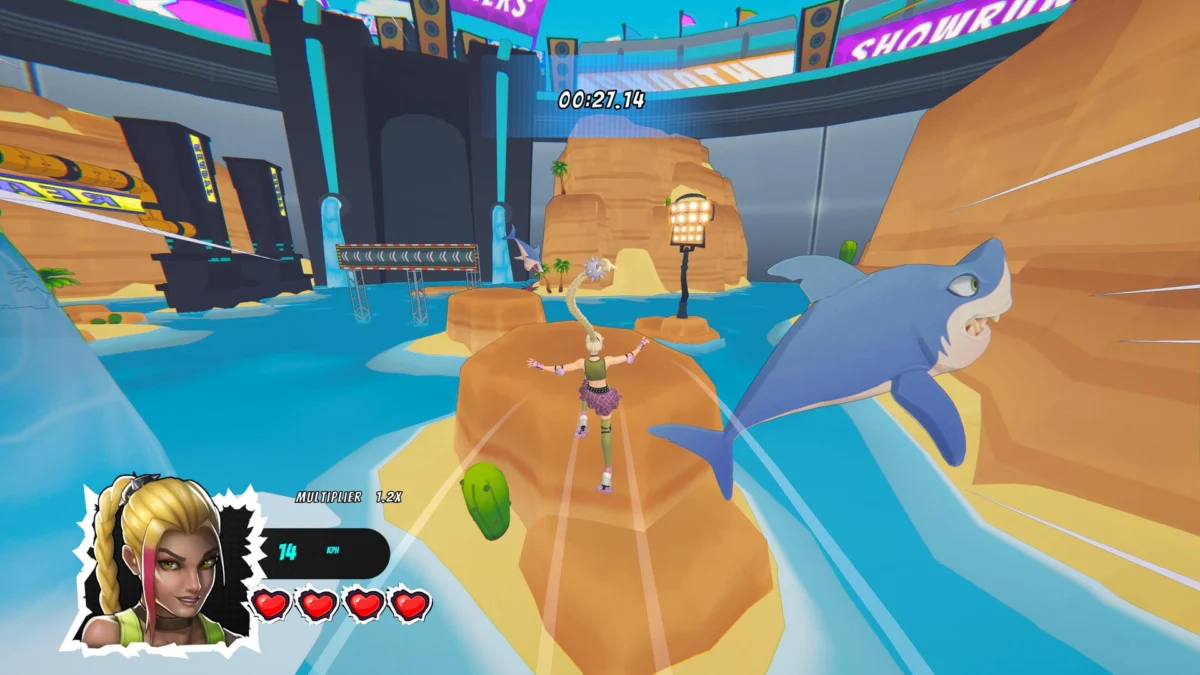
The indie gaming landscape has recently seen a resurgence in momentum-based traversal games, a genre that prioritizes the "flow state"—that psychological sweet spot where a player’s skill perfectly matches the game’s challenge. Emerging from this trend is Showrunners, a fast-paced, speed-running roller skating title that blends the high-stakes adrenaline of futuristic blood sports with the precision of technical skating.
Recently showcased at the Brilliant Indie Treasures event, Showrunners has begun to capture the attention of speedrunners and action-game enthusiasts alike. By combining a unique momentum-based physics engine with a narrative centered on public spectacle, the game promises a mechanical depth that rewards patience, practice, and a flair for the dramatic.
Main Facts: The Anatomy of a Speed-Running Spectacle
At its core, Showrunners is a game about velocity and the mastery of movement. Unlike traditional skating games that focus primarily on high-score trick combos (in the vein of the Tony Hawk’s Pro Skater series), Showrunners shifts the objective toward time-trial efficiency. While tricks are a component of the gameplay, they serve a secondary purpose: entertaining a diegetic audience.
The Core Mechanics
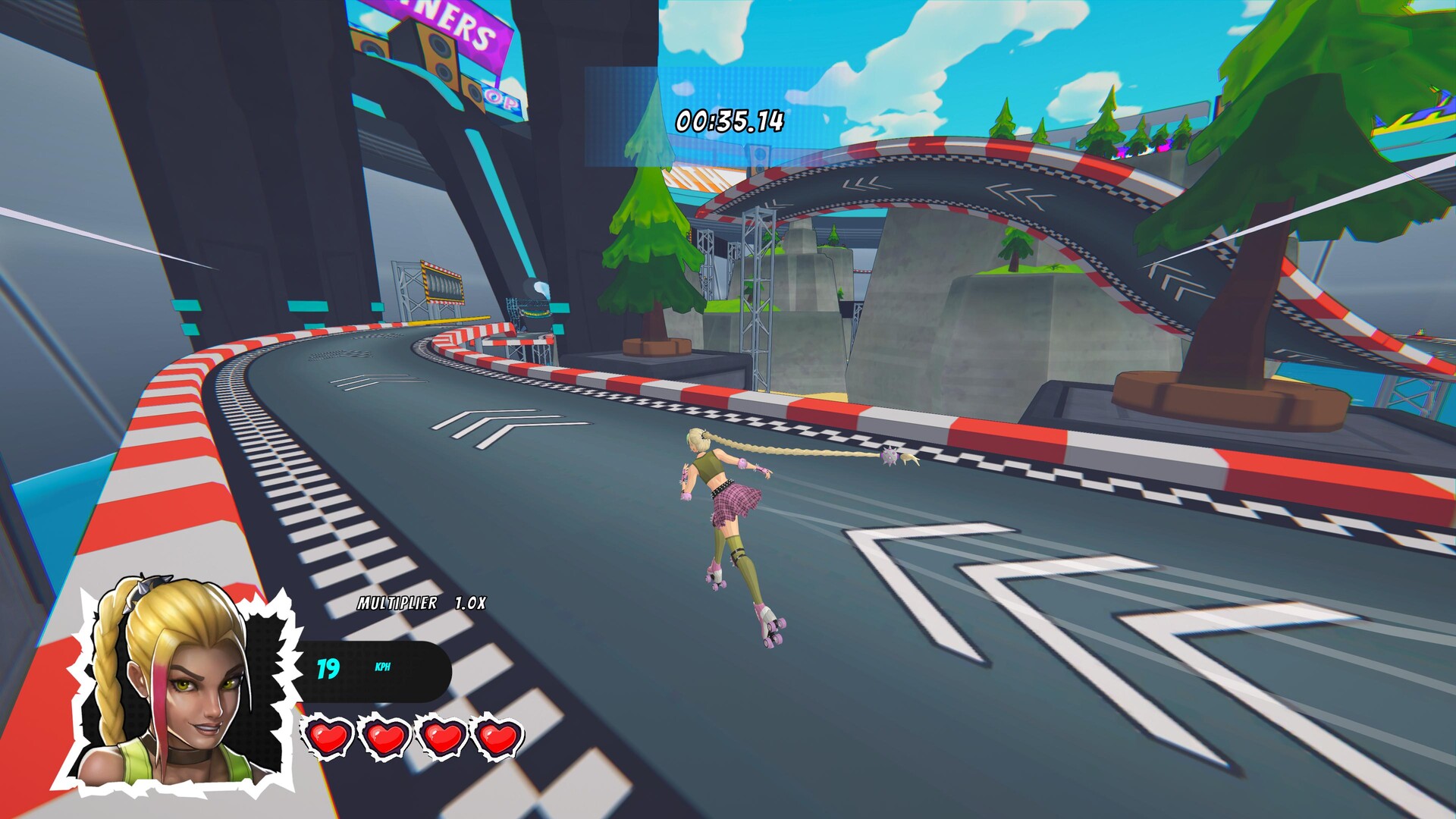
The gameplay loop revolves around navigating complex, multi-layered tracks that feature a variety of surfaces, including half-pipes, flat roads, and vertical side walls. The player’s primary goal is to maintain and build speed through "perfect" movement. This involves:
- Momentum Management: Utilizing gravity and transitions to gain speed.
- Trick Integration: Performing stunts to satisfy the "crowd," which plays into the game’s narrative framework.
- Environmental Navigation: Seamlessly transitioning between different terrain types to find the most efficient path.
The Narrative Hook
The game is set within a dystopian or futuristic entertainment industry where skating is not just a sport but a televised event. Players take on the role of "Showrunners," athletes who must perform for the amusement of a global audience. This narrative layer justifies the game’s focus on aesthetics; players can customize their outfits and gear, ensuring that their character looks the part while zipping through neon-lit corridors or over shark-infested hazards.
Chronology: From Concept to the Brilliant Indie Treasures Demo
The development of Showrunners follows a path common to high-polish indie titles, moving from a mechanical prototype to a visually distinct experience.
Early Development and Vision
The developers set out to create a game that captured the "feel" of classic skating titles like Jet Set Radio but updated the physics for a modern audience. The goal was to move away from "magnetic" rails and toward a system where the player’s weight and trajectory mattered.
The Brilliant Indie Treasures Reveal
The most significant milestone in the game’s public lifecycle to date was its featured presence at the Brilliant Indie Treasures showcase. This event served as the first major hands-on opportunity for critics and the public. The demo provided a vertical slice of the game, featuring several tracks that highlighted the difficulty curve.
During this event, it became clear that Showrunners was not intended to be an easy "pick-up-and-play" experience in the traditional sense. Instead, it follows the "die and retry" philosophy seen in games like Ghostrunner or Neon White. The demo emphasized that mastering a track requires multiple runs to memorize shortcuts and optimal lines.
Steam Wishlisting and Future Launch
Following the success of the demo, the developers opened the Steam Wishlist page, allowing the community to track the game’s progress toward a full release. The current phase of development is focused on refining the "feel" of the jump mechanics and expanding the roster of "strange characters" that inhabit the game’s world.
Supporting Data: Physics, Control, and Level Design
To understand why Showrunners stands out, one must look at the technical data points provided by early playtests and the developer’s design choices.
The Physics of the "Big Jump"
One of the most discussed aspects of the game’s control scheme is the "Jump" mechanic. Initial feedback from the demo suggested that the jump feels "heavy" or "large." However, this is a deliberate design choice. In Showrunners, the jump is not merely a way to clear obstacles; it is a tool for momentum redirection.
The verticality afforded by the jump allows players to reach high-level bars and rails. In this game, height equals potential energy. By jumping higher, players can find steeper declines, which translates into the raw speed necessary to top the global leaderboards.
Control Precision
While the game supports keyboard and mouse, the consensus among early testers—and the recommendation from the developers—is the use of a controller. The analog sticks allow for the fine-tuned directional adjustments required when transitioning from a vertical wall-run back to a horizontal pipe. The game’s "flow" is heavily dependent on these micro-adjustments.
The Trial-and-Error Loop
Data from playtests indicates a specific user behavior pattern:
- Exploration Phase: The player moves slowly, often falling off the track as they encounter unexpected turns.
- Optimization Phase: The player begins to use the respawn mechanic strategically to learn the layout.
- Execution Phase: The player achieves "flow," linking tricks and speed-boosts into a single, continuous run.
The inclusion of "shortcuts" hidden within the level design rewards players who deviate from the obvious path, adding a layer of strategic depth to the speed-running aspect.
Official Responses: The Developer’s Philosophy on "Spectacle"
While the developers have remained focused on iterative design, their public communications and the game’s internal logic provide insight into their creative philosophy.
On the "Entertainment" Narrative
The developers have stated that the "racing for entertainment" aspect was designed to solve a common problem in speed-running games: the feeling of isolation. By making the player a "performer" for an in-game audience, the world feels lived-in and reactive. The "strange characters" encountered—such as the shark-themed elements seen in promotional materials—serve to reinforce the "bizarre" nature of this televised sport.
Addressing the Difficulty Curve
In response to feedback regarding the difficulty of navigating tracks on the first try, the design team has doubled down on the "mastery" aspect. They argue that the satisfaction of Showrunners comes not from finishing a track, but from conquering it. The respawn system is intended to be near-instantaneous, encouraging players to treat "death" or "falling" as a learning tool rather than a punishment.
Implications: The Future of the Speed-Running Genre
The emergence of Showrunners carries several implications for the indie gaming market and the broader culture of competitive gaming.
1. The Rise of "Spectacle Speed-Running"
Showrunners represents a shift toward making speed-running more visually engaging for spectators. In the real-world streaming era, games that look good while being played at high speeds have a natural advantage. By incorporating tricks and outfit customization, Showrunners is built for the Twitch and YouTube era, where the "show" is just as important as the time on the clock.
2. Revitalizing the Skating Genre
For years, the skating genre was dominated by a few major franchises. Showrunners, alongside titles like Rollerdrome, proves that there is a hunger for "skating-plus" games—titles that take the mechanics of skating and apply them to different genres (like shooters or, in this case, speed-runners).
3. Community-Driven Competition
The integration of global leaderboards is not just a feature; it is the game’s lifeblood. If Showrunners can foster a dedicated community, it could become a staple of events like Games Done Quick. The emphasis on shortcuts and momentum physics provides the exact kind of "frame-perfect" potential that competitive communities crave.
4. Accessibility vs. Mastery
The game’s reliance on "feeling" and "momentum" poses a challenge: how to keep the game accessible while maintaining a high skill ceiling. The success of Showrunners will ultimately depend on how well it onboarded new players during its initial levels before demanding the pixel-perfect precision required for the later stages.
Conclusion
Showrunners is more than just a racing game on skates; it is a technical challenge wrapped in a neon-soaked, televised package. By focusing on the purity of movement and the thrill of the chase, it offers a unique proposition in the indie space. As the game moves toward its full release on Steam, it stands as a testament to the enduring appeal of "flow-state" gaming. For those willing to endure a few crashes to find the perfect line, Showrunners promises an exhilarating ride where the crowd is always watching, and the clock is always ticking.
Wishlist Showrunners on Steam today to prepare for the ultimate test of speed and style.