The Digital Canvas: Jacob Holster and the Evolution of Painterly AI Aesthetics
In an era where generative artificial intelligence is frequently criticized for producing "plastic," hyper-realistic, or clinical imagery, a new vanguard of artists is emerging to reclaim the medium for the humanities. At the forefront of this movement is Jacob Holster, known in the digital art community by his handle @bandyquantguy. Holster, an Assistant Teaching Professor of Music Education at Penn State University, has carved out a unique niche that defies the standard tropes of AI art. By bridging the gap between rigorous scholarly inquiry and avant-garde visual experimentation, Holster is proving that the "ghost in the machine" can, in fact, paint with the warmth and texture of a human soul.
Main Facts: The Intersection of Pedagogy and Pixels
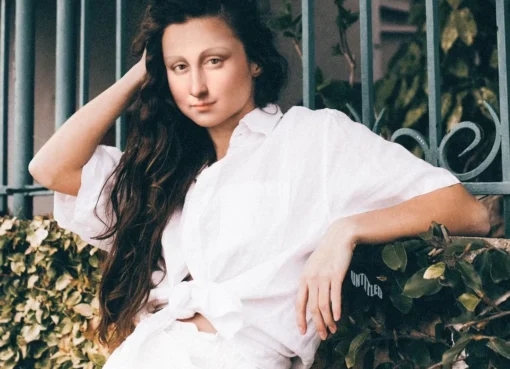
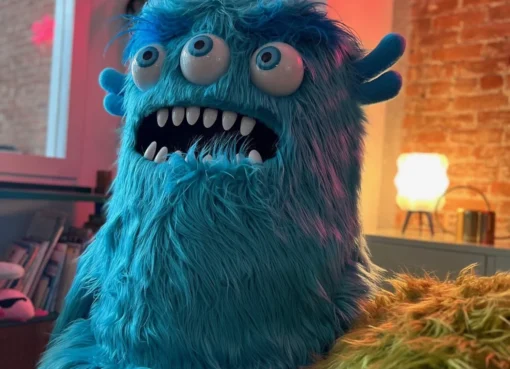
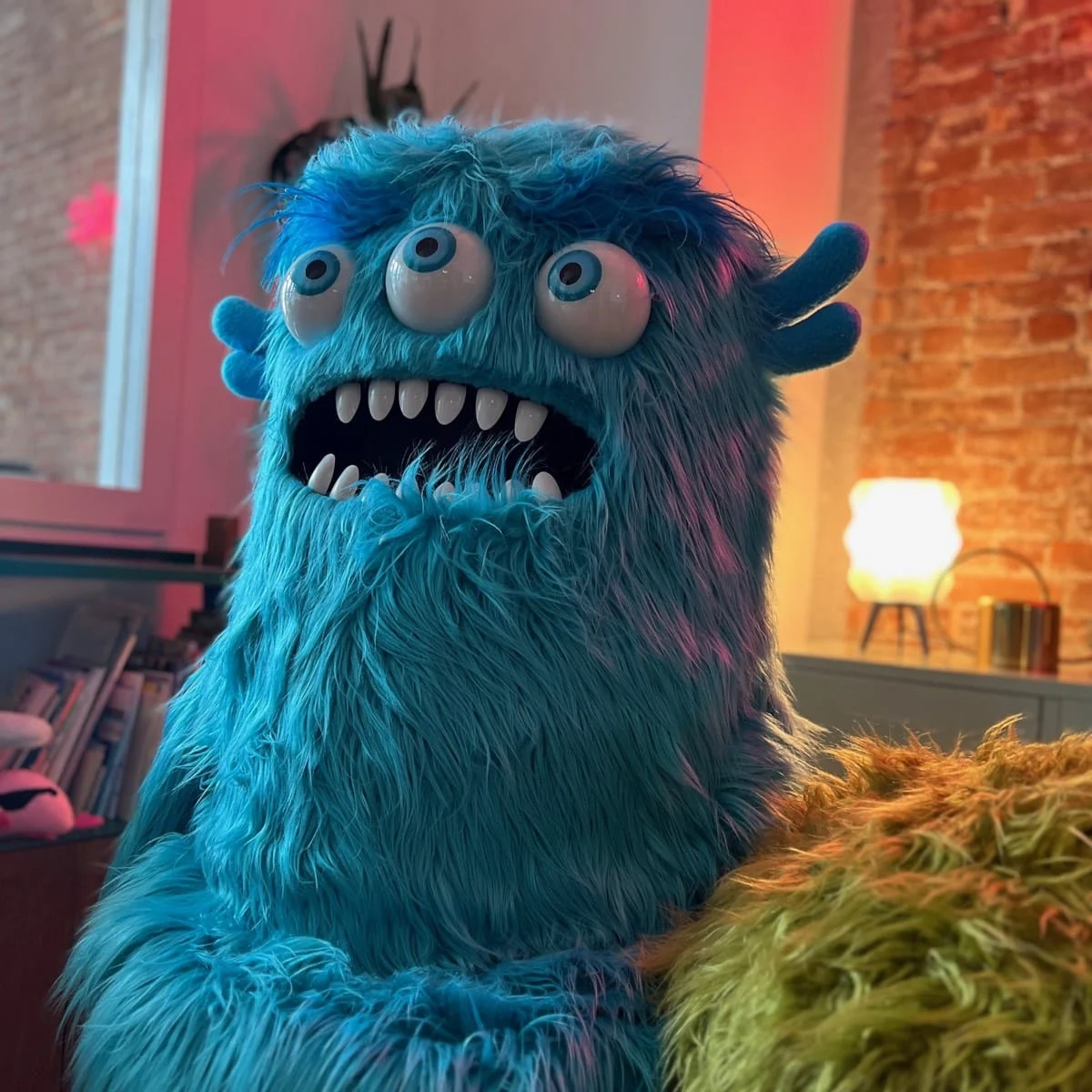
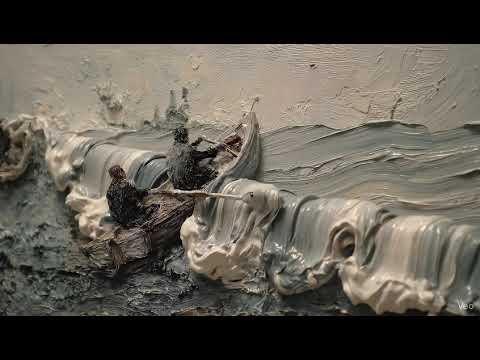
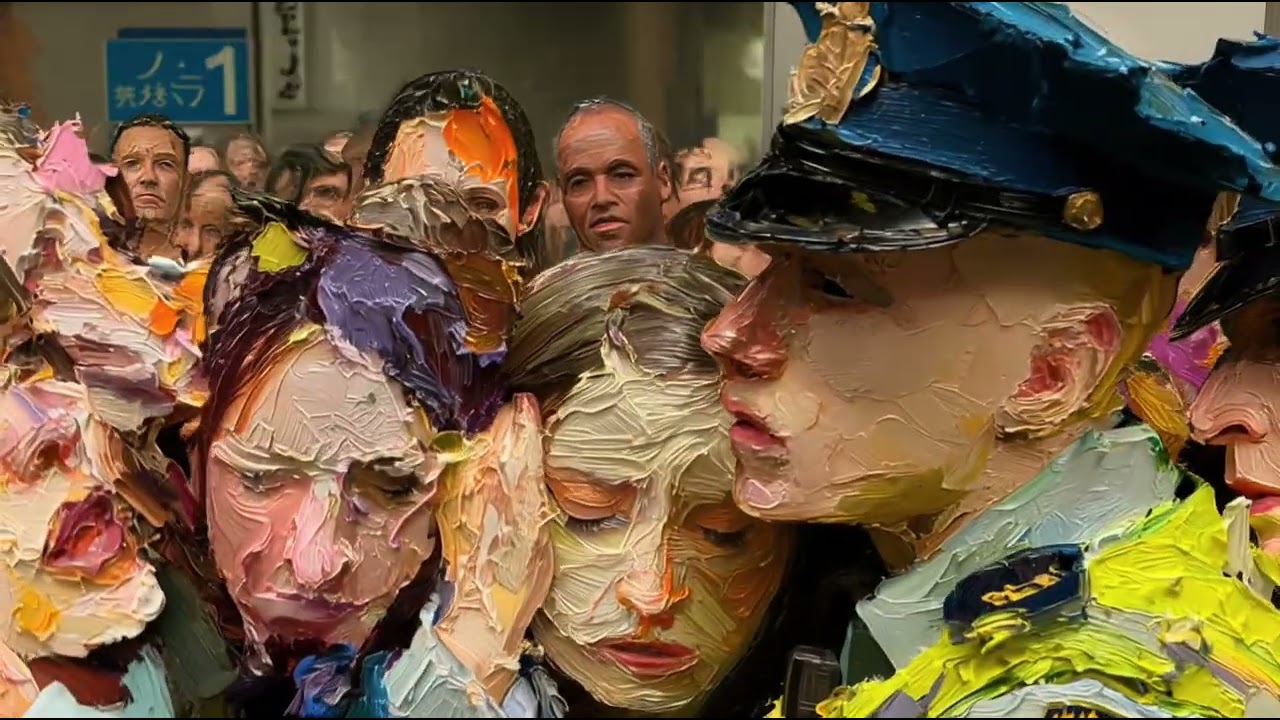
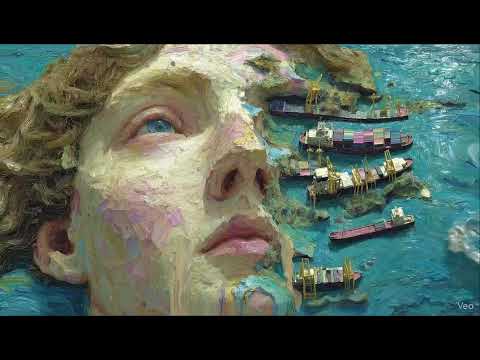
Jacob Holster’s work represents a significant departure from the mainstream application of tools like Midjourney, DALL-E, or Sora. While much of the AI-generated content flooding social media seeks to replicate the precision of high-end photography or 3D rendering, Holster’s portfolio—most notably his "Paint World" series—prioritizes the "painterly." His aesthetic is defined by visible brushstrokes, rich impasto textures, and a color palette that feels derived from oil and pigment rather than pixels and light.
Key to understanding Holster’s impact is his dual identity. As a faculty member at Penn State, his primary research focuses on the convergence of artificial intelligence, pedagogy, and creative practice. This academic grounding ensures that his art is never merely decorative. Each piece is an exploration of how technology can be used to expand human expression rather than replace it. His recent AI short film, Art Is Human Terrain, serves as a manifesto for this philosophy, suggesting that the digital landscape is not a cold, empty void, but a territory rich with human emotion and historical artistic precedent.

Chronology: From Music Education to Visual Innovation
The trajectory of Jacob Holster’s career provides essential context for his current artistic output. His journey into the world of AI art did not begin in a graphic design studio, but in the music classroom and the research lab.
The Academic Foundation
Holster’s early career was defined by music education. As an Assistant Teaching Professor, his focus was—and remains—how students learn to create and express themselves. This interest in the process of creation naturally led him to investigate the emerging tools of generative AI. Unlike many who saw AI as a threat to traditional arts, Holster viewed it as a new pedagogical frontier. He began researching how these tools could be integrated into the classroom to help students understand complex concepts of composition and narrative.
The Transition to Generative Art
Around 2022, as diffusion models began to revolutionize the creative world, Holster began experimenting with visual media. He applied his understanding of musical rhythm and structure to the temporal nature of AI video. His early experiments focused on texture—specifically, how to "break" the AI’s tendency toward smoothness. This led to the birth of the "Paint World" series, a collection of short, evocative films that look like living oil paintings.
Recent Milestones
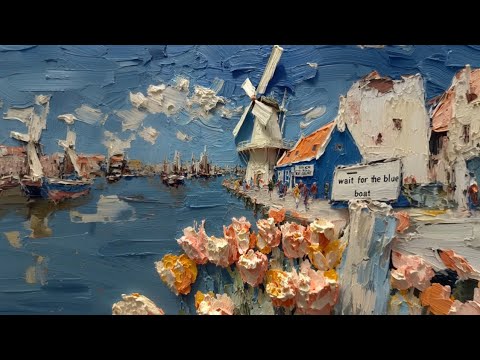
In late 2023 and early 2024, Holster’s work gained significant traction on platforms like Instagram and YouTube. Pieces such as Le Voyage [Paint World 28] and Wait for the Blue Boat [Paint World 18] showcased a level of atmospheric depth rarely seen in generative media. By mid-2024, he released Art Is Human Terrain, a project that synthesized his research into a cohesive cinematic experience, solidifying his reputation as a "painterly" filmmaker.
Supporting Data: Analyzing the "Paint World" Series
To understand the technical and artistic achievement of Holster’s work, one must look at the specific characteristics of his most influential pieces. The "Paint World" series is not just a collection of videos; it is a systematic study of digital texture.
1. Texture and Tactility
In Le Voyage [Paint World 28], the viewer is presented with a scene that mimics the heavy application of oil paint. There is a "warmth" to the imagery that counters the "clinical precision" often associated with AI. Holster utilizes the flickering, metamorphic nature of AI video—often seen as a defect—and reclaims it as the "vibration" of a painter’s hand.
2. Philosophical Inquiry: "Recipe for Consciousness"
Recipe for Consciousness [Paint World 38] demonstrates the conceptual depth of Holster’s work. Here, the imagery serves a narrative about the nature of being. By using AI to explore consciousness, Holster creates a meta-commentary on the medium itself. If a machine can evoke the feeling of a human memory through a "painterly" filter, what does that say about the universality of aesthetic experience?
3. Narrative Tranquility: "Wait for the Blue Boat"
In Wait for the Blue Boat [Paint World 18], Holster leans into a contemplative, almost Zen-like aesthetic. The pacing is deliberate, moving away from the "sensory overload" typical of many AI-generated trailers. This piece highlights his ability to use technology to foster a sense of calm and presence, rather than just spectacle.
Official Context: The Penn State Connection and Scholarly Perspective
Holster’s position at Penn State University is not a secondary detail; it is the engine behind his creative output. Within the academic framework, Holster is exploring the "Human-AI Co-creativity" model. This model suggests that the artist is not a passive "prompter" but an active collaborator who must understand the underlying structures of the technology to bend it to their will.
The Role of Pedagogy
In his teaching, Holster examines how AI can be used to democratize the arts. For a student who may not have the fine motor skills of a classical painter but possesses a profound vision, Holster’s techniques offer a bridge. However, he remains a staunch advocate for the "humanistic" element. His research suggests that without a grounding in traditional artistic principles—such as color theory, composition, and historical context—AI art remains hollow.
Official Responses to the AI Movement
While the broader academic world has been cautious about generative AI, Holster’s work at Penn State serves as a case study for responsible and creative integration. By focusing on "painterly" aesthetics, he bypasses many of the ethical concerns regarding "deepfakes" or the replacement of human photographers, instead positioning AI as a new branch of digital Impressionism.
Implications: The Future of AI as a Humanistic Medium
The work of Jacob Holster carries significant implications for the future of the digital arts. As the novelty of AI-generated realism begins to fade, the "Post-Prompt" era will likely be defined by artists who can infuse the technology with a distinct, recognizable voice.
1. The Rejection of Hyper-Realism
Holster’s success signals a growing fatigue with "perfect" digital imagery. Just as the invention of the camera pushed 19th-century painters toward Impressionism and Expressionism, the "perfection" of AI is pushing 21st-century digital artists toward the "imperfect" and the "textured." Holster is a pioneer of this "New Impressionism."
2. AI as a Narrative Tool
Through films like Art Is Human Terrain, Holster is proving that AI can handle long-form narrative and conceptual depth. It is no longer just about generating a single striking image; it is about building a "world" with a consistent aesthetic language. This opens the door for independent filmmakers to create high-concept visual stories that were previously only possible with massive studio budgets.
3. The Scholar-Artist Hybrid
Holster represents a new breed of creator: the scholar-artist. In the future, the most successful AI artists may not be those who are the fastest at prompting, but those who understand the philosophical and pedagogical implications of the tools they use. By treating AI as a "Human Terrain," Holster reminds us that technology is ultimately a reflection of our own creative history.

Conclusion: Finding the Human in the Machine
Jacob Holster (@bandyquantguy) has successfully navigated the complex intersection of high technology and traditional art. His work serves as a vital reminder that artificial intelligence does not have to be cold, clinical, or derivative. In his hands, the machine becomes a brush, and the digital void becomes a canvas for rich, textured explorations of the human condition.
As he continues his work at Penn State and his visual experiments in the "Paint World" series, Holster remains a crucial figure to watch. He is not just making art; he is defining the aesthetic and ethical parameters of a new medium. For those looking to explore the future of surrealism and digital expression, Holster’s "Human Terrain" is the essential starting point.
Where to Explore Jacob Holster’s Work:
- Instagram: @bandyquantguy
- YouTube: @bandyquantguy
- Academic Profile: Penn State University, Department of Music Education.