The Architecture of a Breakout: Navigating the New Hollywood Landscape for 2026
The entertainment industry is currently navigating one of its most transformative periods since the advent of sound. As the "Peak TV" era wanes and the theatrical landscape recalibrates following the dual strikes of 2023, the quest for the elusive "hit" has become more rigorous, data-driven, and yet, paradoxically, more reliant on raw creative instinct than ever before.
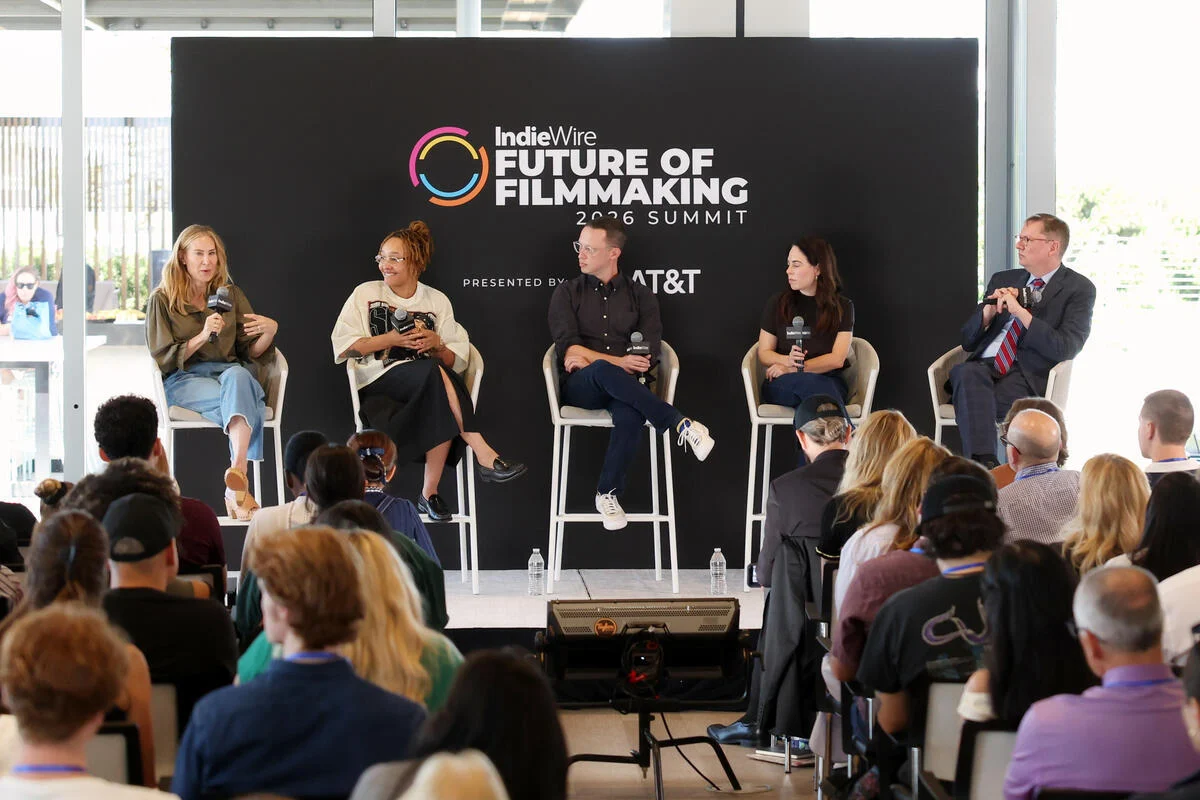
At the recent IndieWire Future of Filmmaking Summit in Los Angeles, industry titans gathered to dissect this evolution. The centerpiece of the event, a panel titled "Pitch Me," brought together four distinct pillars of the filmmaking ecosystem: Erica Lee (President of Production and Partner, Thunder Road), Julien Levesque (Agent, Gersh), Ayo Kepher-Maat (VP of Acquisitions and Productions, Independent Film Company), and Rachel Shane (Head of Film and Television, Madison Wells). Moderated by IndieWire Editor-in-Chief Brent Lang, the discussion served as a masterclass in how to bridge the gap between a creative spark and a commercial phenomenon as we look toward the 2026 market.
Main Facts: The Triple Threat of Success
The consensus among the panelists was clear: finding a hit in 2026 requires a "unique combination of art, science, and luck." While "luck" remains the uncontrollable variable, the "art" and "science" are currently undergoing a massive overhaul.
The panel identified three core pillars that define a viable project in today’s climate:
- Voice-Driven Originality: With audiences showing "franchise fatigue," there is a renewed premium on original scripts that possess a distinct, unreplicable voice.
- Financial Viability and Packaging: The "science" of the hit involves understanding how a project fits into a specific budget tier and which talent attachments can "greenlight" a film in an era of cautious spending.
- Genre Resurgence: The industry is moving away from mid-budget "prestige drama" toward elevated genre films—specifically, a return to the erotic thriller and high-concept action.
Chronology: From the "Streaming Wars" to the "Efficiency Era"
To understand the advice for 2026, one must look at the timeline of the industry’s recent upheaval.
2019–2022: The Volume Era
During the height of the "Streaming Wars," the mandate was volume. Platforms like Netflix, Disney+, and Max were spending billions to acquire content at any cost to grow subscriber bases. During this time, the "pitch" was often secondary to the "package," and many projects were greenlit with minimal vetting.
2023: The Correction
The WGA and SAG-AFTRA strikes, combined with a cooling of the streaming market, forced a total industry shutdown. This period served as a "great reset," where studios began purging development slates and refocusing on profitability over pure subscriber growth.
2024–2025: The Development Bottleneck
As the industry resumed, the "Pitch Me" panelists noted a significant bottleneck. There is currently a massive surplus of scripts but a much narrower "eye of the needle" for what gets produced. This has led to the current state of "high-stakes pitching," where a project must be "undeniable" to move forward.
2026: The Outlook
The projects being pitched today are slated for 2026 release. This two-year lead time means filmmakers must anticipate what audiences will want after the current cycle of superhero movies and biopics has run its course.
Supporting Data: The Mechanics of the Modern Hit
The panel delved into the specifics of what makes a project stand out to agents, producers, and distributors in a crowded marketplace.
The Return of the Spec Script
Julien Levesque of Gersh highlighted a significant shift: the return of the "writing on spec." For years, the industry relied on intellectual property (IP)—reboots, sequels, and adaptations. However, Levesque noted that a spec script (a screenplay written without a buyer) is once again the best way for a writer to demonstrate their "true north." It allows the industry to see a writer’s unfiltered vision, which is often more valuable than a "writer-for-hire" sample.
The "Erotic Thriller" Comeback
One of the most discussed data points during the summit was the shifting appetite for genre. Both Erica Lee and Rachel Shane pointed to the "Erotic Thriller" as the next genre poised for a massive comeback.
- Why now? Historically, erotic thrillers (Basic Instinct, Fatal Attraction) were high-margin successes. In a post-streaming world, these films offer something that "all-ages" superhero fare lacks: adult-oriented, visceral storytelling that generates social media conversation and "water cooler" moments.
- Production Value: These films are often more cost-effective to produce than CGI-heavy blockbusters, making the Return on Investment (ROI) much more attractive to financiers.
The International Quotient
Ayo Kepher-Maat of the Independent Film Company emphasized that a "hit" in 2026 is no longer defined solely by the domestic (U.S.) box office. Data shows that independent films with "universal themes" and "cross-border appeal" are the only ones surviving the current theatrical squeeze. For a pitch to succeed, it must demonstrate how it will play in markets like South Korea, France, and Brazil.
Official Responses: Insights from the Front Lines
The panelists provided specific, actionable advice for filmmakers looking to break through the noise.
Erica Lee (Thunder Road):
As a producer behind the John Wick franchise, Lee emphasized the importance of "world-building" even in small-scale pitches. "We aren’t just looking for a story; we’re looking for a world that can expand," Lee remarked. She noted that Thunder Road looks for projects that have a "hook"—a singular, high-concept idea that can be explained in one sentence but has the depth to sustain a franchise.
Julien Levesque (Gersh):
Levesque spoke to the importance of the "in-person" pitch. In a world of Zoom meetings, he argued that the ability to command a room is a lost art. "The pitch is the first performance of the movie," he said. He advised filmmakers to focus on the emotional core of the story rather than getting bogged down in the minutiae of the plot.
Ayo Kepher-Maat (IFC):
Representing the distribution side, Kepher-Maat was candid about the "theatrical bar." "Does this need to be seen in a dark room with strangers?" she asked. For IFC, a hit is a film that demands a collective experience. She encouraged filmmakers to think about the "audience journey" from the moment they see the poster to the moment the credits roll.
Rachel Shane (Madison Wells):
Shane focused on the collaborative nature of the producer-writer relationship. She noted that Madison Wells looks for "partners, not just scripts." The ability to take notes and iterate is a key metric in deciding whether to pick up a project. "A hit is rarely born; it is built through relentless refinement," Shane noted.
Implications: The Future of the Industry
The "Pitch Me" panel at the IndieWire Future of Filmmaking Summit suggests several long-term implications for the state of cinema in 2026 and beyond.
1. The Democratization of Opportunity
A significant portion of the summit was dedicated to the AT&T Untold Stories initiative. This collaboration with the Tribeca Festival provides $1.2 million in funding and mentorship to underrepresented filmmakers. The implication is clear: the "next big hit" is likely to come from a voice that has historically been marginalized. By providing comprehensive support, the industry is betting that diversity is not just a moral imperative, but a commercial one.
2. Quality Over Quantity
The "Efficiency Era" means fewer movies will be made, but those that are produced will have higher stakes. This will likely lead to a "hollowing out" of the middle—projects will either be ultra-low-budget indie darlings or high-concept "event" films. The "middle-class" movie ($20M–$50M range) must now have a significant genre "hook" (like the aforementioned erotic thriller) to justify its existence.
3. The Hybrid Model
The distinction between "film people" and "TV people" is effectively dead. As Rachel Shane’s title (Head of Film and Television) suggests, hits in 2026 will be "format-agnostic." A successful pitch might start as a feature film but be designed with a limited series spin-off in mind.
4. The Human Element in the Age of AI
While the summit touched on technology, the overwhelming sentiment of the "Pitch Me" panel was a return to human-centric storytelling. In an era where AI can generate a script outline in seconds, the "art" of the hit lies in the flaws, the specificities, and the "soul" that a machine cannot replicate.
Conclusion
As the industry looks toward 2026, the path to a breakout hit remains as treacherous as it is rewarding. The IndieWire Future of Filmmaking Summit served as a reminder that while the tools of the trade—data, distribution models, and technology—are changing, the core of the business remains the same: a compelling story, told with passion, to an audience hungry for connection. For those looking to build a career in this new landscape, the message from the experts is clear: find your voice, master your craft, and be ready when luck meets preparation.