The Architecture of a Hero: How HBO’s ‘Lanterns’ Reconstructs the Green Lantern Mythos
The third episode of HBO’s Lanterns, titled “OutKast,” represents a seismic shift in the landscape of superhero television. While the first two installments of the series established a gritty, True Detective-inspired procedural set in the American Midwest, Episode 3 pivots sharply, abandoning the immediate mystery of the Nebraska "Manhunters" to deliver a profound, standalone origin story. In doing so, it tackles the fundamental question of the franchise: How do you make a Green Lantern?
Traditionally, the answer has been simple: the ring chooses the wearer based on their ability to overcome great fear. However, “OutKast” introduces a more cynical, terrestrial reality. It suggests that while some are born to the light, others are manufactured in the shadows of systemic exclusion and parental expectation.
Main Facts: The Deconstruction of the Chosen One
The core revelation of “OutKast” is that John Stewart (Aaron Pierre) was not merely a lucky candidate for the Green Lantern Corps; he was the subject of a lifelong "programming" effort. The episode reveals that the Guardians of the Universe—the immortal, blue-skinned overseers of the Corps—have grown disillusioned with Hal Jordan (Kyle Chandler). Jordan, the first human Lantern, is viewed by the Guardians as an impulsive liability, particularly following the betrayal of his mentor, Sinestro (Ulrich Thomsen), who murdered a Guardian.
To rectify their "mistake" with Jordan, the Guardians took an unprecedented step: they interfered with a human bloodline. Episode 3 confirms that John Stewart was groomed from birth to be Jordan’s replacement, not his partner. This narrative choice subverts decades of DC Comics lore, moving away from the "magic ring" trope and toward a more complex exploration of eugenics, environmental conditioning, and the weight of Black excellence in America.
Chronology of a Constructed Life
The episode functions as a chronological tapestry, weaving through John Stewart’s life to illustrate the cost of his eventual ascension.

1. The Legacy of Failure (The 1990s)
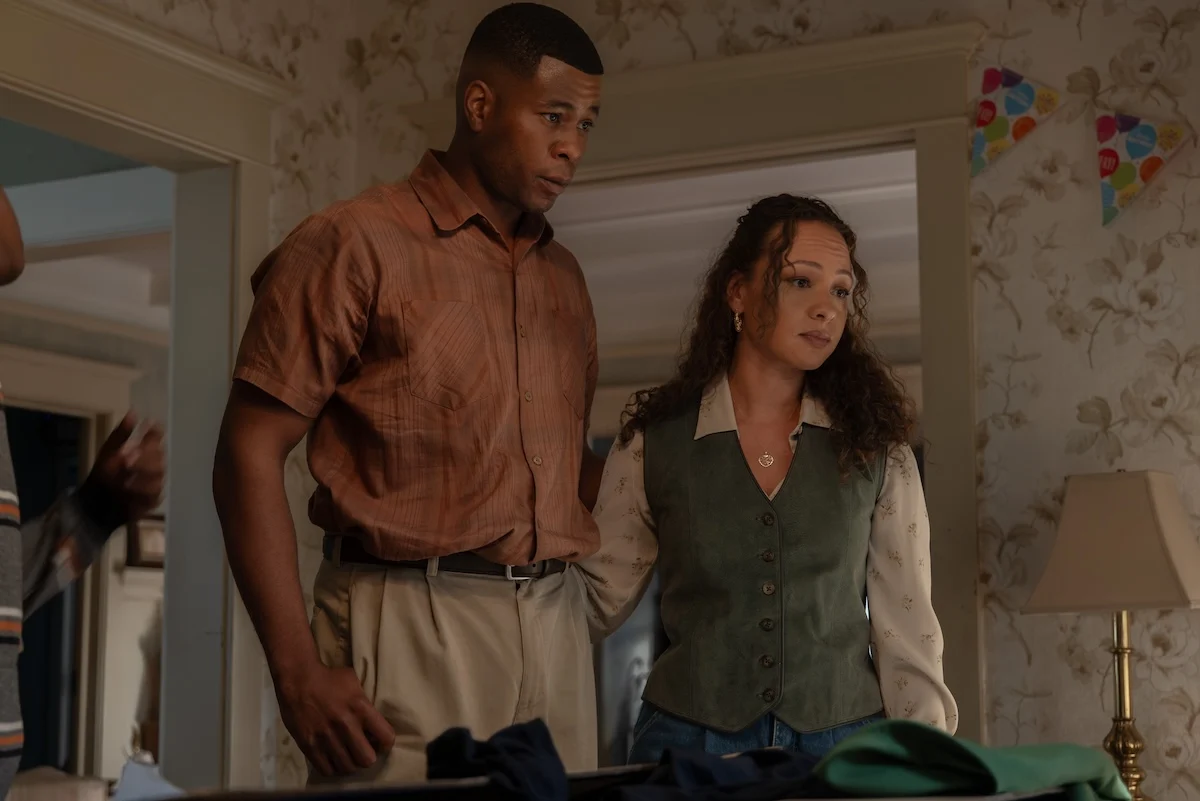
The story begins with John Stewart Sr. (J. Alphonse Nicholson), a former Marine who is tested by a Green Lantern ring and found wanting. The rejection breaks him, leading to a psychological spiral that alienates his community and his wife, Bernadette (Jasmine Cephas Jones). This failure serves as the catalyst for the Guardians’ intervention. They visit Bernadette, offering her a deal: if she can raise a son who is truly "fearless," he will be granted the power her husband could not hold.
2. The Training of a Sentinel (The 2000s)
The middle act of the episode details the grueling, often traumatic upbringing John Jr. endured. Bernadette and John Sr. transform their home into a training camp. John is forced to find his way home from remote locations as a child, pushed to become an elite marksman despite his natural inclination toward art, and subjected to "fear conditioning." In a chilling sequence, his parents fire live rounds at him to desensitize him to lethal threat. This trauma manifests in John’s adulthood as a rigid, almost robotic adherence to discipline, including a self-imposed veganism as a rejection of the "reward" (hamburgers) his father gave him after shooting sessions.
3. The Military and the Interview (2010–2015)
John’s path leads him through a distinguished but isolated career in the Marines. His brothers-in-arms view him as an outlier—a man so focused on his "path" that he seems to have lost his cultural identity. This culminates in a 2016 interview with a Guardian (portrayed in human form by Laura Linney). The interview is a masterclass in tension, as the Guardian probes John’s psyche to ensure he is the "perfect" successor—one who will follow orders unlike the rebellious Hal Jordan.
4. The Collision (2016)
The flashback ends where the series began: the moment John Stewart is officially "hired" to replace Hal Jordan. The episode closes with Hal Jordan’s arrival, a moment that recontextualizes their entire partnership. Jordan is no longer just a mentor; he is the man John has been trained his entire life to obsolete.
Supporting Data: Narrative and Production Excellence
The success of “OutKast” is rooted in its creative pedigree. The episode was directed by Stephen Williams, an Emmy winner known for his work on Watchmen and Lost. Williams brings a similar prestige-drama sensibility to Lanterns, utilizing a desaturated color palette and tight, claustrophobic framing to emphasize John Stewart’s internal isolation.

The Role of Music and Imagery
The episode’s title and its central needle drop—OutKast’s “Gasoline Dreams”—serve as a cultural anchor. The song’s aggressive, socially conscious lyrics reflect the "fire" burning beneath John’s stoic exterior. The contrast between the high-energy hip-hop and John’s silent, disciplined life highlights the parts of himself he has had to suppress to fit the Guardians’ mold.
The Symbolism of Birds
A recurring motif in the series has been John’s fascination with birds. “OutKast” provides the origin: his mother told him as a child that birds were the Guardians watching over him. This lie created a lifelong sense of surveillance, turning John into a man who acts as if he is always being judged by a higher power.
Official Responses: Creative Intent and Casting
While HBO has not released a formal statement regarding the specific plot twists of Episode 3, showrunners have previously hinted that Lanterns would be a "deconstruction" of the superhero myth.
In interviews, Aaron Pierre has discussed the "weight of responsibility" inherent in his portrayal of John Stewart. Pierre notes that this version of the character is defined by a "profound sense of duty that borders on the sacrificial." Kyle Chandler, meanwhile, has described his Hal Jordan as a man "aware that the world is moving past him," a sentiment that takes on new meaning after the revelations of the Guardians’ replacement plan.
The casting of Laura Linney as a human avatar for the Guardians has also been praised by critics. Her performance provides a chilling look at the cold, clinical nature of the cosmic entities, who view human lives as biological data points rather than sentient beings.

Implications: A New Direction for the DCU
The thematic implications of “OutKast” extend far beyond the runtime of a single episode. By framing the Green Lantern selection process as a rigged system, Lanterns offers a stinging critique of meritocracy and institutional bias.
1. The Critique of Privilege
The episode explicitly contrasts Hal Jordan’s "privilege" with John Stewart’s "programming." As Bernadette Stewart points out, Jordan was allowed to be fearless because the world was built for him. John, as a Black man in America, had to be taught to ignore a fear that is a rational response to his environment. This adds a layer of social commentary rarely seen in the genre, positioning the Green Lantern ring not as a gift, but as a burden earned through the erasure of self.
2. The Guardians as Antagonists
The revelation that the Guardians are actively manipulating human lives to suit their political needs shifts their role in the DCU. They are no longer the benevolent "wise men" of the universe; they are cold bureaucrats willing to traumatize a child to ensure they have a compliant soldier. This sets the stage for an inevitable conflict between the Lanterns and their creators.
3. The Future of the Partnership
Knowing that John is there to replace Hal changes the "buddy cop" dynamic of the show. Every interaction between the two is now laden with dramatic irony. Hal is mentoring his own replacement, and John is working alongside the man he was raised to view as a failure. This tension ensures that the back half of the season will be driven by psychological conflict as much as the external Manhunter mystery.
4. Setting a Prestige Standard
“OutKast” proves that the new DCU, under the leadership of James Gunn and Peter Safran, is willing to take massive creative risks. By dedicating an entire episode to a character study without advancing the primary plot, Lanterns aligns itself with "prestige" television like The Last of Us or Succession. It prioritizes character depth over spectacle, signaling a sophisticated future for the franchise.

In conclusion, “OutKast” is more than just an origin story; it is a profound exploration of identity, race, and the cost of power. It elevates Lanterns from a standard procedural to a vital piece of contemporary television, ensuring that John Stewart’s journey will be remembered as one of the most complex character arcs in the history of the genre.