Legacy, Legend, and Leverage: The Return of Cliff Booth and the Reigniting of the Bruce Lee Controversy
The cinematic landscape is bracing for the return of one of the most polarizing and charismatic characters of the last decade. Netflix has officially released the second trailer for The Further Mis-Adventures of Cliff Booth, a "pseudo-sequel" to Quentin Tarantino’s 2019 masterpiece, Once Upon a Time in Hollywood. While the project itself is a landmark collaboration between two of modern cinema’s most formidable titans—writer Quentin Tarantino and director David Fincher—the marketing strategy has opted for a path of maximum resistance.
Rather than focusing on the high-octane action or the prestige of its creators, the new trailer leans heavily into the most divisive moment of the original film: the portrayal of martial arts icon Bruce Lee. The trailer’s opening line—"You heard the story about Bruce Lee getting his ass kicked by a stuntman?"—serves as a provocative reminder that in the world of Cliff Booth, legends are often viewed through a lens of skepticism and grit.
Main Facts: A New Chapter in the Tarantino Universe
The Further Mis-Adventures of Cliff Booth represents a unique experiment in franchise building. Billed as a standalone adventure rather than a traditional sequel, the film sees Brad Pitt reprising his Academy Award-winning role as the laconic, lethally capable stuntman. However, the absence of Leonardo DiCaprio’s Rick Dalton suggests a shift in tone and scope.
Key Production Details
- Creative Pedigree: The film is written by Quentin Tarantino and directed by David Fincher. This marks a historic collaboration between the two, blending Tarantino’s signature dialogue and world-building with Fincher’s meticulous, atmospheric direction.
- Genre Shift: Tarantino has indicated that this film moves away from the "hangout movie" aesthetic of Once Upon a Time in Hollywood. Instead, it draws inspiration from the gritty, lean prose of Elmore Leonard’s paperback crime novels.
- The Cast: Brad Pitt returns as the titular Booth. While DiCaprio is officially absent from the billing, industry rumors persist regarding a possible cameo.
- Release Schedule: The film is slated for a limited theatrical run this month, followed by a global streaming debut on Netflix in December.
The trailer’s focus on the Bruce Lee incident is a calculated marketing maneuver. By ignoring the climax of the first film—the brutal confrontation with the Manson Family—and instead highlighting a scene that sparked years of cultural debate, Netflix is signaling that the sequel will not shy away from the controversial edges of Cliff Booth’s persona.
Chronology: From 1969 to the Modern Discourse
To understand the weight of the new trailer, one must trace the timeline of the controversy that has followed the character of Cliff Booth since his debut.
2019: The Premiere of Once Upon a Time in Hollywood
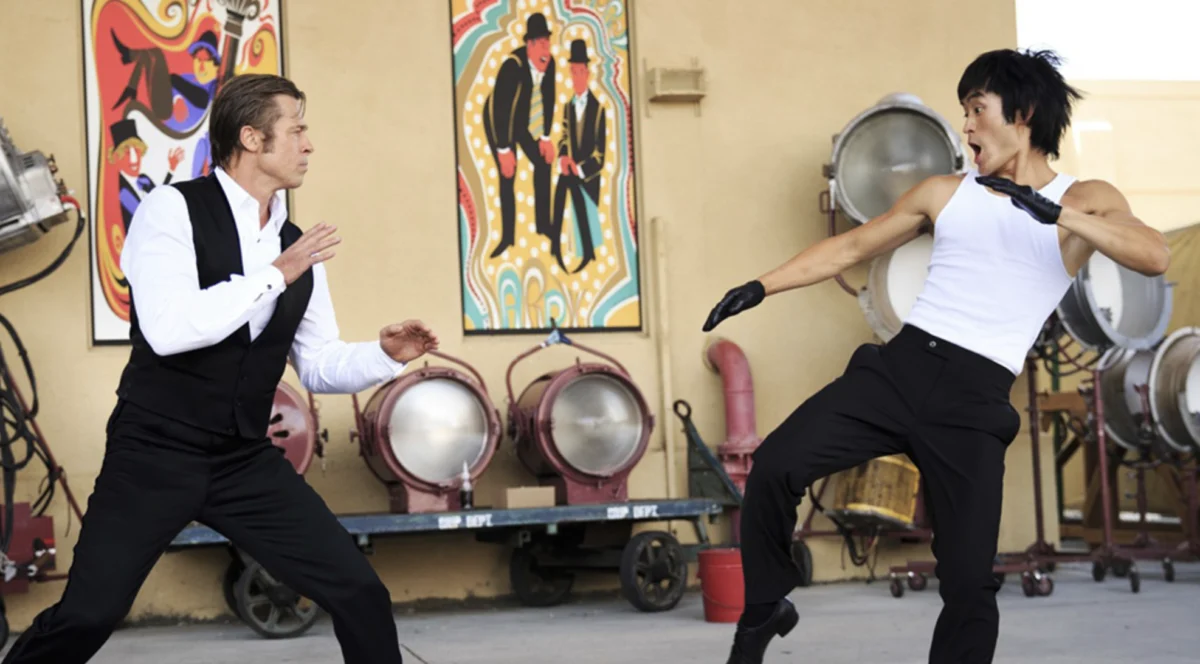
When the film debuted at Cannes and later in global theaters, audiences were introduced to a fictionalized 1969 Los Angeles. The centerpiece of Cliff Booth’s character development was a flashback to the set of The Green Hornet. In the scene, Booth engages in a best-of-three "friendly" fight with Bruce Lee (played by Mike Moh). After Lee knocks Booth down in the first round, Booth retaliates by throwing Lee into the side of a car, denting the vehicle and establishing Booth as a formidable physical force. The fight is interrupted before a winner is declared, but the portrayal of Lee as an arrogant, boastful performer drew immediate fire.
2019–2020: The Immediate Fallout
Following the film’s release, Shannon Lee, Bruce Lee’s daughter, became a vocal critic. She argued that the film reduced her father to a "caricature" and a "buffoon." The controversy became a flashpoint for discussions regarding the representation of Asian American icons in Hollywood and the ethics of historical revisionism in fiction.
2021: The Tarantino Response
During his promotional tour for the novelization of Once Upon a Time in Hollywood, Tarantino doubled down on his portrayal. Appearing on The Joe Rogan Experience, he famously told critics of the scene to "suck a dick," while simultaneously acknowledging the personal pain the depiction might cause Lee’s family. He maintained that his version of Lee was based on extensive research and anecdotes from contemporary stuntmen who worked with the star.

2024: The Trailer for The Further Mis-Adventures
The release of the second trailer for the sequel proves that the creative team is not only aware of the controversy but is actively using it as a pillar of the character’s identity. By opening with a reference to the fight, the film positions Cliff Booth as a man who exists in the shadow of his own notorious reputation.
Supporting Data: The "Elmore Leonard" Influence
Tarantino’s assertion that the new film shares "DNA with Elmore Leonard’s paperback crime novels" provides a roadmap for what audiences can expect. Leonard, the author of Rum Punch (which Tarantino adapted into Jackie Brown), was a master of the "low-stakes" high-tension crime thriller.
Unlike the sprawling, nostalgic epic of the first film, The Further Mis-Adventures is expected to be a more focused, character-driven narrative. Supporting data from early production notes suggests the film explores Booth’s life as a "fixer" and a man for hire in the underworld of 1970s Los Angeles.
Why the Bruce Lee Scene Matters to the Plot
In the context of a crime novel, a character’s "legend" is their currency. In the original film, the rumor that Cliff Booth killed his wife made him a pariah in the industry. The rumor that he "beat up Bruce Lee" serves as a counter-narrative—one that makes him dangerous and respected in the darker corners of Hollywood. By emphasizing this in the marketing, the filmmakers are reinforcing Booth’s status as a mythic figure whose reality is shrouded in hearsay and violence.
Official Responses: A Clash of Legacies
The tension between creative freedom and the protection of a historical legacy remains unresolved. The discourse surrounding The Further Mis-Adventures of Cliff Booth is essentially a continuation of the 2019 debate.
Shannon Lee’s Stance
Shannon Lee has remained consistent in her criticism. In her 2020 statements, she emphasized that her father’s drive was born of a desire for authentic representation, not a need to bully stuntmen. "He could have a temper sometimes, but he did not go around challenging people to fights," she stated. Her objection is rooted in the fear that Tarantino’s fictionalized version will become the "truth" for a new generation of viewers.
Quentin Tarantino’s Defense
Tarantino’s defense rests on the "fictionalized reality" of his films. He argues that in his universe, Cliff Booth is a decorated war hero and a "killer" who is physically capable of holding his own against a martial artist. "Bruce Lee was kind of an arrogant guy," Tarantino said in 2019, citing Lee’s own alleged comments about being able to beat Muhammad Ali. For Tarantino, the scene wasn’t a slight against Lee, but a testament to the lethality of Cliff Booth.
The Fincher Perspective
While David Fincher has been characteristically quiet during the pre-release cycle, his involvement adds a layer of clinical precision to the project. Fincher’s filmography—Fight Club, The Killer, Mindhunter—suggests he is the perfect director to explore the psyche of a man like Booth. Fincher’s "official response" is the film itself, which reportedly treats Booth’s violence with a cold, unsentimental eye.

Implications: Marketing Controversy in the Streaming Age
The decision to lead with the Bruce Lee reference in the marketing for The Further Mis-Adventures of Cliff Booth has significant implications for how prestige films are sold in the streaming era.
1. The Power of "Rage-Bait" Marketing
In a crowded content landscape, controversy generates clicks. By leaning into a five-year-old argument, Netflix ensures that the film remains a topic of conversation on social media. It creates an environment where audiences feel compelled to watch the film to see if the "discourse" is addressed or exacerbated.
2. Historical Revisionism as a Brand
Tarantino has built the latter half of his career on rewriting history (Inglourious Basterds, Django Unchained). This film suggests that he is now interested in rewriting his own fictional history. By re-contextualizing the Bruce Lee fight, he is challenging the audience to re-evaluate what they know about Cliff Booth.
3. The Evolution of the "Tarantino Hero"
Cliff Booth represents a shift in the Tarantino protagonist—from the chatty criminals of the 90s to the silent, efficient men of action. The implications of this film’s success could lead to further "character-study" sequels within the Tarantino cinematic universe, potentially exploring the backstories of other iconic figures from his filmography.
4. The Asian American Representation Debate
The film’s release will undoubtedly reignite the conversation about how Hollywood treats its non-white icons. If the film continues to portray Lee in a controversial light, it may face pushback from advocacy groups and international markets, particularly in Asia, where Lee remains a foundational cultural hero.
As The Further Mis-Adventures of Cliff Booth prepares for its debut, one thing is certain: the shadow of Bruce Lee continues to loom large over the career of Cliff Booth. Whether the film offers a new perspective or simply adds fuel to the fire, the "story about the stuntman" is far from over.