Starlog Magazine Set for Grand Return to Print, Redefining Sci-Fi and Science Journalism
LOS ANGELES, CA – October 26, 2023 – A beacon for generations of science fiction enthusiasts and curious minds, Starlog magazine, the venerable publication once synonymous with "visionary sci-fi and cutting-edge science," has officially announced its highly anticipated return to print. Scheduled for a November 13, 2026 release, the iconic magazine will resume publication as an annual print edition, complemented by a weekly email newsletter, Lodestar, and an accompanying podcast, The Starlog Podcast. This revival, spearheaded by a formidable team of genre experts and backed by the successful Fangoria media network, marks a significant moment for print journalism and the broader science fiction landscape.
The announcement, delivered via a podcast episode detailing the relaunch, revealed a strategic vision aimed at offering content that transcends the ephemeral nature of online media. Esteemed science fiction author, journalist, and cultural critic Annalee Newitz will assume the mantle of Editor-in-Chief, with Meredith Borders appointed Senior Editor and Jason Kauzlarich as Senior Art Director. The editorial philosophy, as articulated by Newitz, prioritizes "thoughtful, engaging articles and beautiful, full-color images that just pop off the page," promising a rich tapestry of speculative scientific inquiry and deep-dive critical essays on beloved genre films and books.
Beyond the annual print magazine, the revitalized Starlog universe will extend its reach into the digital realm. The weekly Lodestar newsletter will keep readers abreast of the latest developments in science and sci-fi, while The Starlog Podcast, hosted by Jordan Hoffman and Dave Gonzales, is poised to feature "conversations with visionary creators, filmmakers, and scientists." This multi-platform approach signals a modern interpretation of a classic brand, designed to engage both long-time devotees and a new generation of fans.
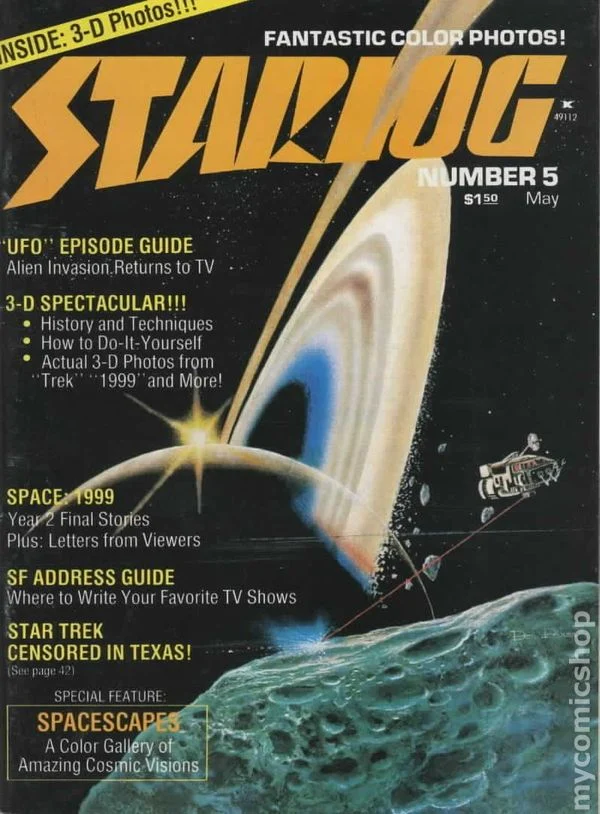
Starlog magazine originally graced newsstands from August 1976 until its cessation in April 2009, concluding with its 374th issue. Its re-emergence under the Fangoria media network, itself a testament to the enduring power of niche print publications, positions Starlog not merely as a nostalgic revival, but as a forward-looking endeavor poised to redefine its legacy in the 21st century.
A Legacy Reimagined: The Chronology of Starlog
The story of Starlog is interwoven with the very fabric of modern science fiction fandom, a testament to its enduring influence and its timely re-emergence. Understanding its past is crucial to appreciating the significance of its future.
The Genesis: 1976 and Beyond
Starlog first burst onto the scene in August 1976, just as the cultural landscape was on the cusp of a seismic shift. Its timing was serendipitous, preceding the release of George Lucas’s Star Wars by less than a year. This pivotal moment in cinematic history would not only redefine blockbuster filmmaking but also ignite a fervent public appetite for science fiction that Starlog was uniquely positioned to satisfy.
In an era predating the internet, Starlog served as a vital conduit, a monthly portal providing unprecedented access to the behind-the-scenes magic of genre filmmaking. It offered readers a privileged glimpse into the special effects wizardry, the design philosophies, and the creative processes that brought fantastical worlds to life. Its pages were filled with in-depth interviews with visionary directors, screenwriters, actors, and special effects artists – individuals like Lucas, Gene Roddenberry, Steven Spielberg, and Ridley Scott, whose names would become synonymous with the genre. For a burgeoning fandom hungry for information, Starlog was an indispensable resource, a trusted authority that went beyond mere movie reviews to explore the craft and the science behind the fiction. It cultivated a sense of community, connecting isolated fans through shared passion and detailed insider knowledge. Its focus on the often-unsung heroes of visual effects, costume design, and prop making elevated these crafts to an art form, giving due recognition to the intricate work that built beloved fictional universes.
The Golden Age and Evolution
Throughout the late 1970s, 1980s, and 1990s, Starlog solidified its reputation as the preeminent source for science fiction and fantasy coverage. It meticulously chronicled the evolution of franchises like Star Trek, from its original series legacy to its various spin-offs, and provided extensive coverage of seminal films such as Alien, Blade Runner, E.T. the Extra-Terrestrial, and countless others. The magazine’s dedication to quality journalism meant that its articles were not just news reports but often comprehensive analyses, offering insights into thematic depth, technological innovation, and cultural impact.
As the genre expanded, so too did Starlog‘s scope. It began to incorporate coverage of television series, comic books, and even early video games, reflecting the diversification of sci-fi media. Its distinct visual style, characterized by striking covers and rich internal photography, made it a collector’s item. Each issue was a time capsule, preserving the conversations, predictions, and aesthetics of its era. For many, a stack of Starlog magazines was a prized possession, a tangible link to the imaginative worlds they cherished. The magazine’s commitment to exploring the scientific underpinnings of speculative fiction also set it apart, fostering a readership that appreciated both the fantasy and the factual possibilities.
The Digital Deluge and Decline: 2009
The turn of the millennium brought with it a profound shift in media consumption. The rapid ascent of the internet and the proliferation of dedicated fan websites, forums, and online news outlets began to erode the traditional dominance of print magazines. Information that once required a monthly wait for Starlog was now available instantaneously, often free of charge, with a simple click. This digital deluge presented an insurmountable challenge for many print publications, including Starlog.
Compounded by economic pressures and a changing advertising landscape, Starlog found it increasingly difficult to compete. Its cessation of print publication in April 2009, after 374 issues, was met with sadness by its loyal readership. It marked the end of an era, a poignant reminder of the relentless pace of technological change and its impact on established media institutions. The absence of Starlog left a void in genre journalism, a space that, for many years, no single entity could fully fill with the same blend of authority, nostalgia, and comprehensive coverage.
The Modern Renaissance: 2026
The announcement of Starlog‘s return in 2026 is therefore not just a revival, but a reclamation of that unique space. It signals a recognition that despite the digital age, there remains a deep-seated desire for curated, high-quality, long-form content presented in a tactile, collectible format. The decision to publish annually, rather than monthly, acknowledges the changed media landscape, positioning the print magazine as a premium, event-driven experience. Its integration into the Fangoria media network is particularly significant, leveraging the lessons learned from Fangoria‘s own successful print revival – a testament to the enduring appeal of physical media for dedicated genre audiences when executed with passion and precision. This revival isn’t about replicating the past but evolving it, fusing the best of Starlog‘s legacy with the demands and opportunities of the present and future.

Supporting Data and Industry Context
The return of Starlog is not an isolated event but rather a fascinating indicator of broader trends within the media industry, particularly concerning niche markets and the enduring appeal of physical formats.
The Enduring Appeal of Print Media
While digital platforms dominate daily news consumption, there has been a noticeable resurgence in the appreciation for high-quality, specialized print publications. This trend is particularly evident in genre-specific magazines like Fangoria, which successfully relaunched its print edition, demonstrating a clear demand for premium, collectible content that offers a different experience from endless online scrolling. For many, print offers a reprieve from screen fatigue, a tangible object to savor and revisit. The tactile experience – the feel of the paper, the crispness of the images, the deliberate layout – contributes to a sense of luxury and permanence that digital media often lacks.
Moreover, print magazines in niche markets often become collector’s items. The annual format proposed for Starlog further enhances this collectibility, transforming each issue into a significant event rather than just another monthly release. This strategic shift moves away from competing with the immediacy of the internet and instead focuses on delivering a curated, in-depth, and visually stunning product that justifies its premium status. It speaks to a segment of the audience that values ownership, curation, and a deeper, more focused engagement with content, often as a complement to their digital consumption.
The Sci-Fi Landscape Today
The science fiction landscape has undergone a dramatic transformation since Starlog last graced newsstands in 2009. The genre has exploded in popularity and diversity, fueled by the rise of streaming services that invest heavily in original sci-fi and fantasy content, from critically acclaimed series like Dune and The Expanse to expansive cinematic universes. This era has also seen a greater emphasis on diverse voices and perspectives within storytelling, pushing the boundaries of what sci-fi can explore.
Simultaneously, "cutting-edge science" has never been more captivating or critical. Advances in artificial intelligence, quantum computing, space exploration (with renewed interest in lunar and Martian missions), biotechnology, and climate science are constantly reshaping our understanding of the world and our potential future. The lines between science fiction and scientific fact are often blurring, making a publication dedicated to exploring both more relevant than ever. Starlog‘s mandate to speculate "with scientists about where we’re headed next" resonates deeply in a world grappling with the implications of rapid technological progress and complex global challenges. It can serve as a crucial bridge, translating complex scientific concepts into accessible, engaging narratives for a broad audience.
Synergies within the Fangoria Network
The decision to house Starlog‘s revival under the Fangoria media network is a strategic masterstroke. Fangoria, a legendary horror magazine, successfully navigated its own return to print, demonstrating a keen understanding of how to modernize a classic genre brand while retaining its core identity. This provides Starlog with invaluable institutional knowledge, operational infrastructure, and a proven playbook for engaging a passionate, dedicated fanbase.
The synergy between Starlog and Fangoria is also compelling. While distinct in their primary focus, both publications cater to a demographic that appreciates genre storytelling, in-depth analysis, and collectible physical media. This shared ethos allows for potential cross-promotion, shared resources, and a consolidated approach to reaching a broader genre audience. The network effect can amplify Starlog‘s reach, leveraging Fangoria‘s established distribution channels and marketing expertise. It’s a testament to the idea that niche print media, when managed by enthusiasts for enthusiasts, can thrive even in a digitally dominated world.
Official Responses and Vision for the Future
The driving force behind Starlog‘s new direction is its leadership team, whose collective vision promises to honor the magazine’s storied past while propelling it confidently into the future.
Annalee Newitz’s Editorial Philosophy
At the helm as Editor-in-Chief is Annalee Newitz, a figure whose extensive background perfectly aligns with Starlog‘s dual mandate. A celebrated science journalist, author of acclaimed science fiction novels (Autonomous, The Future of Another Timeline), and co-founder of influential technology and culture sites like io9 and Gizmodo, Newitz brings a unique blend of critical insight, scientific literacy, and genre passion to the role.
Newitz’s articulate philosophy for the print issue—"What is required of a magazine is to have something that you can’t get online"—is the bedrock of the revival. This statement is not a dismissal of digital content but rather a clear articulation of print’s unique value proposition in the current media landscape. It implies a focus on depth, permanence, and aesthetic quality that differentiates it from the fleeting nature of most web content.
The twin pillars of Newitz’s vision are "a healthy dose of articles about cutting-edge science, speculating with scientists about where we’re headed next" and "deep-dive essays from experts about all your favorite movies and books." This approach promises a nuanced exploration of both the imaginative potential of science fiction and its real-world scientific inspirations. Readers can expect features that delve into topics such as the ethical implications of AI, the latest discoveries in astrophysics, the challenges of space colonization, or breakthroughs in genetic engineering, all framed within the context of speculative thought. Concurrently, the magazine will offer rigorous critical analysis of genre classics and contemporary works, moving beyond superficial reviews to explore themes, narrative structures, production histories, and cultural impact from expert perspectives.
Crucially, Newitz also emphasized "beautiful, full-color images that just pop off the page." This highlights the magazine’s commitment to visual excellence, treating each issue as a work of art. In a world saturated with digital imagery, the impact of high-resolution, thoughtfully curated photography and illustration in a print format cannot be overstated, contributing significantly to the "collectible" nature of the magazine.

The Team Behind the Revival
Complementing Newitz’s editorial vision is a highly skilled and experienced team. As Senior Editor, Meredith Borders brings a wealth of experience in genre film criticism and journalism, particularly from her tenure at Birth.Movies.Death. Her involvement ensures a strong editorial hand in shaping the "deep-dive essays" on movies and books, promising insightful and authoritative commentary. Her understanding of fan culture and critical discourse will be invaluable in crafting compelling narratives that resonate with Starlog‘s audience.
Jason Kauzlarich, the Senior Art Director, is tasked with translating Newitz’s visual mandate into stunning reality. Given his design background and work within the Fangoria network, Kauzlarich is well-positioned to create a visually striking magazine that respects Starlog‘s legacy while embracing modern design aesthetics. The visual identity will be critical in making the magazine "pop" and stand out as a premium print product.
The expanded Starlog ecosystem includes The Starlog Podcast, hosted by the dynamic duo of Jordan Hoffman and Dave Gonzales. Hoffman, a respected film critic and podcaster, and Gonzales, a prominent film writer for outlets like Slashfilm, bring a conversational yet critically informed approach. Their "conversations with visionary creators, filmmakers, and scientists" will offer a complementary audio experience, allowing for more expansive and immediate discussions that can delve into breaking news or extended interviews, providing a different dimension to the print content.
Finally, the weekly email newsletter, Lodestar, serves as the digital connective tissue, keeping the community engaged between annual print issues. It will likely offer a curated digest of news, short-form analysis, and updates on the podcast, ensuring that Starlog maintains a continuous presence in the minds of its readership. This multi-pronged media strategy is designed to create a holistic experience, catering to different consumption habits while reinforcing the core brand identity.
Implications for Fandom and Genre Journalism
The return of Starlog is more than just a publishing event; it carries significant implications for the future of science fiction fandom, genre journalism, and the broader media landscape.
A New Era for Sci-Fi Discourse
Starlog‘s revival has the potential to usher in a new era for sophisticated discourse within the science fiction community. In an age often characterized by rapid-fire social media commentary and fragmented online discussions, the magazine’s commitment to "thoughtful, engaging articles" and "deep-dive essays from experts" offers a crucial counterpoint. It can elevate the conversation beyond surface-level reactions, providing a platform for nuanced analysis, historical context, and critical perspectives that encourage deeper engagement with the genre.
By bridging the gap between academic rigor and passionate fan enthusiasm, Starlog can become a touchstone for critical thought, influencing how both seasoned critics and casual fans perceive and discuss science fiction. Its focus on long-form journalism, a rarity in today’s fast-paced digital world, allows for exploration of complex ideas, fostering a more informed and articulate fandom. This intellectual heft, combined with its accessibility, could inspire new generations to delve into the rich history and speculative future of science fiction.
The Future of Niche Media
The Starlog revival, following Fangoria‘s blueprint, sends a powerful signal about the viability of niche print media. It suggests that while mass-market print struggles, specialized publications catering to passionate, dedicated communities can not only survive but thrive. The model of combining a premium annual print product with a robust digital presence (podcast, newsletter) offers a sustainable pathway forward for other dormant genre publications or even new ventures. This integrated approach acknowledges that modern audiences consume content across multiple platforms but still value unique, high-quality experiences that physical media can provide.
This success could inspire other publishers to re-evaluate their strategies, focusing on quality over quantity, and understanding that for certain audiences, a physical artifact holds immense value. It underscores the importance of a strong brand identity, a clear editorial vision, and a deep connection with the target demographic. The challenges remain significant – distribution, production costs, and maintaining relevance – but Starlog‘s re-emergence provides a compelling case study for overcoming them.
The Nostalgia Factor vs. Innovation
One of the key challenges and opportunities for the new Starlog will be balancing reverence for its rich legacy with a commitment to innovation. While the "Starlog" name undoubtedly evokes powerful nostalgia for original readers, the magazine cannot simply rest on its laurels. It must appeal to a new generation of sci-fi fans who may have never experienced its original run, or who have grown up in a vastly different media environment.
Annalee Newitz’s emphasis on "cutting-edge science" and speculating "where we’re headed next" suggests a forward-looking perspective. This blend of honoring the past (through deep-dive essays on favorite movies and books) and embracing the future (through scientific inquiry and contemporary genre analysis) is crucial. Starlog has the potential to become a publication that not only celebrates the classics but also actively shapes the future of science fiction and science communication. It can inspire new creators, thinkers, and scientists, fostering a renewed sense of wonder and intellectual curiosity that has always been at the heart of the genre. Its return is a testament to the enduring human fascination with the unknown, the imaginative power of storytelling, and the relentless pursuit of knowledge that defines both science and science fiction.