Beyond the Veil: The Provocative Surrealism of Alfred De Angelo and the Quest for Essential Mystery
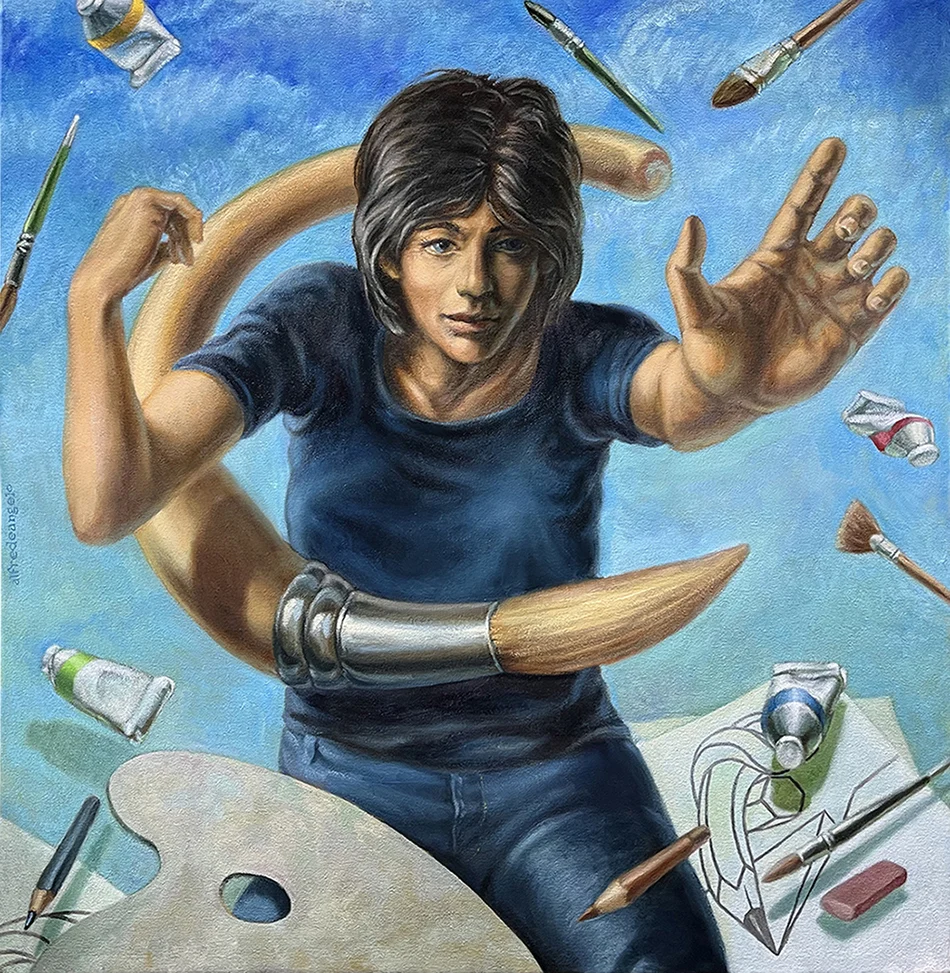
In the contemporary landscape of visual arts, where the digital and the physical increasingly blur, the work of Alfred De Angelo stands as a testament to the enduring power of the human hand and the subconscious mind. A master of surrealist composition and technical precision, De Angelo has carved a niche for himself as a painter who does not merely depict scenes, but constructs "doorways" into a world that is at once sensual, provocative, and profoundly bewildering. His work, characterized by a remarkable fluency of form and a deep-seated commitment to exploring the "essential mystery of existence," challenges the viewer to move beyond the superficiality of outward appearances.
Main Facts: The Aesthetic Architecture of Alfred De Angelo
Alfred De Angelo is not merely an artist of the surreal; he is a cartographer of the internal landscape. His paintings are celebrated for their ability to transport the viewer into a realm where the laws of physics and the constraints of logic are secondary to the dictates of emotion and intuition.
A Sensual World of Provocative Beauty
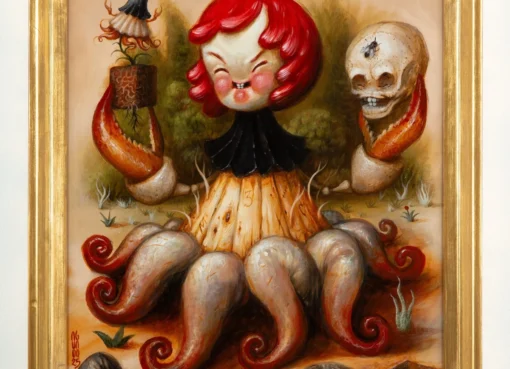
De Angelo’s portfolio is defined by what critics often describe as "provocative beauty." Unlike traditional portraiture or landscape painting, which seeks to capture a moment in time or a specific location, De Angelo’s work seeks to capture a state of being. The imagery is often beguiling—drawing the viewer in with expert use of color and light—only to bewilder them with juxtapositions that defy easy explanation. This tension between the "attractive" and the "unsettling" is the hallmark of his style.
Technical Expertise and Fluency
One cannot discuss De Angelo’s work without addressing his technical prowess. His paintings are "delineated with a remarkable fluency," a phrase that points to his formal training at two of America’s most prestigious art institutions. This expertise allows him to render the impossible with a level of realism that makes the surreal feel tactile. Whether it is the texture of a dreamlike fabric or the luminosity of a metaphysical sky, his brushwork provides a bridge between the viewer’s reality and the artist’s vision.
The Role of the Viewer
Central to De Angelo’s artistic philosophy is the disruption of "well-worn patterns of thought." His paintings act as a catalyst for cognitive dissonance. By pressing the viewer against the limits of their understanding, he grants them "permission to be amazed, confused, and delighted." In an era of instant information and algorithmic certainty, De Angelo offers the rare gift of ambiguity.
Chronology: The Academic and Artistic Evolution
The development of De Angelo’s "private vocabulary" of images is a journey rooted in rigorous academic discipline followed by a liberation into the surreal.
The Formative Years: Massachusetts College of Art (BFA)
De Angelo’s formal journey began at the Massachusetts College of Art (MassArt) in Boston. As the first and only independent public college of art and design in the United States, MassArt provided De Angelo with a foundation in the historical and technical traditions of Western art. It was here that he likely began to master the "fluency" that characterizes his current work, learning the rules of anatomy, perspective, and color theory that he would later learn to subvert.

Refining the Vision: Rhode Island School of Design (MFA)
Following his undergraduate studies, De Angelo attended the Rhode Island School of Design (RISD), consistently ranked among the top art and design universities in the world. An MFA from RISD is more than a degree; it is an immersion into the philosophical underpinnings of art. During this period, De Angelo would have moved beyond technical mastery to focus on the "why" of his creations. The transition from a student of art to a creator of "private vocabularies" was likely solidified here, as he began to look "through" outward appearances to find the essential mysteries he now depicts.
The Professional Era: Developing the Private Vocabulary
Post-academia, De Angelo has spent years refining his surrealist approach. His current body of work is the result of a lifelong effort to localize subjective experiences into a series of visual impressions. His website, artistpainter.ws, serves as the digital repository for this ongoing exploration, showcasing a career dedicated to the pursuit of the "essential mystery."
Supporting Data: The Psychology and Philosophy of De Angelo’s Surrealism
To understand why De Angelo’s work resonates, one must look at the data of human perception and the history of the Surrealist movement.
The Surrealist Tradition
Surrealism, born in the 1920s, was never just an art style; it was a revolutionary movement aimed at "resolving the previously contradictory conditions of dream and reality into an absolute reality, a surreality." De Angelo continues this tradition but brings to it a modern sensibility. While early surrealists like Salvador Dalí or René Magritte often focused on political or psychoanalytic themes (Freudianism), De Angelo’s work feels more ontological—focused on the nature of "being" and the "essential mystery" of life itself.
The Impact of "Subjective Scale"
De Angelo’s artist statement notes that "experiences in life are usually localized and subjective." Psychological data suggests that humans process the world through a series of "snapshots" influenced by personal bias and emotion. De Angelo exploits this by creating images that feel like "personal scale" impressions. By using a private vocabulary of images, he forces the viewer to use their own subjectivity to decode the painting, making the act of viewing a participatory experience.
Comparison with Contemporary Trends
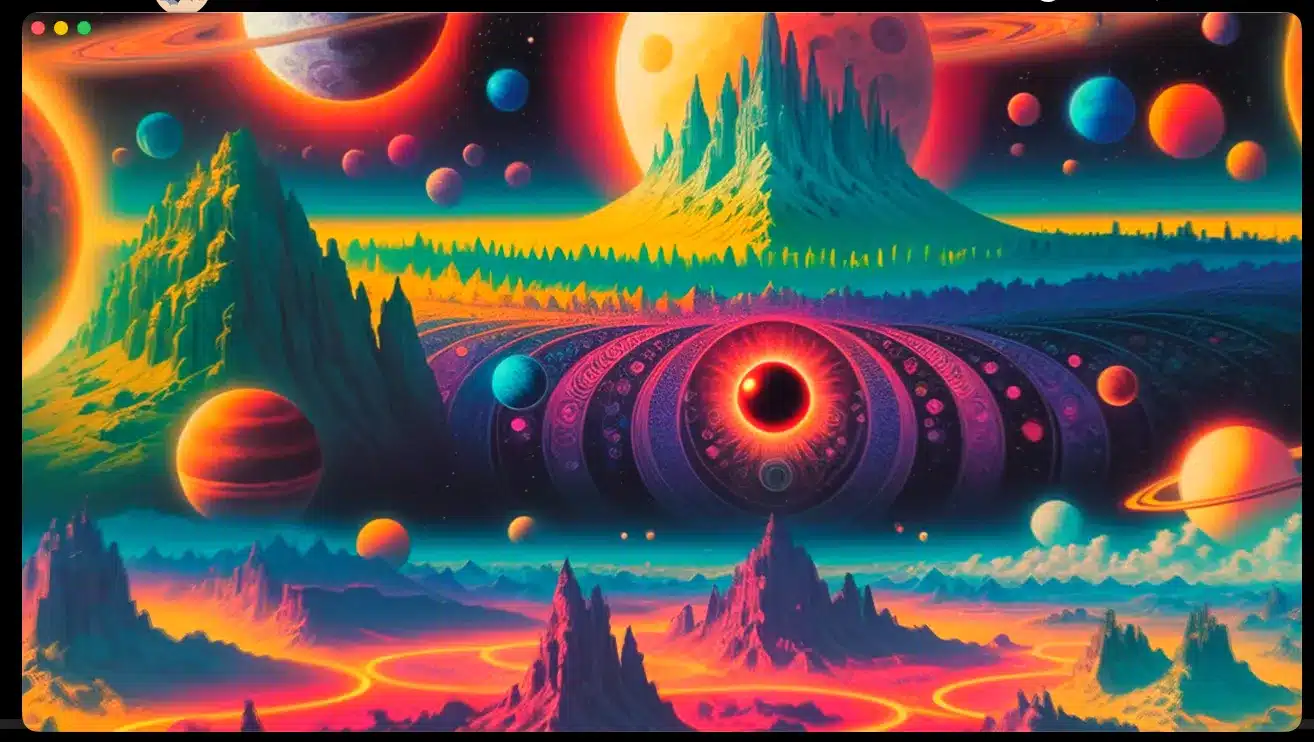
The rise of AI-generated art (as seen in tools like Infinidream.ai or the works of Jacob Holster) provides a fascinating backdrop to De Angelo’s traditional mastery. While AI can generate surreal imagery by scanning millions of existing data points, it lacks the "subjective experience" that De Angelo cites as his primary source. The "fluency" in De Angelo’s work is not algorithmic; it is the result of human neurobiology processing mystery, a distinction that becomes increasingly important as we move further into the digital age.
Official Responses: Analyzing the Artist’s Statement
Alfred De Angelo’s own words provide the most direct insight into his creative intent. His statement is a manifesto of sorts for the modern surrealist.

"Our experiences in life are usually localized and subjective, creating a series of impressions on a personal scale. I am continually developing a private vocabulary of images with which I attempt to express different aspects of these experiences."
This response suggests that De Angelo views his art as a language. A "private vocabulary" implies that the symbols in his paintings—though they may appear universal—are deeply tied to his own internal life. This creates a paradox for the viewer: we are looking at something deeply personal to De Angelo, yet it feels like a doorway to our own subconscious.
"With my surrealist paintings I try to look ‘through’ outward appearances and somehow embody the essential mystery of existence."
The use of the word "through" is critical. It suggests that the physical world is merely a veil. In a journalistic sense, De Angelo’s "official response" to the world around him is one of skepticism toward the material. He is not interested in the "outward appearance" of a tree, a face, or a room, but in the metaphysical energy that those objects represent.
Implications: The Future of Surrealism in a Post-Reality World
The work of Alfred De Angelo has significant implications for the future of the fine arts and our understanding of human creativity.
The Persistence of the Human Touch
As AI aesthetics (like those of Jacob Holster) become more prevalent, the value of artists with "fluency and expertise" like De Angelo is likely to increase. His work serves as a benchmark for what human-driven surrealism can achieve—a depth of "subjective localization" that machines currently cannot replicate. The implication is a potential "Renaissance of the Hand," where the physical act of painting becomes a premium marker of authenticity.
Surrealism as a Tool for Mental Flexibility
In a world characterized by "well-worn patterns of thought" and social media echo chambers, De Angelo’s work has a therapeutic implication. By "luring the viewer out" of their comfort zones, his art functions as a cognitive exercise. It trains the brain to accept confusion and delight simultaneously, a skill that is increasingly necessary in a complex, rapidly changing global society.
The "Essential Mystery" in a Data-Driven Age
Perhaps the most profound implication of De Angelo’s work is its insistence on "mystery." We live in an age where everything is tracked, quantified, and explained. De Angelo’s paintings are a pushback against this totalizing clarity. He reminds us that at the core of existence, there is something that cannot be Googled, something that cannot be reduced to a data point.
Conclusion
Alfred De Angelo is more than a painter; he is a philosopher of the canvas. Through his rigorous training at MassArt and RISD, he has developed the technical "vocabulary" necessary to speak about the unspeakable. His work stands as a bridge between the subjective experience of the individual and the universal mystery of the human condition. Whether he is beguiling us with beauty or bewildering us with surreal juxtapositions, De Angelo remains a vital voice in contemporary art, reminding us that to be "confused and delighted" is, perhaps, the most honest way to experience the world.
For those seeking to explore this sensual world of provocative beauty, his portfolio remains an open invitation to step through the doorway and embrace the mystery.
For more information on the artist and to view his latest collections, visit artistpainter.ws.