The Digital Brushstroke: Jacob Holster and the Humanization of Artificial Intelligence
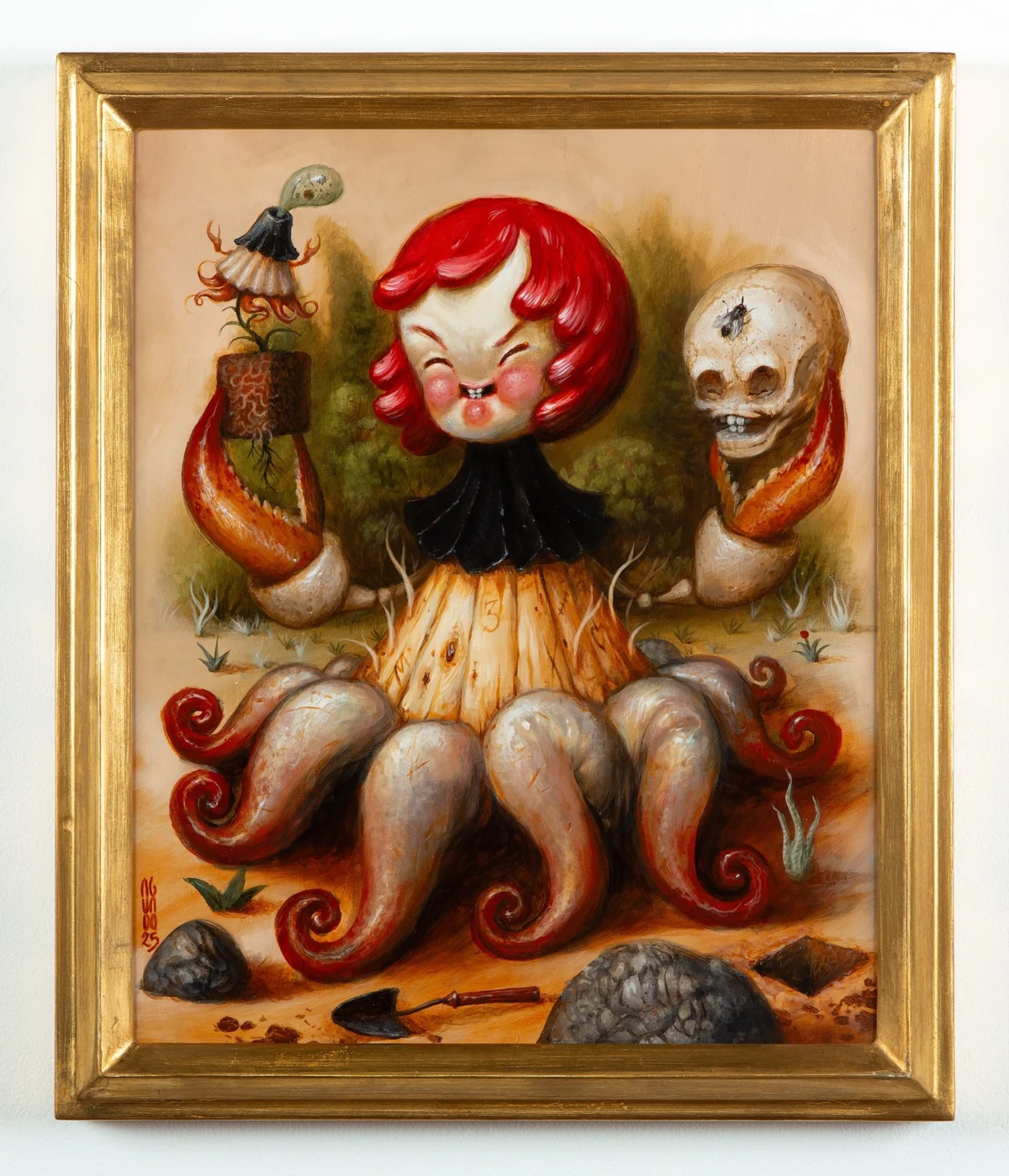
In the rapidly evolving landscape of generative media, where the market is often saturated with hyper-realistic, high-gloss digital renders that prioritize technical perfection over emotional resonance, a new movement is emerging. At the forefront of this shift is Jacob Holster, known to the digital art community as @bandyquantguy. Holster’s work represents a sophisticated departure from the "clinical" aesthetic of standard AI outputs, opting instead for a textured, painterly approach that challenges our perceptions of what machine-assisted art can be.
As an Assistant Teaching Professor of Music Education at Penn State University, Holster occupies a unique position at the intersection of academic inquiry and creative experimentation. His work does more than just produce striking visuals; it serves as a bridge between the rigorous structures of pedagogy and the fluid, often unpredictable world of surrealist filmmaking.
Main Facts: Redefining the Generative Aesthetic
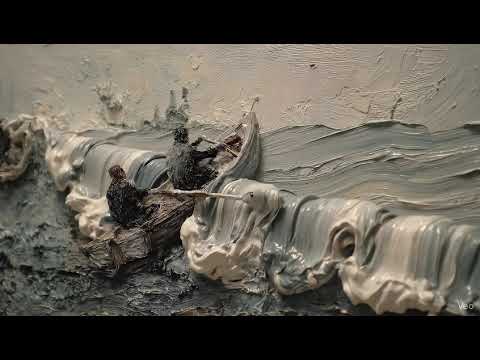
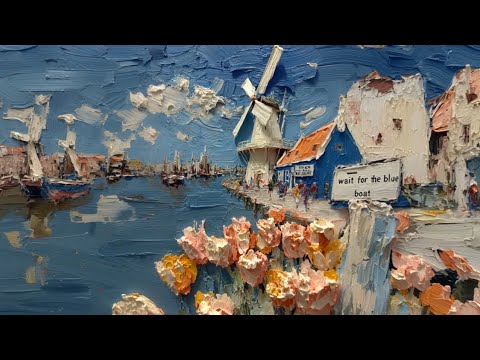
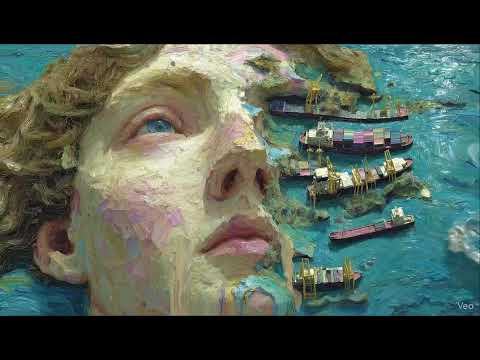
Jacob Holster’s artistic portfolio is characterized by what critics are calling "Painterly AI Aesthetics." Unlike the majority of AI-generated content, which often leans toward the uncanny valley or the sleekness of modern CGI, Holster’s "Paint World" series—comprising works like Le Voyage, Recipe for Consciousness, and wait for the blue boat—utilizes technology to mimic the tactile, impasto qualities of traditional oil painting.

The core of Holster’s contribution to the field lies in three specific areas:
- Textural Warmth: His films utilize generative algorithms to create a sense of physical "tooth" and canvas texture, making the digital screen feel like a living museum piece.
- Conceptual Depth: Drawing from his background in music education and human consciousness research, his films like Art Is Human Terrain explore the philosophical implications of creative labor in the age of automation.
- Academic Integration: Holster actively investigates how AI can be used as a pedagogical tool, moving the conversation from "AI as a threat" to "AI as a collaborative medium."
His presence on platforms like Instagram and YouTube has garnered attention not just for the visual beauty of his work, but for the "human-centric" philosophy he applies to a medium often criticized for its lack of soul.
Chronology: From Music Education to Generative Surrealism
The trajectory of Jacob Holster’s career provides essential context for his current artistic output. His journey is not one of a traditional visual artist moving into digital spaces, but rather a scholar of sound and education discovering a new visual language.
The Academic Foundation (Pre-2020)
Before his rise in the AI art scene, Holster’s primary focus was the intersection of music, technology, and learning. As a member of the faculty at Penn State University, his research was rooted in how humans learn and create within structured environments. This period established his interest in "systems"—whether those systems were musical notations, educational curricula, or, eventually, neural networks.
The Generative Pivot (2021–2022)
With the public release of advanced generative models such as Stable Diffusion and Midjourney, Holster began experimenting with visual storytelling. Unlike many early adopters who focused on creating photorealistic portraits, Holster looked backward to the Impressionist and Surrealist movements. He began developing a workflow that prioritized "warmth" over "resolution," a decision that would eventually become his signature style.
The "Paint World" Era (2023–Present)
In the last eighteen months, Holster has released a series of influential AI short films. Each entry in the "Paint World" series (such as Paint World 18: wait for the blue boat and Paint World 38: Recipe for Consciousness) represents an evolution in his ability to control the "temporal consistency" of AI video—a technical hurdle that often results in flickering. By embracing the flicker as a "brushstroke" effect, Holster turned a technical limitation into an aesthetic choice, further cementing his reputation as a pioneer of the "Painterly AI" movement.
Supporting Data: The Mechanics of a Digital Canvas
To understand why Holster’s work stands out, one must examine the "Supporting Data" of the generative art world. The majority of AI art is generated via "Prompts" that seek to eliminate noise. Holster, conversely, appears to embrace noise as a form of digital "pigment."
The Aesthetics of Texture
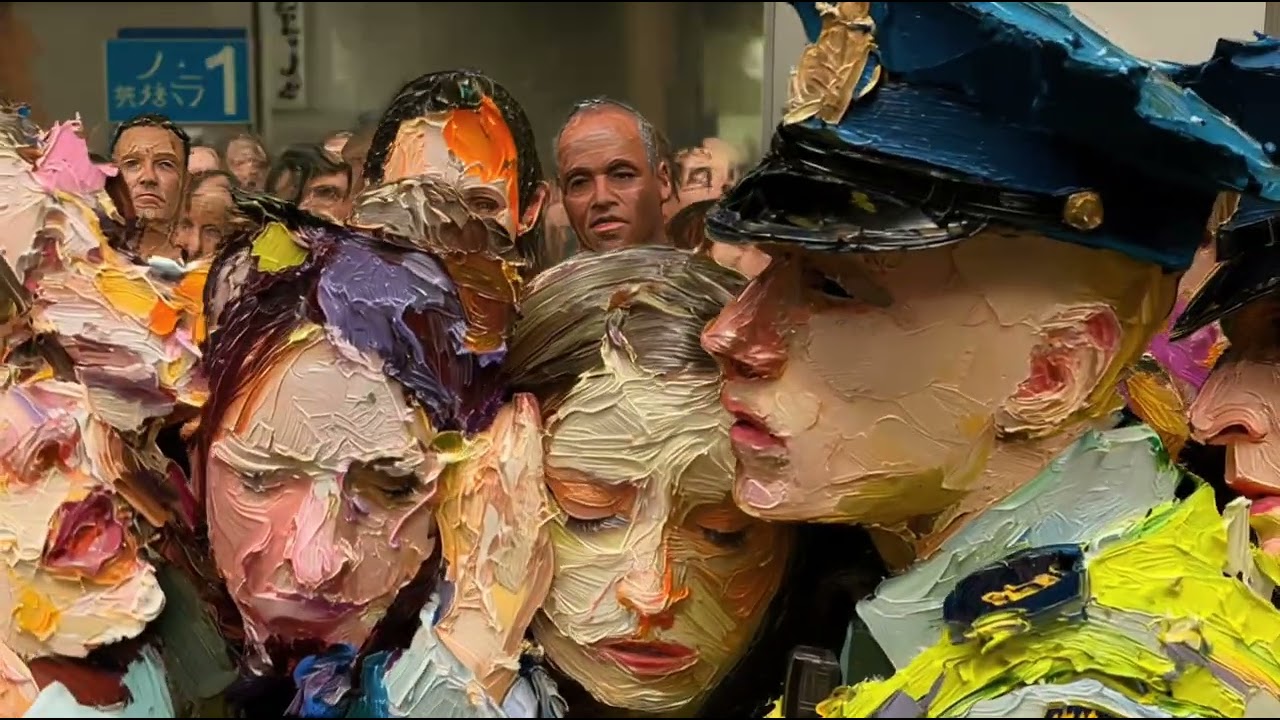
In traditional oil painting, the "impasto" technique involves laying on paint so thickly that the brush or painting-knife strokes are clearly visible. In Holster’s work, we see a digital equivalent. Analysis of his film Art Is Human Terrain shows a high level of "chromatic vibration"—a technique where adjacent colors are slightly varied to create a shimmering effect. This is a hallmark of human-made painting that is typically absent in raw AI outputs, which tend to smooth out color gradients.
The Role of Sound and Pedagogy
Holster’s data-driven approach to music education informs the pacing of his films. As an Assistant Teaching Professor, he understands the "rhythm of learning." His films are not just visual loops; they are structured like musical compositions, with crescendos of color and decrescendos of texture. This structural integrity provides a "human terrain" that anchors the shifting AI visuals, preventing them from feeling aimless.
Technical Workflow
While Holster maintains a level of artistic mystery regarding his exact toolset, his work aligns with the use of "ControlNet" and "Deforum" frameworks within Stable Diffusion. These tools allow artists to guide the AI’s "imagination" using specific structural maps. By using his own musical compositions or specific photographic anchors, Holster ensures that the AI serves his vision, rather than the other way around.
Official Responses and Perspectives
The reception of Holster’s work reflects a broader debate within the art world regarding the legitimacy of AI. However, because of his academic standing, the response to his work has been notably more analytical and respectful than the often-polarized reactions to mainstream AI art.
The Academic Perspective
At Penn State University and within the wider music education community, Holster is viewed as a "practitioner-scholar." His work is often cited as a case study in how AI can be integrated into the classroom. Colleagues note that his approach demystifies the technology, showing students that the "human" in "human-computer interaction" is the most vital component.
The Surrealist Community
Surrealism Today and other contemporary art outlets have highlighted Holster as a key figure in "Modern Surrealism." Their perspective is that Holster is not using AI to replace the artist, but to extend the surrealist tradition of "automatic drawing"—a method of art-making where the artist suppresses conscious control to allow the subconscious to take over. In this view, the AI acts as a collective subconscious, which Holster then curates and refines.
Holster’s Self-Reflective Stance
In his own descriptions of his work, Holster often uses the phrase "Art Is Human Terrain." This suggests a defensive yet celebratory stance on the role of the creator. He has argued, through his films, that even when a machine generates the pixels, the "terrain"—the emotional landscape, the narrative arc, and the aesthetic soul—remains an exclusively human domain.
Implications: The Future of the "Painterly" Machine
The work of Jacob Holster has significant implications for the future of digital media, education, and the philosophy of art.
1. The Death of the "Plastic" Look
Holster’s success proves that there is a significant audience for "imperfect" AI art. As audiences grow weary of the overly smooth, "perfect" look of early generative media, we can expect a shift toward the "Holster Aesthetic"—one that prizes texture, grain, and the visible hand of the artist (even if that hand is guiding an algorithm).
2. A New Model for Art Education
By bridging the gap between a Teaching Professor and a viral AI artist, Holster is creating a blueprint for the future of art and music education. His career suggests that the next generation of educators will need to be fluent in "Prompt Engineering" and "Algorithmic Curation" just as much as they are in music theory or art history.
3. The Blurring of "Medium"
If a film looks like an oil painting, was generated by a computer, but was directed by a music professor, what is the medium? Holster’s work forces a re-evaluation of artistic categories. We are moving toward a "post-medium" era where the intent and the resulting emotional impact are more important than the tools used to create the work.

4. Ethical Humanism
Finally, Holster’s work offers a more optimistic path forward in the ethical debate surrounding AI. By emphasizing that "Art is Human Terrain," he reinforces the idea that technology is an instrument. Just as the piano did not replace the composer, Holster suggests that AI will not replace the artist; it will only provide a more complex keyboard.
Conclusion: The Legacy of @bandyquantguy
Jacob Holster remains a singular figure in the digital art world. Through his Instagram (@bandyquantguy) and his academic work at Penn State, he continues to push the boundaries of what is possible when human intuition meets machine intelligence. His films are more than just "AI videos"; they are textured, soulful explorations of the human condition, rendered in the digital equivalent of oil and light.
As we look toward the future of creativity, Holster’s "Paint World" reminds us that no matter how advanced our tools become, the most important element of any landscape—digital or otherwise—is the human being standing within it, deciding where to place the next stroke.