
Material Memory: Roda Medhat’s ‘From the Loom’ and the Digital Rebirth of Kurdish Identity
Introduction
In the heart of Toronto’s contemporary art scene, a profound dialogue between ancient heritage and futuristic technology is unfolding. Toronto-based Kurdish artist Roda Medhat has long been recognized for his ability to navigate the complex intersections of cultural memory, displacement, and materiality. His latest solo exhibition, From the Loom, hosted at the prestigious Abbozzo Gallery, represents a seminal moment in his career. By pushing the traditional boundaries of fabric into the three-dimensional realm of sculpture, Medhat interrogates how West Asian textiles—and the stories they carry—are transformed when translated through the "synthetic languages" of the digital age.
The exhibition is a masterclass in multidisciplinary practice, featuring large-scale sculptures, neon installations, and intricate textile works. Medhat’s work serves as a bridge between the tactile past of hand-woven rugs and the cold, precise future of 3D scanning and electronic fabrication. Through this synthesis, he asks a fundamental question relevant to any diaspora: How do we carry our stories across borders, and what is lost or found when those stories are reconstructed in a new land?

Main Facts: A Convergence of Heritage and Innovation
The exhibition From the Loom, which runs through May 26, marks a significant expansion of Roda Medhat’s artistic vocabulary. While Medhat has previously gained acclaim for his neon works that mimic the geometric patterns of Kurdish rugs, this show delves deeper into the structural possibilities of these motifs.
The Venue and Scope
Abbozzo Gallery, located in Toronto’s 401 Richmond Street West—a historic industrial building turned arts hub—provides the perfect backdrop for Medhat’s industrial-meets-traditional aesthetic. The exhibition is organized around several key pillars:

- Large-Scale Sculptures: Utilizing 3D printing and digital modeling to bring cultural symbols into physical space.
- Electronic Jacquard Weavings: A series of textiles that use computer-controlled looms to weave imagery from Kurdish children’s literature.
- Light-Based Installations: Neon works encased in acrylic and glass, which recontextualize the "glow" of cultural identity in a modern urban environment.
Artistic Philosophy
Medhat’s practice is rooted in the concept of "translation." To him, the act of moving from a textile to a sculpture, or from a memory to a digital file, is a metaphor for the Kurdish experience. As a stateless people with a rich but often suppressed history, the preservation of Kurdish culture often requires innovative methods of survival. Medhat’s use of "synthetic languages"—3D printing filaments, neon gases, and digital pixels—reflects the modern reality of cultural transmission.
Chronology: The Evolution of a Multi-Disciplinary Practice
To understand From the Loom, one must look at the trajectory of Medhat’s career, which has consistently moved toward greater material complexity.

The Early Exploration of Light
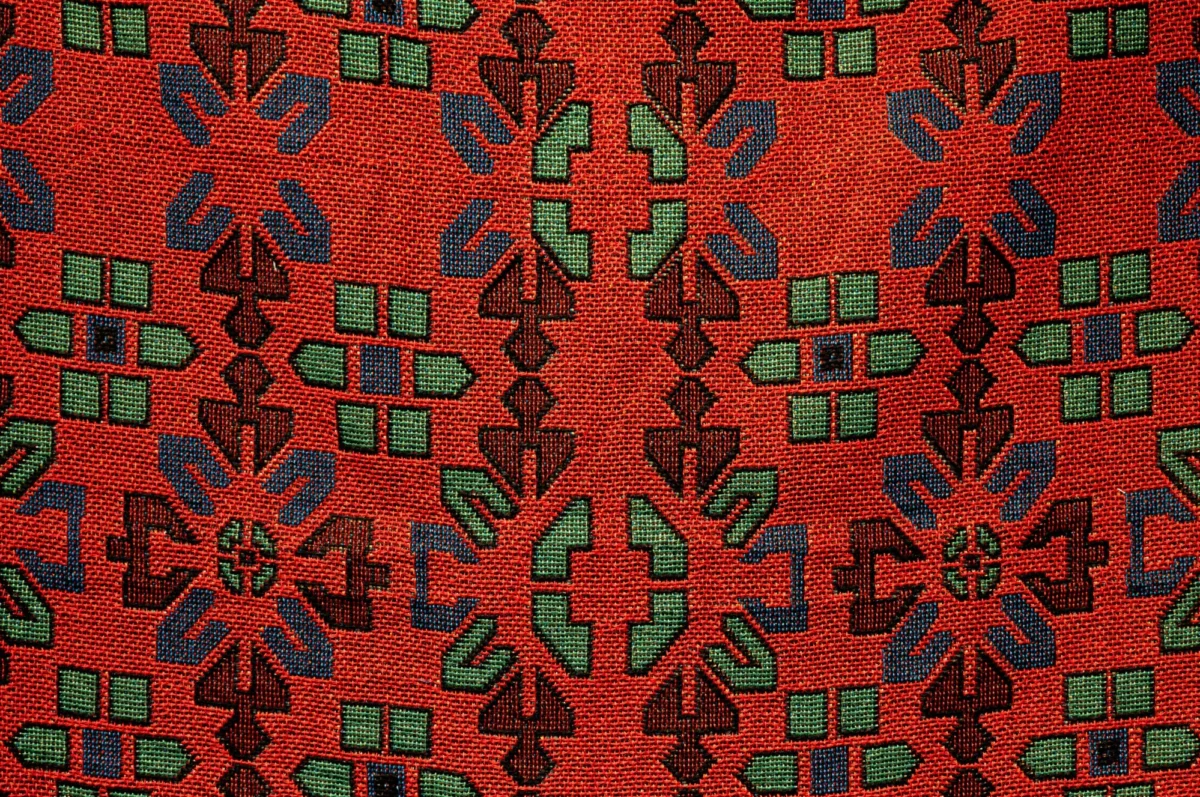
Medhat first gained attention for his neon installations. These works were not merely decorative; they were an attempt to "illuminate" the intricate patterns of Kurdish kilims and carpets. By stripping away the wool and replacing it with noble gases and glass tubes, Medhat highlighted the mathematical precision of traditional designs. This period established his interest in how a traditional form could be "hollowed out" and refilled with modern energy.
The Transition to Digital Fabrication
In the years leading up to 2025 and 2026, Medhat began incorporating 3D scanning into his workflow. This allowed him to take physical objects—sometimes family heirlooms or archival artifacts—and turn them into data. This "datafication" of culture became a central theme. The sculptures in the current exhibition are the culmination of this research, where the digital file is finally "re-materialized" into sculptural forms that the original weavers could never have imagined.

The Development of ‘From the Loom’
The works presented in this exhibition, dated between 2025 and 2026, show a refined focus on narrative. Whereas earlier works were more abstract, From the Loom introduces figurative elements sourced from Kurdish children’s books. This shift represents a move from the "pattern" of culture to the "story" of culture, marking a more personal and pedagogical phase in Medhat’s career.
Supporting Data: Analysis of Key Works and Methodologies
The exhibition is anchored by several pieces that demonstrate Medhat’s technical prowess and his ability to subvert historical narratives.

‘The Sheep and the Chevrolet’ (2026)
Perhaps the most striking work in the gallery is The Sheep and the Chevrolet. This monumental sculpture features a large, composed sheep sitting atop a small, stylized Chevrolet vehicle. The piece is a direct response to François Balsan’s 1947 ethnographic book of the same title.
Balsan’s original work was a travelogue that often presented a stereotypical and "orientalist" view of Kurdish life, pitting the "primitive" agrarian society against the "advancement" of Western machinery. Medhat’s sculpture reclaims this narrative. By using 3D printing to create the sheep—traditionally a symbol of Kurdish pastoral life—and placing it in a position of dominance over the Western car, he playfully upends the power dynamics of the colonial gaze. The use of a vibrant, synthetic pink for the sheep further distances the work from the "gray" ethnographic archives of the past.

The Electronic Jacquard Series
The exhibition features several textile works, including Def (2026) and Boy, Cat, Bike, Mother (2026). These are not hand-woven in the traditional sense but are created using an electronic Jacquard machine.
- Methodology: The Jacquard loom is historically significant as a precursor to modern computing (using punch cards to program patterns). Medhat utilizes this connection to show that the "digital" has always been present in the "textile."
- Imagery: Symbols of young boys riding horses or playing with bikes are woven with high fidelity. These images, sourced from Kurdish educational materials, act as "preserved icons" that have been updated for a contemporary audience.
Neon and Material Encapsulation
Works such as A Rug Falls in Four Frames (2025) continue Medhat’s exploration of neon. By encasing these glowing patterns in glass or acrylic, he creates a sense of preservation. The neon rug is no longer a functional object to be stepped on; it is a specimen, a glowing ghost of a domestic tradition that now exists in the clinical, high-contrast world of the art gallery.

Official Perspectives: The Artist’s Inquiry into Synthetic Languages
In his exhibition statement, Medhat provides a theoretical framework for the show, describing his work as a "distillation of a wider body of research." His commentary focuses on two primary areas: archival subversion and the linguistics of materiality.
On Synthetic Languages
Medhat frequently uses the term "synthetic languages" to describe his medium. He states, "How we carry our stories, and what happens when those stories are translated into new, synthetic languages?" This suggests that for the artist, 3D printing and digital weaving are not just tools, but new ways of "speaking" a culture that has been silenced or marginalized. The "synthetic" nature of the work reflects the artificiality of borders and the reconstructed nature of identity in the diaspora.

On Archival Materials
Medhat’s engagement with François Balsan’s work highlights his role as a researcher. He views archival materials not as static truths, but as "problematic" starting points for artistic intervention. By "subverting" the archive, Medhat is performing an act of decolonization, taking back the right to represent Kurdish life from the Western ethnographers who historically controlled the narrative.
Implications: Decolonizing the Archive and the Future of Cultural Materiality
The implications of Roda Medhat’s From the Loom extend far beyond the walls of the Abbozzo Gallery. His work contributes to a broader movement in contemporary art that seeks to reconcile traditional craftsmanship with the digital revolution.

Decolonizing the Kurdish Narrative
For the Kurdish community, Medhat’s work is an assertion of visibility. By elevating children’s book illustrations to the status of high art and reclaiming ethnographic slights, he provides a template for how marginalized cultures can use technology to protect and project their identities. The work suggests that culture is not something that only exists in the past; it is a living, breathing entity that can be "upgraded" and "re-printed" for each new generation.
Technological Materiality
In the wider art world, Medhat’s practice challenges the hierarchy of materials. For a long time, digital art was seen as ephemeral or "lesser" than physical sculpture. Medhat collapses this distinction. His 3D-printed sculptures have the weight and presence of traditional bronze or stone, yet they carry the "DNA" of a digital file. This encourages a new understanding of "materiality" where the concept (the code) is just as important as the physical form (the plastic or neon).

The Future of the "Loom"
The title From the Loom is both a nod to the past and a prophecy. It suggests that the "loom" of the future is the computer, the 3D printer, and the neon transformer. As we move further into an era of artificial intelligence and digital existence, Medhat’s work serves as a reminder that the threads of our history—no matter how much they are stretched, scanned, or translated—remain the essential fabric of our humanity.
Conclusion
Roda Medhat’s From the Loom is a landmark exhibition that successfully navigates the perilous waters of cultural translation. Through his innovative use of 3D printing, electronic weaving, and neon, Medhat has created a body of work that is both a tribute to his Kurdish roots and a bold exploration of the technological future. By confronting problematic archives and reimagining cultural icons, he ensures that the stories of the loom are not lost, but are instead given a new, luminous life in the synthetic languages of the 21st century. As the exhibition concludes on May 26, it leaves behind a profound legacy: a reminder that while the medium may change, the spirit of the story remains unbreakable.

Leave a Comment