
Echoes Across Millennia: Unveiling Humanity in the "Lullaby for a Son of Shulgi"
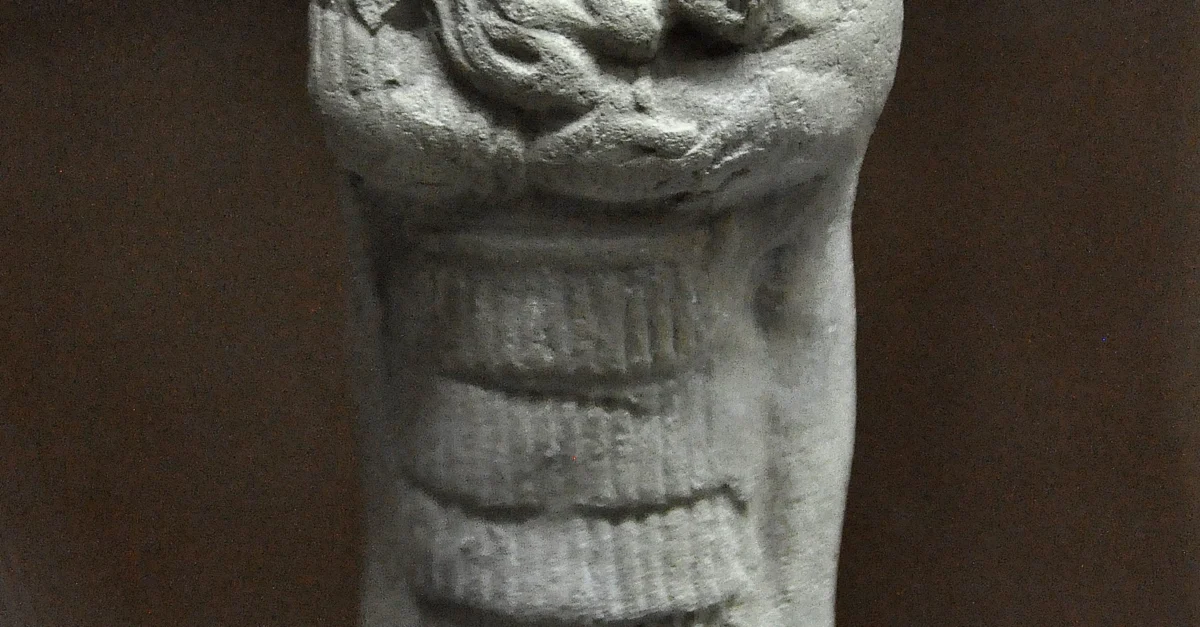
Ur, Sumer – Circa 2094-2046 BCE – From the heart of ancient Mesopotamia, a poignant and deeply human voice emerges, transcending over four millennia to resonate with parents today. Discovered in the mid-19th century and finally translated in the 1950s, the "Lullaby for a Son of Shulgi" stands as a singular testament to universal parental love, anxiety, and aspiration, offering an unparalleled glimpse into the private emotional world of the Sumerian elite. This cradlesong, composed during the reign of King Shulgi of Ur, deviates sharply from the monumental epics and hymns typically associated with ancient Sumerian literature, instead capturing the intimate act of a mother soothing her child to sleep.
I. Main Facts: A Glimpse into the Cradle of Civilization
The "Lullaby for a Son of Shulgi" is a Sumerian poem dating back to the Third Dynasty of Ur, specifically to the reign of King Shulgi (c. 2094 to 2046 BCE). This remarkable piece of literature is a cradlesong, a "lullaby" in the truest sense, crafted to encourage sleep in an infant while simultaneously expressing the speaker’s fervent hopes and fears for the child’s future. Unlike the vast majority of Sumerian literary works, which typically glorify deities, recount heroic deeds, or laud the accomplishments of kings, this composition focuses on a deeply personal, domestic scene: a mother singing to her son at bedtime.
Its significance lies precisely in this departure from the norm. It is believed to be the only such composition from the Ancient Near East discovered to date, offering a unique window into the emotional landscape and private lives of Sumerians, potentially even within the royal court. While the exact identities of the mother and child remain a subject of scholarly debate, strong textual evidence points towards Queen Taram-Uram, Shulgi’s first wife, as the singer, and her son, Prince Amar-Suen (who would later succeed Shulgi), as the recipient of the lullaby. The poem’s themes—from wishing for the child’s health and prosperity to expressing profound anxieties about illness and death, and ultimately, envisioning a glorious future—are strikingly familiar, bridging the vast temporal and cultural chasm between ancient Sumer and the modern world. Its belated translation in the 20th century opened up new avenues for understanding the breadth and depth of Sumerian literary expression.
II. Chronology: The Golden Age of Ur and the King’s Legacy
To fully appreciate the context of the "Lullaby for a Son of Shulgi," one must understand the era in which it was composed—a period often referred to as the Sumerian Renaissance. This cultural flourishing was initiated by King Ur-Nammu (c. 2112-2094 BCE), the founder of the Third Dynasty of Ur, and reached its zenith under his son, Shulgi.
The Reign of Ur-Nammu: Laying the Foundations
Ur-Nammu ascended to power following the expulsion of the Gutians, a mountain people who had dominated Mesopotamia for nearly a century. His reign marked a period of reconstruction and consolidation. He is famously credited with issuing the "Code of Ur-Nammu," one of the oldest known law codes, predating Hammurabi’s by centuries. Ur-Nammu rebuilt temples, established a strong centralized administration, and fostered a sense of Sumerian identity after years of foreign rule. His achievements were celebrated in literary works, such as "The Death of Ur-Nammu," which immortalized him as a benevolent and effective ruler.
Shulgi’s Golden Age: Expansion and Enlightenment
Shulgi inherited a stable and prosperous kingdom from his father. His reign, lasting nearly half a century, saw an unprecedented period of cultural, economic, and political expansion. Shulgi continued his father’s policies of infrastructure development, building roads, establishing roadside inns, and encouraging trade throughout his empire. He was also a military innovator, driving out the remaining Gutian presence and expanding Sumerian influence.
Crucially for the context of the lullaby, Shulgi was an extraordinary patron of the arts and literature. He reformed the scribal schools (edubba), making literacy a priority and promoting the composition of new literary works. This period saw a "rebirth" of Sumerian culture, characterized by a prolific output of poetry, hymns, and royal inscriptions. Many of these works, such as "A Praise Poem of Shulgi," were dedicated to the king himself, celebrating his wisdom, strength, and piety. It is within this vibrant intellectual and artistic environment that a sophisticated literary piece like the "Lullaby for a Son of Shulgi" could emerge.
Shulgi’s Royal Family and the Succession Question
Shulgi’s personal life was as expansive as his reign. He had three principal wives—Taram-Uram, Amat-Suen, and Shulgi-simti—and at least six consorts, resulting in a large family. The names of eighteen sons and thirteen daughters are known, a testament to the extensive record-keeping of the era. This multitude of offspring naturally leads to questions about the specific subject of the lullaby.

Scholars like Jeremy Black have meticulously documented Shulgi’s family. Taram-Uram, his first wife, was the mother of Amar-Suen, who would succeed Shulgi. Amat-Suen married Shulgi in the middle of his reign, and Shulgi-simti became queen in his 29th year, remaining so until his death. While the lullaby could theoretically have been for any of his sons, later textual evidence within the poem, particularly the admonitions concerning kingship and the defeat of the "enemy" (likely the Gutians), strongly suggests that the child was Amar-Suen and the singer was Queen Taram-Uram. This hypothesis places the composition early in Shulgi’s reign, when Amar-Suen was a young child and the memory of Gutian incursions was still fresh.
III. Supporting Data: An Intimate Poetic Tapestry
The "Lullaby for a Son of Shulgi" is a unique literary artifact, not only for its subject matter but also for its rich emotional depth and sophisticated use of language. Scholars Samuel Noah Kramer and Jeremy Black have provided key translations and interpretations, each shedding light on different facets of the poem. While Kramer’s translation is often praised for its literary beauty, Black’s is considered by many to be more strictly faithful to the original Sumerian.
A Song Unlike Others: Breaking the Mold of Sumerian Literature
As noted by both Kramer and Black, this lullaby stands apart from the prevailing themes of Sumerian literature. "This unique composition," Kramer observed, "the only one of its kind thus far known from the Ancient Near East, probably consists entirely of a chant purported to be uttered by the wife of Shulgi, who seems to have been anxious and troubled by the ill health of one of her sons" (Sumer, 329). Black echoed this sentiment, highlighting that "in general, the tone and content of this composition are unparalleled in Sumerian literature" (193). This distinctiveness underscores the poem’s value, offering a rare window into the private, domestic sphere of ancient Mesopotamian life, a stark contrast to the public and monumental narratives that dominate the surviving corpus.
The Lullaby’s Narrative Arc: From Wishes to Woes and Royal Destiny
The poem unfolds as a deeply personal address from a mother to her child, moving through various emotional states and aspirations:
-
Opening Wishes for Growth and Strength: The lullaby begins with the mother’s fervent desires for her son’s well-being. She invokes an "ururu-chant," a term whose precise meaning is debated but is often interpreted as a "song of joy" (Kramer) or simply "lullaby" (Black), possibly carrying connotations of magical incantation.
- Black’s Translation (1-5): "Ah, ah, may he grow sturdy through my crooning, may he flourish through my crooning! May he put down strong foundations as roots, may he spread branches wide like a sakir plant!"
- Kramer’s Translation (1-5): "In my ururu-chant – may he grow big / In my ururu-chant – may he grow large, / Like the irina-tree may he grow stout of root, / Like the shakir-plant may he grow broad of crown."
These lines establish a tone of hopeful anticipation, wishing for robust growth and stability, mirroring natural imagery.
-
The Call to Sleep: The central purpose of a lullaby quickly comes to the fore. The mother directly addresses "Sleep" itself, personified, imploring it to embrace her son and bring him rest.
- Black’s Translation (12-18): "Sleep come, sleep come, sleep come to my son, sleep hasten (?) to my son! Put to sleep his open eyes, settle your hand upon his sparkling eyes – as for his murmuring tongue, let the murmuring not spoil his sleep."
- Kramer’s Translation (12-18): "Come Sleep, come Sleep, / Come to where my son is, / Hurry (?) Sleep to where my son is, / Put to sleep his restless eyes, / And as for his babbling tongue, / Let not the babbling tongue shut out his sleep."
This section beautifully captures the common struggle of parents to soothe a restless child, highlighting the timeless desire for a child’s peaceful slumber.
-
Nourishment and Healing: Hints of Illness: The poem then takes a subtle turn, suggesting that the child may be unwell. The mother promises him comforting and healing foods, such as miniature cheeses and "well-watered lettuce." This detail is crucial for Kramer’s hypothesis that the mother was "anxious and troubled by the ill health of one of her sons."
- Black’s Translation (19-23): "May he fill your lap with emmer while I sweeten miniature cheeses for you, those cheeses that are the healer of mankind, that are the healer of mankind, and of the lord’s son, the son of lord Shulgi."
- Kramer’s Translation (19-23): "I-I will make sweet for you the little cheeses, / Those little cheeses that are the healer of man, / The healer of man, Oh son of the lord, / Oh, son of the lord Shulgi!"
The repetition of "healer of mankind" emphasizes the medicinal qualities attributed to these simple foods, underscoring the mother’s concern.
-
Vision of the Future: Love, Family, and Prosperity: The lullaby shifts to a more elaborate vision of the child’s adulthood, painting a picture of a happy family life with a wife and son. This segment can be interpreted as a form of "magical conjuring," where the speaker visualizes and thus, hopes to manifest, a bright and fulfilling future for her child.
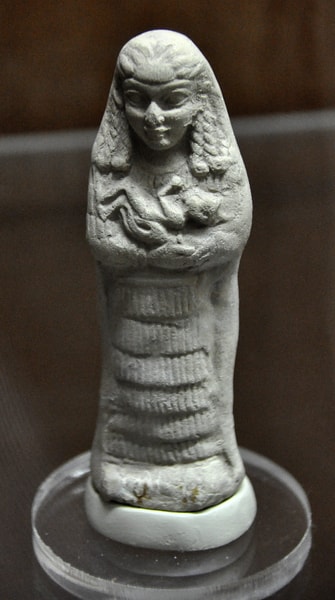
- Black’s Translation (31-38): "Let me … a wife for my son, and may she bear him a son so sweet. May his wife lie in his warm embrace, and may his son lie in his outstretched arms. May his wife be happy with him, and may his son be happy with him. May his young wife be happy in his embrace, and may his son grow vigorously on his gentle knees."
- Kramer’s Translation (31-38): "I – I will take a wife for my son, / She will bear him a son so sweet, / The wife will lie on his burning lap, / The son will lie in his outstretched arms…"
These lines express a universal parental desire for their children to experience love, companionship, and the joys of parenthood themselves.
-
Confronting Mortality: A Mother’s Deepest Fear: Perhaps the most striking and emotionally raw section of the poem are lines 39-48, where the mother’s anxieties about her son’s potential death are laid bare. She imagines a grim scenario where he dies and is mourned not by humans, but by common creatures like lizards and flies, alongside professional mourners (keeners). This passage is stark in its imagery and profound in its expression of a parent’s ultimate fear.
- Black’s Translation (39-48): "You are restless – I am troubled, I am quite silent (?), gazing at the stars, as the crescent moon shines on my face. Your bones might be arrayed on the wall! The man of the wall might shed tears for you! The mongoose might beat the balaj drums for you! The gecko might gouge its cheeks for you! The fly might gash its lips for you! The lizard might tear out (?) its tongue for you!"
- Kramer’s Translation (39-48): "You are in pain, / I am troubled by it, / I am struck dumb, I gaze at the stars, / The new moon shines white on my face: / Your bones will be arrayed on the wall, / The ‘man of the wall’ will shed tears for you, / The keeners will pluck the lyres for you…"
The vivid, almost grotesque imagery underscores the intensity of the mother’s anguish. The references to "man of the wall" and "who makes sprout woe" are ambiguous but are strongly interpreted as allusions to death or malevolent forces.
-
Banishment of Woe and Divine Blessings: Following this dark interlude, the mother forcefully banishes thoughts of misfortune, returning to the hopeful power of her ururu-chant to bring flourishing and thriving. The poem concludes with blessings from Ashnan (or Ezina-Kusu), the goddess of grain, symbolizing agricultural prosperity and a future filled with "happy days" and "bright feasts."
- Black’s Translation (49-56): "May the lullaby (?) make us flourish! May the lullaby (?) make us thrive! When you flourish, when you thrive, when you … the shaking of churns, sweet sleep …, the sweet bed …"
- Kramer’s Translation (57-63): "May the wife be your support, / May the son be your lot, / May the winnowed barley be your bride, / May Ashnan, the Kusu-goddess, be your ally, / May you have an eloquent guardian angel, / May you achieve a reign of happy days, / May feasts make bright your forehead."
This reassertion of hope and divine favor is a powerful emotional pivot.
-
Royal Destiny and Political Admonitions: The very end of the poem, though fragmentary, contains crucial lines that solidify the hypothesis of the lullaby being for a future king. Kramer’s translation includes an admonition to the son to "stand by the cities of Ur and Uruk, to seize and pinion the enemy, a dog who, unless cowed, will tear him to pieces." This strong political charge, referencing the "enemy" (likely the Gutians, often described as "dogs"), aligns perfectly with the historical context of Shulgi’s early reign and the need for a strong successor to protect the realm. This suggests that even in a private cradlesong, the weighty expectations of royal succession and defense of the realm were present.
Linguistic and Translational Challenges
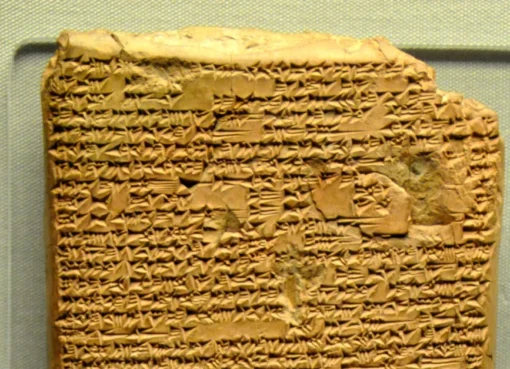
Both Black and Kramer acknowledge the difficulties in translating the "Lullaby for a Son of Shulgi." The poor state of preservation of the cuneiform tablets means there are gaps and fragmentary lines. Furthermore, certain Sumerian concepts, like the "ururu-chant" or specific allusions to death, lack direct modern equivalents, requiring scholarly interpretation and informed speculation. The differences between Black’s more literal rendering and Kramer’s more poetic one highlight these challenges, yet both ultimately convey the profound emotional core of the text.
IV. Official Responses: Scholarly Consensus and Enduring Debates
The academic community largely agrees on the unique and invaluable nature of the "Lullaby for a Son of Shulgi." The consensus, as articulated by leading Sumerologists, is that this text offers an unprecedented look into aspects of Sumerian culture previously unseen in the extant literature.
Uniqueness and Literary Style: There is universal agreement that the lullaby’s content and tone are singular. Scholars recognize its distinct literary style, characterized by vivid imagery and figurative language, which, as Jeremy Black notes, sometimes echoes the praise poems dedicated to Shulgi himself, yet it applies these sophisticated techniques to an intimate, domestic subject. This blend of high literary artistry with personal emotion is what makes the text so compelling.
Identity of Mother and Child: While not definitively proven, the hypothesis identifying the mother as Queen Taram-Uram and the child as Prince Amar-Suen has gained significant traction among scholars. The evidence for this primarily comes from the concluding, albeit fragmentary, lines of the poem. The royal admonitions to protect Ur and Uruk, and to confront an "enemy" described as a "dog" (a common epithet for the Gutians), strongly suggest a royal context and a child destined for kingship in a period immediately following the Gutian expulsion. This aligns with Amar-Suen’s position as the heir apparent during the early part of Shulgi’s long reign. However, scholars maintain a degree of caution, acknowledging that it remains a strong suggestion rather than an absolute certainty.
The Purpose of the "Death" Passage: One of the most debated aspects of the lullaby is the interpretation of lines 39-48, where the mother vividly imagines her son’s death and mourning. Two primary interpretations exist:
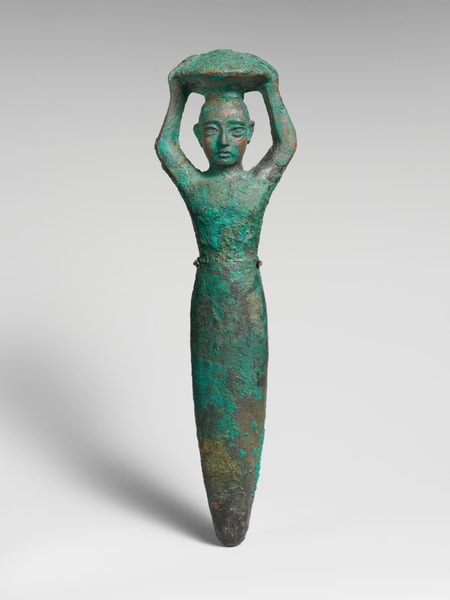
- Magical Conjuring: Many scholars, including Kramer, view this as a form of apotropaic magic. In ancient Mesopotamian belief, verbalizing a negative outcome could be a way to confront and then banish it, thereby protecting against its actual occurrence. By imagining death and then rejecting it, the mother performs a protective ritual.
- Mother’s Anxiety/Teasing: Another perspective suggests it reflects a mother’s deep-seated anxieties, amplified by the high infant mortality rates of the ancient world. It could also be a form of dark, dramatic teasing, akin to modern parents warning children about "night goblins" to encourage sleep, albeit with a much more intense and culturally specific portrayal of mourning.
Both interpretations highlight the profound emotional weight of the passage and the universal nature of parental fear.
Translational Methodologies: The existence of different, respected translations (like Black’s and Kramer’s) is a testament to the complexities of Sumerian language and the fragmentary nature of some texts. Black’s preference for a sparser, more literal rendering aims for precision, while Kramer’s more literary approach seeks to capture the poetic flow and emotional impact, sometimes taking more interpretive liberties. Scholars appreciate both, understanding that each contributes to a fuller, albeit nuanced, understanding of the original work.
V. Implications: A Timeless Testament to Humanity
The "Lullaby for a Son of Shulgi" transcends its ancient origins to offer profound implications for our understanding of human history, literature, and the enduring nature of emotional bonds.
Human Universals: At its core, this lullaby is a powerful reminder of the universal human experience of parenthood. The hopes for a child’s health and prosperity, the anxieties over illness and mortality, and the dreams for their future happiness are emotions that connect us directly to a Sumerian mother over 4,000 years ago. It underscores that despite vast differences in culture, technology, and societal structure, fundamental human sentiments remain constant. The act of a mother singing to her child, wishing them well, is an immutable aspect of the human condition.
A Window into Sumerian Society: Beyond its universal appeal, the lullaby provides a unique and invaluable window into the private life of Sumerian royalty, and by extension, possibly ordinary Sumerian families. While monumental art and literature celebrated kings and gods, this poem reveals an intimate, personal side of life that is often absent from the historical record. It humanizes an ancient civilization that can sometimes feel distant and abstract, reminding us that its people had complex emotional lives, fears, and dreams just like our own.
Literary Legacy and Sophistication: The existence of such a sophisticated and emotionally rich poem, dedicated to a private moment rather than a public spectacle, speaks volumes about the literary achievements of the Sumerian Renaissance. It demonstrates that Sumerian literature was not solely confined to epic narratives or religious hymns but possessed a remarkable breadth, encompassing genres that explored the most personal human experiences with considerable poetic skill.
Historical and Political Insight: The potential allusions to the Gutians and the royal admonitions in the concluding lines offer a subtle yet significant political dimension. It suggests that even in the most private moments, the burden of kingship and the defense of the realm were ever-present concerns within the royal family. The lullaby subtly intertwines personal emotion with the broader geopolitical realities of the time, highlighting the interconnectedness of the domestic and the political spheres in ancient Mesopotamia.
The Power of Enduring Texts: The "Lullaby for a Son of Shulgi" is a testament to the enduring power of written texts to preserve moments in time. Discovered centuries after its creation and translated millennia later, it continues to speak to us, offering not just historical facts but emotional truths. It reminds us that archaeology and philology are not merely about excavating artifacts or deciphering dead languages, but about uncovering the vibrant, living human stories that shaped our past.
Ultimately, the lullaby serves as a poignant counterpoint to the known fate of Amar-Suen. While the poem envisions a future of happy days, successful reign, and triumph over enemies, historical records tell us that Amar-Suen’s reign was short (c. 2046-2037 BCE), marked by military campaigns, and tragically ended by a scorpion bite in his ninth year as king, leaving no heir. He was succeeded by his brother, Shu-Sin, famous for another unique text, "The Love Song for Shu-Sin," the world’s oldest love poem. Yet, in the "Lullaby for a Son of Shulgi," Amar-Suen, if he is indeed the infant, remains forever a small child, cradled in his mother’s arms, his future boundless with possibility, preserved in a moment of tender love and hopeful song, unchanged across four millennia.



Leave a Comment