
The Lost Epic of John Woo: Reevaluating Nicolas Cage’s ‘Windtalkers’ and the Cost of Hollywood Homogenization
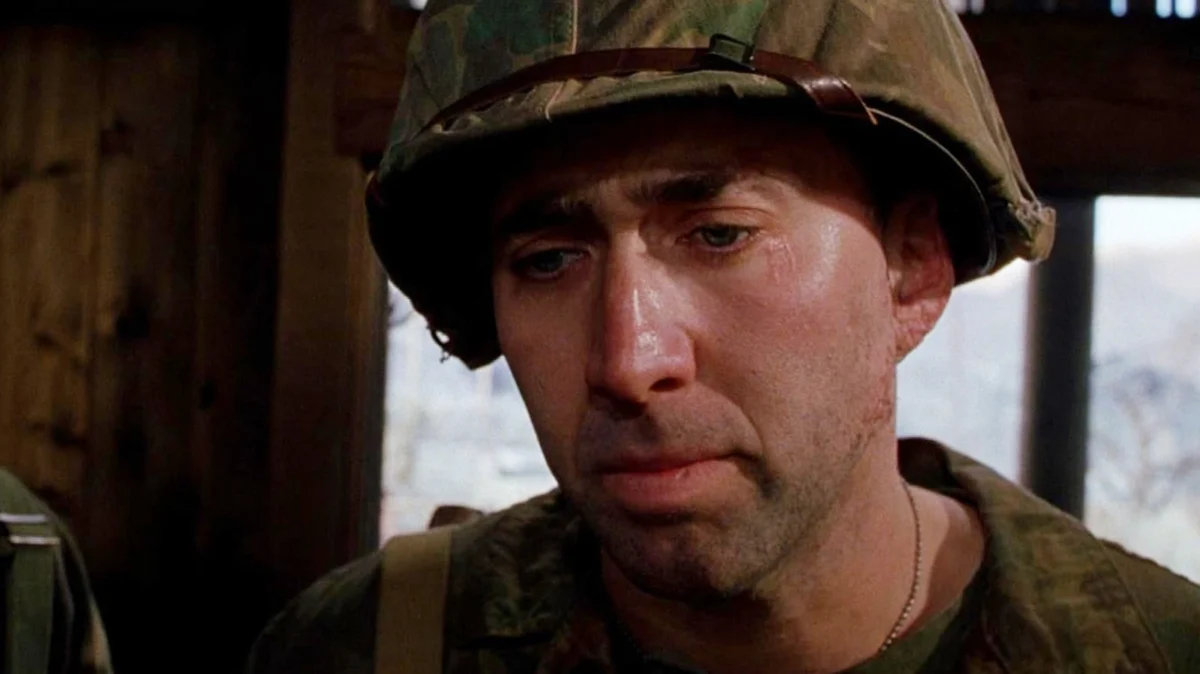
The trajectory of John Woo’s Hollywood career remains one of the most fascinating "what-if" narratives in modern cinema. A maestro of the Hong Kong "heroic bloodshed" genre, Woo arrived in the United States in the early 1990s with a reputation for redefining action through a lens of operatic violence, liturgical symbolism, and a balletic sense of choreography. While his tenure in the American studio system produced the high-water mark of Face/Off and the commercial juggernaut of Mission: Impossible II, it also produced Windtalkers (2002)—a film that was intended to be a definitive World War II epic but instead became a cautionary tale of studio interference and cultural misalignment.
Starring Nicolas Cage at the height of his action-hero era, Windtalkers sought to tell the vital, often overlooked story of the Navajo Code Talkers. However, the friction between Woo’s stylized sensibilities and MGM’s desire for a traditional, patriotic blockbuster resulted in a film that felt caught between two worlds. Today, the movie is frequently dismissed as a box-office failure, yet a deeper look at its production, its director’s cut, and its historical context reveals a work far more complex than its initial reception suggested.
Main Facts: A Collision of Styles and History
At its core, Windtalkers is a fictionalized account of the Battle of Saipan, centered on the relationship between a battle-scarred Marine, Sergeant Joe Enders (Nicolas Cage), and Ben Yahzee (Adam Beach), a Navajo recruit trained to use his native language as an unbreakable military code. The central dramatic tension of the film—and its most controversial plot point—revolves around the "orders" given to the bodyguards: they must protect the code at all costs, which implies killing the code talker if there is a risk of them being captured by the Japanese.
The film was a massive undertaking for Metro-Goldwyn-Mayer (MGM), carrying a production budget of approximately $115 million. This was an astronomical sum for a war film in 2002, especially one directed by a filmmaker known more for stylized "Gun Fu" than historical realism. The cast was rounded out by Christian Slater, Peter Stormare, and Mark Ruffalo, but the heart of the film was the interaction between Cage’s brooding, deafened Sergeant and Beach’s optimistic, yet eventually disillusioned, Private.
Despite the pedigree of its director and the bankability of its lead star, Windtalkers struggled to find an audience. It grossed only $77.6 million globally, failing to recoup its massive budget. Critics were largely divided, with many praising the visceral intensity of the battle scenes while lambasting the script’s reliance on war movie clichés and the sidelining of the Navajo characters in favor of a "white savior" narrative.
Chronology: From Hong Kong to the Battle of Saipan
To understand why Windtalkers exists in its current form, one must trace the timeline of John Woo’s American journey. After revolutionizing cinema with The Killer (1989) and Hard Boiled (1992), Woo moved to Hollywood to escape the uncertainty surrounding Hong Kong’s 1997 handover to China.
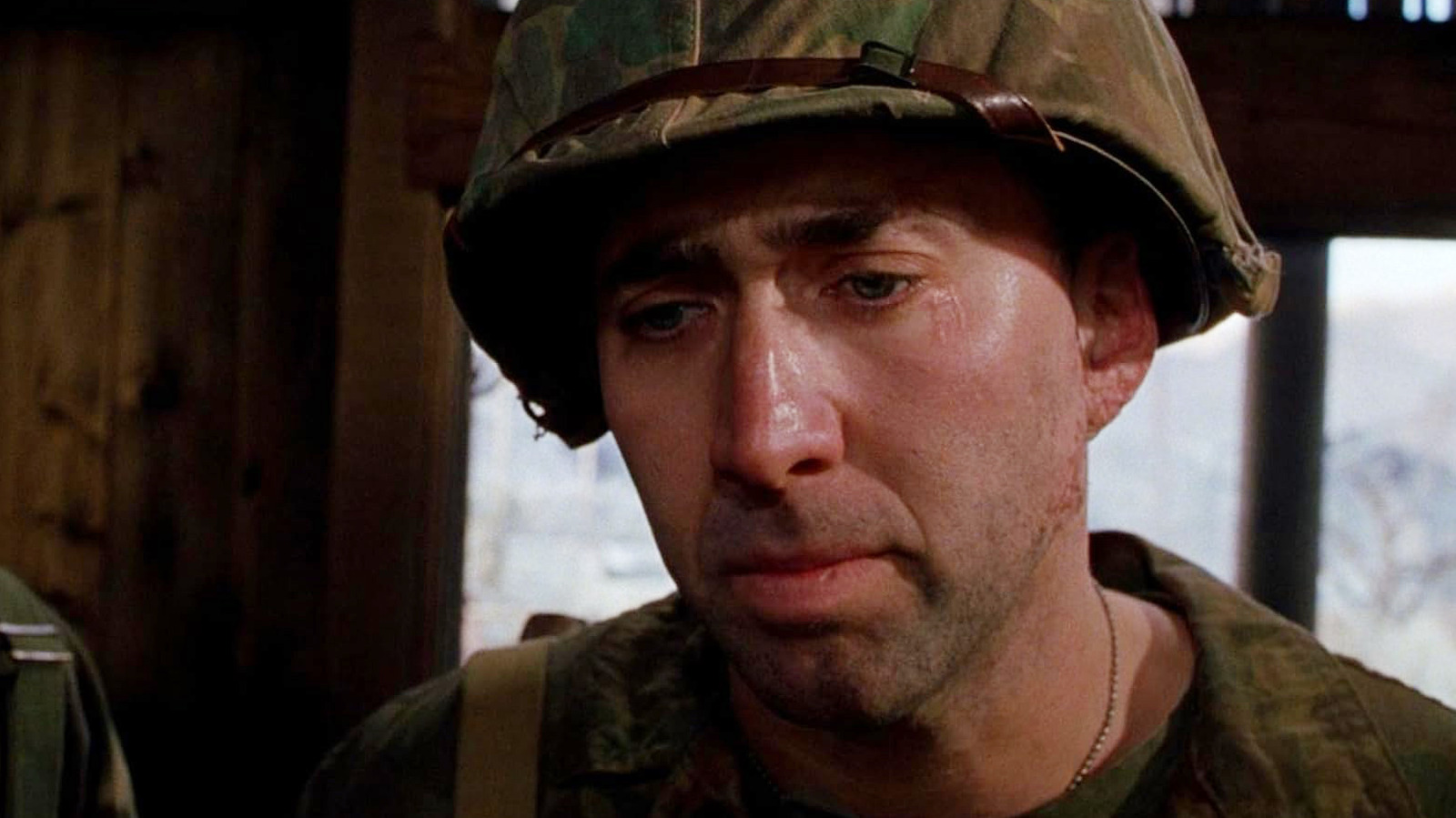
- 1993–1997: The Hollywood Ascent. Woo’s early American films, Hard Target and Broken Arrow, were successful but felt "reined in." It wasn’t until 1997’s Face/Off that Woo was given the creative freedom to marry his Hong Kong flair with American resources.
- 2000: The Franchise Peak. Woo directed Mission: Impossible II, which became the highest-grossing film of the year. This success gave him the "blank check" clout needed to pitch a project as ambitious as Windtalkers.
- 2001: The Production and the Tragedy. Filming took place throughout 2000 and 2001, primarily in Hawaii and Southern California. The film was originally slated for a November 2001 release. However, the terrorist attacks of September 11, 2001, fundamentally altered the American cultural landscape.
- 2002: The Delayed Release. MGM, fearing that the film’s gritty, morally ambiguous portrayal of American soldiers might clash with the post-9/11 surge in uncomplicated patriotism, delayed the film to June 2002. During this period, the film was edited down significantly to achieve a faster pace and a more traditional "heroic" tone.
- 2003–Present: The Director’s Cut. Following its lackluster theatrical run, Woo eventually released a 153-minute director’s cut on DVD, which restored nearly 20 minutes of character development and significantly more graphic violence, aligning the film closer to his original vision.
Supporting Data: The Financial and Critical Divide
The failure of Windtalkers was not just a matter of "bad timing"; it was a statistical outlier in a year of massive hits.
Box Office Performance:
- Budget: $115,000,000
- Domestic Opening Weekend: $14,520,273
- Total Domestic Gross: $40,914,062
- Total Worldwide Gross: $77,628,265
The film’s failure was a significant blow to MGM, which had pinned its summer hopes on the project. By comparison, Saving Private Ryan (1998) had grossed nearly $482 million on a $70 million budget just four years prior, proving that war epics could be profitable if they captured the zeitgeist.
Critical Reception:
On Rotten Tomatoes, the film holds a 33% approval rating. The consensus among critics was that the film’s action was "too much like a Hong Kong action movie" and not enough like a historical document. However, notable critics like Stephanie Zacharek of Salon offered a dissenting view, praising the film for its emotional sincerity and Woo’s ability to find beauty in the carnage. Zacharek argued that the film’s failure to adhere to the "documentary-style" realism of Steven Spielberg was actually its greatest strength, as it allowed Woo to explore his signature themes of brotherhood and sacrifice.
Official Responses and Studio Conflict
The production of Windtalkers was marked by a fundamental disagreement between John Woo and the executives at MGM. Woo, whose films are often deeply spiritual and focused on the emotional bonds between men, wanted to make a "soulful" war movie. He saw the relationship between Enders and Yahzee as a mirror of the brotherhood depicted in his earlier films like Bullet in the Head.
MGM, conversely, was looking for a "John Wayne-style" flag-waver. The studio was reportedly uncomfortable with the darker aspects of the script, specifically the scenes where American soldiers commit war crimes or display overt racism toward their Navajo comrades.
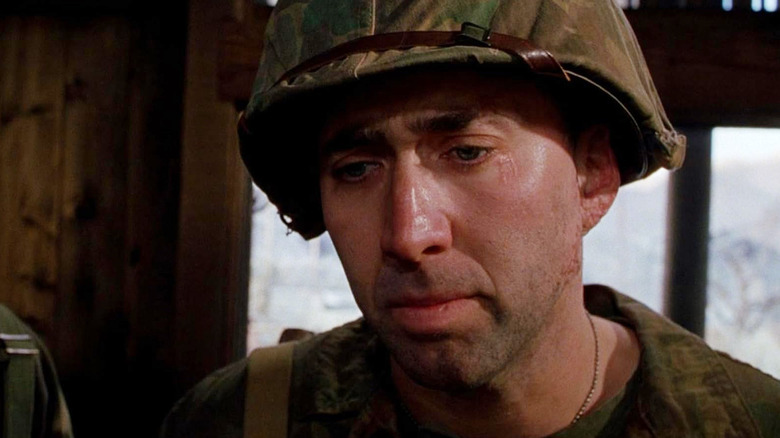
In retrospective interviews, Woo has hinted at the frustrations of the editing process. He noted that the theatrical cut removed much of the internal struggle of Nicolas Cage’s character, making him appear more like a standard action hero rather than the broken, haunted man Woo intended. The Navajo community also had a nuanced response; while many were grateful to see the Code Talkers finally acknowledged on a global scale, there was significant criticism regarding the decision to keep the Navajo characters in the background of their own story. Adam Beach, who delivered a powerhouse performance as Yahzee, often found himself playing second fiddle to Cage’s internal angst in the theatrical edit.
Implications: Representation and the End of an Era
The legacy of Windtalkers carries significant weight in two specific areas: the history of Indigenous representation in Hollywood and the decline of the "auteur" action director in the studio system.
The "White Savior" Narrative
Windtalkers arrived during an era where Hollywood believed that minority stories could only be told through the eyes of a white protagonist to ensure "relatability" for a mass audience. By making Joe Enders the protagonist and the Navajo Code Talkers the "objective" of his mission, the film inadvertently reinforced the very marginalization it sought to correct. Modern audiences often find the film difficult to watch for this reason, despite the genuine respect Woo clearly holds for the Navajo culture.
The End of John Woo’s Hollywood Reign
The financial failure of Windtalkers effectively ended John Woo’s run as a top-tier Hollywood director. After one more American project—the 2003 sci-fi thriller Paycheck, which also underperformed—Woo returned to Asia. There, he regained his creative footing with the massive historical epic Red Cliff (2008), which became a record-breaking success in China. His departure signaled a shift in Hollywood; the era of the flamboyant, stylized action auteur was being replaced by the "producer-led" era of the Marvel Cinematic Universe and high-concept reboots.
The Case for the Director’s Cut
For cinephiles and fans of Nicolas Cage, the 153-minute director’s cut of Windtalkers remains a vital piece of work. It restores the operatic violence that is Woo’s trademark—bloodier, more chaotic, and more tragic. It also gives more room for Adam Beach and Roger Willie to inhabit their roles, providing a glimpse of the more balanced, poignant film that might have been.
In conclusion, Windtalkers is a flawed masterpiece of "what-could-have-been." It stands as a monument to a time when Hollywood was willing to spend $100 million on a director’s specific, blood-soaked vision of history, even if they ultimately lacked the courage to let that vision reach the screen intact. For all its faults, it remains a visceral, heart-on-its-sleeve exploration of honor in the face of horror—a true John Woo film, even if it had to be rescued from the cutting room floor.


Leave a Comment