
Shifting Gears: ‘Fast Forever’ Screenwriter Oren Uziel Aims to Return the Franchise to its Street-Racing Roots
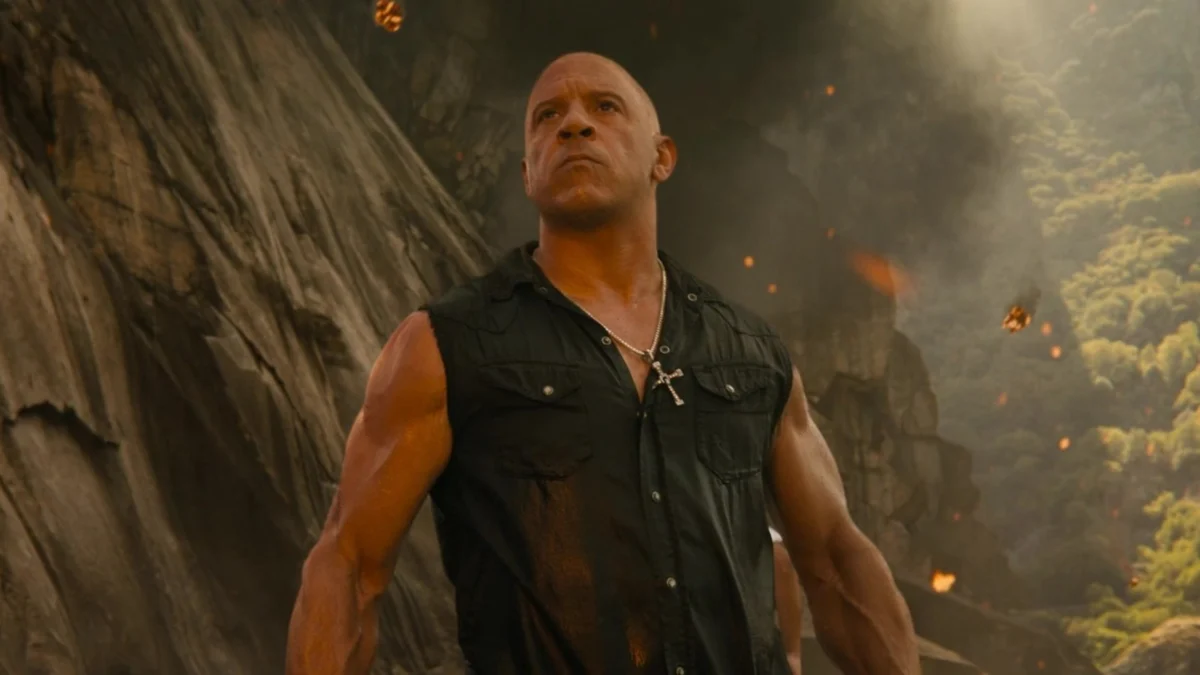
The Fast & Furious franchise, a multi-billion-dollar cinematic juggernaut that began as a mid-budget exploration of Los Angeles street racing, has spent the last decade defying the laws of physics, gravity, and narrative restraint. From dragging a bank vault through the streets of Rio de Janeiro to launching a Pontiac Fiero into low Earth orbit, the series has become synonymous with "action inflation." However, as the production gears up for its eleventh (and potentially final) installment, a significant shift in philosophy is emerging from the writers’ room.
Oren Uziel, the screenwriter tasked with penning the upcoming sequel—currently titled Fast Forever—has expressed a desire to strip away the high-tech gadgetry and global stakes in favor of a "ground-level" story. In a move that signals a return to the franchise’s DNA, Uziel hopes the 2028 release will most closely resemble the 2001 original, The Fast and the Furious.
Main Facts: The Road to ‘Fast Forever’
The announcement of Oren Uziel as the primary architect for the eleventh film comes at a critical juncture for Universal Pictures. The previous entry, 2023’s Fast X, served as the first half of a planned finale but faced a tumultuous production cycle and a mixed commercial reception.
While Fast X concluded on a literal cliffhanger—with Dominic Toretto (Vin Diesel) and his son trapped at the base of a rigged dam—the creative direction for the sequel appears to be pivoting away from the "bigger is better" mantra. Uziel, a veteran screenwriter known for 22 Jump Street, The Lost City, and the upcoming Spider-Noir series, was brought on board to provide a fresh perspective on a series that many critics argue has exhausted its "spectacle budget."
Key details regarding the upcoming production include:
- Working Fast Forever
- Release Date: Slated for March 2028.
- Director: Louis Leterrier is expected to return to conclude the story he began in Fast X.
- Primary Objective: To ground the narrative in practical stunts and character-driven stakes, echoing the "engines and gears" aesthetic of the early 2000s.
A Chronology of Escalation: From Heists to Outer Space
To understand why Uziel’s desire to "go back to basics" is so significant, one must examine the chronological trajectory of the franchise. The Fast & Furious series is unique in Hollywood history for its radical genre evolution.
- The Street Racing Era (2001–2006): The Fast and the Furious, 2 Fast 2 Furious, and The Fast and the Furious: Tokyo Drift were localized stories. The stakes involved undercover police work, local drug lords, and the subculture of illegal street racing. The primary "villains" were often rival racers or low-level mobsters.
- The Heist Pivot (2009–2011): With the return of the original cast in Fast & Furious (2009) and the franchise-redefining Fast Five (2011), the series transitioned into a heist-heavy ensemble format. While the action grew in scale, it remained tethered to a sense of physical weight and automotive utility.
- The Super-Spy Era (2013–2023): Starting with Fast & Furious 6, the crew transitioned into a paramilitary unit working for shadowy government agencies. This era introduced hacking "God’s Eye" devices, cybernetic super-soldiers (Hobbs & Shaw), and eventually, the aforementioned journey to space in F9.
By the time Fast X arrived in 2023, the franchise had moved so far from its origins that the concept of "street racing" was relegated to a brief, almost nostalgic cameo in the film’s first act. Uziel’s vision suggests that the eleventh film will act as a corrective measure to this decades-long drift.
Supporting Data: The Financial and Production Turbulence of ‘Fast X’
The decision to scale back Fast Forever is not merely a creative choice; it is a financial necessity driven by the data from Fast X.
![Fast And Furious 11 Screenwriter Hopes The Upcoming Sequel Will Be Most Similar To This Other Fast Film [Exclusive]](https://www.slashfilm.com/img/gallery/fast-and-furious-11-screenwriter-hopes-the-upcoming-sequel-will-be-most-similar-to-this-other-fast-film-exclusive/l-intro-1778721049.jpg)
The production of Fast X was plagued by complications. Longtime director Justin Lin famously exited the project just days into principal photography, citing "creative differences"—a move that reportedly cost the studio nearly $1 million per day while the production searched for a replacement. Louis Leterrier eventually took the helm, but the chaos contributed to a ballooning budget.
The Financial Breakdown of ‘Fast X’:
- Production Budget: Approximately $378.8 million (making it one of the most expensive films ever made).
- Global Box Office: $714.4 million.
- Profitability Analysis: While $714 million is a substantial figure, the standard industry "break-even" point is generally 2.5 times the production budget plus marketing. For Fast X, that threshold was likely north of $850 million. By falling short of this, Fast X became one of the franchise’s least profitable entries relative to its cost.
Furthermore, the "action fatigue" observed in audience reviews suggested that the "physics-hating kookiness," as some critics described it, was reaching a point of diminishing returns. The data indicated that while fans still loved the "Family," they were beginning to lose interest in the increasingly CGI-heavy, indestructible nature of the protagonists.
Official Responses: Oren Uziel on "Engines and Gears"
In an exclusive interview with /Film, Oren Uziel laid out his philosophy for the next chapter. His comments reflect a deep reverence for the original 2001 film and a desire to recapture the tactile thrill of automotive cinema.
"I hope it’s the most similar to the first one," Uziel stated. "It needs to get back to it… I would love it to get back to its roots. And once you’ve been to space, you want to bring things a little bit back down to earth, and the cars are so practical. Let’s get back to engines and gears."
Uziel’s emphasis on "engines and gears" is a direct nod to the mechanical soul of the series. The first film relied heavily on practical stunt driving and the actual culture of car modification. By contrast, recent entries have relied on "moving platforms" and digital environments where the cars serve as mere avatars for superhero-like feats.
Uziel also acknowledged the challenge of following the cliffhanger of Fast X. The previous film ended with Jason Momoa’s villain, Dante Reyes, seemingly winning the day, leaving Dom and his son in a precarious position. Reconciling that high-stakes ending with a "grounded" sequel will require a narrative pivot that focuses more on survival and grit than on high-tech counter-measures.
The Screenwriter’s Pedigree: Why Uziel?
The choice of Oren Uziel is telling. His filmography suggests a writer capable of balancing self-aware humor with high-octane stakes.
![Fast And Furious 11 Screenwriter Hopes The Upcoming Sequel Will Be Most Similar To This Other Fast Film [Exclusive]](https://www.slashfilm.com/img/gallery/fast-and-furious-11-screenwriter-hopes-the-upcoming-sequel-will-be-most-similar-to-this-other-fast-film-exclusive/intro-1778721049.jpg)
- ’22 Jump Street’: Demonstrated his ability to handle a sequel that acknowledges its own absurdity while maintaining a tight narrative.
- ‘The Lost City’: Showcased a knack for character-driven action-adventure.
- ‘Spider-Noir’: His current work on the Nicolas Cage-led series suggests an interest in "noir" and grounded, gritty aesthetics.
His involvement suggests that Fast Forever might lean into a more "street-level" thriller vibe, perhaps focusing on the characters’ resourcefulness when stripped of their high-tech support systems.
Implications: A New Direction for Action Cinema?
The shift toward a more grounded Fast & Furious has broader implications for the action genre at large. For years, the industry has followed the "Marvel model" of ever-escalating digital spectacles. However, the recent success of films like John Wick: Chapter 4 and Top Gun: Maverick—which emphasize practical stunts and "real" stakes—has shifted audience expectations.
1. Reclaiming the "Practical" Label:
If Fast Forever successfully returns to practical car chases and real-world physics, it could revitalize the brand’s reputation among cinephiles who have grown weary of "weightless" CGI action.
2. Narrative Closure:
As the eleventh film is positioned as a finale (or the beginning of the end), returning to the roots of the series provides a sense of "poetic symmetry." Ending where it began—with the Toretto family defending their turf on the streets of Los Angeles—would offer a more emotionally resonant conclusion than another world-saving mission.
3. Budgetary Sustainability:
By scaling back the scope, Universal can potentially lower the production budget, ensuring that the film is a financial success even if it doesn’t reach the billion-dollar heights of Furious 7.
Conclusion: The Long Road to 2028
With a release date set for March 2028, the creative team has ample time to refine this "back-to-basics" approach. The 2023 writers’ and actors’ strikes, combined with Vin Diesel’s busy schedule and the need for a comprehensive script, have pushed the finale further into the future than fans initially expected.
However, if Oren Uziel’s vision holds true, the wait may be worth it. By trading in the space suits for wrenches and the global satellites for street-level grit, Fast Forever has the opportunity to do something truly radical for a modern blockbuster: it can become human again. For a franchise that has spent twenty-three years accelerating, sometimes the most exciting thing a driver can do is shift back into a lower gear.




Leave a Comment