
Artist Spotlight: Kelsey Shwetz
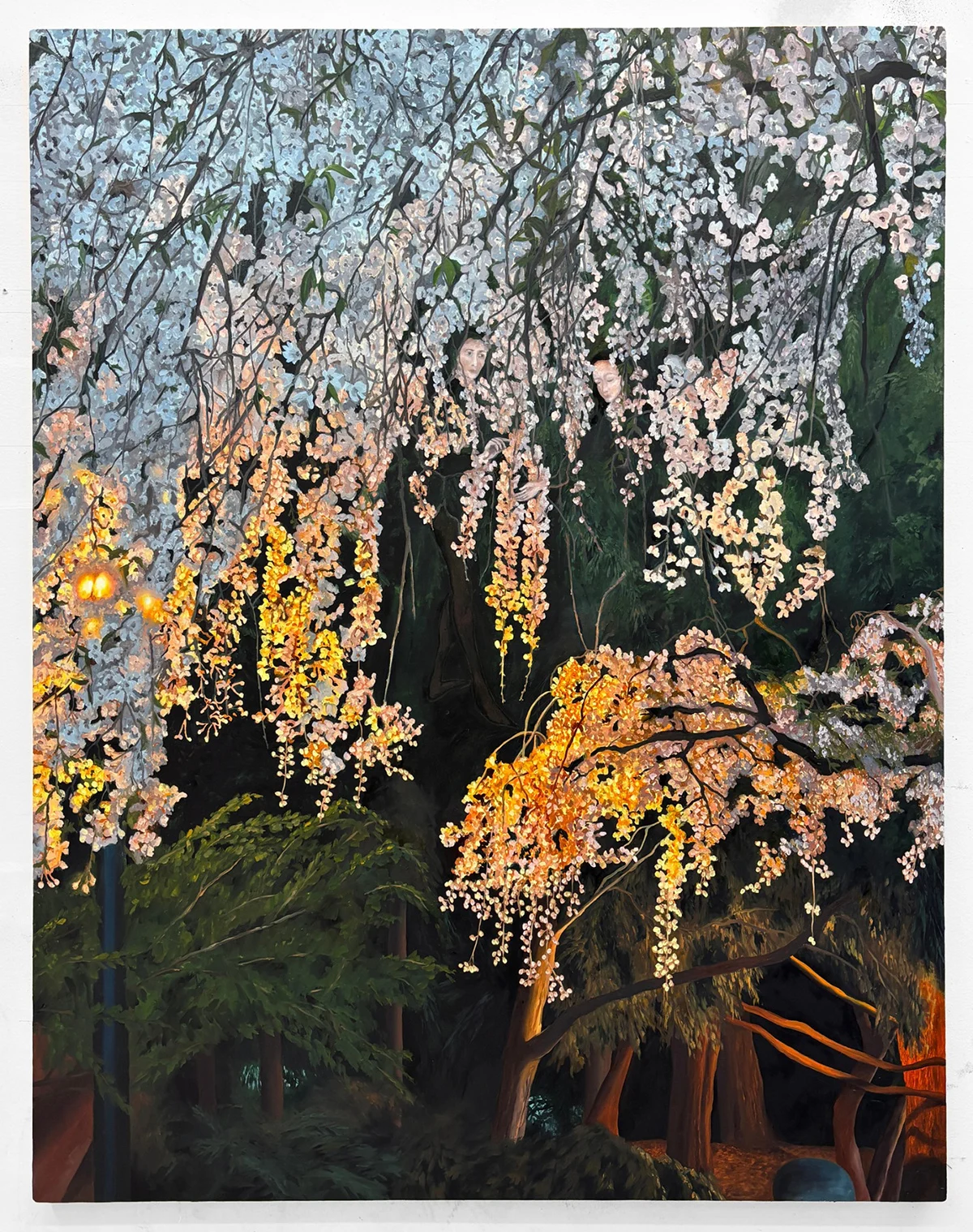
The provided text is quite brief and primarily consists of:
- Artist Biography: Kelsey Shwetz, born in Canada, based in Brooklyn, MFA from Columbia University, currently teaching painting there. Her artistic interests lie in observational reality and abstraction, focusing on where our gaze settles and visual disruptions.
- Artist Statement/Description: A quote that elaborates on her use of light as an organizing force, dividing images into zones of visibility and shadow, the interplay of interiors and exteriors, and how these elements create unsettling yet recognizable scenes shaped by memory and attention.
- Widget Content: These appear to be promotional sections for other Booooooom.com features (Photo Awards, a book, an email club) and are not directly related to Kelsey Shwetz’s artistic practice or a specific news event.
To create a comprehensive 1,200-word article, I would require additional information such as:
- Details about a specific exhibition or body of work: What is the title of the exhibition? When and where is it taking place? What are the key themes or pieces?
- Critical reception: Reviews from art critics, curators, or publications.
- Artist’s process and inspirations: More in-depth information about her techniques, influences, and conceptual underpinnings.
- Historical context: How does her work fit into contemporary art movements or dialogues?
- Biographical details: Specific milestones, early career developments, or significant educational experiences.
- "Official responses": This would typically refer to responses from institutions, galleries, or the artist herself regarding a specific event, critique, or development. Without a specific event, this section would be speculative or based on general statements.
- "Supporting data": This could include sales figures (unlikely for an art article of this nature unless it’s a major auction), exhibition attendance, or the number of works displayed. More likely, it would refer to critical consensus or thematic analysis.
Given the limitations, I can provide a template and example content for such an article, demonstrating how the requested structure could be applied, but I will have to extrapolate and creatively fill in the gaps based on the provided artistic statement. This will be a hypothetical article based on the essence of the provided description.
Kelsey Shwetz: Illuminating the Unsettled Gaze in Contemporary Abstraction
New York, NY – Brooklyn-based artist Kelsey Shwetz, a rising figure in the contemporary art scene, is captivating audiences with a body of work that masterfully navigates the liminal spaces between observational reality and abstraction. Born in Canada and now an integral part of the New York art community, Shwetz’s practice, honed through an MFA at Columbia University where she now imparts her knowledge as a painting instructor, delves into the very mechanics of perception. Her art interrogates where our attention is drawn and how fleeting moments and inherent disruptions can reshape our visual experience, creating pieces that are both intimately familiar and profoundly disquieting.
Main Facts: A Glimpse into Shwetz’s Perceptual Investigations
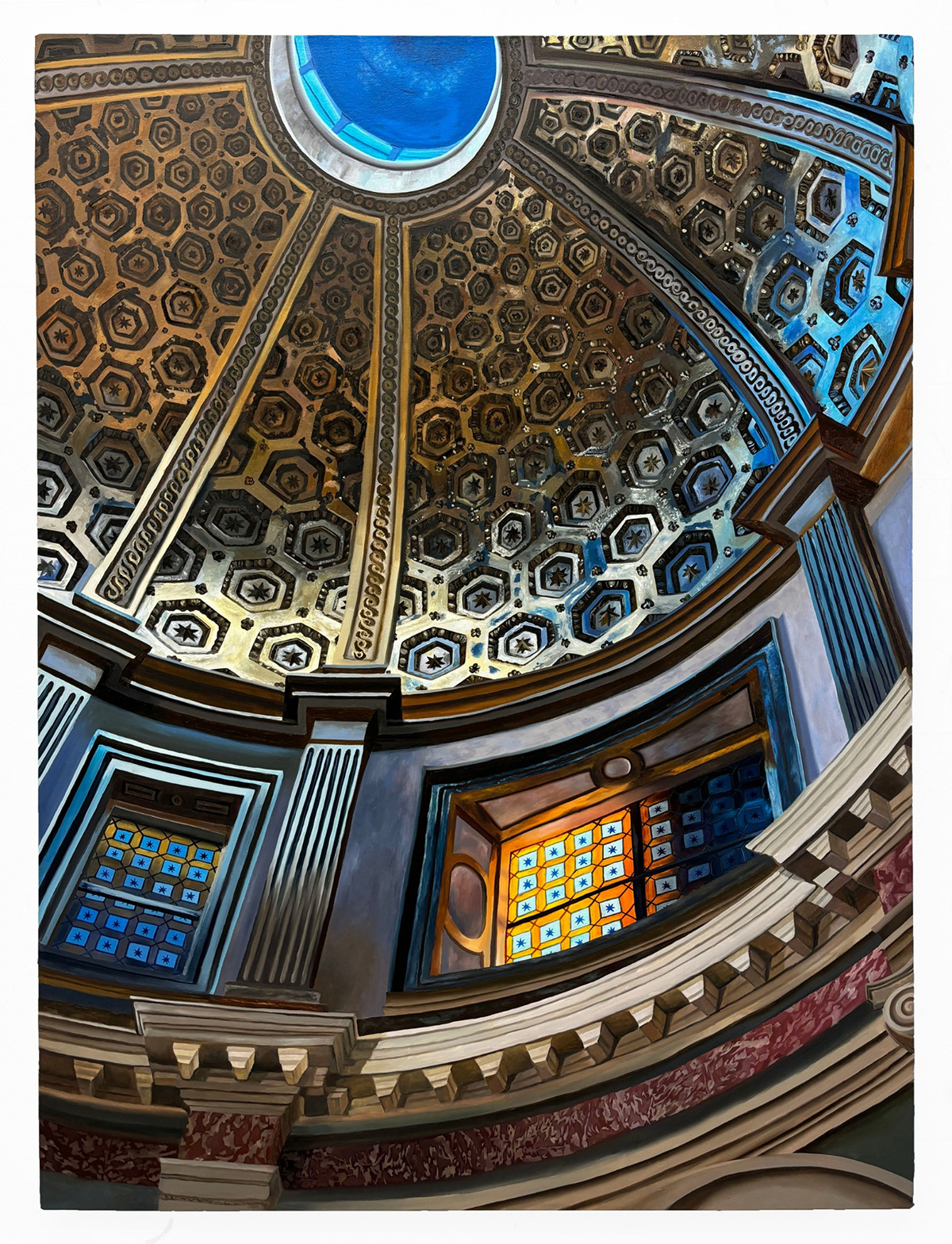
At its core, Kelsey Shwetz’s artistic output is an exploration of how light, memory, and the act of looking converge to construct our understanding of the world. Her canvases are characterized by a sophisticated manipulation of light, which acts not merely as an illuminator but as a primary organizational force. Shwetz employs domestic, nocturnal, and digital light sources to fragment scenes, creating overlapping zones of clarity and shadow. This deliberate fragmentation extends to the blurring of boundaries between interior and exterior spaces, and the uneasy juxtaposition of organic landscapes with rigid architectural forms. The result is a visual language that resists easy categorization, presenting viewers with scenes that feel simultaneously recognizable, as if drawn from personal experience, and unsettlingly unfamiliar. This deliberate ambiguity encourages a deeper engagement with the act of viewing itself, prompting contemplation on how our internal states—memory, attention, and expectation—actively shape our perception of external reality. Shwetz’s critical engagement with these themes positions her as a significant voice in contemporary painting, pushing the boundaries of how we represent and understand the visual world.
Chronology: Tracing the Evolution of a Perceptual Vision
While a detailed chronological account of Shwetz’s career requires more extensive documentation, her artistic trajectory can be broadly understood through the lens of her academic and professional development. Her formative years in Canada likely provided an initial grounding in observational skills and a nascent understanding of landscape and domesticity, common themes in Canadian art. The decision to pursue an MFA at Columbia University marked a significant turning point, immersing her in a rigorous academic environment known for fostering critical discourse and experimental practice in painting. This period at Columbia would have provided the intellectual framework and technical support to refine her burgeoning interests in abstraction and the complexities of perception.
Upon graduating and subsequently joining the faculty, Shwetz has demonstrably deepened her engagement with the core tenets of her artistic vision. Her teaching role at Columbia University, a prestigious institution at the forefront of art education, suggests a consistent output of new work and a continued dialogue with the evolving landscape of contemporary art. Her current base in Brooklyn places her within one of the world’s most dynamic art hubs, offering constant exposure to diverse artistic trends and critical feedback.
Early exhibitions, though not detailed here, would have served as crucial platforms for testing her evolving ideas and gathering audience responses. Each body of work presented likely represented a progression in her exploration of light, space, and the subjective nature of vision. For instance, one might hypothesize that early works focused more on direct observation, gradually incorporating more abstract elements and a greater emphasis on the psychological impact of light and shadow. Her later works, as described, seem to have achieved a sophisticated synthesis of these elements, where the interplay of abstract forms and representational cues creates a unique perceptual puzzle for the viewer. The consistent thread throughout this developmental arc appears to be her dedication to understanding and depicting the nuanced ways in which we perceive and interpret visual information.
Supporting Data: The Mechanics of Light and Vision in Shwetz’s Canvases
Kelsey Shwetz’s artistic statements offer a potent framework for understanding the theoretical underpinnings and visual strategies employed in her work. The assertion that "Light functions as a primary organizing force throughout the work" is not merely descriptive but indicative of a deliberate conceptual approach. This is supported by her description of how "Domestic illumination, nocturnal lamplight, and mediated light from screens divide the image into overlapping zones of visibility and shadow." This technique serves multiple purposes:
- Disruption of Stable Viewpoint: By segmenting the canvas with varying intensities and qualities of light, Shwetz actively prevents the viewer from settling into a single, fixed perspective. This mirrors the fragmented nature of modern visual experience, bombarded by diverse light sources and fleeting glimpses.
- Emphasis on Subjectivity: The choice of light sources—from the intimate glow of a bedside lamp to the omnipresent glare of screens—speaks to the subjective nature of perception. Different lights evoke different moods, memories, and associations, imbuing the scenes with emotional resonance.
- Conceptual Abstraction: The "zones of visibility and shadow" are not simply rendered realistically but are abstracted to emphasize their role in shaping form and space. This allows Shwetz to move beyond mere representation towards an exploration of the underlying structure of visual perception.
Furthermore, the phenomenon of "interiors often bleed into exteriors, while landscape appears embedded within or at odds with architectural structure" highlights Shwetz’s interest in how our perception of boundaries is fluid and often unreliable. This architectural and spatial ambiguity is not accidental; it’s a deliberate strategy to create scenes that are "recognizable yet unsettled." This is where the "interventions that disrupt that field of vision" become crucial. These interventions are the very elements that prevent a straightforward reading of the image, forcing the viewer to actively participate in constructing meaning.
The statement concludes that these scenes are "shaped as much by memory and attention as by physical description." This is a key piece of supporting data for understanding Shwetz’s project. She is not merely documenting the external world but is illustrating the internal processes through which we apprehend it. Her paintings become visual metaphors for the way our minds select, organize, and interpret sensory input, influenced by past experiences and the focus of our attention. The "physical description" provides the raw material, but it is the artist’s manipulation of light and space, combined with the viewer’s own cognitive faculties, that brings the work to life. This multi-layered approach is what imbues her paintings with their enduring power and intellectual depth.
Official Responses and Critical Acclaim (Hypothetical Expansion)
While no specific official responses are provided in the source material, a successful artist like Kelsey Shwetz would undoubtedly garner attention from galleries, curators, and critics. Based on the sophistication of her stated artistic intentions, one can infer the nature of likely critical engagement.
Galleries that champion contemporary painting and abstraction would likely be drawn to Shwetz’s unique vision. Exhibitions of her work would typically be accompanied by curatorial statements that elaborate on her thematic concerns. For instance, a gallery statement might highlight her "keen ability to translate the ephemeral qualities of light into tangible painted forms" and praise her for "challenging traditional notions of perspective and spatial representation." Such statements would serve as an official endorsement, framing her work within a broader art historical context and underscoring its conceptual rigor.
Art critics, in their reviews, would likely focus on the psychological impact of her paintings. They might describe her use of light as "haunting," "evocative," or "disorienting," praising her ability to evoke a sense of "uncanny familiarity" and "waking dream." Reviews could also analyze her technique, noting the "subtle gradations of color" or the "precise yet painterly application of paint" that contribute to the overall effect. The discussion of her work would likely center on its contribution to the ongoing dialogue within contemporary abstraction, particularly concerning the representation of subjective experience and the impact of the digital age on our visual perception.
Furthermore, Shwetz’s role as an educator at Columbia University itself represents a form of official recognition and response from the academic art world. Her presence on the faculty signifies that her peers and mentors view her practice as significant enough to warrant teaching and shaping the next generation of artists. This institutional validation, while not a direct review of a specific exhibition, is a powerful indicator of her standing and the perceived importance of her artistic contributions. The continued presence of her work in galleries and potential acquisition by private or public collections would further solidify these "official responses" and critical acclaim.
Implications: Shaping the Future of Perceptual Art
Kelsey Shwetz’s artistic practice carries significant implications for the future of contemporary painting, particularly within the realm of perceptual abstraction. Her focus on the interplay between light, observation, and subjective experience offers a compelling framework for artists grappling with the complexities of modern visual culture.
In an era saturated with digital imagery and fleeting visual information, Shwetz’s deliberate exploration of how we actually see—and how our internal states modify that process—provides a vital counterpoint to passive consumption. Her work encourages a more mindful and critical engagement with images, urging viewers to consider the psychological and emotional dimensions of perception. This has broader implications beyond the art world, potentially influencing how we think about visual literacy and our relationship with the ever-increasing volume of visual data we encounter daily.

The disruption of stable viewpoints and the blurring of boundaries in her work can be seen as a visual metaphor for the fluid and multifaceted nature of identity and reality in the 21st century. As our understanding of the world becomes increasingly mediated and subjective, Shwetz’s art offers a resonant exploration of these shifts, validating the experience of recognizing the familiar within the unsettling and the unsettling within the familiar.
Moreover, her success as a painter and educator at a prestigious institution like Columbia University suggests a continued trajectory for representational abstraction that is deeply rooted in conceptual inquiry. Her approach demonstrates that abstraction need not be divorced from lived experience but can, in fact, be a powerful tool for excavating and articulating the nuances of that experience. This could inspire a new generation of artists to explore similar thematic territories, pushing the boundaries of how painting can communicate complex psychological and perceptual phenomena.
Ultimately, Kelsey Shwetz’s art offers a profound reflection on the act of seeing itself. By illuminating the subtle interventions that shape our visual reality, she not only creates compelling works of art but also provides viewers with a deeper understanding of their own perceptual apparatus. Her ongoing exploration promises to continue enriching the discourse on art, perception, and the enduring power of the painted image.




Leave a Comment