
Sony’s AI Gambit: Navigating the Tightrope Between Investor Appeal and Gamer Trust in PlayStation Development
In a bold move that underscores the escalating integration of artificial intelligence within the gaming industry, Sony has recently detailed its strategic adoption of AI technologies across PlayStation game development. The tech giant, facing the perennial challenge of appeasing investors while assuaging gamer anxieties, presented its AI initiatives during its latest financial results. While Sony insists these advancements are designed to "unleash the creativity" of its studios without displacing human talent, the presentation has, perhaps predictably, ignited a flurry of questions and skepticism from the gaming community.
The core of Sony’s AI strategy, as outlined, centers on leveraging artificial intelligence to streamline and enhance various facets of the game development pipeline. This includes the automation of repetitive tasks, the optimization of payment and transaction systems, the acceleration of quality assurance processes, and a general boost in productivity within software engineering. Notably, the discussion around AI-driven asset generation appeared to be less prominent, suggesting a primary focus on augmenting existing workflows rather than radically overhauling content creation from the ground up.
However, the breadth of AI’s potential application, even within these stated parameters, has raised eyebrows. CEO Hiroki Totoki has been emphatic in his assurances that AI will not supplant human artists or developers. Yet, the acknowledgement of AI’s use in areas such as 3D modeling and animation hints at a more pervasive integration than a mere efficiency tool. This delicate balancing act – showcasing innovation to investors while reassuring a community often wary of AI’s implications – is a defining characteristic of the current industry landscape.
The AI Toolkit: Enhancing Efficiency and Unleashing Creativity
Sony’s presentation highlighted specific AI tools and applications already in play, offering a glimpse into the tangible benefits the company believes AI can deliver. One prominent example is a proprietary tool named Mockingbird. According to Hideaki Nishino, CEO of Sony Interactive Entertainment, Mockingbird is capable of dramatically accelerating facial animation workflows. By utilizing performance capture data, this AI model can reportedly reduce complex animation tasks from hours to mere fractions of a second. This technology is already being deployed by studios like Diego Studio, responsible for the recent MLB The Show 26, and the acclaimed Naughty Dog, the developers behind The Last of Us franchise.
Further illustrating the innovative applications, Sony also disclosed the development of an AI hair animation tool. This sophisticated system is designed to convert video footage of hairstyles into detailed, strand-level 3D models. Such advancements promise to significantly cut down on the laborious manual process of creating realistic hair for game characters, a notoriously time-consuming aspect of 3D art.
Crucially, Sony has sought to preemptively address concerns about the dehumanization of the creative process. "Importantly, we’re not replacing human performers, but rather optimising how we process the data from these live captures," viewers were assured during the presentation. The company maintains that human talent will remain indispensable for defining the "vision, design, and emotional impact" of game experiences. This distinction is critical, as it attempts to frame AI as a collaborative partner rather than a substitute for human creativity.
Addressing Past Controversies and Future Aspirations
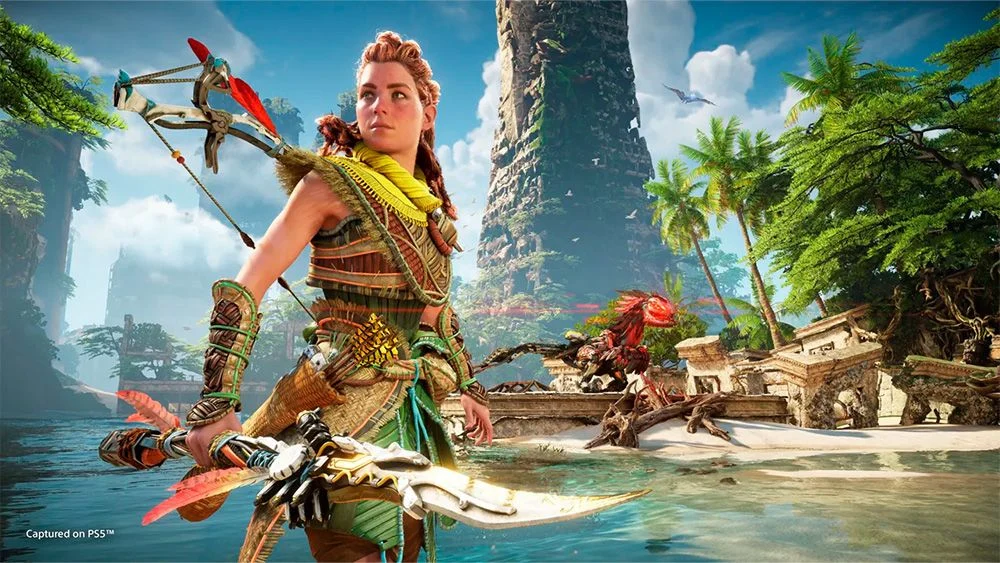
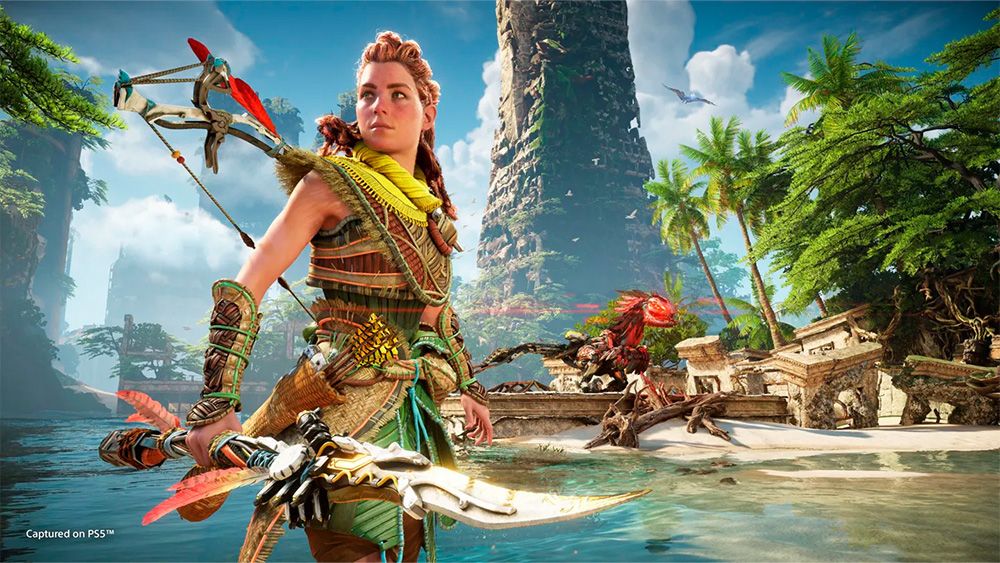
The conversation around AI in game development for Sony is not without its historical context. The company has previously faced significant backlash for its experiments with AI-driven dynamic character interaction, most notably the controversial AI-generated Aloy from Horizon Forbidden West. This incident undoubtedly cast a long shadow, increasing the scrutiny on Sony’s subsequent AI endeavors. The current emphasis on "optimizing data processing" and "not replacing human performers" appears to be a direct response to this past criticism, aiming to demonstrate a more cautious and ethical approach.
Looking ahead, Sony revealed it is actively working on generating AI Non-Player Characters (NPCs) endowed with their own distinct personalities. This ambitious undertaking taps into the potential for more dynamic and unpredictable game worlds, where NPCs can react and evolve in ways that feel organic and engaging. However, the challenges in achieving this are substantial, requiring a nuanced understanding of character development and player interaction.
In another significant collaboration, Sony is partnering with Bandai Namco on a generative AI video project. While details remain scarce, Hiroki Totoki indicated that this venture has yielded "massive gains in speed and productivity per person." However, he also candidly admitted to facing hurdles with "consistency and controllability," underscoring the ongoing nature of AI development and the need for refinement in even the most promising applications.
Investor Relations and Gamer Reactions: A Divergent Perspective
Sony’s strategic pivot towards AI in its investor presentations is clearly aimed at showcasing forward-thinking innovation and potential for future growth. The inclusion of AI in the narrative is a calculated move to capture the attention of a market increasingly captivated by artificial intelligence. The company is undoubtedly seeking to project an image of a technologically advanced and adaptable entity, capable of navigating the evolving demands of the digital landscape.
However, the reception from the gaming community has been decidedly mixed, often characterized by a deep-seated skepticism. The ambiguity surrounding Sony’s terminology – distinguishing between cutting-edge generative AI and more established machine learning algorithms historically used in game development – has fueled much of the debate. Many players perceive this as a deliberate tactic to inflate the perceived impact of AI and, by extension, impress investors, while potentially downplaying genuine concerns about job security and the authenticity of game content.
A common sentiment expressed on social media platforms like X (formerly Twitter) is that figures like Hideaki Nishino intentionally conflate different types of AI to sidestep criticism. The argument is that by lumping together AI applications like NPC development with production design elements, they create a smokescreen that obscures the real potential for job displacement. One user articulated this concern, stating, "People like Nishino purposefully confuse game AI with GenAI to keep it confusing and avoid criticism. Case in point, putting NPCs on the same list as production design. One of them gets workers fired and one doesn’t."
Another prevalent observation highlights the sheer scope of Sony’s AI integration: "Sony just listed every layer of game development AI can touch. Animation, QA, NPCs, upscaling, payments. The interesting part isn’t any single use case; it’s that there’s no part of the production pipeline they left out." This widespread acknowledgement of AI’s pervasive potential across the entire development cycle fuels anxieties about its ultimate impact on the industry and its workforce.
Furthermore, some critics dismiss Sony’s AI narrative as a mere "catchphrase" designed to appease investors, particularly in the wake of perceived disappointing financial results. The argument is that the proclaimed advancements are not genuinely revolutionizing production but rather rebranding existing practices with an AI label. "This is the most nothing deck of slides. [It’s] literally ‘here’s a bunch of things we do, now put AI in front of it’," one user argued, encapsulating a feeling of unfulfilled promise.
The Quality Assurance Conundrum: Efficiency vs. Integrity
Perhaps one of the most debated aspects of Sony’s AI integration is its application to Quality Assurance (QA). The sheer scale and complexity of modern video games have made manual testing an increasingly arduous and time-consuming endeavor. Automating QA processes with AI presents a seemingly logical path towards efficiency and cost reduction. However, this area also raises significant concerns among players.
The fear is that an over-reliance on AI for QA could lead to a deluge of game-breaking bugs slipping through into the final product. This, in turn, could result in a proliferation of apologetic messages from developers and publishers, akin to: "We’re sorry that the game did not meet our expectations." This prediction stems from a belief that AI, while capable of identifying certain patterns, may lack the nuanced understanding and creative problem-solving abilities of human testers to uncover the more subtle or emergent bugs that can significantly impact the player experience.
This concern is amplified by Hideaki Nishino’s statement that AI will lead to a "meaningful increase" in the volume of content produced. For some, the equation is simple: more games, coupled with AI-aided QA, inevitably leads to a decline in quality – a phenomenon colloquially referred to as "slop." This sentiment suggests a deep-seated worry that the pursuit of efficiency and increased output, driven by AI integration, could ultimately compromise the integrity and polish of the games players have come to expect from PlayStation.
Sony’s AI strategy represents a critical juncture for the gaming industry. While the company aims to harness AI for creative enhancement and operational efficiency, the path forward is fraught with challenges. The success of this gambit will ultimately hinge on Sony’s ability to strike a genuine balance between technological advancement, investor satisfaction, and, most importantly, the trust and satisfaction of its dedicated player base. The coming months and years will reveal whether Sony’s AI revolution will indeed "unleash creativity" or inadvertently usher in an era of compromised gaming experiences.




Leave a Comment