
The Audacious Rise and Dramatic Fall of Roger Mortimer: England’s Uncrowned King
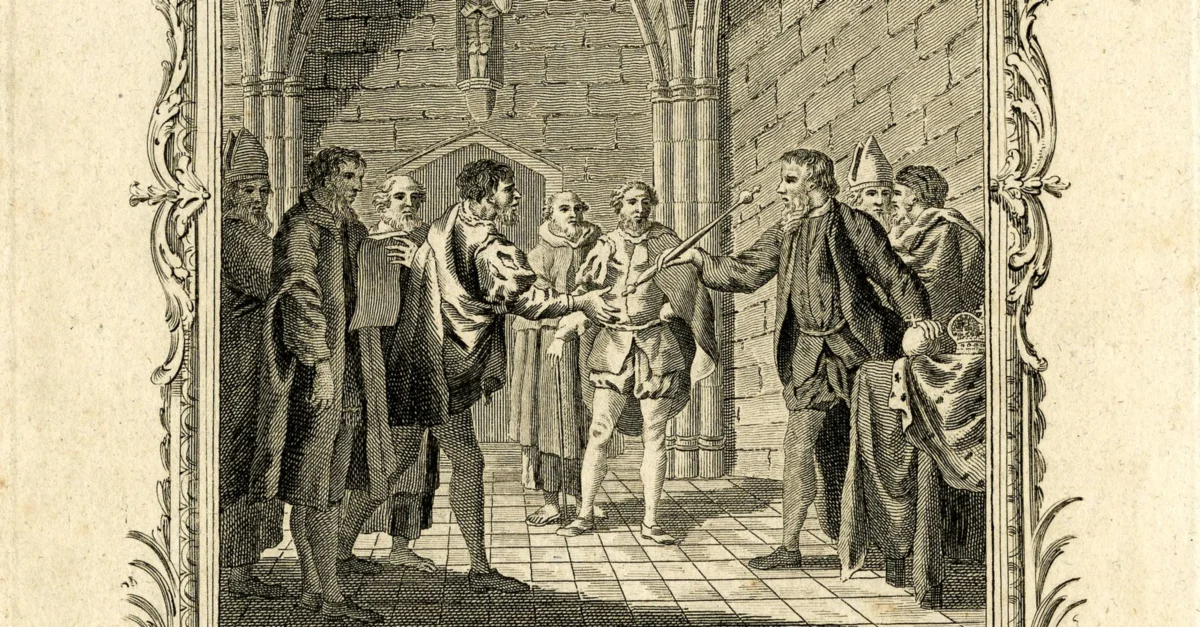
London, England – November 29, 1330 – In a dramatic climax to a life marked by ambition, daring escapes, and a scandalous affair with a queen, Roger Mortimer, 1st Earl of March, was executed at Tyburn. His death marked the end of a turbulent period in English history, a time when a powerful nobleman dared to depose a king and establish himself as the kingdom’s de facto ruler, only to be overthrown by the very monarch he had helped to enthrone. Mortimer’s story is a vivid tapestry of medieval power struggles, betrayal, and the ruthless pursuit of control, ultimately serving as a stark lesson in the perils of overreaching ambition.
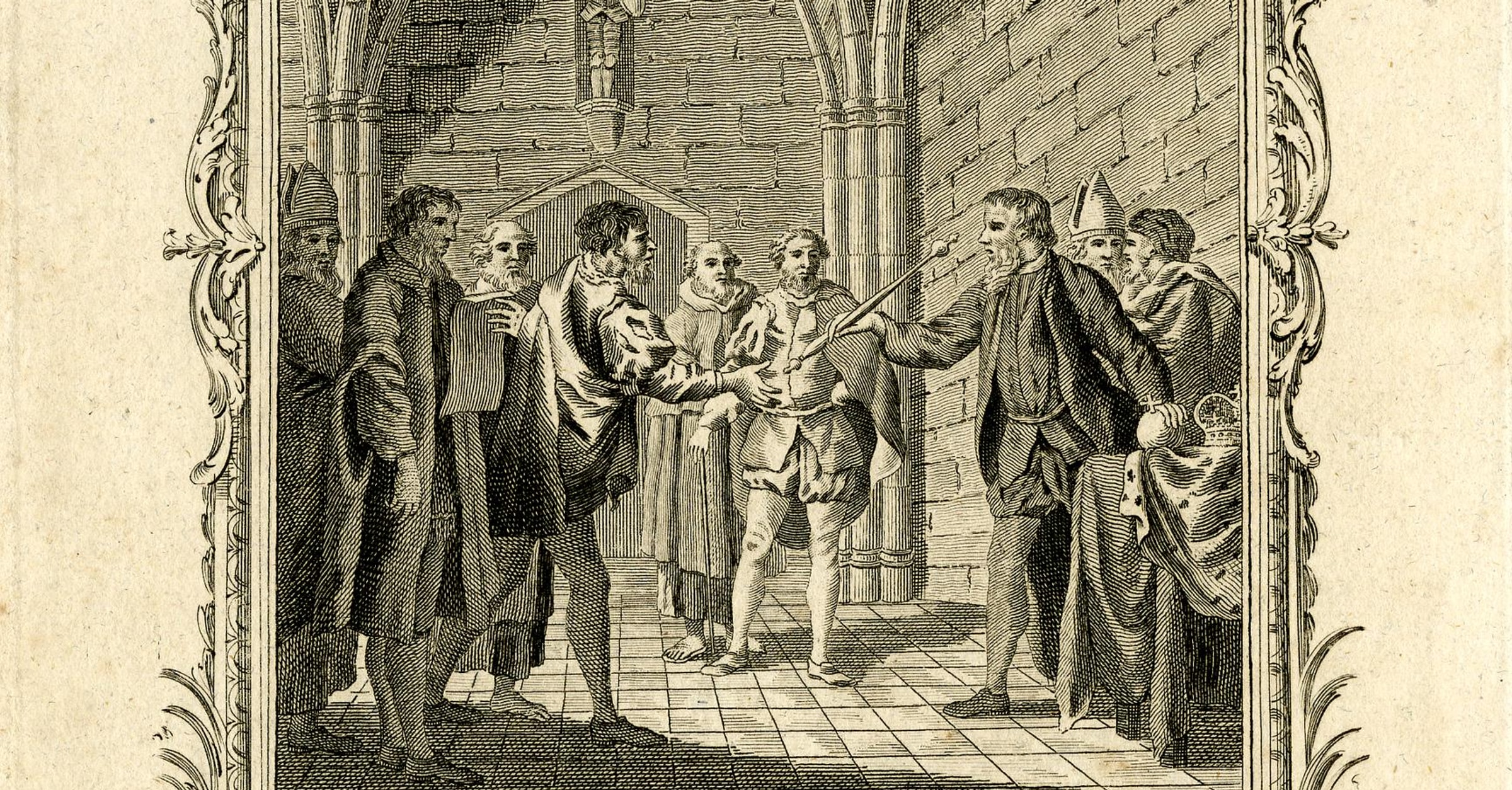
Mortimer’s ascent was nothing short of extraordinary. Initially a loyal servant of King Edward II, he became a central figure in the baronial opposition, driven to rebellion by the king’s ruinous favoritism towards Hugh Despenser the Younger. His audacious escape from the Tower of London, followed by his conspiracy with Queen Isabella of France – Edward II’s estranged wife and Mortimer’s lover – culminated in a successful invasion of England in 1326. This unprecedented act led to Edward II’s forced abdication, placing the kingdom under the joint regency of Mortimer and Isabella. However, the consolidation of their power, marked by perceived corruption and tyranny, quickly sowed the seeds of Mortimer’s downfall, leading to a swift and brutal end orchestrated by the young King Edward III.
A Marcher Lord’s Early Ascendancy
Roger Mortimer was born on April 25, 1287, at Wigmore Castle in Herefordshire, a stronghold of his ancient and powerful family. The Mortimers were ‘Marcher lords,’ custodians of the volatile borderlands between England and Wales, a region demanding both martial prowess and political acumen. This upbringing instilled in young Roger a keen understanding of power dynamics and military strategy. He was fostered in the harsh household of his uncle, Roger Mortimer of Chirk, a man notorious for his severity towards the Welsh, further hardening his character. Briefly, he was also the ward of Piers Gaveston, King Edward II’s controversial Gascon favourite, whose lavish influence would foreshadow the very issues Mortimer later fought against. Mortimer, however, soon bought his independence from Gaveston, displaying an early assertion of self-reliance.
By 1301, Mortimer had significantly enhanced his family’s fortunes through his marriage to Joan de Geneville, a wealthy heiress who brought with her Ludlow Castle, a pivotal stronghold in Shropshire, as well as extensive lands in Ireland and Gascony. The union, which produced twelve children, appears to have been affectionate, with Joan often accompanying Mortimer on his travels – a testament to their bond in an era when such companionship was not always a given for noble couples. Upon his father’s death in 1304, Mortimer inherited the barony of Wigmore, solidifying his position as a preeminent figure in the Welsh Marches.
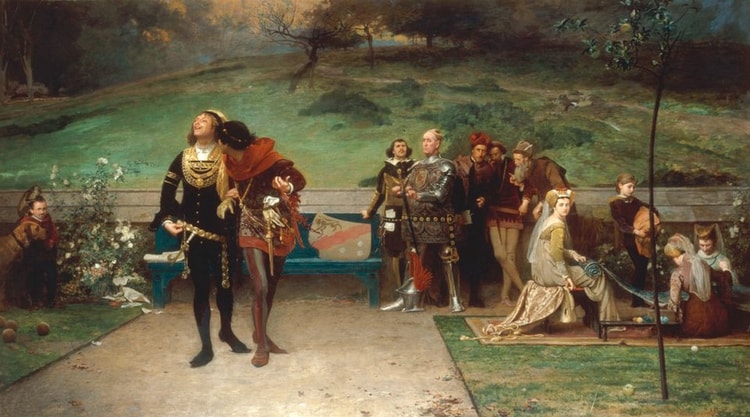
His burgeoning reputation caught the eye of Prince Edward of Caernarfon, soon to be King Edward II. Mortimer’s bravery, charm, and martial ability were admired by the future monarch, who, in 1308, dispatched the then 21-year-old Mortimer to Ireland to enforce royal authority. Historian Alison Weir paints a vivid portrait of Mortimer at this time: "Tall, swarthy of complexion, and strongly built. He was one of the most outstanding military leaders of the period, tough, energetic, decisive and versatile in his talents. Like most barons, he was arrogant, grasping, and ambitious, but he was also an excellent political strategist and faithful servant of the Crown who was well respected by his peers. Clever, cultured, and literate…he had refined tastes, loved fine clothes, lived in some luxury, and undertook major architectural work to transform his castles at Wigmore and Ludlow into veritable palaces. Typical of his caste, he also loved tournaments, paid lip service to the knightly code of chivalry, and amassed a considerable collection of weaponry." (43) His star, it seemed, was unequivocally on the rise.
The Despenser War: From Loyalist to Rebel
Mortimer spent several years in Ireland, successfully quelling rebellions and even repelling an invading Scottish force led by Edward Bruce, brother of Robert the Bruce. Appointed Lord Lieutenant of Ireland in 1316, his loyalty to Edward II remained unwavering, even as many of his fellow barons grew increasingly disaffected with the king’s rule. The primary source of this discontent was Edward II’s excessive favouritism towards Piers Gaveston, whose perceived manipulation of the king and mismanagement of the realm led to a baronial revolt and Gaveston’s execution in 1312. Mortimer, though not involved in this initial uprising, would soon experience firsthand the frustrations that drove the barons to such drastic measures.
Upon his return to the Marches in 1318, Mortimer found a new royal favourite, Hugh Despenser the Younger, rapidly filling the void left by Gaveston. Despenser, serving as royal chamberlain since 1318, and his father, Hugh Despenser the Elder, were showered with lands and titles, many of which encroached upon the traditional territories of the Marcher lords. This blatant aggrandizement not only alarmed figures like Thomas, Earl of Lancaster, who feared the emergence of another tyrannical favourite, but also deeply offended the previously loyal Marcher lords, including Mortimer. The Despensers’ aggressive expansion into their territories, coupled with an old blood feud stemming from Mortimer’s grandfather having slain Despenser’s grandfather, made the situation intolerable.
By February 1321, a council of Marcher lords, including Mortimer and his uncle Chirk, convened with Lancaster, united in their resolve to remove the Despensers from power. Their chosen method was direct and brutal. In May, Mortimer led his men, bearing the royal arms to signify their quarrel was with the Despensers and not the Crown, into Despenser lands. Their campaign was one of fire and blood: towns were razed, livestock slaughtered, and any resistance met with deadly force. This scorched-earth policy culminated in Mortimer’s march on London in July 1321, aiming to force the Despensers’ expulsion. Though the city gates were initially closed against him, the arrival of Lancaster’s army on August 1 led to a unified demand from the ‘Contrariants’ for the Despensers’ exile, accusing them of usurping royal authority and inciting civil war. Faced with overwhelming force, Edward II reluctantly capitulated, banishing his favourites.
Imprisonment, Daring Escape, and Exile in France
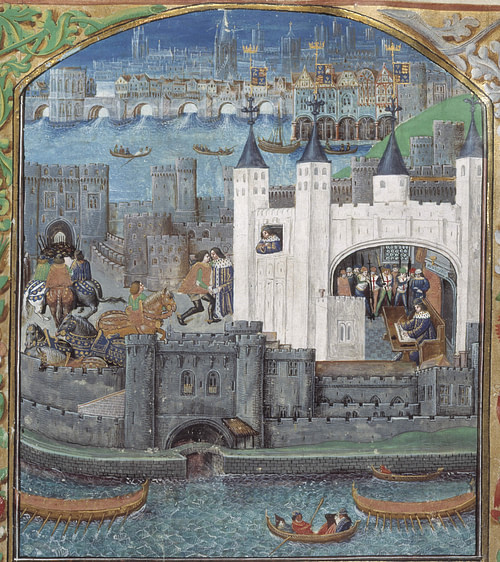
Edward II, however, viewed this as a temporary setback, not a defeat. He swiftly recalled the Despensers in October 1321 and, at the head of a royal army, began to crush the rebellious barons. Many Contrariants, intimidated by the king’s sudden resolve, abandoned the cause. Mortimer and his uncle, engaged in suppressing a peasant revolt in the Marches, found their forces dwindling through desertion. Rather than face annihilation, they surrendered to Edward II at Shrewsbury in January 1322, and were promptly imprisoned in the formidable Tower of London. The king’s vengeance was absolute: Thomas of Lancaster was defeated, captured, and executed at the Battle of Boroughbridge two months later, followed by scores of other Contrariants, whose bodies adorned gibbets across England. Edward II appeared to have decisively crushed all opposition.
For eighteen months, Mortimer languished in the Tower, his initial death sentence commuted to life imprisonment, possibly due to his past loyal service. Yet, the Tower was teeming with Edward II’s political prisoners, many of whom saw Mortimer as a potential figurehead for their cause. A daring escape was planned. On the night of August 1, 1323, Gerard d’Alspaye, the deputy constable, drugged the warders during a feast. Once they were deep in slumber, he unlocked Mortimer’s cell, leading him through the castle kitchens to the south wall. There, using a ladder, they descended to a waiting boat on the Thames. They rowed to the south bank, journeyed on horseback to the coast, and Mortimer boarded a ship bound for France, eventually reaching Paris.
Mortimer’s escape sent tremors of fear through Edward II’s court. The king, consumed by paranoia, feared Mortimer’s return, envisioning assassins or an invading army. He was right to fear, but tragically unaware that the most potent threat would emerge not from a distant land, but from his own bedchamber.
Invasion and Victory: A Queen’s Revenge
In March 1325, Queen Isabella, Edward II’s wife, traveled to Paris ostensibly to mediate a dispute between her husband and her brother, King Charles IV of France. She was accompanied by her thirteen-year-old son, Prince Edward, who was to pay homage to the French king for the English Duchy of Aquitaine. Isabella, however, harbored a deeper, more personal agenda. She felt utterly eclipsed by Hugh Despenser the Younger’s influence over her husband, both politically and emotionally. Resolving not to return to England until "this intruder is removed," she remained in Paris under her brother’s protection, defying Edward II’s increasingly desperate demands for her return.
It was in Paris that Isabella famously reunited with the fugitive Mortimer. While some historians suggest a pre-existing relationship, their romantic liaison in Paris became undeniable. Their "pillow talk" quickly transcended personal affection, evolving into a calculated conspiracy to overthrow Edward II and the Despensers. By May 1326, their relationship was openly acknowledged; they lived together and appeared publicly as a couple, a scandal that further alienated Edward II and eroded his authority.
Mortimer, a shrewd political strategist, leveraged this alliance. He and Isabella secured crucial support from the Count of Hainault, cementing the alliance by betrothing Prince Edward to the Count’s daughter, Philippa. With Hainault’s backing and a growing number of English exiles, they assembled an invasion force comprising approximately 1,500 German and Dutch mercenaries. On September 24, 1326, their fleet of 95 ships landed in Suffolk. Edward II, dining in the Tower of London with Despenser the Younger, received the devastating news with a cry of despair: "Alas, alas! We be all betrayed."
The presence of the Queen lent an invaluable veneer of legitimacy to the invaders. Isabella rallied support by declaring her intention to "uphold and safeguard the realm" by destroying "sir Hugh Despenser, our enemy and all the realm’s." Her call resonated deeply with a populace fed up with the Despensers’ rapacity and the king’s weakness. London erupted in riots in October; John Marshal, a key Despenser ally, was seized and beheaded, followed by the Bishop of Exeter, the royal treasurer, who was decapitated with a bread knife by a furious mob.
Edward II and Despenser the Younger fled London amidst the chaos, with Mortimer and Isabella in hot pursuit. As the rebels swept through England, powerful magnates flocked to their banner, eager to rid themselves of the Despensers. On October 26, Bristol Castle fell, and Despenser the Elder, who had sought sanctuary there, was captured. The next day, he was publicly hanged in his armour, his body then beheaded and dismembered, parts reportedly fed to dogs – a gruesome spectacle reflecting the depth of public hatred.
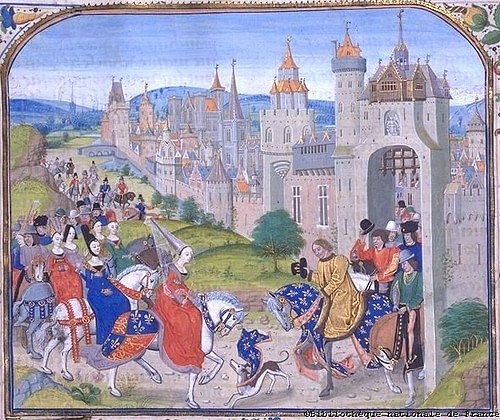
The rebels established their headquarters in Hereford. Isabella entrusted the new Earl of Lancaster with the task of apprehending her husband. On November 16, Edward II and Despenser the Younger were discovered hiding in the woods near Llantrisant Castle in Wales. Edward II was imprisoned in the Tower of London and, under duress, forced to abdicate in favour of his son, who was crowned King Edward III. Despenser the Younger met an equally horrific end, hanged, drawn, and quartered before a cheering crowd. Mortimer and Isabella’s audacious gamble had paid off spectacularly; within three months, they had transformed from continental fugitives into the undisputed masters of England.
Rule, Paranoia, and Downfall
With the boy-king Edward III on the throne, Mortimer and Isabella effectively controlled England as joint regents. Mortimer immediately set about consolidating his power, rewarding loyal supporters, particularly the Marcher lords, by restoring their lands and privileges. However, the lovers understood that their position remained precarious as long as the deposed king lived. Edward II died in captivity on September 21, 1327, less than a year after his abdication. Initially, the official story of natural causes was accepted, but as time wore on, dark suspicions began to coalesce around Mortimer. Wild rumours, notably recorded by chronicler Geoffrey the Baker, circulated that Mortimer’s men had murdered the former king by inserting a red-hot poker up his anus – a lurid and likely apocryphal tale, but one that cemented Mortimer’s image as a ruthless and dangerous man in the public consciousness. These suspicions intensified when Mortimer, in 1328, elevated himself to the Earldom of March, an act perceived as blatant self-aggrandizement.
To the established earls and barons, Mortimer’s unchecked proximity to the new king, his lavish lifestyle amidst a near-bankrupt royal treasury, and his increasing arrogance – presiding over tournaments above the king, appearing arm-in-arm with the Queen Mother – made him eerily similar to the despised Gaveston and Despensers. Many of the same magnates who had fought alongside Mortimer against the Despensers now saw him as an equally dangerous tyrant.
In January 1329, Henry, Earl of Lancaster, publicly accused Mortimer of corrupting the king’s counsel and violating the Magna Carta and Edward III’s coronation oath. For a brief period, England teetered on the brink of another civil war, but tensions subsided without open conflict. Yet, the threat of rebellion fueled Mortimer’s growing paranoia, causing him to perceive enemies in every shadow. This paranoia reached a peak in March 1330 when, after a session of Parliament, Mortimer ordered the arrest of Edmund, Earl of Kent, Edward II’s half-brother. Kent was accused of treason and summarily executed, his family imprisoned – an act of arbitrary power that destroyed any remaining goodwill Mortimer might have possessed.
The King’s Coup and Mortimer’s End
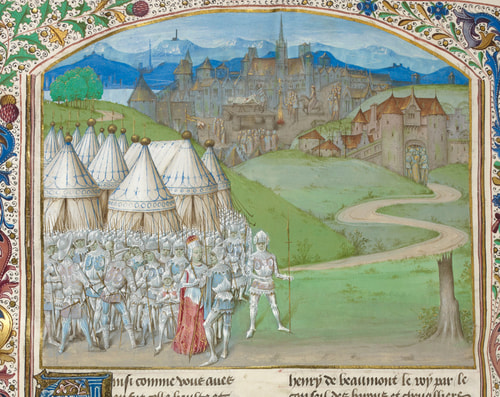
The execution of Kent proved to be the final straw. A conspiracy against Mortimer quickly formed, spearheaded by none other than Edward III himself. Now seventeen, the king was determined to cast off Mortimer’s overbearing influence and reclaim his rightful authority. On the night of October 16, 1330, the conspirators, including Edward III, covertly entered Nottingham Castle, where Mortimer and Isabella were residing, through a secret underground tunnel. They surprised Mortimer in his apartments, seizing him as Queen Isabella, witnessing the scene in horror, pleaded with her son, "Have pity on the good Mortimer!"
But Edward III was in no mood for mercy. Mortimer was conveyed to the Tower of London, where he endured over a month of imprisonment. Accused of numerous crimes, most notably usurping royal power and engineering Edward II’s death, he was condemned to death without trial – a stark irony given his own actions against the Despensers. On November 29, 1330, Roger Mortimer was hanged at Tyburn, his body left to dangle from the gallows for two days as a grim warning.
His death marked a pivotal moment. With Mortimer eliminated, King Edward III finally asserted full control over his kingdom, ushering in a new era of stable royal rule. The dramatic fall of Roger Mortimer, a man of immense talent and ambition, served as a potent cautionary tale for future English nobles – a reminder that even the most audacious climb to power could be brutally cut short by the very Crown it sought to control. His legacy remains that of a brilliant, ruthless, and ultimately tragic figure whose ambition led him to the precipice of power, only to be dashed against the enduring strength of the English monarchy.




Leave a Comment