
GameMaker Unveils Ambitious Spring 2026 Update: Embracing New Languages, 3D, and Open Development
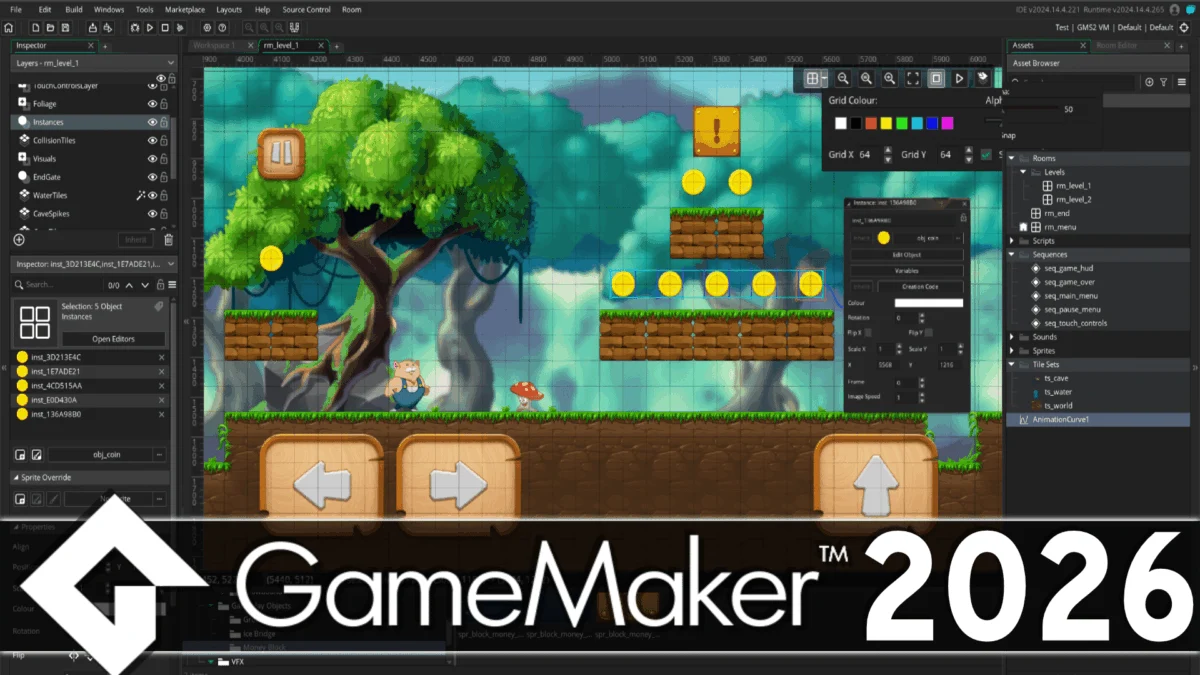
GameMaker, a venerable and widely-used 2D game engine, has officially launched its Spring 2026 update, signaling a significant evolution for the platform. The update introduces a raft of transformative features, most notably the broader integration of popular programming languages like JavaScript, TypeScript, and C#, alongside a robust enhancement of its 3D capabilities. This strategic pivot aims to democratize game development further, attract a wider range of developers, and solidify GameMaker’s position in an increasingly competitive landscape.
Core Functionality Revolutionized: The Rise of the GMRT
At the heart of this monumental update lies the GameMaker Runtime (GMRT), a project that has been in beta and is now set to leave its testing phase on multiple platforms throughout 2026. The GMRT is not merely an incremental improvement; it represents a fundamental reimagining of GameMaker’s underlying architecture, paving the way for the groundbreaking features outlined in the Spring 2026 release. This new runtime is the engine that will power the engine’s expansion, bringing long-awaited functionalities and a more flexible development environment to creators worldwide.
A Leap in Language Support: Beyond GML’s Borders
One of the most impactful announcements from the Spring 2026 update is the native integration of JavaScript, TypeScript, and C#. For years, GameMaker’s proprietary GameMaker Language (GML) has been the primary, and often sole, scripting language for its users. While GML has proven effective for 2D game development, the engine’s move to embrace industry-standard languages represents a strategic masterstroke.
Embracing JavaScript and TypeScript: Ubiquity and Familiarity
JavaScript and TypeScript will now be directly usable in all areas where GML is currently supported. This is a game-changer for several reasons. Firstly, it significantly lowers the barrier to entry for developers already proficient in these languages. Game development studios can now leverage their existing talent pool without the steep learning curve associated with mastering GML. This could lead to faster prototyping, more complex game logic, and a more efficient development cycle for teams of all sizes.
Secondly, the ubiquity of JavaScript and TypeScript in web development means that a vast ecosystem of libraries, tools, and community knowledge can now be potentially integrated into GameMaker projects. This opens up new avenues for creating games with advanced features, particularly those that might benefit from web-based technologies or cross-platform deployment. The ability to seamlessly switch between GML and these languages also offers flexibility for developers who might prefer to use GML for certain tasks and JavaScript or TypeScript for others, fostering a hybrid development approach.
C# Integration: Powering Sophistication
The integration of C# marks another significant advancement. While C# will be callable from JavaScript and TypeScript, it will not directly replace GML in all contexts. This tiered approach allows for the introduction of a more powerful, object-oriented language for developers who require it for more complex systems, demanding performance, or integration with specific C# libraries and frameworks. This is particularly relevant for indie studios aiming to build more ambitious titles or for larger teams looking to integrate GameMaker into more complex development pipelines. The ability to call C# from the newly supported scripting languages creates a powerful chain of interoperability, allowing developers to choose the right tool for the right job.
The Dawn of 3D Development: A More Viable Proposition
While GameMaker has historically been lauded as a premier 2D game engine, the Spring 2026 update signals a serious commitment to enhancing its 3D capabilities. This is not an attempt to dethrone dedicated 3D powerhouses, but rather to make the creation of stylized or hybrid 2D/3D games significantly more accessible and intuitive.
Seamless glTF Model Importing: Bridging the Gap
A cornerstone of the 3D enhancement is the native support for importing glTF models. glTF (GL Transmission Format) is a modern, efficient, and widely adopted file format for 3D assets. This means developers can now directly import models created in popular 3D modeling software like Blender, Maya, and 3ds Max without complex conversion processes or clunky workarounds. This streamlines the asset pipeline, allowing artists and designers to contribute 3D assets more easily and efficiently.
A Proper Scene Graph and Enhanced 3D Mathematics: Structure and Control
The introduction of a proper scene graph is a crucial architectural change for 3D development. A scene graph organizes the hierarchical relationships between objects in a 3D scene, providing a structured way to manage their transformations, properties, and rendering order. This offers developers greater control and a more intuitive understanding of their 3D environments. Coupled with enhanced 3D mathematics functions, which likely include improved vector and matrix operations, developers will find it easier to manipulate objects, manage camera perspectives, and implement complex 3D behaviors. This eliminates the need for the "hacky workarounds" that developers have historically had to employ, making the process more robust and less prone to errors.
While GameMaker will likely remain a "2D-first" engine, these additions transform it into a far more capable platform for creating games that incorporate 3D elements, whether for environmental details, character models, or even entirely 3D experiences with a stylized aesthetic.
Empowering the Developer Ecosystem: CLI and Source Access
GameMaker’s commitment to empowering its developer community extends beyond language and feature enhancements. The introduction of Command Line Interface (CLI) tools and source code access to the runtime signifies a move towards greater transparency and extensibility.
CLI Tools: Automation and Integration
The upcoming CLI tools, which will be open-sourced, will enable external applications to interface directly with GameMaker. This is a significant boon for developers looking to build custom workflows and integrate GameMaker into their existing toolchains. Imagine automated testing suites that can launch and test GameMaker projects, continuous integration and continuous deployment (CI/CD) pipelines that can build and deploy games, or custom editors and asset management tools that can interact with the GameMaker project. The open-sourcing of these tools fosters a collaborative environment where the community can contribute to and improve the tooling ecosystem.
GMRT Source Access: Transparency and Deeper Understanding
While the GMRT itself will not be open-sourced, GameMaker has announced that source code access to the runtime will be enabled. This is a crucial step towards greater transparency. Developers will be able to examine how the engine functions under the hood, which can be invaluable for debugging complex issues, understanding performance bottlenecks, and even contributing to the runtime’s development (if such contribution channels are established). This access fosters a deeper understanding of the engine and can empower advanced users to push the boundaries of what’s possible.
A Glimpse into 2026 and Beyond: Continuous Evolution
The Spring 2026 update is not presented as a final destination but rather as a significant milestone in GameMaker’s ongoing evolution. The announcement explicitly states that "several editor improvements, more extensions, etc." are expected throughout 2026. This suggests a continuous development cycle, with regular updates and feature additions planned to keep the engine at the forefront of game development technology.
The availability of a dedicated video, alongside links to the official GameMaker homepage and the developer update blog post, ensures that developers have ample resources to explore these new features and understand the future direction of the platform.
Chronology of Transformation: A Gradual Ascent
The evolution of GameMaker has been a testament to its adaptability. From its early days as a tool primarily for aspiring hobbyists, it has steadily grown in power and scope. The Spring 2026 update represents a culmination of years of development and a strategic response to the evolving demands of the game development industry.
- Early Years: GameMaker established itself as a user-friendly engine for 2D game creation, fostering a generation of independent developers.
- Iterative Improvements: Over the years, GameMaker has seen numerous updates, each refining its core functionalities, improving its editor, and expanding its feature set within the GML ecosystem.
- Beta Development of GMRT: The prolonged beta phase of the GameMaker Runtime (GMRT) has been a crucial period of internal development and testing, laying the groundwork for the significant changes now being introduced.
- Spring 2026: The Watershed Moment: The official release of the Spring 2026 update marks a definitive turning point, with the GMRT moving out of beta and ushering in the era of multi-language support and enhanced 3D capabilities.
- Ongoing Development: The promise of further editor improvements and extensions throughout 2026 indicates a commitment to sustained growth and refinement of the platform.
Supporting Data and Community Reaction
While specific usage statistics for GameMaker are proprietary, its long-standing presence in the market and its consistent presence on platforms like Steam and itch.io are strong indicators of its active and dedicated user base. The engine has been instrumental in the creation of numerous successful indie titles across various genres.
The announcement of the Spring 2026 update has been met with considerable excitement within the game development community. Discussions on forums, social media, and developer platforms highlight the anticipation for the new language integrations, particularly C# and TypeScript, which are expected to attract a new wave of developers and enable more complex projects. The prospect of improved 3D tools is also a significant talking point, with many seeing it as a way to create more visually engaging and unique games without migrating to entirely different engines.
Official Responses and Vision
The GameMaker team has consistently emphasized their commitment to empowering creators and making game development more accessible. The Spring 2026 update directly reflects this vision.
"We’re incredibly excited to unveil the Spring 2026 update, which represents a significant leap forward for GameMaker," stated a spokesperson for GameMaker. "Our goal has always been to provide developers with the tools they need to bring their creative visions to life. By embracing popular languages like JavaScript, TypeScript, and C#, and by substantially enhancing our 3D capabilities, we are opening up GameMaker to an even wider audience and empowering existing users to build more ambitious and diverse projects than ever before."
The focus on CLI tools and runtime source access further underscores a desire to foster a more robust and collaborative development ecosystem, allowing developers to tailor GameMaker to their specific needs and workflows.
Implications for the Game Development Landscape
The transformative nature of the Spring 2026 update carries significant implications for the broader game development landscape:
- Increased Competition in the Indie Space: By lowering the barrier to entry for developers familiar with JavaScript, TypeScript, and C#, GameMaker is poised to attract a larger pool of talent. This could lead to an even more vibrant and diverse indie game market, with GameMaker-powered titles potentially challenging established engines in various niches.
- Hybrid Development Becomes More Mainstream: The ability to seamlessly integrate GML with JavaScript, TypeScript, and C# encourages a hybrid development approach. Developers can leverage the strengths of each language, leading to more efficient workflows and the creation of more sophisticated game mechanics and systems.
- Democratization of 3D Game Creation: While not aiming to replace high-end 3D engines, GameMaker’s improved 3D tools make it a more viable option for creating stylized 3D or hybrid games. This could democratize the creation of certain types of 3D experiences, making them accessible to developers who might not have the resources or expertise to master more complex 3D pipelines.
- Strengthened Tooling Ecosystem: The introduction of open-sourced CLI tools is a powerful indicator of GameMaker’s commitment to fostering a rich and extensible tooling ecosystem. This will likely lead to a surge in community-developed tools, further enhancing productivity and customization for developers.
- A More Flexible and Adaptable Engine: GameMaker’s evolution demonstrates a keen understanding of industry trends and developer needs. The engine’s ability to adapt and incorporate new technologies, languages, and workflows ensures its continued relevance in a rapidly changing technological landscape.
In conclusion, GameMaker’s Spring 2026 update is not just an iteration; it’s a revolution. By embracing new languages, bolstering its 3D capabilities, and empowering its developer community with advanced tooling, GameMaker is charting a bold new course, promising a future where creativity knows fewer bounds and the creation of compelling games becomes more accessible and versatile than ever before.

Leave a Comment