
The Eloquent Silence: Can Language Truly Grasp Reality’s Profound Mysteries?
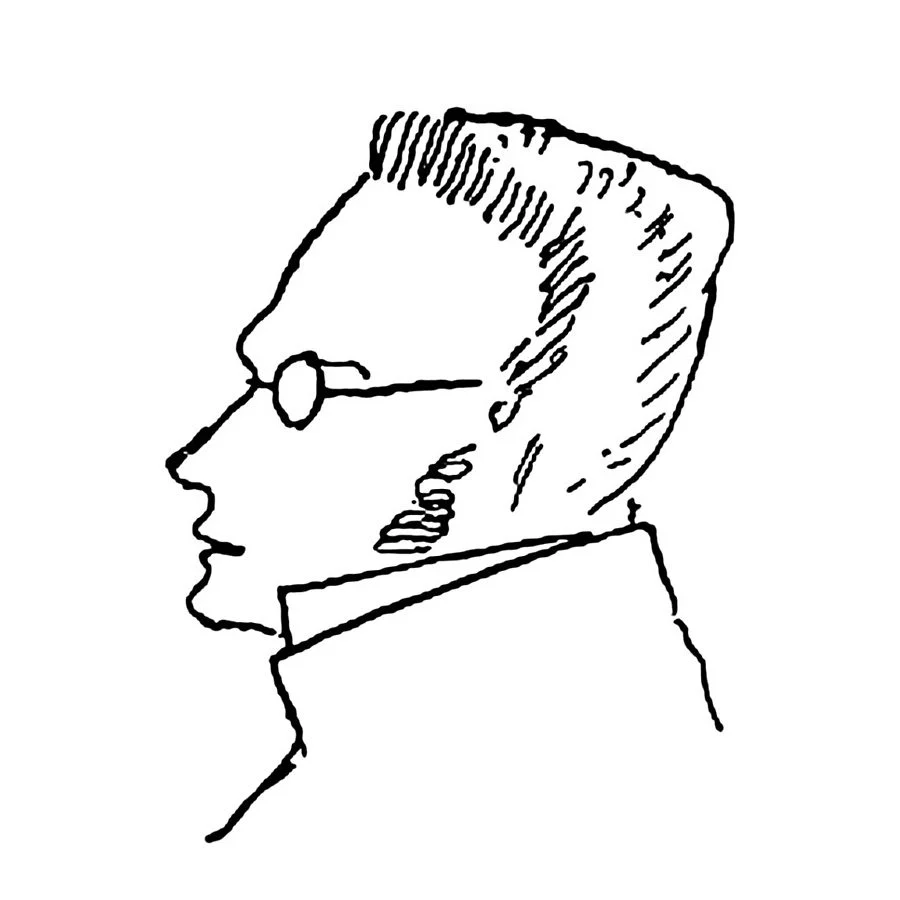
A philosophical inquiry into the limitations and enduring power of words in our quest for understanding.
London, UK – In an era saturated with information and communication, a fundamental question continues to echo through the halls of philosophy and the minds of the curious: can the very tools we use to articulate our thoughts – language – truly capture the essence of reality, particularly when grappling with life’s most profound and philosophical questions? This persistent inquiry, posed by William and addressed by philosopher Geoffrey Klempner, delves into the inherent limitations of linguistic expression and challenges the very foundation of our reliance on words to unravel existence.
William’s provocative question, "Letters are just lines. The combinations are finite. So why do we fall so heavily onto language to communicate and solve the nature of big philosophical questions? Language will never have the capacity to represent reality, so why try? Why don’t we consider it a lost cause?" strikes at the heart of a centuries-old philosophical debate. Klempner, founder member of the International Society for Philosophers (ISFP), acknowledges the apparent paradox: the seemingly simple construction of words, composed of finite combinations of letters or sounds, yet possessing the remarkable ability to evoke meaning and represent an external reality. This, he argues, is indeed a profound wonder.
Klempner’s response, however, is not a dismissal of language but an exploration of its historical context and philosophical underpinnings. He frames the issue as a fundamental puzzle concerning representation, intention, and meaning – core concepts in the philosophy of language. To understand this puzzle, he embarks on a historical journey, tracing the evolution of thought on how language relates to reality.
The Ancient Roots of Linguistic Skepticism
The philosophical inquiry into the relationship between language and reality can be traced back to ancient Greece. Klempner points to Plato’s dialogue Cratylus as a pivotal moment where the problem was explicitly articulated. However, the seeds of this questioning were sown earlier by the Presocratic philosopher Heraclitus. Heraclitus famously posited that "you can never step into the same river twice," highlighting the ceaseless flux and change inherent in the world. This constant state of becoming raised a critical question: how can a static linguistic label, like the word "river," meaningfully refer to an object that is demonstrably different at every single moment of its use? If the world is in perpetual motion, how can our words, which seem fixed, accurately describe it? This paradox laid the groundwork for centuries of philosophical contemplation on the nature of meaning and reference.
Enlightenment Attempts to Anchor Meaning
Centuries later, during the 17th century, prominent thinkers grappled with this challenge through different lenses. John Locke, an influential English philosopher, proposed a theory of "ideas" as the intermediaries between language and reality. For Locke, words were essentially labels that we attach to mental constructs – ideas – generated by our five senses. The meaning of any statement, in this view, was determined by the combination of these underlying ideas. This presented a two-stage process: sensory experience generates ideas, and language then serves to label and combine these ideas. Thus, the meaning of spoken sounds or written lines was believed to originate from an internal, mental landscape.
Meanwhile, on the continent, Gottfried Wilhelm Leibniz, a formidable intellectual adversary of Locke, envisioned a more ambitious solution. He entertained the concept of a characteristica universalis, a universal language designed to articulate reality with such clarity and precision that all philosophical problems could be resolved through logical calculation. Leibniz, in essence, recognized that the very structure and nature of the language we employ inherently imposes limits on our capacity for thought. His pursuit of a perfect language hinted at the profound influence that linguistic frameworks have on our understanding of the world.
The Dawn of Modern Logic and the Limits of Representation
The 19th century witnessed a significant breakthrough with the work of Gottlob Frege, a mathematician with a profound interest in philosophy. Frege’s groundbreaking contribution was the development of the first effective system of symbolic logic, known as the Begriffsschrift (Concept Script). This system was revolutionary because it was capable of accurately representing quantifiers – phrases like "All x" or "Some x" – in a way that had eluded philosophers for centuries, including Aristotle. Frege’s logic provided a rigorous framework for analyzing the logical relationships between quantified statements, offering a powerful tool for dissecting complex propositions.
It was within this intellectual milieu that Ludwig Wittgenstein emerged as a towering figure in 20th-century philosophy. Initially drawn to aeronautics at Manchester University, Wittgenstein’s fascination with the mathematics underpinning the field led him to explore fundamental questions about numbers and their representation. He sought out Bertrand Russell at Cambridge, who had further developed Frege’s ideas on symbolic logic. Unlike Frege, who primarily saw his work as contributing to mathematics, Russell viewed his logical analyses of language as crucial for epistemology and metaphysics. Echoing Locke, Russell believed that the logical dissection of language could illuminate how words function as conduits for knowledge about the external world.
Wittgenstein’s Early Vision: The Picture Theory of Meaning
The upheaval of the First World War profoundly impacted Wittgenstein’s intellectual trajectory. While serving in the Austrian Army, he meticulously documented his thoughts in his 1914-1918 Notebooks. These writings formed the bedrock of his seminal work, Tractatus Logico-Philosophicus, published after the war.
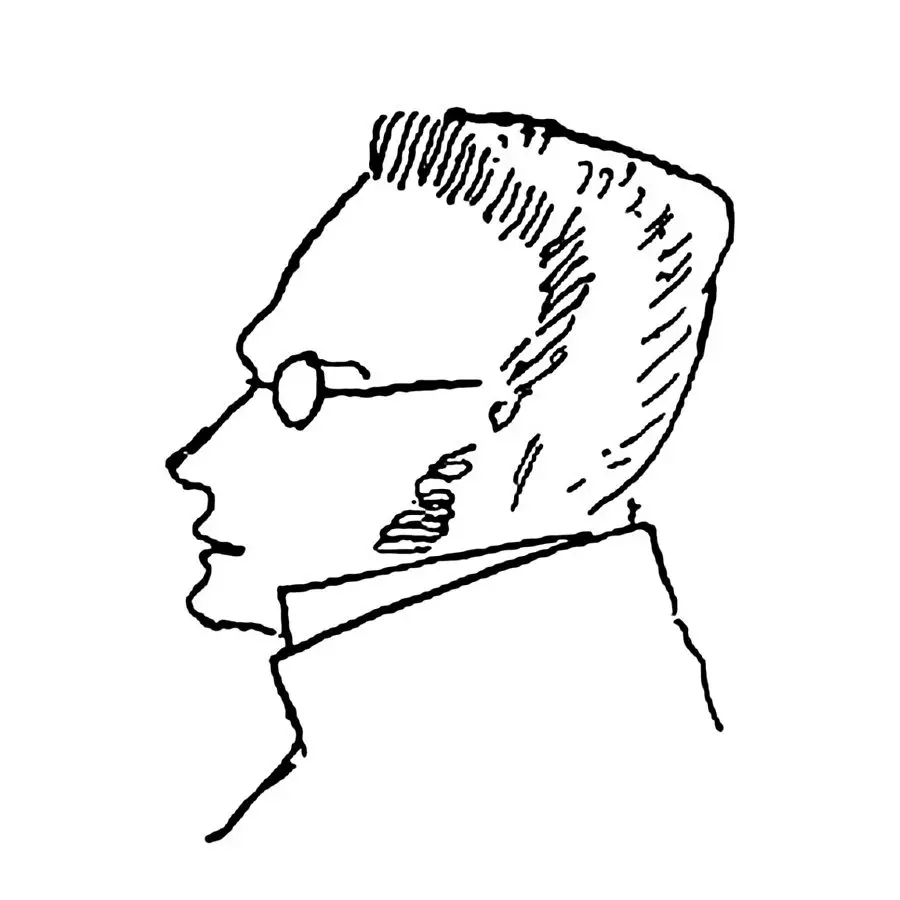
For many, including Klempner, the Tractatus presented a mind-bending perspective on language and reality. Wittgenstein’s initial, seemingly straightforward idea was that words arranged in a sentence form a "picture" of reality. He posited that any conceivable statement could ultimately be broken down into simple, "atomic" sentences. These atomic sentences, in turn, would directly correspond to "bits of the world," and their structure would mirror the actual relationships between those bits. An analogy often employed is that of chess notation, where every possible move and game state can be represented algebraically by numbering the squares. While the external world might not appear as neatly structured as a chessboard, Wittgenstein argued that, at its most fundamental level, it operates according to similar logical principles, and language, when properly analyzed, reflects this. This was the core of his "picture theory of meaning."
The Limits of the Picture: Philosophical Gibberish and the Quest for Meaning
However, the very power of this early theory contained the seeds of its own critique. In his later philosophical work, Wittgenstein came to recognize the limitations of the picture theory. He realized it was not a fully satisfactory answer to the question of how words acquire meaning.
More relevant to William’s original query, Wittgenstein’s early work in the Tractatus was adamant that "nothing can be said" that cannot be resolved into pictures of reality or representations of plain fact. This led to a stark conclusion: much of what is discussed in philosophy, particularly concerning ethics, values, and fundamental existential questions (like "Why is there anything at all?"), falls outside the scope of meaningful language. These are not objective statements about the world but rather subjective impressions or, as Wittgenstein termed it, "gibberish." While these questions might resonate deeply within our minds, objectively, they are not conveying anything that can be pictured or represented by language.
Beyond the Picture: Language Games and the Unspoken Desire
The implications of Wittgenstein’s early pronouncements are profound. If language is inherently limited to picturing factual reality, then our deepest philosophical inquiries – those that venture beyond empirical observation – are rendered meaningless. This presents a frustrating impasse for those seeking genuine understanding of concepts like morality, beauty, or the very nature of consciousness.
Klempner acknowledges that the later Wittgenstein’s concept of "language games" offers a different perspective. This view suggests that discourse about God, values, or the ultimate nature of reality are simply different "games" we play with words, legitimate within their specific human-centric contexts. However, Klempner, reflecting the sentiment of many who grapple with these profound questions, argues that when one asks these questions, it is not merely a game. There is a genuine intention, a deep desire to "mean what I say," to seek an objective reality, and to "know."
The frustration lies in the inherent difficulty of fully articulating this "meaning." While philosophical accounts can describe how words gain meaning, they often fall short of explaining precisely what it is that we mean to convey when we venture into these abstract philosophical territories. The gap between our intended meaning and our linguistic expression, especially when dealing with the ineffable, remains a persistent challenge.
The Enduring Power and the Unanswered Question
Despite the acknowledged limitations, the power of language to facilitate communication, build societies, and transmit knowledge is undeniable. The ability of finite combinations of sounds and symbols to evoke complex emotions, convey intricate ideas, and facilitate collective action is, as Klempner suggests, a profound marvel.
However, William’s question, and Klempner’s exploration, leaves us with a lingering sense of the profound. If language, our primary tool for understanding, has inherent limitations when confronting the deepest philosophical questions, what are the alternatives? Are we destined to remain in a state of eloquent silence when faced with the ultimate mysteries of existence?
The journey through the history of philosophy reveals a continuous struggle to reconcile the abstract nature of thought with the concrete limitations of language. While philosophers like Frege and Russell sought to harness the power of logic to refine our linguistic tools, and Wittgenstein initially believed language could perfectly mirror reality, the enduring questions suggest that the human desire to understand transcends the capacity of any single linguistic framework.
The challenge, therefore, is not necessarily to abandon language, but to remain critically aware of its boundaries. It is to acknowledge that while words can illuminate, they can also obscure. And in our pursuit of profound philosophical truths, we may find that the most significant insights lie not only in what we can articulate but also in what we can, with earnest intention, strive to mean, even when the words themselves fall short of fully capturing the vastness of reality. The conversation, it seems, is far from over.


Leave a Comment