
James S.A. Corey’s The Captive’s War: A Profound Exploration of Resistance and Humanity’s Long Game
FOR IMMEDIATE RELEASE
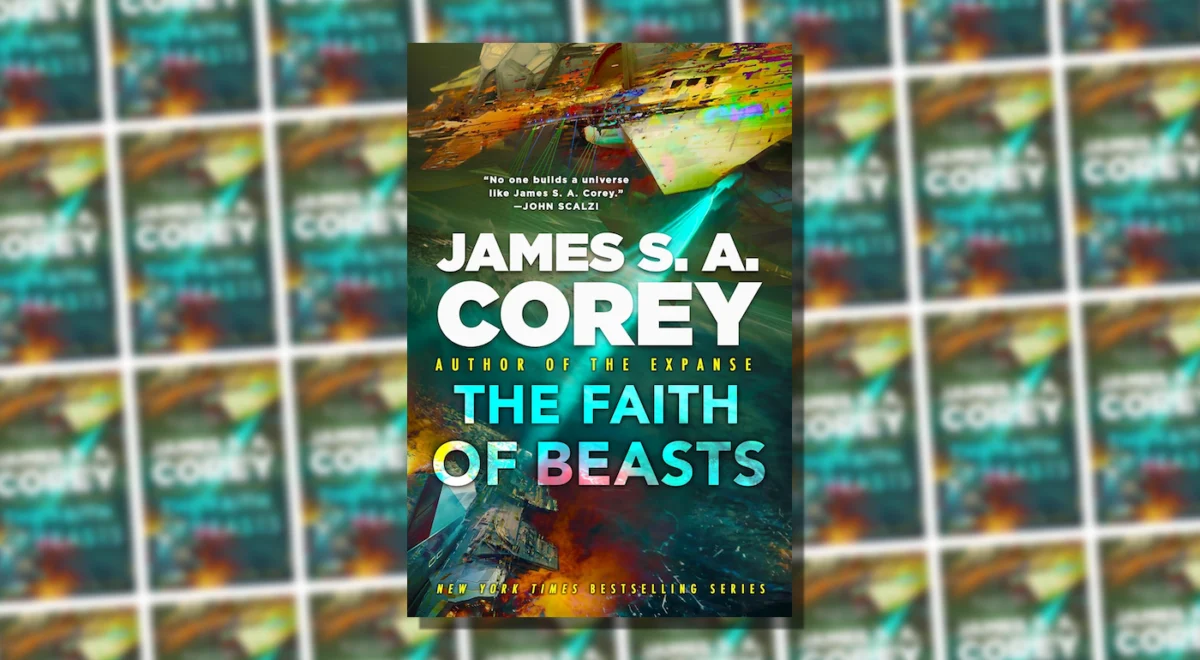
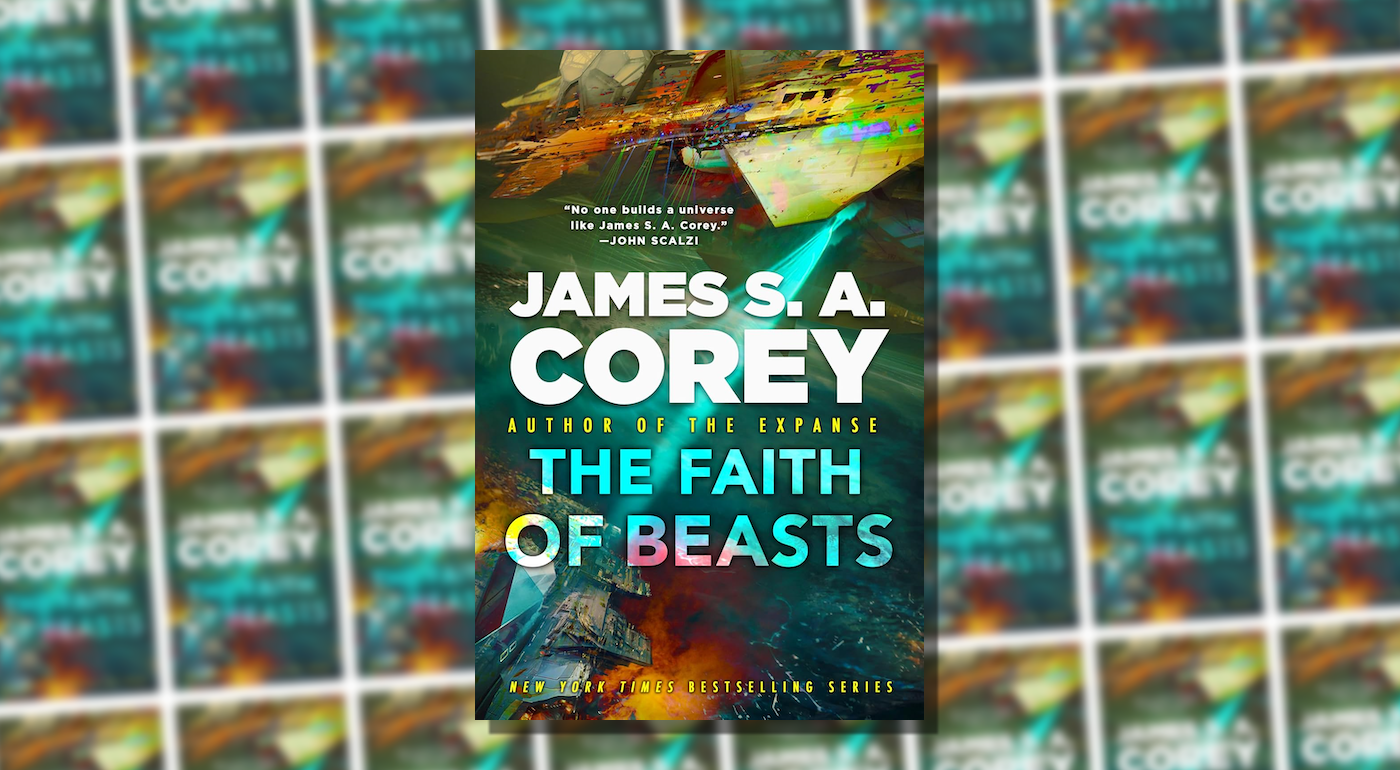
NEW YORK, NY – The literary duo known as James S.A. Corey, acclaimed authors of the sprawling Expanse series, continue to captivate science fiction readers with their latest endeavor, The Captive’s War trilogy. With the release of the second installment, The Faith of Beasts, the narrative deepens into a masterful study of subtle resistance, the enduring human spirit, and the strategic long game required to confront overwhelming oppression. This series eschews conventional heroic narratives, instead focusing on the quiet, often agonizing choices made by individuals striving for survival and freedom against a truly alien foe.
Initial Encounter: The Mercy of Gods Lays the Groundwork
The genesis of The Captive’s War was boldly established in its inaugural volume, The Mercy of Gods. Breaking from the expected human-centric opening, the narrative commenced not with its ensemble cast of captive humans, but through the stark, alien perspective of Ekur-Tkalal, the "keeper-librarian" of the Carryx. This chilling introduction immediately immersed readers in the vast, indifferent empire of the Carryx, framing humanity’s plight from the vantage point of their enslavers. Ekur-Tkalal’s ominous final statement, "We did not see the adversary for what he was, and we brought him into our home," served as both a warning and a prescient foreshadowing of the Carryx’s eventual downfall, subtly indicating that the humans, despite their captivity, are not merely victims but catalysts for change.
The "adversary" in question is Dafyd Alkhor, an unassuming research assistant thrust into an improbable leadership role. Transported unwillingly from their home planet of Anjiin—a world whose own origins are shrouded in lost history, hinting at a humanity that arrived from "somewhere else"—Dafyd and a select group of brilliant minds find themselves imprisoned in a towering Carryx facility. Their task: a scientific endeavor with the ultimate stakes of survival or destruction. Corey, known for weaving seemingly minor details into pivotal moments, directly clues readers into the series’ central theme: "Small moments, unnoticed at the time, change the fate of empires." The Mercy of Gods thus functions as a meticulously crafted setup, promising eventual triumph over the Carryx, but leaving the critical question unanswered: how will this seemingly impossible resistance manifest?
(Spoilers for The Mercy of Gods follow.)
The Unfolding Strategy: The Faith of Beasts and the Art of Covert Resistance
The Faith of Beasts does not provide immediate answers, but rather meticulously peels back layers of the resistance strategy, unfolding with a pace that is both "stately and propulsive." Corey’s narrative style, characterized by "masterful restraint," builds tension and anticipation, making this a book that demands uninterrupted attention. Readers are drawn deeper into the complex mechanics of survival and covert defiance, exploring how individuals can resist without overtly fighting, and crucially, "how long that might take."
The Carryx present an adversary of immense scale and chilling philosophy. They perceive all enslaved species as mere "animals," utterly disregarding individual success or emotion. Their society revolves entirely around serving the Sovran, a central figure to whom they are utterly devoted. The very concepts of "life," "war," and "serving the empire" are encapsulated in a single, monolithic Carryx word, reflecting a collective existence where individuality is fluid, bodies are physically transformed as needed, and purpose is dictated by the empire’s directives. Humans, with their inherent individuality, emotional complexity, and needs, are minuscule within this colossal, impersonal organism. This stark contrast between human and Carryx nature forms the core of the series’ philosophical tension.
A defining event in The Mercy of Gods was the swift and brutal suppression of a human rebellion. While some captives sought immediate, violent recourse, Dafyd Alkhor, driven by a profound need to understand the Carryx and devise a truly effective long-term resistance, played a crucial role in crushing this premature uprising. This decision, though instrumental in preserving a viable path forward, earned him the bitter hatred of many survivors, burdened by the deaths of their friends. However, it also served a critical, if painful, culling: the survivors were not those driven by immediate, violent impulses, but rather the observers, the learners, the explorers, the inventors, the caregivers, the storytellers, and the brilliant scientists. These individuals – curious, clever, wise, loving, and subtly dangerous – are the architects of the new, insidious forms of resistance explored in The Faith of Beasts.
Diversified Fronts: The Many Faces of Humanity’s Struggle
Corey masterfully illustrates these varied avenues of resistance through the evolving arcs of his characters:
1. The Power of Narrative: Uuya Tomos and the Shaping of Future Generations
One of the most profound strategies emerges through Uuya Tomos, a writer from Anjiin. Dafyd enlists her to craft stories and songs for the next generation of humans born into Carryx captivity. The Carryx, ironically, demand a self-sustaining human population, inadvertently creating a demographic that has known nothing but alien rule. Dafyd understands that these children will require a cultural anchor, narratives that whisper of a different existence, a lost freedom, and a heritage worth reclaiming. The article raises a poignant question about these "founding myths of Anjiin" — are they genuine historical accounts from the "beforetimes" or deliberately constructed fables for a new generation? This underscores the power of storytelling not just as entertainment, but as a vital tool for cultural preservation, identity formation, and the planting of seeds of rebellion. In the absence of physical weapons, stories become the most potent means of passing on the fight, instilling hope, and fostering a sense of shared purpose across generations.
2. Exploration, Connection, and Unexpected Discoveries
Other characters forge less overt but equally significant paths. Jessyn, who confronted her own capacity for violence in the first book, is dispatched on an expedition to a new planet. There, she stumbles upon an unexpected discovery, hinting at deeper layers of the universe and potentially new alliances or resources that could turn the tide. (Readers familiar with Corey’s novella Livesuit might find early connections, though it is not a prerequisite.)
Simultaneously, Campar embarks on his own expedition, forming an unlikely friendship with a remarkably funny, giant slug-like creature that endearingly refers to humans as "meat-on-sticks." This poignant encounter highlights humanity’s innate capacity for connection, even across vast species divides. Campar also finds a new lover, reinforcing the idea that even under unimaginable oppression, the human need for intimacy and emotional support persists as a form of defiant self-preservation. His journey also yields a "shocking discovery," further broadening the scope of the human predicament and the potential avenues for change.
3. Scientific Ingenuity and Psychological Endurance
Meanwhile, Tonner, the genius scientist, continues to push the boundaries of knowledge, wielding scientific ingenuity as a weapon against ignorance and oppression. Across the board, characters grapple with the pervasive trauma of their situation, finding solace and resilience in various coping mechanisms: humor, denial, and small, defiant acts of rebellion. The overwhelming "exhaustion" of their daily lives is a recurring motif, yet Corey carefully details their individual responses, their focus on tasks, and the profound things that compel them to persist. This exploration of individual psychology under duress is a hallmark of Corey’s writing, emphasizing that the will to survive is not monolithic but deeply personal and multifaceted.
4. The Enigma of the Swarm: A Catalyst for Existential Questions
Perhaps the most intriguing and philosophically challenging element of the resistance is the alien sentience known as the swarm. Having landed on Anjiin before the Carryx invasion, the swarm has been diligently gathering intelligence for its own enigmatic masters. By the end of The Mercy of Gods, it declares an unexpected "love" for Dafyd. The swarm possesses unique and formidable skills, capable of taking over human bodies and integrating them into its shared consciousness. This raises profound questions about individuality, collective identity, and the very definition of survival. The swarm’s admission that it is "making itself up as it goes along" injects a touch of cosmic irony, suggesting that even advanced alien intelligences are improvising in the face of the unknown – a sentiment strikingly relatable to humanity’s own desperate struggle. The swarm represents a potential game-changer, but also a moral and existential dilemma, forcing characters and readers alike to ponder the ethical boundaries of alliance and transformation.
Implications: The Long Game of Freedom and the Radical Hope of Humanity
The Captive’s War is unequivocally a story about playing the long game. It chronicles survival under impossible conditions, resistance when traditional warfare is futile, and the precarious, often horrific, balance between acceptance and defiant horror. Characters repeatedly observe that humans can adapt to almost anything: navigating massive alien cathedrals filled with bizarre species, reporting to multi-legged giant cockroaches, learning to procreate in artificial sacs, contemplating that freedom might be a generational fight, or exploring derelict alien ships. The sheer scale of these adjustments underscores humanity’s incredible adaptability and tenacity. "They persist," the narrative reminds us, echoing a sentiment of enduring hope.
Even in a world where individual power seems negligible, characters retain the fundamental power of choice. They choose who to blame, who to trust, how to react; they choose between denial and acceptance; and sometimes, they choose actions that could lead to their demise, for better or worse. These seemingly small choices accrue immense significance, shaping not just individual fates but the potential destiny of an entire species. The ultimate choice, often, is "who to become, and how to leave yourself behind" – a profound examination of identity under duress.
The Faith of Beasts is replete with "huge revelations delivered quietly," moments of world-changing import that creep up on characters and readers alike. It remains deeply character-driven, a testament to Corey’s commitment to exploring heroism not through grand, romanticized gestures, but through the mundane, painful, and often subtle acts of courage that manifest epic change. The idea of passing the fight to the next generation, as articulated by Uuya Tomos – "It’s never your responsibility to do something that can’t be done. You do your part, and you help the next generation carry it a little farther, and then the one after that" – encapsulates the series’ enduring message. It acknowledges the daunting nature of the struggle while affirming the moral imperative to continue, to nurture the embers of freedom for those who will follow.
Two books in, The Captive’s War series stands as a "quietly radical and intensely hopeful" work. Corey unflinchingly portrays the inherent bleakness of the situation, showing that other species have endured Carryx enslavement for generations and that individual lives are terribly fragile. Yet, The Faith of Beasts is a powerful and repeated reminder that there is no singular way to fight, to retain one’s self, to care for others, or to forge connections. It is a testament to the myriad ways in which life, and hope, can persist against the most overwhelming odds.
The Faith of Beasts is published by Orbit.


Leave a Comment