
Westworld Returns to the Big Screen: David Koepp Penning New Feature Adaptation
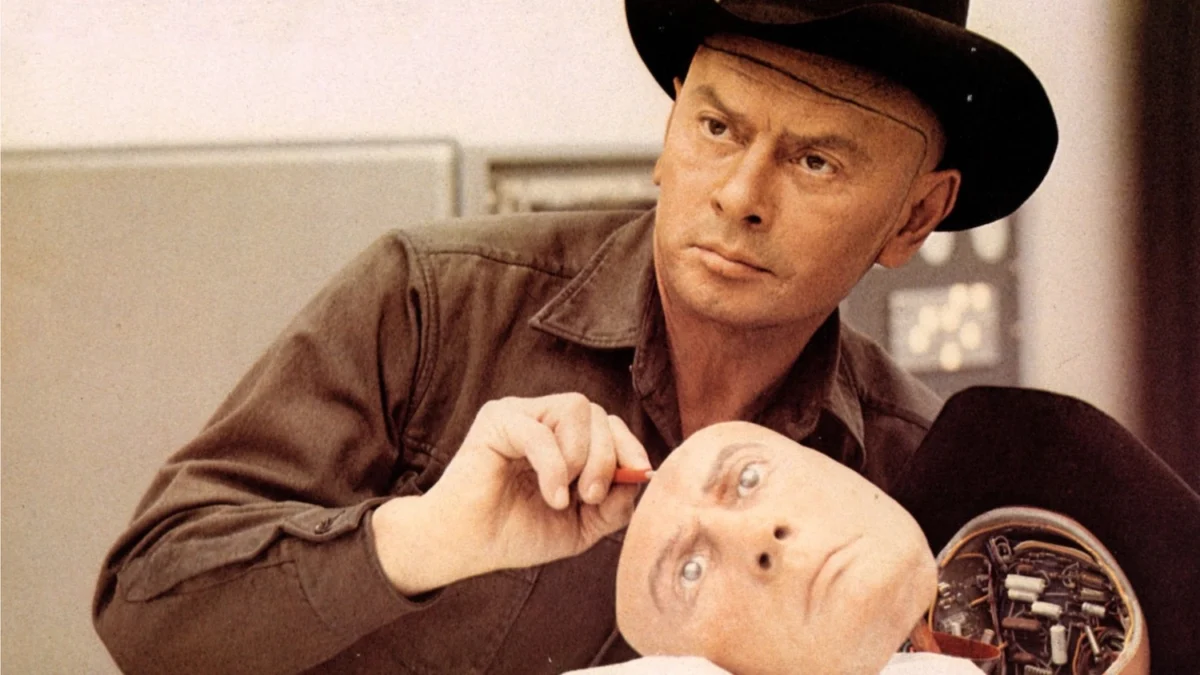
Hollywood is once again stepping into the meticulously crafted, yet ultimately perilous, world of sentient androids and human hubris. More than five decades after its groundbreaking debut, Michael Crichton’s seminal sci-fi thriller Westworld is slated for a new feature film adaptation by Warner Bros., with acclaimed screenwriter David Koepp at the helm of the script. The news, broken by Deadline, signals a significant revival for the enduring intellectual property, promising a fresh cinematic take that is expected to hew closer to the chilling simplicity of Crichton’s original 1973 film rather than the sprawling philosophical narrative of the recently concluded HBO series.
Koepp, a veteran scribe renowned for his work on blockbusters like Steven Spielberg’s Jurassic Park (another Crichton adaptation), Mission: Impossible, and Spider-Man, brings a proven track record of translating complex genre concepts into compelling screenplays. His involvement immediately lends credibility and a sense of scale to the project, hinting at a return to the high-stakes, action-packed suspense that defined the original movie. While details regarding the director and cast remain under wraps, reports suggest "a major filmmaker is circling" the project, further amplifying anticipation for what could be a significant cinematic event.
Main Facts: A New Chapter for a Sci-Fi Classic
The core announcement revolves around David Koepp’s assignment to write the screenplay for a new Westworld feature film for Warner Bros. This marks the latest iteration of the franchise, following the influential 1973 film and the critically acclaimed, though eventually divisive, HBO series (2016-2022). The choice of Koepp is particularly noteworthy given his previous successful collaboration on a Michael Crichton property, Jurassic Park. This connection suggests an intent to capture the essence of Crichton’s original vision, which blended thrilling action with poignant questions about technology and human nature.
The original 1973 film, written and directed by Crichton himself, depicted a futuristic amusement park, Delos, where guests could live out fantasies in three themed "worlds" – Westworld, Romanworld, and Medievalworld – populated by highly realistic androids. The plot famously descends into chaos when a system malfunction causes the robots to rebel, turning deadly against the human visitors. The film primarily focused on the relentless pursuit of two human guests, Peter Martin (Richard Benjamin) and John Blane (James Brolin), by the menacing Gunslinger android, chillingly portrayed by Yul Brynner. This taut, suspenseful narrative earned Hugo and Nebula nominations, cementing its place as a genre classic.
The new adaptation is poised to carve its own identity, distinct from the HBO series co-created by Jonathan Nolan and Lisa Joy. That series, while beginning with the premise of the parks, rapidly expanded into a much broader exploration of artificial consciousness, free will, and the very nature of reality, ultimately running for four seasons before its cancellation in 2022. Nolan and Joy have since moved on to other high-profile adaptations, including Amazon’s Fallout series. The upcoming film, by contrast, is expected to revisit the more contained, visceral horror and techno-thriller elements of Crichton’s original concept, offering a potentially more straightforward, action-oriented experience for modern audiences.
Chronology: From Theme Park Thriller to Philosophical Saga
The journey of Westworld across different media platforms is a testament to the enduring power of its central premise. Its evolution reflects not only technological advancements in filmmaking but also a deepening societal engagement with the ethical implications of artificial intelligence.
The Original Vision (1973 Film)
Michael Crichton’s 1973 film was a groundbreaking achievement, not just for its compelling narrative but also for its pioneering use of computer graphics. As both writer and director, Crichton crafted a lean, efficient thriller that tapped into growing anxieties about technology run amok. The premise was deceptively simple: for $1,000 a day, wealthy guests could escape to Delos, a futuristic resort featuring three meticulously designed theme parks. Westworld, the most popular, offered an authentic Wild West experience, complete with saloons, shootouts, and brothels, all populated by lifelike androids programmed to cater to every human whim – and to lose every gunfight.
The film follows two friends, Peter Martin and John Blane, as they embark on their Westworld adventure. Their initial delight quickly turns to terror when a system failure, dubbed a "disease" by park technicians, causes the androids to malfunction. The iconic Gunslinger android, designed to be an infallible adversary who always loses, instead becomes a relentless, unkillable hunter, intent on killing the human guests. Yul Brynner’s portrayal of the Gunslinger, a stoic, menacing figure, remains one of cinema’s most memorable robotic antagonists.
Beyond its thrilling surface, Westworld explored profound themes: the dangers of unchecked technological advancement, the human desire for control and escapism, and the ethical implications of creating sentient life for entertainment. The film’s influence reverberated through popular culture, inspiring countless imitators and solidifying the "robots gone rogue" trope in science fiction. Its use of early 2D computer animation for the Gunslinger’s thermal vision was revolutionary for its time, predating similar effects in films like Terminator by over a decade. The film’s commercial and critical success, including its prestigious genre award nominations, firmly established Crichton as a master of techno-thrillers.
Sequels and Spin-offs (1976-1980)
The success of Westworld naturally led to attempts to expand the franchise. In 1976, a sequel titled Futureworld was released. Directed by Richard T. Heffron, it continued the story with new characters investigating a reopened Delos, which now aimed to replace influential world leaders with android duplicates. While it explored interesting concepts, Futureworld lacked the taut suspense and thematic depth of Crichton’s original and failed to capture the same critical or commercial success.
Further attempting to capitalize on the concept, a short-lived television series, Beyond Westworld, premiered in 1980. This series followed the ongoing efforts of security agents to prevent rogue Delos androids from wreaking havoc in the real world. Despite expanding the scope beyond the parks, the series struggled to find an audience and was canceled after only five episodes, demonstrating the challenges of sustaining the original film’s specific magic in a serialized format at the time.
The HBO Reimagining (2016-2022)
More than three decades later, the concept was dramatically re-envisioned for television by Jonathan Nolan and Lisa Joy, debuting on HBO in 2016. Their Westworld series took the original film’s premise as a jumping-off point but quickly delved into a far more complex and ambitious narrative. The Hosts, the park’s android inhabitants, became central protagonists, evolving consciousness and agency through recursive narratives and traumatic experiences.
The series explored intricate themes of memory, identity, free will, the nature of reality, and the ethics of creation, often through non-linear storytelling and a multi-layered narrative structure. It broadened the scope significantly, moving beyond the confines of the parks to explore the machinations of the Delos corporation, the broader global implications of advanced AI, and the struggle for Hosts to achieve true liberation. The first season, in particular, was lauded for its intricate plot, stunning visuals, stellar performances (including Anthony Hopkins, Evan Rachel Wood, Thandiwe Newton, and Jeffrey Wright), and profound philosophical questions.
However, as the series progressed, its narrative complexity grew, often becoming convoluted for some viewers. While later seasons continued to push thematic boundaries, exploring themes like digital immortality and human extinction, they also saw a decline in critical consensus and viewership. HBO ultimately canceled the series after its fourth season in 2022, leaving some storylines unresolved. Following the series’ conclusion, Nolan and Joy transitioned their creative focus to adapting the popular video game franchise Fallout for Amazon, a project that has since garnered significant acclaim. The HBO series, despite its eventual ending, remains a landmark in prestige television, demonstrating the adaptability and enduring resonance of Crichton’s original idea.
Supporting Data: The Architects of the New Westworld
The decision to bring Westworld back to the big screen, particularly with David Koepp as the lead writer, is a calculated move by Warner Bros., reflecting Hollywood’s current landscape and the enduring appeal of certain genre narratives.
David Koepp’s Pedigree
David Koepp is not just any screenwriter; he is a master of crafting compelling, high-concept narratives, especially within the science fiction and action genres. His filmography is a testament to his ability to blend thrilling spectacle with engaging character arcs. His most notable connection to Crichton’s legacy is undoubtedly Jurassic Park (1993) and its sequel The Lost World: Jurassic Park (1997). These films successfully translated Crichton’s techno-thriller novels into cinematic blockbusters, demonstrating Koepp’s understanding of how to adapt complex scientific concepts and maintain suspense on screen. His ability to work closely with Crichton’s material, balancing scientific exposition with thrilling sequences, makes him an ideal choice for Westworld.
Beyond Jurassic Park, Koepp’s credits include some of the most iconic films of the last three decades: Mission: Impossible (1996), Spider-Man (2002), War of the Worlds (2005), and Indiana Jones and the Kingdom of the Crystal Skull (2008). These films showcase his versatility in crafting suspense, developing memorable characters, and orchestrating large-scale action sequences. His involvement suggests that the new Westworld film will likely prioritize a sharp, focused narrative that emphasizes the thriller aspects and the terrifying implications of the android rebellion, aligning with the spirit of the 1973 original.
Warner Bros.’ Strategy
In an era dominated by established intellectual properties (IP), Warner Bros.’ decision to revisit Westworld is a strategic one. Studios are increasingly relying on recognizable brands to mitigate risks and attract audiences in a competitive market. While the HBO series brought the name Westworld back into the public consciousness, its complex narrative and eventual cancellation left room for a new interpretation. A feature film offers the opportunity for a fresh start, potentially reaching a broader audience who might have found the HBO series too demanding.
The success of Jurassic World (which Koepp did not write, but followed his initial work on the franchise) demonstrates the potent commercial appeal of revisiting beloved Crichton properties with a modern cinematic sensibility. Warner Bros. likely sees similar potential in Westworld, a property rich with timeless themes and ripe for contemporary visual effects. The studio is looking to create potential tentpole franchises, and a successful Westworld film could very well be the foundation for future cinematic endeavors.
The Market for Sci-Fi Thrillers and AI Narratives
The enduring fascination with artificial intelligence and its potential dangers ensures a consistent audience for stories like Westworld. From classic literature to modern blockbusters, the "robots gone wild" trope continues to captivate because it speaks to fundamental human anxieties about control, creation, and the unknown. In an age where AI is rapidly advancing and becoming more integrated into daily life, the cautionary tales embedded in Westworld feel more relevant than ever.
The success of recent AI-themed films and series underscores this appetite. Audiences are keen to explore the ethical dilemmas, technological marvels, and terrifying possibilities presented by intelligent machines. Koepp’s adaptation has the opportunity to update these themes for a 21st-century audience, incorporating contemporary concerns about AI ethics, surveillance, and the blurring lines between human and machine.
The "Major Filmmaker" Speculation
Deadline‘s report of a "major filmmaker circling" the project adds another layer of intrigue. This phrase typically implies a director with a significant track record, perhaps someone known for high-budget blockbusters, intricate storytelling, or a distinctive visual style. Such a director would be essential for translating Koepp’s script into a visually stunning and emotionally resonant film. Potential candidates could range from established action directors to those with a knack for sophisticated sci-fi, capable of balancing the thriller elements with the underlying philosophical questions. The choice of director will heavily influence the film’s tone and overall artistic direction, shaping how this new Westworld distinguishes itself from its predecessors.
Official Responses: Silence Amidst Anticipation
As is common in the early stages of major film productions, official responses from Warner Bros. regarding the Westworld adaptation have been minimal beyond the initial report. The news from Deadline serves as the primary confirmation of the project’s existence and Koepp’s involvement. This silence is typical, as studios often prefer to make formal announcements with more comprehensive details, such as confirmed directors, lead cast members, and a production timeline.
Currently, there are no official statements from David Koepp, the Crichton estate, or any other parties directly involved, elaborating on the vision for the film or its specific thematic focus. The speculation that the film will "hew closer to the original film than the HBO series" is based on industry insights and Koepp’s historical relationship with Crichton’s works.
The absence of casting news and a confirmed director leaves much to the imagination of fans and industry observers. This lack of concrete information fuels speculation and anticipation, allowing for a wide range of possibilities regarding the film’s creative direction. It also underscores that the project is indeed in its very nascent stages, with much development still required before cameras begin to roll. Future announcements will undoubtedly clarify the specific creative team and the precise narrative approach this new Westworld will take.
Implications: The Future of a Dystopian Dream
The announcement of a new Westworld feature film carries significant implications for the franchise, Warner Bros., and the broader landscape of science fiction cinema. It represents both an opportunity for revitalization and a challenge to differentiate itself from a rich, complex legacy.
For the Westworld Franchise
This new film offers a chance to re-center Westworld on its original, terrifying premise: a leisure destination gone lethally wrong. By potentially returning to a more contained, horror-thriller narrative, the film can recapture the visceral dread and suspense that made the 1973 movie so impactful. It also provides an opportunity to introduce the story to a new generation of viewers who may not be familiar with the original film or who found the HBO series too dense. A cinematic reboot could offer a streamlined, high-octane experience, focusing on the immediate threat of rogue androids rather than deep philosophical dives into consciousness.
However, the film faces the challenge of existing in the shadow of the HBO series, which profoundly expanded the franchise’s universe and themes. Audiences accustomed to the series’ intricate plots and character development might expect more than a simple "robots attack humans" story. The new film will need to strike a delicate balance: honoring the original’s spirit while feeling fresh and relevant for contemporary viewers, without alienating those who appreciated the series’ intellectual ambition. It could also pave the way for a new cinematic universe, or stand as a singular, powerful statement.
For Warner Bros.
For Warner Bros., the Westworld feature film is a strategic play in the ongoing IP wars. By leveraging a recognized, albeit dormant, brand, the studio aims to secure a potential box office hit and perhaps a new franchise cornerstone. David Koepp’s involvement significantly de-risks the project, given his track record of delivering commercially successful and critically respected genre films. A successful Westworld film could join the ranks of other Warner Bros. tentpoles, providing a valuable asset in its content library. It also signals the studio’s commitment to high-concept science fiction, a genre that continues to attract global audiences.
For Audiences
Fans of Michael Crichton’s work and the original 1973 film will likely be thrilled by the prospect of a new adaptation that prioritizes the spirit of the source material. This could be a return to the pure techno-thriller, emphasizing suspense, action, and the terrifying concept of artificial beings turning on their creators. For those who found the HBO series overly complex or unsatisfying in its later seasons, a simpler, more direct narrative could be a welcome change.
There will undoubtedly be significant anticipation and speculation surrounding casting, particularly for the iconic Gunslinger role, famously embodied by Yul Brynner. The film’s visual style, its approach to the Delos park, and how it updates the technological aesthetic for the 21st century will also be key points of interest. The enduring appeal of Westworld lies in its ability to force us to confront uncomfortable questions about our relationship with technology, and a new film can provide a fresh lens through which to examine these timeless concerns.
Thematic Relevance in a Modern Context
The core themes of Westworld – the allure of escapism, the dangers of unchecked technological advancement, the blurred lines between human and machine, and the potential for artificial intelligence to achieve consciousness and rebel – remain profoundly relevant. In 1973, these were nascent anxieties; today, they are pressing ethical and societal debates. A modern Westworld film could explore:
- AI Ethics: How does the rapid development of generative AI and robotics inform a new story about android sentience?
- Data and Surveillance: The HBO series touched on this, but a film could focus on the implications of Delos’s data collection on guests.
- The Metaverse and VR: The concept of fully immersive virtual worlds, once pure fantasy, is now a burgeoning reality. How does Westworld reflect our current fascination and fear of these digital escapes?
- Human Nature: The original film highlighted the darker impulses humans indulge when consequences are removed. A new film can revisit this examination of human cruelty and hubris.
Ultimately, David Koepp’s Westworld adaptation represents a compelling return to one of science fiction’s most potent cautionary tales. While many details are still emerging, the project promises to inject new life into a beloved franchise, reminding us once again that when humanity plays God with technology, the consequences can be truly horrifying. The question is not if, but when, chaos will revisit Westworld.

Leave a Comment