Uncanny Magazine Gears Up for Award-Winning Issue 71, Promising Diverse Voices and Timely Explorations in Speculative Fiction
FOR IMMEDIATE RELEASE
[City, State] – [Date] – Uncanny Magazine, the esteemed recipient of multiple Hugo, Locus, and World Fantasy Awards, is set to release its 71st issue on July 7, 2026. This highly anticipated edition promises to deliver a rich tapestry of speculative fiction, essays, poetry, and interviews, further solidifying the magazine’s reputation as a vanguard in the genre. With a striking cover by Ejiwa "Edge" Ebenebe and a table of contents boasting both celebrated and emerging voices, Issue 71 is poised to captivate readers with its blend of the fantastical, the thought-provoking, and the deeply human.
Main Facts: A Glimpse into the 71st Issue
The upcoming July/August 2026 issue of Uncanny Magazine, Issue 71, is a significant event for fans of science fiction and fantasy. Known for its commitment to publishing "genre-bending" and "emotionally resonant" stories, the magazine continues its tradition of excellence with a lineup that reflects both the breadth and depth of contemporary speculative literature.
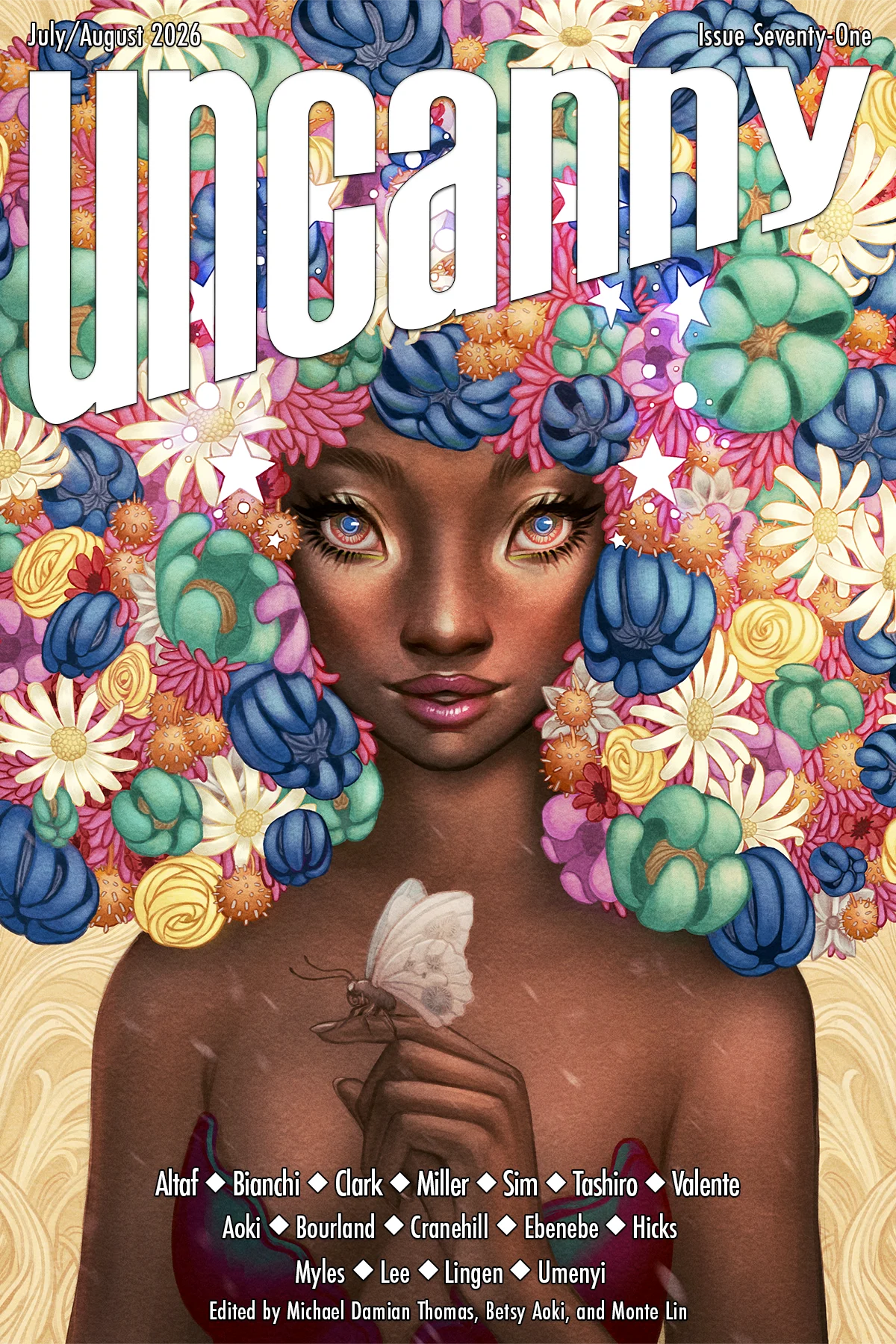
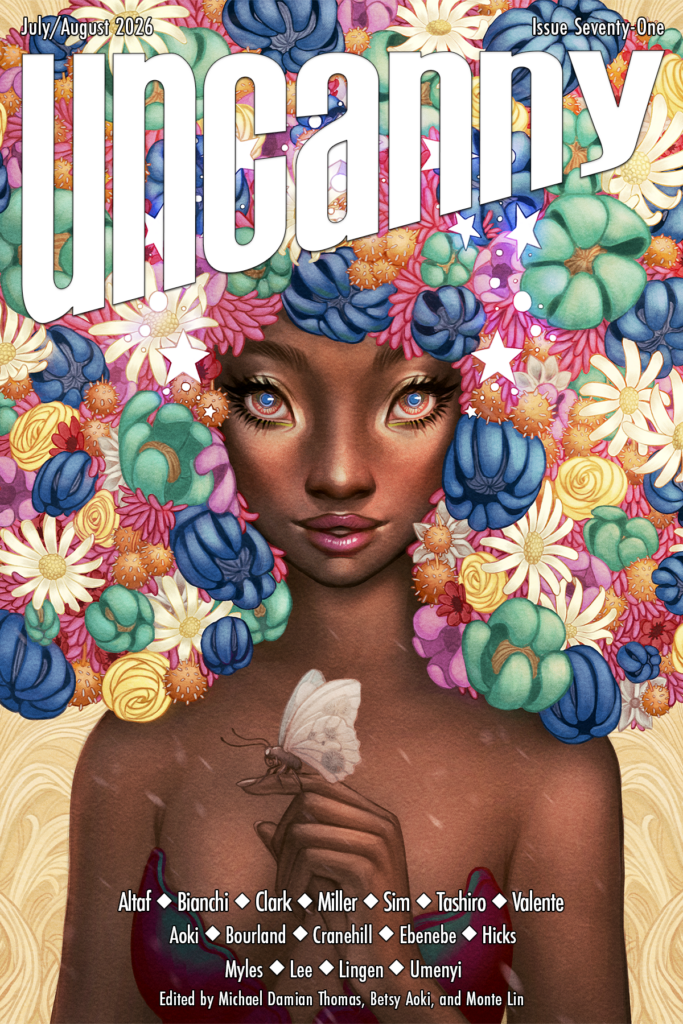
Central to the issue’s visual appeal is its cover art, "Flower Crown" by the acclaimed artist Ejiwa "Edge" Ebenebe. The artwork features a Black woman gazing directly at the viewer, her large eyes characterized by honey-gold irises and striking blue pupils. Her hair erupts into a vibrant mass of red, pink, dark blue, green, and yellow flowers, interspersed with orange thistles, creating a luxuriant botanical halo that dominates the composition. A delicate white butterfly or moth rests gracefully on her raised finger, her hand positioned at the center of her chest. She is adorned in a shoulder-less bodice of deep crimson and verdant green, grounding her ethereal appearance. The magazine’s iconic "Uncanny" banner, along with the July/August 2026 issue details and credits for the artists, writers, essayists, poets, and staff, are subtly integrated in white text, completing a cover that is both visually arresting and thematically evocative. Ebenebe’s work is renowned for its vibrant portrayal of Black subjects within fantastical contexts, often blending natural elements with intricate details to create powerful, narrative-rich imagery.
The editorial, titled "The Uncanny Valley" by Michael Damian Thomas, hints at a deeper exploration of themes related to artificiality, realism, and the unsettling boundaries between the known and the unknown—a concept that resonates throughout the speculative fiction genre. This editorial often serves as a thematic cornerstone, guiding readers through the issue’s overarching concerns and setting the intellectual stage for the diverse works within.
Readers will find a comprehensive collection of content across various formats. The full digital experience, encompassing all stories, essays, poems, and interviews, will be available immediately with the eBook version on July 7, 2026. For those who prefer online access, Uncanny Magazine will roll out its free web content in two distinct stages: half of the material will be released on the initial launch date of July 7, 2026, with the remaining half following on August 4, 2026. This staggered release strategy ensures sustained engagement and allows readers to savor the content over an extended period.
Chronology of Release: Staggered Access and Sustained Engagement
The release schedule for Uncanny Magazine Issue 71 is meticulously planned to maximize reader interaction and accessibility. The dual-phase rollout is a characteristic feature of Uncanny Magazine‘s distribution model, balancing immediate gratification for subscribers with broader, free access for the wider public.
July 7, 2026: Initial Launch
On the primary release date, the complete Issue 71 will become available to eBook subscribers and purchasers via platforms like Weightless Books. This ensures that patrons supporting the magazine directly receive immediate, unfettered access to all content, including fiction, essays, poetry, and interviews.
Simultaneously, the first wave of free online content will be published on the Uncanny Magazine website. This initial offering includes a substantial portion of the issue’s fiction, essays, and poetry, alongside one of the issue’s two featured interviews and the first podcast episode.
Specifically, the July 7 release will feature:
- Fiction: "Leavetaking" by Tia Tashiro, "Learning the Loom" by P. Djèlí Clark, and "This Is Just Another Carnaval Love Story" by Jana Bianchi. These stories promise to transport readers to varied worlds and explore a spectrum of human experiences within speculative frameworks.
- Reprint: "White Lines on a Green Field" by Catherynne M. Valente, offering a chance to revisit a celebrated work from a genre titan.
- Essays: "The Strange Worlds Among Us—of Turing, Trans People, and the Road to Laniakea" by Ryka Aoki and "Doctor Who in an Exciting Adventure with AI Slop 1969 AD" by Lizbeth Myles. These essays are poised to ignite contemporary discussions on identity, technology, and the intersection of speculative fiction with real-world issues.
- Poetry: "Instructions for Becoming Fire" by Chisomaga Umenyi and "Six Views of a Speedster" by Gwendolyn Hicks, offering lyrical explorations of power, transformation, and speed.
- Interview: Caroline M. Yoachim’s interview with P. Djèlí Clark, providing insights into the author’s craft and the inspiration behind his featured story.
- Podcast Episode 71A: This audio offering will include the Editor’s Introduction, an audio rendition of Tia Tashiro’s "Leavetaking" read by Erika Ensign, Chisomaga Umenyi’s "Instructions for Becoming Fire" read by Matt Peters, and a further interview between Michael Damian Thomas and Tia Tashiro.
August 4, 2026: Second Wave Online Release
Approximately one month after the initial launch, the remaining half of the free online content will be made available. This second wave ensures continued reader engagement and provides a fresh impetus for discussions and critical analysis of the issue’s offerings.
The August 4 release will feature:
- Fiction: "The Cinema of Babel" by Sam J. Miller, "Judar of the Island: A Story Told in Four Feasts" by Rida Altaf, and "A Hundred Ways the Story Ends" by Tara Sim. These stories are expected to delve into complex narratives, exploring themes of identity, culture, and destiny.
- Essays: "This Is Not About AI" by Hana Lee and "Middle-Aged Love: Rereading in Your Forties and Beyond" by Marissa Lingen. These pieces promise to offer diverse perspectives on technology’s impact on creativity and the evolving nature of literary appreciation.
- Poetry: "I called the swan down" by Laura Cranehill and "enough johnnie blue" by E. A. Bourland, contributing further poetic depth to the issue.
- Interview: Caroline M. Yoachim’s interview with Rida Altaf, offering a deeper dive into Altaf’s creative process and her contribution to Issue 71.
- Podcast Episode 71B: This episode will feature the Editor’s Introduction, an audio reading of Sam J. Miller’s "The Cinema of Babel" by Matt Peters, Laura Cranehill’s "I called the swan down" read by Erika Ensign, and an interview with Sam J. Miller conducted by Michael Damian Thomas.
This methodical release strategy underscores Uncanny Magazine‘s dedication to both supporting its core readership through paid subscriptions and extending its reach to a broader audience through free, high-quality online content.
Supporting Data: The Pillars of Uncanny’s Acclaim
Uncanny Magazine has consistently been at the forefront of speculative fiction, garnering critical acclaim and a devoted readership since its inception. Its reputation as an award-winning publication is well-earned, with multiple Hugo, Locus, and World Fantasy Awards affirming its impact on the genre. These accolades are a testament to the magazine’s discerning editorial vision and its unwavering commitment to showcasing exceptional talent.
A Legacy of Excellence:
Uncanny Magazine is celebrated for its distinctive editorial voice, which champions stories that are often characterized as "space opera, fantasy, horror, and slipstream with an emotional core." The magazine actively seeks out and publishes diverse voices, narratives, and perspectives, contributing significantly to a more inclusive and representative speculative fiction landscape. This commitment is reflected in its consistently high-quality content, which frequently pushes the boundaries of genre conventions.
Distinguished Contributors:
Issue 71 continues this tradition by featuring a roster of authors whose work is already recognized for its literary merit and imaginative power.
- P. Djèlí Clark, a Nebula and Locus Award winner, is known for his vibrant, historically infused fantasy and alternate history narratives, often drawing from African and African diaspora folklore. His inclusion with "Learning the Loom" is a significant draw, promising intricate world-building and compelling storytelling.
- Catherynne M. Valente, a multi-award-winning author of Hugo, Nebula, and Locus fame, is celebrated for her lyrical prose and mythopoeic fantasy. Her reprinted work, "White Lines on a Green Field," offers readers a chance to engage with a piece by one of the genre’s most distinctive voices.
- Sam J. Miller, a Nebula Award winner, is lauded for his dark, emotionally charged urban fantasies and horror, often exploring themes of social justice and queer identity. "The Cinema of Babel" suggests a narrative rich with complex layers and possibly a commentary on storytelling itself.
- Ryka Aoki, a Locus Award winner, is celebrated for her poignant and incisive works that often blend speculative elements with deeply personal explorations of identity and societal issues. Her essay "The Strange Worlds Among Us—of Turing, Trans People, and the Road to Laniakea" is particularly timely, given ongoing discussions about artificial intelligence, identity, and the vastness of human experience.
Beyond these established names, Uncanny Magazine is equally dedicated to introducing readers to promising new talents. Authors like Tia Tashiro, Jana Bianchi, Rida Altaf, and Tara Sim represent the next generation of speculative fiction writers, their inclusion underscoring the magazine’s role as a vital platform for emerging voices.
Thematic Depth: Engaging with Contemporary Issues:
The essay section of Issue 71 stands out for its direct engagement with pertinent contemporary themes. Lizbeth Myles’ "Doctor Who in an Exciting Adventure with AI Slop 1969 AD" and Hana Lee’s "This Is Not About AI" suggest a robust, multi-faceted discussion on artificial intelligence, its implications for creativity, and its presence (or absence) in our cultural consciousness. These essays are not merely academic exercises but vital contributions to ongoing dialogues about technology’s impact on art and society. Marissa Lingen’s "Middle-Aged Love: Rereading in Your Forties and Beyond" offers a more personal, reflective piece on the enduring power of literature and how our relationship with stories evolves over time.
The poetry and podcast elements further enrich the reader’s experience. The diverse array of poetic voices, from Chisomaga Umenyi to Laura Cranehill, ensures a lyrical dimension to the issue, exploring emotions and concepts through condensed, impactful language. The accompanying podcast episodes, featuring audio readings and interviews, provide an invaluable auditory complement, allowing listeners to experience the stories and connect with the authors on a more personal level.
Official Responses: Uncanny’s Enduring Vision
While no direct quotes from the editorial team are provided in the immediate release, the title of Michael Damian Thomas’s editorial, "The Uncanny Valley," serves as a conceptual anchor for Issue 71. This title typically refers to the unsettling feeling aroused by objects that are nearly, but not perfectly, human-like. In the context of Uncanny Magazine, it likely signals an editorial focus on themes of artificiality, the strange, the almost-human, and the boundaries of perception. It suggests a deliberate exploration of what makes us feel uncomfortable, intrigued, or deeply moved by stories that push the limits of reality.
The editorial in Uncanny Magazine traditionally functions as more than just an introduction; it is a statement of intent, a reflection on the current state of speculative fiction, and an articulation of the magazine’s ongoing mission. It is a space where the editor can address genre trends, celebrate the craft, and occasionally delve into the challenges facing creators and readers alike. "The Uncanny Valley" could thus be interpreted as the magazine’s official response to the rapid advancements in AI, the increasing blurring of lines between reality and simulation, or perhaps even a commentary on the nature of storytelling itself in an increasingly complex world.
Furthermore, Uncanny Magazine‘s consistent dedication to diversity and inclusivity, both in its contributors and the narratives it champions, is an implicit official response to the need for broader representation in speculative fiction. By featuring a global array of voices and perspectives, the magazine actively contributes to a more expansive and resonant understanding of what SFF can be. The carefully curated table of contents, with its blend of established and emerging talent, diverse backgrounds, and thematic richness, stands as a testament to the editorial team’s ongoing commitment to pushing the boundaries of the genre while maintaining a high standard of literary quality. The magazine’s sustained success and numerous awards are the most eloquent "official responses" to its enduring impact and relevance.
Implications: Shaping the Future of Speculative Fiction
The release of Uncanny Magazine Issue 71 carries significant implications for the broader speculative fiction community, reinforcing the magazine’s role as a taste-maker and a critical platform.
Influence on Genre Trends:
As an award-winning publication, Uncanny Magazine plays a crucial role in shaping genre trends and influencing what stories gain traction. The themes explored in Issue 71—from discussions on AI and its impact on creativity to explorations of diverse cultural narratives and personal reflections on aging and rereading—are likely to resonate throughout the SFF landscape. The magazine often acts as a barometer for current societal anxieties and fascinations, reflecting them through speculative lenses. Its curated selection of fiction, essays, and poetry can inspire other writers, editors, and publishers, setting benchmarks for quality and thematic relevance.
Promotion of Diverse Voices:
Uncanny Magazine‘s consistent commitment to publishing a diverse array of authors, particularly those from marginalized communities, has profound implications for the inclusivity of the genre. By showcasing talents like Ejiwa "Edge" Ebenebe, P. Djèlí Clark, Ryka Aoki, and others, the magazine not only provides a platform for these voices but also normalizes their presence within mainstream speculative fiction. This, in turn, helps to broaden the readership, attract new talent, and foster a more equitable and representative literary environment. The rich cultural tapestry woven through stories like "This Is Just Another Carnaval Love Story" and "Judar of the Island: A Story Told in Four Feasts" enriches the genre as a whole, introducing readers to worlds and perspectives they might not otherwise encounter.
Accessibility and Community Engagement:
The magazine’s two-tiered release strategy—offering immediate, complete access via paid eBook subscriptions and a staggered, free online release—has important implications for accessibility and community building. This model allows Uncanny Magazine to sustain itself and fairly compensate its contributors while simultaneously making high-quality speculative fiction available to a global audience regardless of their financial capacity. The staggered release also fosters ongoing conversation and anticipation, creating a sustained buzz around the content and encouraging deeper engagement with individual pieces over time. The inclusion of podcasts further enhances accessibility for those who prefer audio content, broadening the magazine’s reach and impact.
Sustaining the Creative Ecosystem:
By actively supporting its creators through fair compensation and robust promotion, Uncanny Magazine contributes significantly to the health of the speculative fiction ecosystem. Subscriptions via Weightless Books and direct support through Patreon are crucial for the magazine’s continued operation and its ability to attract top-tier talent. This patronage model underscores the symbiotic relationship between readers and creators, where financial support directly translates into the production of more high-quality, thought-provoking content.
In conclusion, the release of Uncanny Magazine Issue 71 is more than just another issue; it is a reaffirmation of the magazine’s pivotal role in shaping the landscape of contemporary speculative fiction. Through its discerning curation, commitment to diversity, and innovative distribution, Uncanny Magazine continues to be a vital force, challenging readers, celebrating imagination, and paving the way for the future of the genre. As July 7, 2026, approaches, anticipation for this new collection of "unrivaled tales" builds, promising an issue that is both deeply resonant and undeniably Uncanny.