
John Chu’s The Subtle Art of Folding Space: A Cosmic Conundrum Woven with Familial Trauma
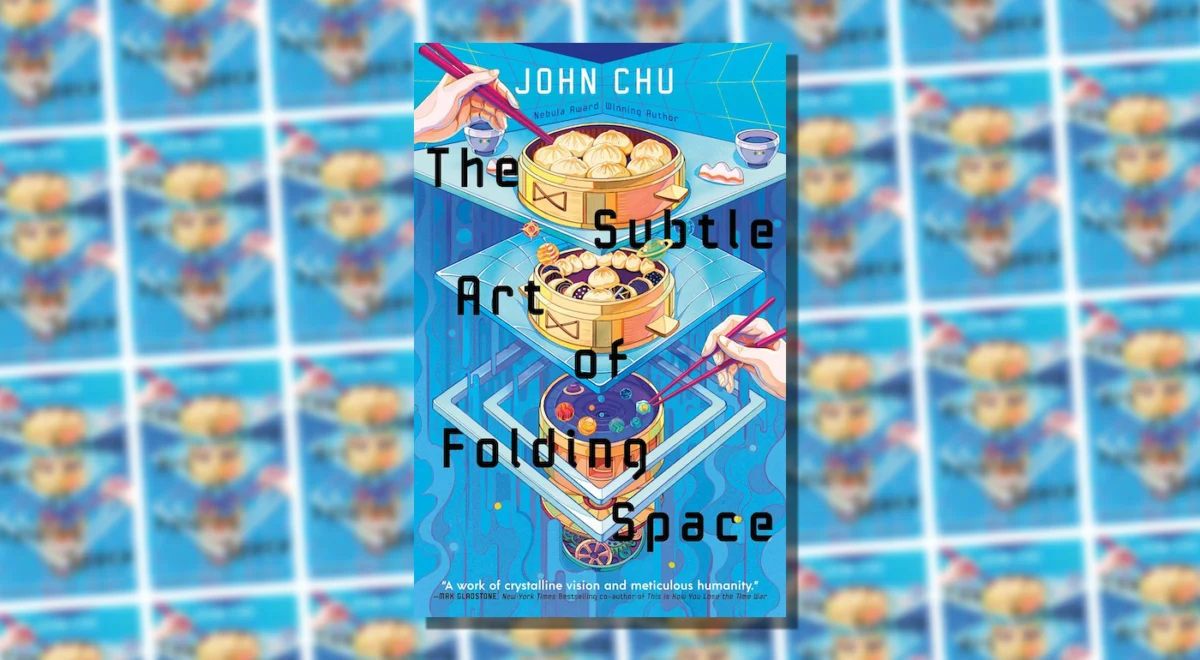
The Ultimate Moral Dilemma and the Fabric of Reality
Imagine a choice so profound that the fate of the entire universe rests on your shoulders, yet the price of salvation is the life of the person you love most. This agonizing Sophie’s Choice, amplified to cosmic proportions, forms the electrifying opening of John Chu’s debut novel, The Subtle Art of Folding Space. Protagonist Ellie is thrust into an unthinkable dilemma: sacrifice her dying mother to preserve reality, or save her mother at the cost of all existence. This isn’t merely a philosophical exercise; it’s the crucible from which a sprawling, intricate, and deeply personal narrative emerges, exploring the profound consequences of such a decision and the enduring scars of familial trauma.
Chu, a seasoned short fiction writer making his ambitious leap to a full-length novel, crafts a universe both breathtakingly imaginative and intimately familiar. He masterfully blends hard science fiction concepts with fantastical elements, anchoring the cosmic stakes to a deeply human story about belonging, identity, and the impossible weight of family expectations. The Subtle Art of Folding Space is not just a journey across realities; it is a meticulously constructed psychological odyssey that challenges readers to ponder the very fabric of love, sacrifice, and the universes we build within ourselves.
The Main Facts: A Universe on the Brink
The Subtle Art of Folding Space, published by Tor Books, introduces readers to a reality where the very laws of physics are not immutable truths but meticulously maintained systems. At the heart of this cosmic upkeep lies the "skunkworks," a hidden, sprawling infrastructure where specialized individuals ensure the smooth "chugging along" of existence. Our entry point into this extraordinary world is Ellie, a "builder" within this essential machinery.
The central conflict ignites with the grave illness of Ellie’s mother. Her deteriorating condition isn’t a simple medical mystery; it’s intricately linked to a catastrophic glitch within the skunkworks itself, manifesting as "hold-time violations" that threaten to unravel the very reality Ellie and her colleagues work tirelessly to maintain. The opening pages confront Ellie, and by extension the reader, with a harrowing ethical quandary: is the life of one individual, even a beloved mother, worth the collapse of everything else? What kind of person could make such a choice, and what kind couldn’t? Chu posits that the answer, regardless of its direction, reveals fundamental truths about the chooser. The brilliance of the narrative lies not in the choice itself, which is withheld from the reader, but in the sprawling, unpredictable, and deeply personal repercussions that follow. This is a story where the beginning of the journey is marked by an end, and where every subsequent step is burdened by the weight of an irreversible decision.
Chronology of Crisis: From Personal Tragedy to Cosmic Catastrophe
Ellie’s existence revolves around her demanding role as a maintainer, specifically a builder, for the skunkworks. In this unique cosmic enterprise, reality isn’t a given; it’s a constant construction project. Every universe, we learn, possesses its own skunkworks, populated by various roles: architects design the fundamental laws, builders like Ellie, her mother, and her often cruel sister Chris implement these designs by constructing the "gates and pipes" that keep physics operational, fix errors, patch changes, and even "generate the next universe." Overseeing the integrity of these designs are verifiers, such as Ellie’s cousin Daniel, who diagnose problems for the builders to resolve.
The catalyst for the novel’s unfolding drama is Chris, who dispatches Ellie into the labyrinthine depths of the skunkworks to investigate a seemingly routine glitch. It’s there, amidst the complex machinery of existence, that Daniel’s expertise illuminates the terrifying truth: the glitch is directly connected to Ellie’s comatose mother. Someone has intentionally caused "hold-time violations," trapping her mother in a suspended state between life and death. This deliberate act is not merely a personal tragedy; it’s a cosmic one, unleashing ripples of instability that threaten to escalate into a full-blown tsunami, dismantling the very fabric of reality. The longer Ellie’s mother remains in this liminal state, the worse the cosmic unraveling will become.
Faced with this impending universal collapse, Ellie is presented with the impossible choice: "pull the plug" on her mother’s life to resolve the violations and save reality, or find a way to bring her mother back, alive and whole, at the probable cost of universal annihilation and her mother’s subsequent fury. The novel, as the review notes, does not dwell on the moment of decision itself, nor does it reveal Ellie’s choice. Instead, this pivotal moment serves as a narrative springboard. The bulk of The Subtle Art of Folding Space charts the complex, often harrowing, consequences of that fateful decision. Ellie and Daniel are immediately tasked with a multi-faceted mission: return to the skunkworks to rectify the fundamental error exploited by the culprit, identify the mastermind behind the catastrophic glitch, and neutralize a faction of "rabble-rousers" who seek to exploit the chaos. Their journey across various realities forces them to confront not only cosmic threats but also a lifetime of deeply entrenched familial trauma, weaving personal healing into the very fabric of universal repair.
Supporting Data: The Intricate Tapestry of Worldbuilding and Character
The Skunkworks Unveiled: Cosmic Mechanics and Existential Responsibility
Chu’s worldbuilding shines brightest in his conceptualization of the skunkworks. Far from a mere backdrop, it is a living, breathing entity, a universe-generating engine requiring constant, meticulous maintenance. The hierarchy within this cosmic utility company—architects, builders, and verifiers—suggests a highly structured and specialized organization, highlighting the immense responsibility placed upon its members. Builders, as implementers of foundational designs, are akin to cosmic engineers, constantly patching, bridging, and refining the intricate "gates and pipes" that channel physical laws and ensure causality. The very idea of "generating the next universe" speaks to a cyclical, perhaps even manufactured, existence, adding a layer of meta-narrative depth to the story. The "hold-time violations" are a clever plot device, demonstrating that even fundamental constants can be manipulated, and that personal actions can have universal reverberations. This intricate system elevates the stakes beyond individual lives, positing that personal choices are inextricably linked to the well-being of all existence.
Familial Dynamics: A Deep Dive into Trauma and Expectations
Central to the novel’s emotional core is the exploration of familial trauma, particularly resonant for many, but often a significant topic within Asian immigrant families. Ellie’s mother, having immigrated before her children’s birth, embodies a specific cultural legacy that profoundly shapes her daughters. As the eldest, Chris bears the brunt of societal and familial expectations, a burden that she transforms into her entire, often toxic, personality. Unable to truly live up to these "impossible expectations," she weaponizes them, creating an atmosphere of resentment and control.

Chris’s actions are chillingly depicted: she keeps their ailing mother captive in her home, ostensibly fulfilling her "daughterly duty," yet this act is laced with manipulation. She neglects her own family, channeling all her obsessive energy into controlling her mother and sister. For Ellie, Chris’s cruelty manifests in "elaborate death traps," designed not to kill, but to keep Ellie perpetually on edge, undermining her sense of safety and trust. The arrival of their gay cousin, Daniel, after his parents reject him, merely shifts Chris’s "evil eye," though Ellie consistently endures the worst of her sister’s torment. The mother’s repeated plea to Ellie to "be nicer to Chris" underscores a deeply ingrained cultural dynamic of maintaining harmony at the expense of individual well-being, effectively enabling Chris’s behavior and leaving Ellie isolated and longing for an affection she never receives. Both sisters, driven by their unmet longing for their mother’s approval (Chris) and sister’s acceptance (Ellie), begin the novel in states of profound emotional dissatisfaction.
Psychological Nuances: Ellie’s Perception vs. Reality
Chu employs a subtle yet powerful narrative technique in portraying Ellie and Daniel. As the protagonist, Ellie is seen through a third-person narration that hovers closely, often depicting her in diminishing terms – small, unassuming, lacking stability. In stark contrast, Daniel is consistently "heaped with praise," described as "imposing and handsome," a "bulky hunk" almost god-like in his composure and perfections. This deliberate disparity is a brilliant stroke, reflecting Ellie’s deeply ingrained sense of inferiority, exacerbated by Chris’s lifelong psychological abuse. It’s not necessarily that Daniel is a flawless paragon, but that Ellie’s skewed self-perception magnifies his strengths while intensifying her own perceived weaknesses. Her admiration for Daniel becomes a window into her own fragile self-worth and her desperate yearning for stability and validation. However, the review notes a minor narrative misstep: at times, Daniel’s idealized portrayal veers too far into "superhero from a comic book movie" territory, momentarily disrupting the psychological realism that otherwise defines their complex relationship.
Genre-Bending Brilliance: The Blurring Lines of SFF
The Subtle Art of Folding Space boldly defies easy categorization, engaging directly with the perennial "what’s the difference between science fiction and fantasy" debate. The novel’s core premise, rooted in the mechanics of a universal skunkworks and the physics of reality maintenance, firmly plants it in the realm of science fiction. Chu delves into the intricate workings of this cosmic infrastructure, detailing complex theoretical frameworks and the often abstract science underpinning the universe’s operation. For readers accustomed to hard science fiction, this will be a welcome intellectual feast. However, for those less inclined towards detailed scientific exposition, such passages can indeed cause "eyes to glaze over," transforming dense explanations into "white noise." This personal struggle with "hard SF" details, vividly described by the reviewer, highlights Chu’s commitment to building a scientifically grounded (within its own fictional rules) world, even if it demands considerable reader engagement.
Yet, alongside this rigorous sci-fi framework, the novel frequently ventures into the fantastical. Ellie’s ability to shoot fire from her hands, Daniel’s capacity to conjure delicious dishes from thin air, characters teleporting across vast distances, and weaving "strange images from their minds" all echo classic fantasy tropes. The creatures encountered across various realities are less like traditional aliens and more akin to the unique, organic beings found in Martha Wells’s Books of the Raksura, blurring the lines between extraterrestrial and mythical. While the underlying premise leans towards science fiction, Chu’s willingness to embrace these fantastical elements creates a rich, dynamic, and often wondrous reading experience, allowing the novel to transcend rigid genre boundaries and appeal to a broader spectrum of speculative fiction enthusiasts. This fluid interplay between science and magic is one of the book’s most distinctive and successful features.
Thematic Depth and Authorial Vision: Challenging the Reader
John Chu’s authorial vision in The Subtle Art of Folding Space is one that actively challenges and demands engagement from its readership. This is not a novel designed for passive consumption; it deliberately eschews straightforward narratives and easy categorization. Readers accustomed to neatly packaged stories, readily identifiable "fanfic tropes," or "trendy genre marketing terms" may initially find themselves frustrated. Chu refuses to systematize his intricate worldbuilding into easily digestible concepts or thoroughly explain every nuance. Instead, he compels the reader to "put in the work," to grapple with ambiguity, and to piece together understanding as the narrative unfolds.
This approach means that readers will likely finish the book with as many questions as they began with, an intentional choice that fosters reflection and deeper thought. Chu’s boldness in presenting a complex, untidy reality mirrors the emotional complexities of his characters and the messy nature of familial bonds. By challenging conventional storytelling structures and genre expectations, Chu invites a more profound interaction with his text, positioning The Subtle Art of Folding Space as a significant contribution to speculative fiction that values intellectual curiosity and emotional resilience. His refusal to provide all the answers underscores the novel’s thematic core: life, like the universe, is rarely neat, and true understanding often comes from embracing its inherent uncertainties.
Implications: A Stunning Achievement and a Lingering Echo
The Subtle Art of Folding Space marks a "stunning achievement" for John Chu, a writer who has honed his craft in the "short fiction mines" for over a decade. His transition to a full-length novel is not just a success but a testament to his "creative powerhouse" status. The intricate layering of cosmic stakes with profound personal trauma, the daring blend of hard science fiction with rich fantasy, and the psychological depth of his characters all contribute to a work that transcends the typical debut.
The novel’s lasting implication lies in its ability to resonate long after the final page is turned. As the reviewer aptly puts it, "The more I think about the book, the more layers I pick out, like I’m diving into the skunkworks myself." This indicates a narrative that is not only compelling but also deeply thought-provoking, designed to be re-read and re-analyzed. It is a book that pushes boundaries, not just of genre, but of narrative expectation, daring to be complex, messy, and demand effort from its audience.
In an era often dominated by formulaic storytelling, Chu offers a refreshing and challenging alternative. The Subtle Art of Folding Space solidifies John Chu’s position as an important new voice in speculative fiction, one capable of crafting universes as vast and complex as the human heart, and exploring the profound implications of our choices on both personal and cosmic scales. It leaves readers with an enduring sense of wonder, a deeper understanding of the ties that bind and break us, and a lingering echo of that impossible choice at its heart.
The Subtle Art of Folding Space is published by Tor Books.



Leave a Comment