
The "Zombie" Strip Crisis: Why the Newspaper Comics Page is Facing an Existential Threat
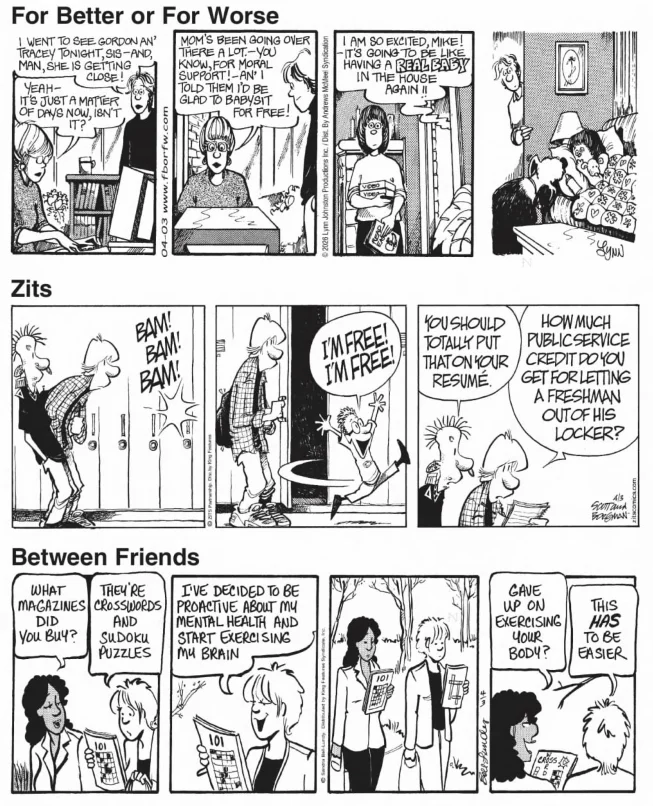
PITTSBURGH, PA — For decades, the American newspaper comics page was a vibrant, evolving tapestry of social commentary, slapstick humor, and domestic drama. From the political edge of Doonesbury to the philosophical quietude of Peanuts, the "funnies" were a daily ritual for millions. However, as of May 2026, a quiet revolution—or perhaps a quiet stagnation—has taken hold. The comics page is increasingly becoming a museum of the past, populated by "zombie strips" that continue to occupy valuable real estate long after their creators have retired or passed away.
The situation has reached a tipping point where it is no longer just the hardcore "sequential art" enthusiasts noticing the repetition. Newspaper editors, historically less attuned to the nuances of syndicate contracts than the fans themselves, are now citing the prevalence of reruns as a primary reason to eliminate comics pages entirely. This trend signals a potential death knell for a medium that has struggled to adapt to the digital age.
Main Facts: The Rise of the Rerun Economy
The core of the crisis lies in a fundamental shift in how syndicates—the middlemen between cartoonists and newspapers—manage their portfolios. Rather than discovering and nurturing new talent, the "Big Four" syndicates (Andrews McMeel, King Features, Creators Syndicate, and Tribune Content Agency) have increasingly leaned on "legacy" content.
Last week, the Gloucester Daily Times became a symbol of this shift when it officially discontinued its daily comics page. The editorial justification was blunt: "Another reason for discontinuing the comics is that many creators are simply recycling old strips."
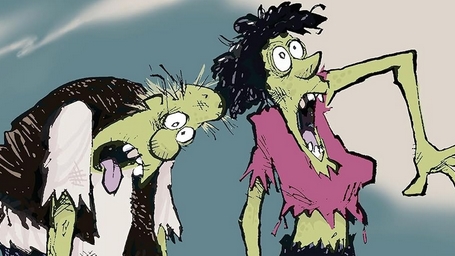
This is not an isolated incident. Across the country, editors are looking at their ledgers and realizing they are paying premium syndicate fees for content that first appeared in the 1970s, 80s, or 90s. The practice of running "classic" strips—episodes of a comic that are reruns of previous decades—has moved from a rare exception to a dominant business model.
The economic incentive for syndicates is clear: a rerun strip requires no salary for a living artist, no production staff to handle new lettering, and no creative risk. For the newspapers, however, the value proposition is diminishing. If the content isn’t fresh, the "daily" nature of the newspaper is undermined.
Chronology: From Schulz to the Stagnation of 2026
The transition to a rerun-heavy industry did not happen overnight. It has been a slow-motion evolution spanning a quarter of a century.
2000: The Peanuts Precedent
The shift began in earnest with the death of Charles M. Schulz in 2000. For the first time in history, a strip of massive global importance—Peanuts—was continued in reruns rather than being handed off to a "ghost" artist or discontinued. The industry watched with bated breath, expecting newspapers to drop the strip en masse. Instead, the drop-off was minimal. Readers, it seemed, were happy to revisit Charlie Brown’s failures, even if they had seen them before.

2008: The Retelling Model
In 2008, Lynn Johnston’s For Better or For Worse began a "retelling" of the Patterson family’s story. By mixing old strips with slight modifications, the syndicate proved that a strip could remain highly profitable while effectively being in rerun status. This solidified the "Peanuts Model" as a viable long-term strategy for syndicates.
2024: The Creative Drought
The creative pipeline began to dry up significantly in the mid-2020s. The last major launch of a new comic strip from the Big Four syndicates was Rosebuds in September 2024. Since then, the syndicates have largely stopped signing new talent for print distribution, focusing instead on digital platforms or simply maintaining their existing rosters.
2026: The Breaking Point
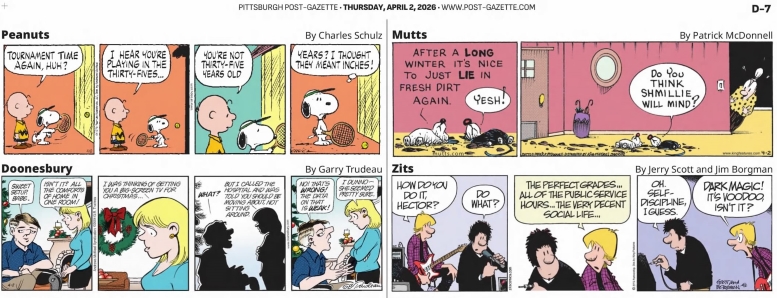
By early 2026, the prevalence of reruns became impossible to ignore. Major strips like Zits and Baby Blues—longtime anchors of the comics page—began transitioning to rerun status or "hybrid" schedules. As of May 2026, the Pittsburgh Post-Gazette and Greenwich Time have seen their comics sections become majority-rerun zones, prompting the current wave of editorial backlash.
Supporting Data: A Syndicate Breakdown
A deep dive into the current offerings of the major syndicates reveals the staggering scale of the "zombie" phenomenon.
Creators Syndicate
Creators Syndicate represents perhaps the most aggressive embrace of the rerun model. Out of the 36 comic features listed on their current roster, nearly half (16) are in permanent rerun status. These include:
- Agnes, Archie, Archie Spanish, Diamond Lil, Dog Eat Doug, Doodles, Liberty Meadows, Momma, One Big Happy, Rugrats, Scary Gary, Shrimp & Grits (dailies), Spectickles, The Meaning of Lila, Wee Pals, and Working It Out.
- Rubes also operates as a partial rerun, utilizing old material from Thursday through Saturday.
Andrews McMeel Syndication (AMS)
AMS, the home of industry giants, has followed suit. Their "Classic" or rerun lineup includes:
- Peanuts, For Better or For Worse, Cul de Sac, Doonesbury (dailies), Fred Basset, Get Fuzzy, Herman, Mutt and Jeff, and Uncle Art’s Funland.
- Notably, Baby Blues—one of the most widely circulated strips of the last 30 years—is currently in a "transition" phase, running new content one week and reruns the next as it prepares for a full-time rerun status.
King Features Syndicate
King Features, which handles some of the most popular strips in history, recently saw its heavyweight title Zits go into daily reruns, with Sundays expected to follow. Their rerun stable also includes:
- Between Friends (dailies), Bringing Up Father, Mandrake, Moose and Molly, Mutts, Popeye (dailies), Sam and Silo, The Katzenjammer Kids, and Tiger.
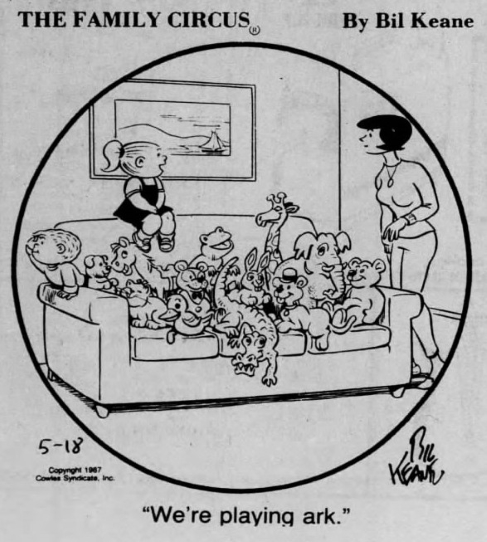
- The Family Circus continues to "rework" old gags, updating the art or references slightly to appear modern, a practice sometimes referred to in the industry as "re-furbishing."
Tribune Content Agency
Tribune remains the sole outlier among the Big Four, currently offering no rerun-only strips to newspapers, choosing instead to focus on a smaller roster of active creators.

Official Responses and Industry Defense
Syndicates have defended these moves as a response to the dire financial straits of the newspaper industry. By offering "proven" hits like Peanuts or Zits as reruns, syndicates argue they are helping newspapers retain subscribers who have an emotional attachment to these characters.
"Our goal is to keep the comics page relevant and beloved," said one syndicate executive, speaking on the condition of anonymity. "If a newspaper drops a page because they don’t want to pay for a new, unproven strip, but they are willing to keep it for a ‘Classic’ version of a legendary strip, we are going to provide that option. It’s about survival."
However, cartoonists who are still active see it differently. Many argue that the "zombie strips" are cannibalizing the space that should be going to the next generation of artists. "When Zits goes to reruns but keeps its 1,000+ newspaper spots, that’s 1,000 spots that aren’t available for a new voice," says one independent creator. "The syndicates are effectively killing the future of the medium to milk the last few dollars out of its past."
Implications: The Death of the "Funny Pages"
The implications of this trend are profound and multifaceted.

1. The Loss of Cultural Currency
Comic strips once drove the national conversation. From Pogo’s political barbs to Cathy’s commentary on modern womanhood, comics were current. A rerun-dominated page is, by definition, stuck in the past. It cannot comment on current events, technology, or social shifts, rendering the medium a historical curiosity rather than a living art form.
2. The Erosion of the Fee Structure
Newspapers are already demanding significant concessions in licensing fees. As it becomes common knowledge that many strips are reruns, editors have more leverage to demand even lower rates. If the syndicates cannot command premium prices for their "A-list" strips because they are reruns, the entire financial model of syndication may collapse.
3. The Migration to Webtoons and Social Media
With the path to the newspaper comics page effectively blocked by "zombie strips," the most talented young cartoonists are abandoning the format entirely. They are moving to platforms like Webtoon, Instagram, and Substack. While these artists are finding success, the traditional "short-form sequential art" of the newspaper strip is losing its best chance at reinvention.
4. The Final "Excuse" for Cancellations
As seen with the Gloucester Daily Times, the rerun phenomenon provides a convenient "out" for editors looking to cut costs. In an era of shrinking page counts, the comics page—once considered "untouchable"—is now being viewed as a "waste of space" filled with recycled content.
Conclusion
The newspaper comics page is at a crossroads. The strategy of using reruns to hold onto space was intended to be a bridge to the future, but it has instead become a wall. Without a commitment from syndicates to invest in new talent and a willingness from newspapers to take risks on original content, the "funnies" may soon be a thing of the past. For now, readers are left with a landscape of "Zombie Parents" and decades-old punchlines—a nostalgic but fading echo of what was once the most popular art form in America.

Leave a Comment