
The Fertile Crescent: From Cradle of Civilization to Environmental Crossroads
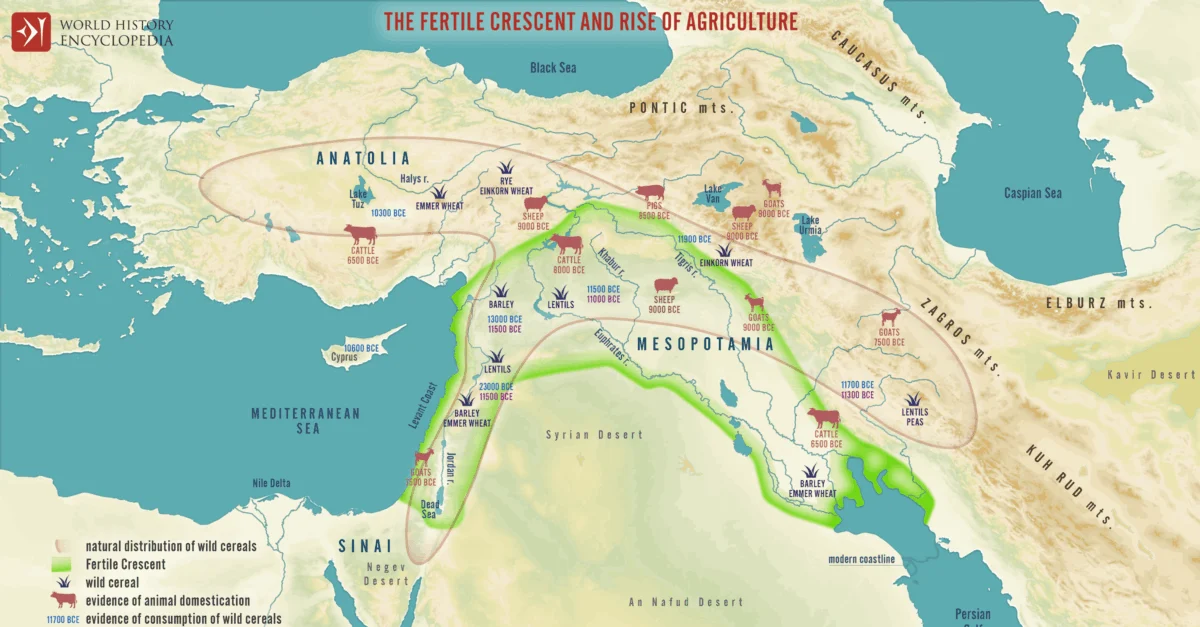
Baghdad, Iraq – The Fertile Crescent, a crescent-shaped region spanning the Middle East, has long been revered as the "cradle of civilization." This historically rich area, curving from the Persian Gulf through modern-day Iraq, Syria, Lebanon, Jordan, Israel, and northern Egypt, witnessed the birth of humanity’s most foundational advancements. However, this once-thriving land now faces a dire environmental crisis, threatening to strip it of its ancient legacy and transform its lush plains into barren dust.
Main Facts: A Legacy Forged in Fertility
The term "Fertile Crescent" was coined in 1916 by Egyptologist James Henry Breasted in his seminal work, Ancient Times: A History of the Early World. He described it as "approximately a semi-circle, with the open side toward the south, having the west end at the south-east corner of the Mediterranean, the centre directly north of Arabia, and the east end at the north end of the Persian Gulf." This vivid description quickly gained widespread acceptance, becoming the enduring designation for a region that profoundly shaped human history.
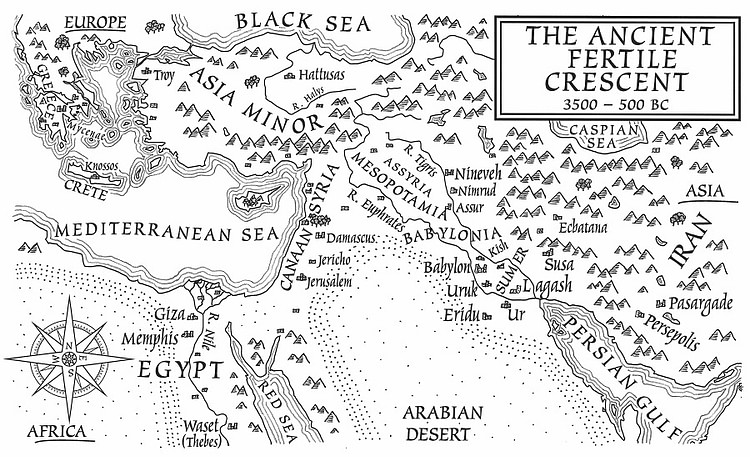
Home to the ancient civilizations of Mesopotamia, Egypt, and the Levant – including the Sumerians, Babylonians, Assyrians, Egyptians, and Phoenicians – the Fertile Crescent fostered an unprecedented era of innovation. These societies were pioneers in virtually every sphere of human knowledge, laying the groundwork for modern society. Their contributions included:
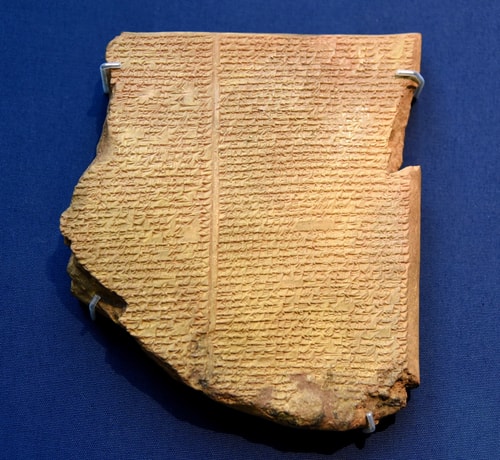
- Writing Systems: The development of cuneiform, the world’s first writing system, by the Sumerians, revolutionizing record-keeping, communication, and the preservation of knowledge.
- Mathematics and Astronomy: Advanced understanding of arithmetic, geometry (including the sexagesimal system, which influences our division of time and circles), and meticulous astronomical observations that led to sophisticated calendars.
- Law and Governance: The creation of codified legal systems, most notably Hammurabi’s Code, establishing principles of justice and social order.
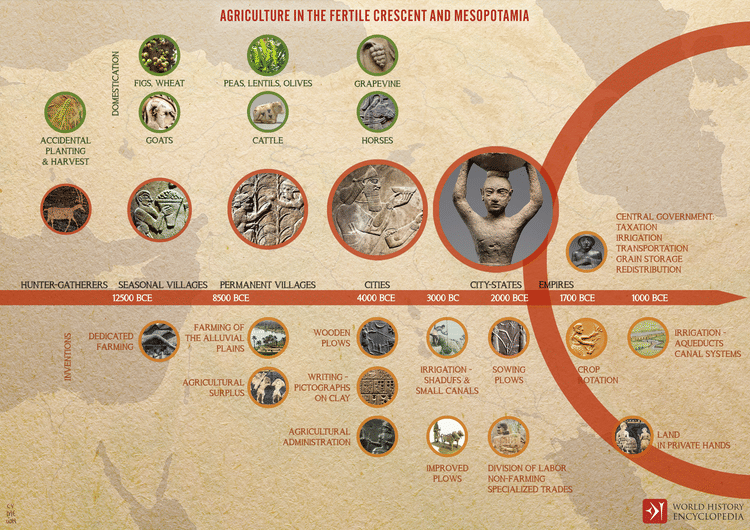
- Agriculture and Irrigation: Groundbreaking techniques in farming, including large-scale irrigation systems, crop rotation, and the domestication of plants and animals, enabling settled life and food surpluses.
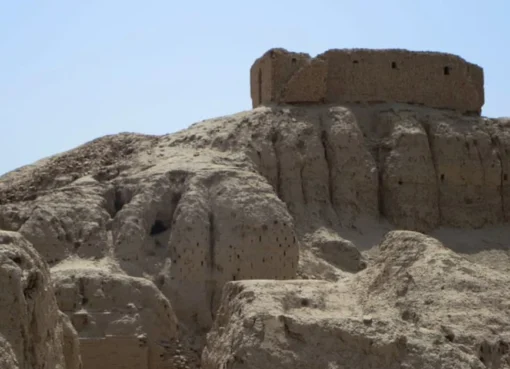
- Urban Planning and Architecture: The construction of the world’s first cities, complete with intricate layouts, public buildings, and monumental structures like ziggurats.
- Metallurgy: Early mastery of metalworking, from copper to bronze and later iron, for tools, weapons, and art.
- Medicine: Initial forays into medical diagnostics, surgical practices, and the use of herbal remedies.
- Literature and Philosophy: The birth of epic narratives like the Epic of Gilgamesh, hymns, myths, and early philosophical inquiries into the human condition.
- Trade and Commerce: The establishment of extensive trade networks, development of early forms of currency, and contractual agreements facilitating economic exchange.
Beyond its tangible contributions, the Fertile Crescent holds deep religious significance. It is traditionally associated in Jewish, Christian, and Muslim faiths with the earthly location of the Garden of Eden, and numerous sites within the region feature prominently in narratives from the Bible and the Quran.
Chronology: A Journey Through Millennia of Innovation and Empire
The story of the Fertile Crescent is a sprawling epic, beginning with the foundational shifts of the Neolithic Revolution and continuing through the rise and fall of mighty empires.
The Dawn of Civilization: From Hunter-Gatherers to Urban Life (Circa 10,000 – 3000 BCE)
The Fertile Crescent first became a hub of human activity around 10,000 BCE, as climate shifts and abundant natural resources encouraged hunter-gatherer societies to transition to settled agricultural communities. This period marked the beginning of agriculture and the domestication of animals, a revolution that would fundamentally alter human existence. By 9,000 BCE, the cultivation of wild grains and cereals was widespread, evolving into sophisticated farming practices. Around 5,000 BCE, advanced irrigation systems were fully developed, allowing for controlled water supply to crops, increasing yields, and supporting larger populations. The domestication of wool-bearing sheep, vital for textiles, was widely practiced by 4,500 BCE.

The region’s unique geography, nourished by the Tigris and Euphrates Rivers in Mesopotamia and the Nile further south in Egypt, provided the ideal conditions for these transformations. The semi-arid climate, combined with the rivers’ perennial flow, enabled the cultivation of staple crops like wheat, barley, rye, chickpeas, and lentils. This agricultural bounty led to the development of rural communities, followed by technological advancements that further solidified sedentary life.
The first true cities began to emerge in Sumer, southern Mesopotamia. Eridu, considered the earliest by the Sumerians, rose around 5,400 BCE, followed by Uruk and other urban centers. These cities were not merely large villages; they were complex societies with organized governance, specialized labor, and monumental architecture. By 3,500 BCE, the depiction of various dog breeds, including the Saluki, Dane, Greyhound, and Mastiff, on ceramics and wall paintings, illustrates the close relationship between humans and domesticated animals.
Beer brewing, believed to have evolved from the baker’s craft as stored barley and wheat fermented, was also an early innovation. The goddess Ninkasi presided over this art, and beer was considered a divine gift, serving as both a source of daily nutrition and a form of payment. The Hymn to Ninkasi praises its ability to "make one’s heart feel light," highlighting its social and celebratory role. The earliest archaeological evidence for beer comes from the Sumerian outpost of Godin Tepe in modern-day Iran. Temples became central to these early urban economies, managing food supplies, overseeing distribution, and monitoring surpluses for trade by 3,400 BCE.
Empires and Innovations: The Age of Akkadians, Babylonians, and Assyrians (Circa 2334 – 612 BCE)
Trade routes expanded significantly, connecting the Fertile Crescent with distant lands such as the Kingdom of Saba in southern Arabia, Egypt, and the Kingdom of Kush in Africa. These early exchanges eventually evolved into the famed Incense Routes, flourishing between the 7th/6th centuries BCE and the 2nd century CE, facilitating not only the movement of goods but also the cross-cultural exchange of ideas and innovations.
By 2300 BCE, soap, made from tallow and ash, was in widespread use, underscoring the importance of personal hygiene, which was linked to social standing and honoring the gods. Ritual bathing and meticulous grooming were particularly vital for the clergy, reflecting the belief that humans, created as helpmates to the gods, should present themselves impeccably. Artifacts such as mirrors, cosmetic jars, combs, and even early toothbrushes, along with artistic depictions of bathing, attest to these cultural values.
The political landscape of the Fertile Crescent transformed dramatically with the rise of the Akkadian Empire. From 2334 to 2279 BCE, Sargon of Akkad, also known as Sargon the Great, established the world’s first multicultural empire, uniting the disparate city-states of Mesopotamia. His reign ushered in an era of monumental building projects, sophisticated artworks, and the flourishing of religious literature, including the hymns to the goddess Inanna penned by his daughter, Enheduanna, the first author in history known by name.
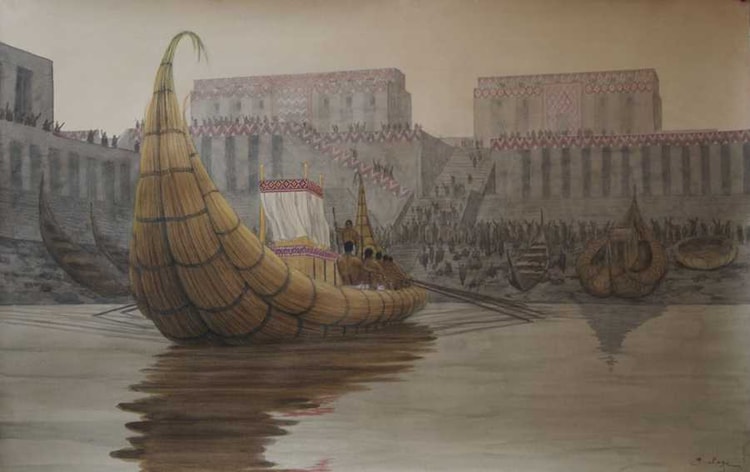
By 2000 BCE, Babylon ascended to prominence, controlling much of the Fertile Crescent. Under Babylonian rule, the region saw remarkable advancements. Hammurabi’s famous code, one of the earliest and most complete written legal codes, set precedents for justice. Literary masterpieces like The Epic of Gilgamesh explored themes of mortality, friendship, and the search for meaning. The Babylonian pantheon of gods developed, and significant strides were made in science, particularly astronomical measurements and technological innovations, alongside complex mathematical systems.
Between 1900 and 1400 BCE, trade with Europe, Egypt, Phoenicia, and the Indian subcontinent reached new heights, spreading literacy, culture, and religious beliefs. The Sumerian goddess Nisaba, patroness of writing and wisdom, gained recognition far beyond her native lands, and Mesopotamian deities and commodities, including its distinctive beer, traveled extensively along these trade routes.
Spiritual Echoes and Shifting Powers: The Age of Biblical Narratives and Persian Dominance (Circa 1900 BCE – 7th Century CE)
It is speculated that around 1900 BCE or 1750 BCE, the biblical patriarch Abraham embarked on his journey from Ur to the "promised land" of Canaan. He likely carried with him the rich oral traditions and legends of Mesopotamian gods, which, over time, would be transformed into biblical narratives. The striking parallels between Mesopotamian stories like Atrahasis and the biblical Noah’s Flood, or the Myth of Adapa and the tale of the Fall of Man in the Book of Genesis, underscore the deep cultural cross-pollination of the era.
Before the mid-19th century, the Bible was widely considered the oldest book, its stories regarded as divinely inspired originals. However, archaeological excavations in the Fertile Crescent revealed older Sumerian texts, demonstrating that many biblical narratives drew upon and reinterpreted earlier Mesopotamian literary and religious traditions. This discovery highlighted the profound and lasting influence of Mesopotamian culture on subsequent civilizations.
The region continued to be a contested prize, changing hands repeatedly. By 912 BCE, the Assyrians dominated the Fertile Crescent, forging a vast empire ruled by powerful kings such as Tiglath Pileser III, Sargon II, Sennacherib, Esarhaddon, and Ashurbanipal. Ashurbanipal, a king renowned for his intellectual curiosity, ordered the systematic copying and collection of all literary works in the region, housing them in the magnificent Library of Ashurbanipal in Nineveh. When the Neo-Assyrian Empire collapsed in 612 BCE, invading forces set fire to the libraries. Paradoxically, this act of destruction inadvertently preserved many clay tablets, baking them harder and ensuring their survival for millennia.
By 580 BCE, the Neo-Babylonian Chaldean Empire, under Nebuchadnezzar II, rose to power, making Babylon the grandest city on Earth. It was during this period that the legendary Hanging Gardens of Babylon were allegedly created. However, Babylon’s glory was short-lived; in 539 BCE, it fell to Cyrus the Great after the Battle of Opis, bringing the Fertile Crescent under the control of the Achaemenid (First Persian) Empire.
Alexander the Great’s invasion in 334 BCE ushered in Hellenistic influence, followed by rule under the Parthians and then the Romans in 116 CE. After a brief Roman annexation, the Sassanid Persians reasserted control (circa 224-226 CE), before the final conquest by Arab Muslims in the 7th century CE.
By this time, many of the great cities that had cradled civilization were in ruins, victims of continuous warfare, environmental degradation, and unchecked urbanization. Eridu had been abandoned since 600 BCE, Uruk by 700 CE, and Babylon, once a beacon of learning, lay vacant by the 7th century CE. While later Hebrew scribes would forever link Babylon’s name to sin and corruption in their biblical narratives, its historical significance as a center of culture, law, science, and learning remains undeniable.
Supporting Data: The Pillars of Progress
The remarkable longevity and influence of the Fertile Crescent’s civilizations were built upon a series of fundamental innovations, supported by the unique environmental conditions of the region. The predictable annual flooding of the Tigris, Euphrates, and Nile rivers deposited fertile silt, renewing the agricultural potential of the land year after year. This natural endowment, coupled with human ingenuity in developing complex irrigation networks, allowed for consistent food surpluses, which in turn supported larger, more settled populations.
The development of writing, specifically cuneiform, was a critical turning point. Thousands of clay tablets unearthed by archaeologists provide an unparalleled window into the daily lives, laws, economies, religions, and literature of these ancient societies. From administrative records of grain distribution to epic poems and astronomical observations, cuneiform enabled sophisticated governance and the systematic accumulation of knowledge.
Architectural marvels, such as the ziggurats of Mesopotamia and the pyramids of Egypt, stand as testaments to the organizational capacity and engineering prowess of these early civilizations. These structures were not only religious centers but also symbols of centralized power and societal cohesion. The Code of Hammurabi, inscribed on a diorite stele, illustrates the advanced legal thought and the concept of justice that permeated Babylonian society, influencing subsequent legal traditions.
Early trade networks, initially local exchanges of agricultural produce, expanded into vast international routes, facilitated by rivers and eventually land routes. The movement of goods like grains, textiles, metals, and precious stones spurred economic growth and cultural diffusion, connecting diverse peoples and fostering a shared, albeit varied, ancient world culture.
Official Responses: A Modern Crisis of Neglect
In stark contrast to its ancient prosperity, the Fertile Crescent today faces an acute environmental crisis, jeopardizing its very name. A 2001 report by National Geographic News highlighted the alarming rate at which the region’s fertile marshlands were shrinking. Once spanning an impressive 5,800-7,700 square miles (15,000-20,000 km²), these vital ecosystems had diminished to a mere 580-770 square miles (1,500-2,000 km²).
This catastrophic decline is attributed to a confluence of factors:
- Climate Change: Rising temperatures and altered precipitation patterns have intensified droughts and increased water stress across the region.
- Extensive Damming: Upstream dam construction on the Tigris and Euphrates rivers, particularly in Turkey (e.g., the Atatürk and Ilisu Dams) and Syria, has drastically reduced downstream water flow to Iraq, starving its agricultural lands and marshes.
- Massive Drainage Works: A large-scale drainage program initiated in southern Iraq from the 1970s onward, notably under Saddam Hussein’s regime, deliberately drained vast tracts of marshlands, ostensibly for agricultural expansion and to punish rebellious Marsh Arab communities.
Despite urgent pleas from environmental groups, regional farmers, and international organizations, governments in Iraq, Syria, and Turkey have largely ignored calls to halt or reverse these destructive projects. The political complexities, coupled with national development priorities focused on hydropower and agricultural expansion, have often overridden environmental concerns. The result is a landscape that, in many areas, has transformed from a lush paradise into dry, cracked plains of sun-baked clay, further exacerbated by global fossil fuel emissions driving climate change.
The human cost of this environmental degradation is immense. The Marsh Arabs, an indigenous population with a unique culture deeply intertwined with the wetlands, have faced displacement and the collapse of their traditional way of life. Biodiversity has plummeted, with countless species of birds, fish, and plants facing extinction. The ancient cradle of civilization is paradoxically becoming a symbol of modern environmental mismanagement.
Implications: Learning from the Past, Facing the Future
The current plight of the Fertile Crescent presents a stark paradox: the region that pioneered sustainable agriculture and urban living (within the limits of ancient technology) is now grappling with the devastating consequences of modern environmental neglect. The decline of its historic cities, often attributed to a combination of warfare and natural disasters, also stemmed from practices like salinization of agricultural lands due to over-irrigation without proper drainage, which gradually rendered the soil infertile. This historical precedent offers a chilling lesson for today.
The unchecked exploitation of water resources and the disregard for ecological balance in the 20th and 21st centuries have created an unfolding humanitarian and ecological catastrophe. The shrinking rivers and desiccated lands contribute to regional instability, internal migration, and geopolitical tensions over water rights, amplifying existing conflicts.
The philosopher George Santayana famously warned, "Those who cannot remember the past are condemned to repeat it." The Fertile Crescent, with its unparalleled historical narrative of both groundbreaking innovation and eventual decline, serves as a poignant testament to this truth. The failure of contemporary societies in the region and beyond to learn from the environmental mistakes of the past and to adequately address the challenges of climate change and resource management has pushed this vital historical landscape to the brink. Reversing this damage requires not just technological solutions, but a profound shift in political will, regional cooperation, and a renewed appreciation for the delicate balance between human development and environmental stewardship. The fate of the Fertile Crescent, once the wellspring of human civilization, now hangs in a precarious balance, offering a critical lesson for the entire planet.

Leave a Comment