
The Biological Inevitability of the Roguelite: Exploring ‘Everything is Crab’
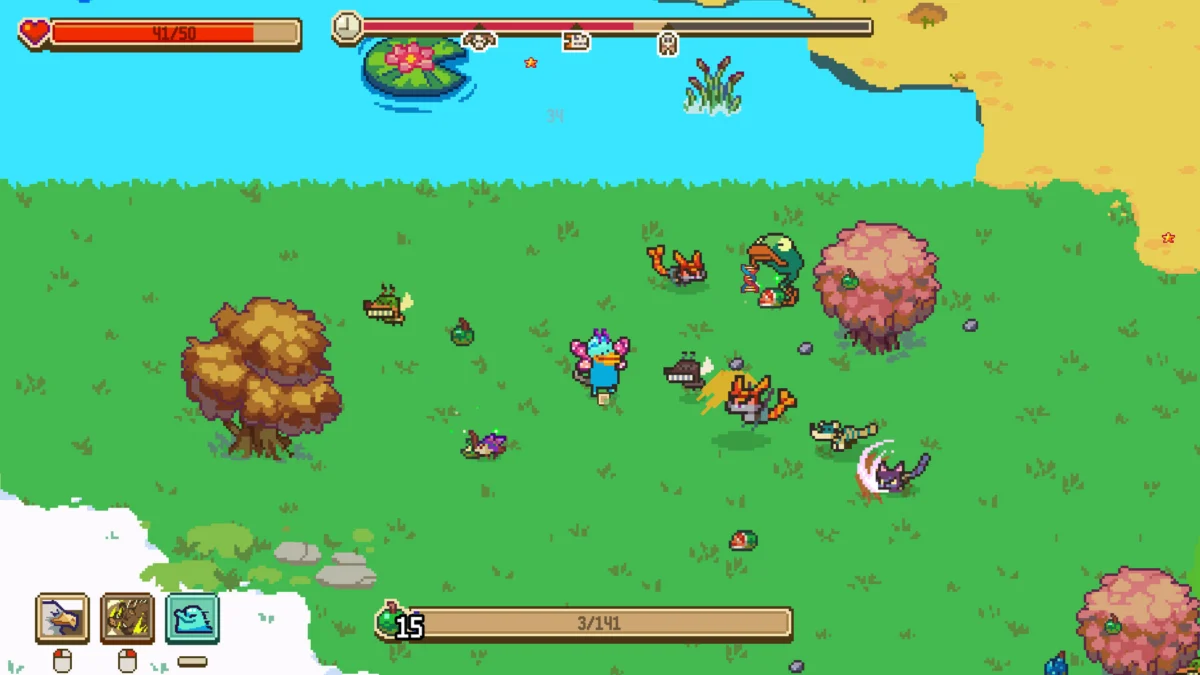
In the vast, ever-shifting landscape of indie game development, few titles capture the zeitgeist of internet culture and evolutionary biology quite as succinctly as Everything is Crab. Developed as an ambitious animal evolution roguelite, the game posits a singular, chaotic premise: you begin as a formless biological primer and must navigate a hostile ecosystem where the ultimate end-state is the armored, multi-legged perfection of the crustacean.
Recently showcased at DreamHack Birmingham and featured in the Convergence Games Showcase 2026, Everything is Crab is more than a meme-driven title; it is a sophisticated take on the survival-action genre that leverages the scientific concept of "carcinization." By blending procedural generation with deep mutation mechanics, the game challenges players to survive long enough to witness their own biological transcendence.
Main Facts: The Anatomy of an Evolution Roguelite
At its core, Everything is Crab is a top-down action roguelite that emphasizes adaptation over static progression. Unlike traditional games in the genre where players collect swords or magic spells, the "loot" in this title is DNA.
The game begins with a literal clean slate: a gelatinous blob. Through a preliminary DNA mixing phase, players establish their starting attributes, which dictate their initial survivability. From this humble beginning, the gameplay loop follows a rigorous cycle of predation and adaptation. Players must scavenge the environment and hunt other organisms to accumulate "food," which serves as the primary currency for evolutionary leaps.
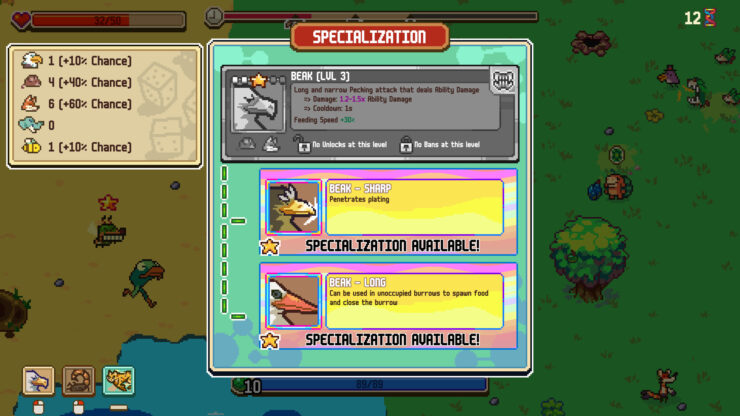
Each time a player reaches a growth milestone, they are presented with three randomized evolutionary paths. These are not merely statistical buffs; they are physical manifestations. A player might choose to grow massive elk-like antlers for charging attacks, iridescent scales for defense, or functional wings to bypass environmental hazards. The ultimate goal, as the title suggests, is to navigate these mutations toward the crab form—a pinnacle of evolutionary stability—though the path there is fraught with biological dead-ends and lethal predators.
Chronology: From Protoplasm to Apex Predator
The journey of Everything is Crab from a conceptual curiosity to a highly anticipated indie title has been marked by significant public demonstrations. The most recent and telling of these was the hands-on demo at DreamHack Birmingham, which provided a clear look at the game’s progression systems.
The Early Stage: Scavenging and Survival
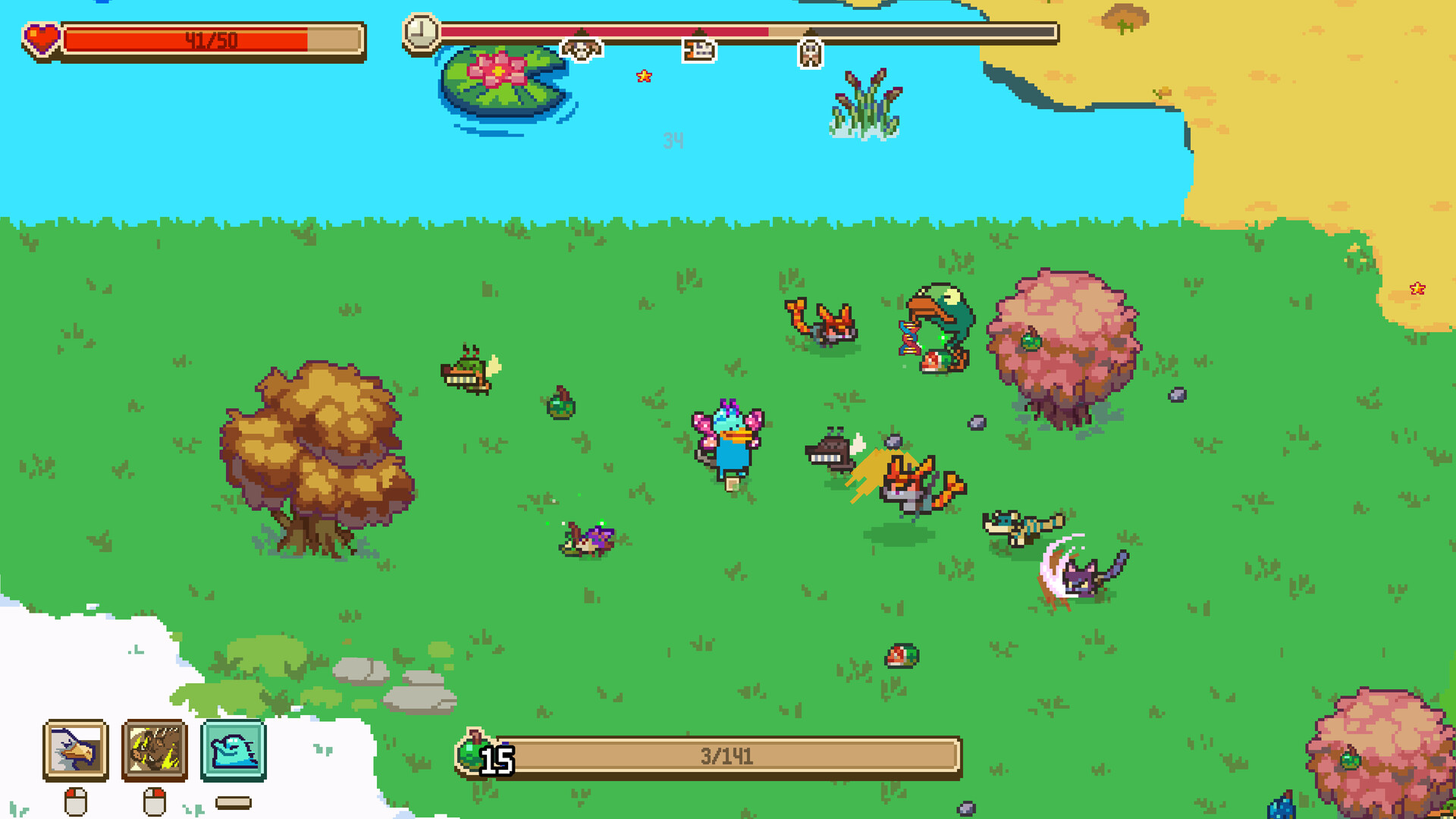
In the opening minutes of a typical run, the player is incredibly vulnerable. The "blob" phase focuses on movement and opportunistic feeding. During the DreamHack demo, early-game strategy revolved around avoiding larger predators while consuming smaller, passive organisms. This phase introduces the player to the game’s environmental stressors, such as the moisture meter, which requires the player to balance their time between arid land and water sources.
The Mid-Game: Mutation and Synergies
As the player consumes more biomass, the mutation system takes center stage. Journalistic impressions from the demo highlight the surprising depth of these mechanics. For instance, growing antlers allows for a "dash-attack" that can stun enemies. Interestingly, the game features a rudimentary social system; by attacking certain creatures, players can inadvertently trigger "pack mentalities," causing nearby neutral creatures to join the fray if they perceive a common threat or an opportunity for a shared kill.
The Boss Encounters: Evolutionary Bottlenecks
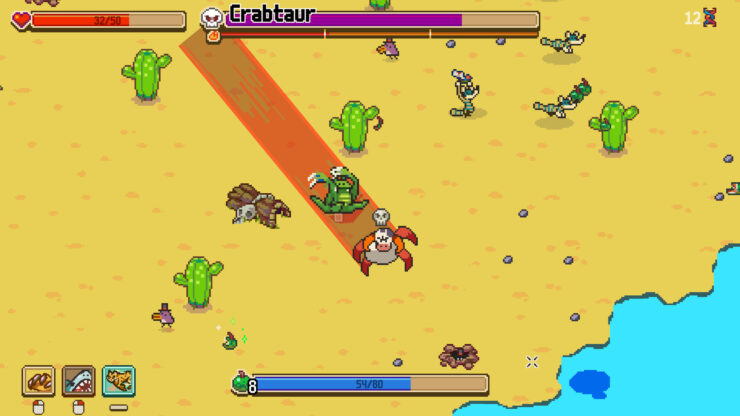
The chronology of a run is punctuated by "Evolutionary Milestones"—intense boss fights that serve as skill checks. When a boss appears, the game world shifts; a biological "fence" or arena forms around the player, preventing escape. These bosses are themselves products of the game’s procedural evolution system, meaning a boss encountered in one run might have venomous stingers and high speed, while the next might be a slow-moving, heavily armored behemoth.
Supporting Data: The Science of Carcinization
To understand why Everything is Crab resonates with its audience, one must look at the scientific theory that inspired it. "Carcinization" is a term coined by evolutionary biologist L.A. Borradaile to describe the process by which non-crab-like crustaceans evolve into crab-like forms. This phenomenon has occurred independently at least five times in nature, leading to the popular internet axiom that "nature eventually turns everything into a crab."
The game incorporates this data into its mechanical design through several key systems:
- Convergence Mechanics: While the mutations are randomized, certain traits begin to "lock in" as the player nears the crab state, reflecting the stability of the crab’s body plan.
- Biological Trade-offs: The game uses a "Positive/Negative" trait system. A mutation that provides high defensive scales might significantly reduce movement speed, mimicking the real-world trade-offs of heavy armor in the animal kingdom.
- Environmental Adaptation: The moisture system (the "Wet vs. Dry" mechanic) directly references the transition of crustaceans from marine to terrestrial environments. Staying too dry leads to dehydration debuffs, while staying too wet might limit the effectiveness of certain land-based mutations like fur or feathers.
Official Responses and Developer Context
While the developers at the Convergence Games Showcase 2026 have remained tight-lipped about the full list of possible mutations, the official release date trailer provides significant insight into the game’s scope. The developers have emphasized that the goal was to create a "tactile evolution experience."
In official communications, the team noted that the procedural nature of the bosses was a response to the "static" nature of many roguelite encounters. "We wanted the environment to feel like it was evolving alongside the player," the developers stated during a Q&A session. "If the player is focusing on high-speed aerial mutations, the ecosystem will eventually produce a predator designed to ground them."
The game’s inclusion in the Convergence Games Showcase marks a major milestone, positioning it as a standout title for the 2026 release window. The trailer showcases high-intensity combat where a hybrid creature—part bull, part crab—rushes through desert-dwelling enemies, illustrating the sheer variety of builds available to the player.
Implications: The Future of the "Sim-Roguelite"
The emergence of Everything is Crab signals a broader shift in the indie market toward "Sim-Roguelites"—games that combine the high stakes of permanent death with complex, systems-based simulations.
Innovation in Procedural Body Geometry
One of the most significant technical implications of the game is its handling of procedural body geometry. In most games, character models are fixed. In Everything is Crab, the character model must dynamically adjust to accommodate wings, multiple legs, antlers, and varying sizes of shells. This technical feat allows for a level of player expression rarely seen in the genre, moving beyond simple color swaps or stat increases.
Educational Value and Scientific Literacy
While the game is primarily an entertainment product, it carries an undercurrent of scientific literacy. By gamifying the concepts of DNA mixing, selection pressure, and environmental adaptation, it introduces players to the fundamentals of evolutionary biology in a digestible, engaging format. The "Everything is Crab" meme acts as a "Trojan Horse" for genuine biological concepts.
Market Positioning
In a crowded market of "Survivor-likes" and "Bullet Heavens," Everything is Crab distinguishes itself by focusing on the character’s form rather than just their weapons. The implication for the industry is clear: players are looking for deeper customization that impacts gameplay in visible, physical ways. The success of the DreamHack demo suggests that there is a significant appetite for games that embrace "weird" biological themes over traditional fantasy or sci-fi tropes.
Conclusion: Embracing the Crustacean Future
Everything is Crab is currently in active development, with a growing community of followers on Steam. As the game moves toward its 2026 release, it stands as a testament to the creativity of the indie scene—taking a niche biological theory and a popular internet joke and turning them into a robust, challenging, and mechanically dense roguelite.
For players, the message is simple: you can try to be a bird, you can try to be a beast, but in the end, the pincers are calling. Whether you are managing your moisture levels in a parched desert or fighting off a procedurally generated apex predator, the journey toward the perfect crab form is a compelling loop of life, death, and mutation.
The game is currently available for wishlisting on Steam, and if the reception at DreamHack Birmingham is any indication, the world may soon find out that, indeed, everything is—or eventually will be—crab.

Leave a Comment