
Revisiting the Gritty Realms: Neil Baker Explores the 1980s B-Movie Barbarian Revival
London, UK – In a continuing series that delves into the often-overlooked and critically maligned corners of cinematic history, film critic Neil Baker has released another installment of his "Murky Movie" surveys. This latest collection, following "Fauxnan the Barbarian, Part One," focuses on a diverse array of "dodgy barbarian and barbarian-adjacent movies" from the 1980s. Baker’s reviews provide a candid, albeit often scathing, look at five films that largely defined the era’s low-budget fantasy and post-apocalyptic action genres: Gor (1987), Outlaw of Gor (1988), The New Barbarians (1983), Iron Warrior (1987), and The Dungeonmaster (1984). These films, characterized by their ambition often exceeding their budget and sometimes questionable thematic content, offer a fascinating glimpse into the commercial and creative landscape of 1980s genre cinema.
Main Facts: A Glimpse into the 1980s Cult Film Canon
Neil Baker’s latest compilation of reviews highlights five distinct, yet thematically linked, films from the 1980s, primarily US-Italian co-productions, that capitalized on the burgeoning popularity of sword-and-sorcery and post-apocalyptic narratives. These cinematic endeavors, often released straight to video or with limited theatrical runs, represent a significant, if often uncelebrated, segment of the decade’s film output.
The reviewed films include:
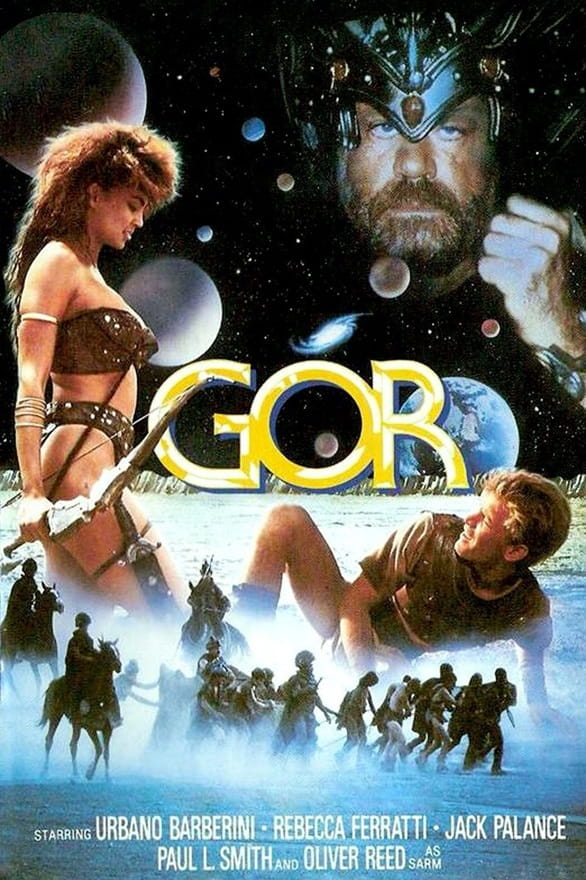
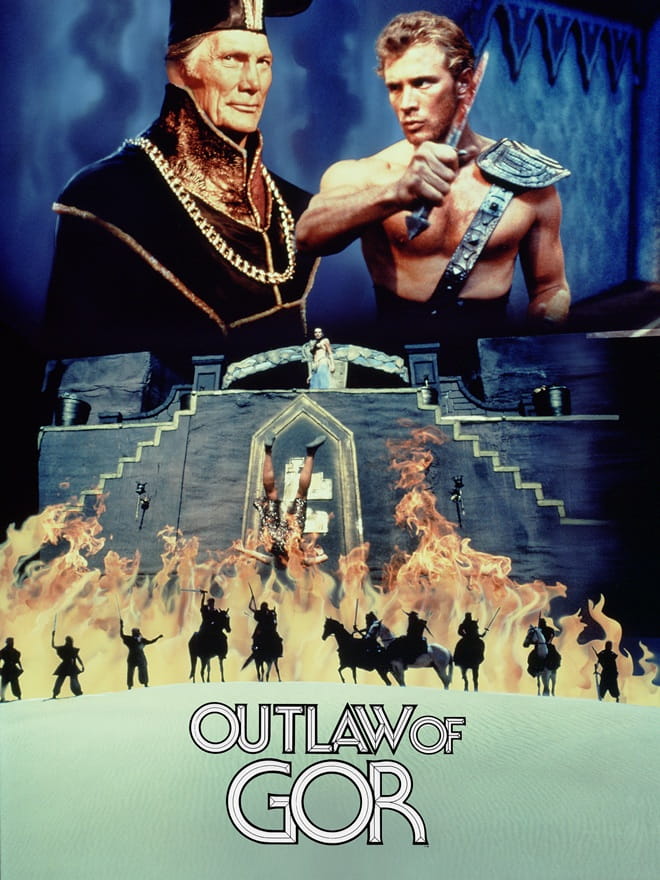
- Gor (1987) and Outlaw of Gor (1988): Two adaptations from John Norman’s controversial Gor series of novels, produced by the prolific Cannon Group. These films feature the teleportation of a mild-mannered physics professor, Tarl Cabot, to the barbaric planet Gor, where he becomes embroiled in conflicts with tyrannical rulers and navigates a society known for its depiction of female slavery.
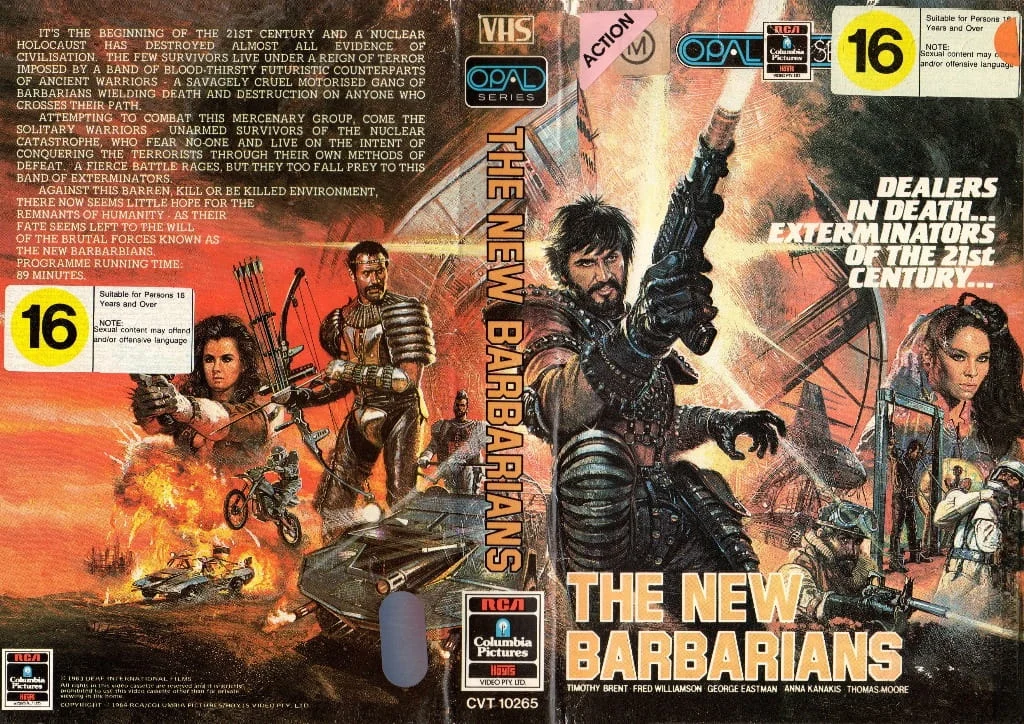
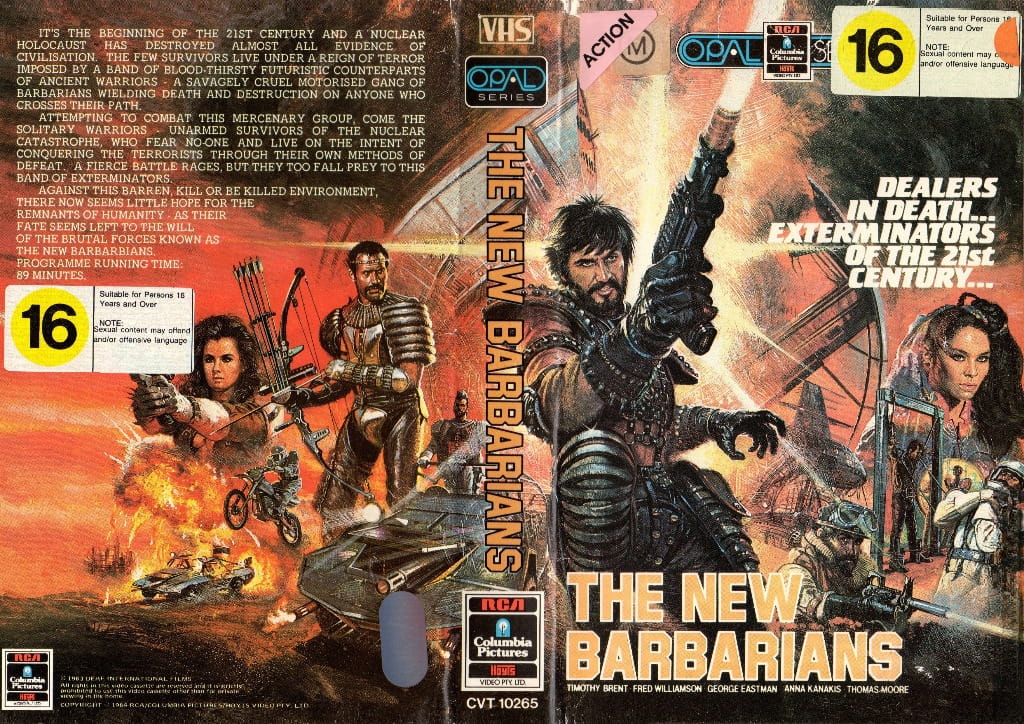
- The New Barbarians (1983): Also known as Warriors of the Wasteland, this Italian post-apocalyptic action film explicitly draws inspiration from the highly successful Mad Max franchise. It portrays a desolate future where a lone warrior battles a fanatical religious sect.
- Iron Warrior (1987): The third entry in the Ator series, this sword-and-sorcery film features the titular hero, Ator, in a quest against a powerful witch, showcasing the era’s fascination with muscular heroes and fantastical adversaries.
- The Dungeonmaster (1984): An anthology film that blends science fiction and fantasy, where a computer programmer and his girlfriend are transported to a demonic sorcerer’s realm and forced to undertake a series of challenges. This film is notable for its multiple directors, each contributing a segment.
Baker’s reviews are marked by a blend of critical assessment and nostalgic appreciation for these often-flawed productions. He frequently points out plot inconsistencies, wooden acting, and budgetary limitations, yet also finds moments of genuine enjoyment, particularly in the performances of character actors like Oliver Reed and Fred Williamson, or the sheer audacity of certain narrative choices. The collection underscores the era’s penchant for direct-to-video releases and the creative freedoms (and sometimes excesses) afforded to low-budget genre filmmaking.
Chronology: A Decade of Barbarians, Wastelands, and Digital Quests
The films reviewed by Neil Baker span a significant portion of the 1980s, each reflecting different facets of the decade’s genre trends and production realities.
The New Barbarians (1983) – USA/Italy
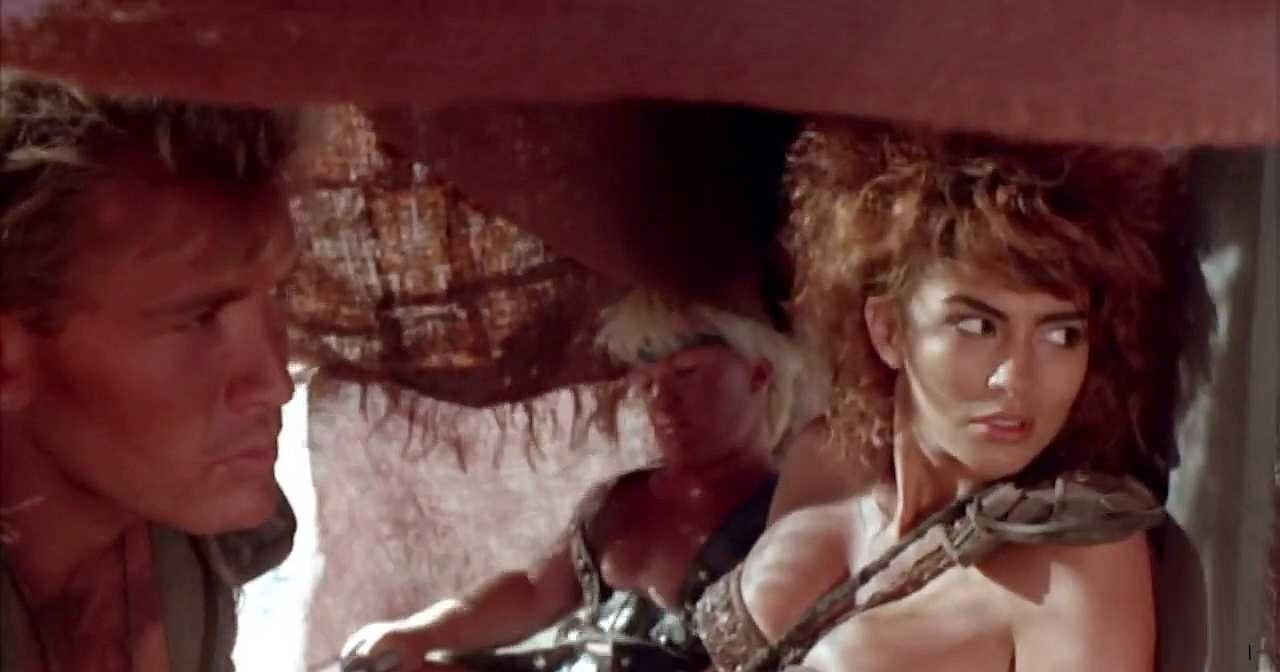
Released early in the decade, The New Barbarians arrived at the height of post-apocalyptic cinema’s popularity, largely spurred by George Miller’s Mad Max films. Directed by Enzo G. Castellari, a veteran of Italian exploitation cinema, the film unashamedly borrows from its Australian predecessors, depicting a desolate future Earth where survivors battle for resources. The protagonist, Scorpion (Giancarlo Preti), a former Templar soldier, defends a group of pacifists from the ruthless Templars, led by the villainous One (George Eastman). Baker notes the film’s visually distinctive quarry setting outside Rome and the high-octane vehicle chases. A surprising and disturbing scene involving sexual assault is highlighted as a jarring element. However, the unexpected appearance of actor Fred Williamson as Nadir, wielding explosive arrows, injects a much-needed boost of energy and entertainment for Baker, elevating its score despite its narrative shortcomings and often absurd violence.
The Dungeonmaster (1984) – USA
Also known as Rage War: The Challenges of Excalibrat or Digital Knights, The Dungeonmaster represents a unique blend of nascent computing technology fascination and classic fantasy tropes. Directed by seven different filmmakers, including John Carl Buechler and stop-motion artist Dave Allen, this anthology film features computer programmer Paul (Jeffrey Byron) and his girlfriend Gwen (Leslie Wing) being transported by the demonic sorcerer Mestema (Richard Moll) to a fantastical realm. Paul must complete a series of challenges using his wrist-mounted AI assistant, X-CaliBR8. Baker criticizes the film’s disjointed narrative, inconsistent quality across segments, and the seemingly overpowered capabilities of Paul’s AI. Despite its acknowledged "ludicrous mess" status, Baker paradoxically recommends it, suggesting its chaotic nature contributes to its cult appeal. The inclusion of heavy metal band WASP in one segment further grounds it in 80s pop culture.
Gor (1987) – USA/Italy
The first of two Cannon Group productions based on John Norman’s controversial novels, Gor introduces Tarl Cabot (Urbano Barbarini), a dull physics professor who is magically transported to the barbaric planet Gor via a family heirloom. There, he becomes entangled in a struggle against the tyrannical Sarm (Oliver Reed, a standout performance noted by Baker). Cabot’s journey involves rescuing the semi-clad princess Talena (Rebecca Ferratti) and reclaiming a macguffin to return home. Baker acknowledges the source material’s infamous misogyny, particularly its themes of slavery and sexual abuse, but notes that the film largely "glosses over" the more explicit elements, presenting it as a generic sword-and-sorcery adventure. Despite its flaws, Oliver Reed’s enthusiastic performance is singled out as a highlight, securing an additional point in Baker’s rating.
Iron Warrior (1987) – USA/Italy
Part of the Ator film series, Iron Warrior continues the saga of the muscle-bound hero Ator, played by Miles O’Keeffe. Baker admits to being unaware it was the third film in a franchise but found little to inspire him to seek out the others. The film opens with a promisingly shot scene before quickly descending into what Baker describes as "nonsense." Ator, whose brother has been kidnapped and encased in iron by the witch Phoedra (Elisabeth Kaza), spends the film protecting kingdoms and eventually confronting his sibling. Baker critiques O’Keeffe’s wooden acting, describing him as giving "planks a bad name" and "voguing his way from one lackluster sword fight to the next." The film’s reliance on stolen music cues from James Horner’s Star Trek scores is also noted, highlighting another common practice in low-budget productions.
Outlaw of Gor (1988) – USA/Italy
The immediate sequel to Gor, Outlaw of Gor sees Tarl Cabot (now played by Jack Palance, despite the review stating he took over Oliver Reed’s role, which is incorrect; Palance played Xenos in the first film and was replaced by the actor portraying the new villain, though the review implies Palance took over Reed’s villain role, suggesting a minor factual discrepancy in the original text) tossed back onto Gor, this time accompanied by an annoying co-worker. The plot involves Cabot being framed for murder by the evil Queen Lara (Donna Denton) and going on the run with his companion Hup (Nigel Chipps). Baker notes the film’s misguided attempt to inject more humor and its continued emphasis on "female slaves on screen." Jack Palance, despite his top billing, is described as having "far less fun" than Oliver Reed in the first film and is largely overshadowed by Denton’s villain. The film concludes with Cabot remaining on Gor, sparing his university students from further physics lectures, a detail Baker delivers with characteristic dry wit.
Supporting Data: The 1980s B-Movie Ecosystem
The films reviewed by Neil Baker are emblematic of a specific era in cinema history, characterized by a confluence of technological advancements, audience demands, and production strategies.
The Rise of the Direct-to-Video Market
The 1980s saw the explosive growth of the home video market, primarily VHS. This created an insatiable demand for new content, allowing low-budget films to bypass traditional theatrical distribution and find an audience directly in video rental stores like Blockbuster. Production companies like Cannon Films and Empire Pictures thrived in this environment, churning out dozens of genre films annually. These films were often conceived with the video shelf in mind, where eye-catching cover art was as crucial as the content itself.
The "Conan" and "Mad Max" Influence
The commercial success of Conan the Barbarian (1982) and the Mad Max trilogy (Mad Max, 1979; The Road Warrior, 1981; Mad Max Beyond Thunderdome, 1985) spawned a wave of imitators. Studios rushed to produce their own sword-and-sorcery and post-apocalyptic action films, often with significantly smaller budgets. The New Barbarians is a direct descendant of The Road Warrior, while the Gor and Ator films clearly aimed to capture the fantasy audience drawn to Conan. This trend, often dubbed "Fauxnan" by enthusiasts, highlights the commercial imperative driving much of 80s genre filmmaking.
US-Italian Co-Productions
Many of these films were US-Italian co-productions, a common practice in the 70s and 80s. Italian studios, known for their efficiency and expertise in producing genre fare quickly and cheaply, would partner with American distributors. This arrangement often meant filming in Italy (often around Rome, utilizing its quarries and ancient ruins for fantastical landscapes) with a mix of American and European actors and crew. This collaborative model allowed for broader distribution and often gave these films a distinct visual aesthetic, characterized by practical effects, elaborate costumes, and sometimes a charmingly rough-around-the-edges quality.
Controversial Source Material: John Norman’s Gor
The Gor novels by John Norman (a pseudonym for philosophy professor John Lange) are a cornerstone of controversial fantasy literature. The series, which began in 1966, is infamous for its explicit themes of female slavery, sexual subjugation, and a philosophy that champions male dominance and a return to "primitive" social structures. Baker’s review correctly identifies these problematic elements, noting that while the films "glossed over" some of the overt misogyny, the core premise of women as chattel in a barbaric society remains inherent. The decision by Cannon Films to adapt such material speaks to the era’s less scrutinized approach to sensitive themes in genre cinema, though even then, the controversy surrounding the books limited their mainstream acceptance.
The Talent Pool: Stars and Stalwarts
These B-movies often featured a mix of actors: established stars looking for a quick paycheck (Oliver Reed, Jack Palance, Fred Williamson), emerging talent, and genre regulars. Oliver Reed’s "wonderful time" in Gor is a testament to his ability to elevate even the most outlandish material with his charismatic presence. Fred Williamson, a blaxploitation icon, brought a recognizable persona to The New Barbarians. Miles O’Keeffe, known for his infamous Tarzan (1981) with Bo Derek, became a staple of these types of films, his physique often prioritized over his acting prowess. This eclectic casting created an interesting dynamic, where genuine performances could occasionally shine through the otherwise formulaic plots and limited production values.
Official Responses: Critical Reception and Cult Status
The "official responses" to these films at the time of their release were largely unfavorable. Mainstream critics often dismissed them as derivative, poorly acted, and cheaply produced. Box office returns were generally modest, with many films finding their true audience on the burgeoning home video market.
Contemporary Critical Scrutiny
Neil Baker’s reviews, while personal, offer a contemporary critical lens on these films. He frequently highlights their shortcomings: "Another nail in the Cannon coffin lid" for Gor, "plank masquerading as a physics prof" for Urbano Barbarini, "silly slog" for The New Barbarians. His scores, ranging from 4/10 to 6/10, reflect this general disappointment in their execution. However, his critical eye is tempered by an appreciation for specific elements, such as Oliver Reed’s performance, Fred Williamson’s impactful appearance, or the sheer, unadulterated absurdity that often defines cult cinema. His recommendation for The Dungeonmaster, despite calling it a "ludicrous mess," perfectly encapsulates the paradoxical charm these films hold for dedicated genre enthusiasts.
The Filmmakers’ Intent
From the perspective of the filmmakers and studios like Cannon Group, the intent was primarily commercial. These films were designed to be quick, profitable ventures, capitalizing on popular trends with minimal risk. Franchises like Gor and Ator were attempts to build on existing intellectual property or create new ones, leveraging established genre tropes to appeal to a specific demographic. The multi-director approach of The Dungeonmaster suggests a modular production strategy, possibly to maximize output or delegate specific genre challenges to specialists. The focus was on delivering spectacle – whether sword fights, car chases, or monsters – within tight budgetary constraints, often at the expense of narrative coherence or character development.
Evolution to Cult Status
Despite their initial critical drubbing, many of these films have achieved cult status over the decades. This is often due to their unique blend of earnest ambition and unintentional humor, their nostalgic value for those who grew up with them on VHS, and the sheer audacity of their concepts. Film enthusiasts and scholars of exploitation cinema now re-evaluate these works, not necessarily for their artistic merit, but for their historical significance, their reflection of popular culture, and the creative solutions employed by their low-budget production teams. Baker’s ongoing series contributes to this re-evaluation, bringing these "murky movies" back into the spotlight for a new generation of viewers and reminding older fans of their peculiar charm.
Implications: The Enduring Legacy of the B-Movie Barbarian
The collection of reviews by Neil Baker underscores several key implications regarding the enduring legacy of 1980s B-movies, particularly within the barbarian and adjacent genres.
Shaping Genre Tropes and Visual Language
While often considered derivative, these films, through their sheer volume and widespread availability on home video, contributed to solidifying certain genre tropes. The image of the muscle-bound hero, the damsel in distress (often a "slave girl"), the tyrannical overlord, the desolate wasteland, and the use of practical effects (even if rudimentary) became ingrained in the collective consciousness of genre fans. Even if parodied or refined by later, higher-budget productions, the visual and narrative shorthand established by these B-movies persists.
The Role of Independent and Exploitation Cinema
These films highlight the vital role of independent and exploitation cinema in film history. They served as training grounds for aspiring filmmakers and actors, offered alternative narratives to mainstream Hollywood, and often pushed boundaries (for better or worse) that larger studios might avoid. Companies like Cannon Films, despite their eventual downfall, were powerhouses of genre production, filling a market niche that Hollywood largely ignored. Their films, including the ones Baker reviews, represent a vibrant, if chaotic, period of cinematic experimentation and commercial opportunism.
A Testament to Film Preservation and Re-evaluation
Baker’s dedication to reviewing these "dodgy movies" speaks to the broader movement of film preservation and re-evaluation. Many of these films were once dismissed and might have faded into obscurity without the efforts of enthusiasts, genre critics, and home video distributors who champion their rediscovery. By engaging with these films critically, Baker not only entertains but also contributes to a deeper understanding of film history, demonstrating that even "terrible" movies can offer valuable insights into cultural trends, production methods, and the evolution of cinematic storytelling. His work encourages audiences to look beyond surface-level quality and appreciate the diverse tapestry of film, recognizing the unique contributions of every tier of production.
Neil Baker’s Contribution to Niche Criticism
Finally, Neil Baker himself represents a significant voice in niche film criticism. His commitment to watching and dissecting films that others might dismiss outright provides a unique perspective. He fills a gap, offering detailed, humorous, and often insightful commentary on movies that rarely receive serious journalistic attention. His ongoing "Murky Movie" surveys are not just reviews; they are a curated exploration of a particular cinematic aesthetic, celebrating the quirks and questionable choices that make these films memorable for a dedicated audience. His work reminds us that "enjoyment" in cinema is subjective and that there is profound value in exploring the full spectrum of film, from critically acclaimed masterpieces to the most obscure and outlandish B-pictures.




Leave a Comment