
The Unvarnished Truth: What Befell Jesus’ Twelve Apostles After the Gospels
By Colin Marshall
May 13th, 2026
The biblical narrative, a cornerstone of Western civilization, has been retold and reinterpreted countless times, finding its way into literature, art, and perhaps most powerfully, cinema. While Hollywood has produced numerous cinematic adaptations of Christianity’s sacred texts, a curious observation emerges: few, if any, conclude with the abrupt, freeze-frame title cards that punctuate comedies like Animal House or American Graffiti, detailing the ultimate fates of their characters. Such a stylistic choice, while unconventional for sacred narratives, could profoundly satisfy a lingering curiosity about the lives – and often, the grim demises – of the lesser-known figures within these foundational stories.
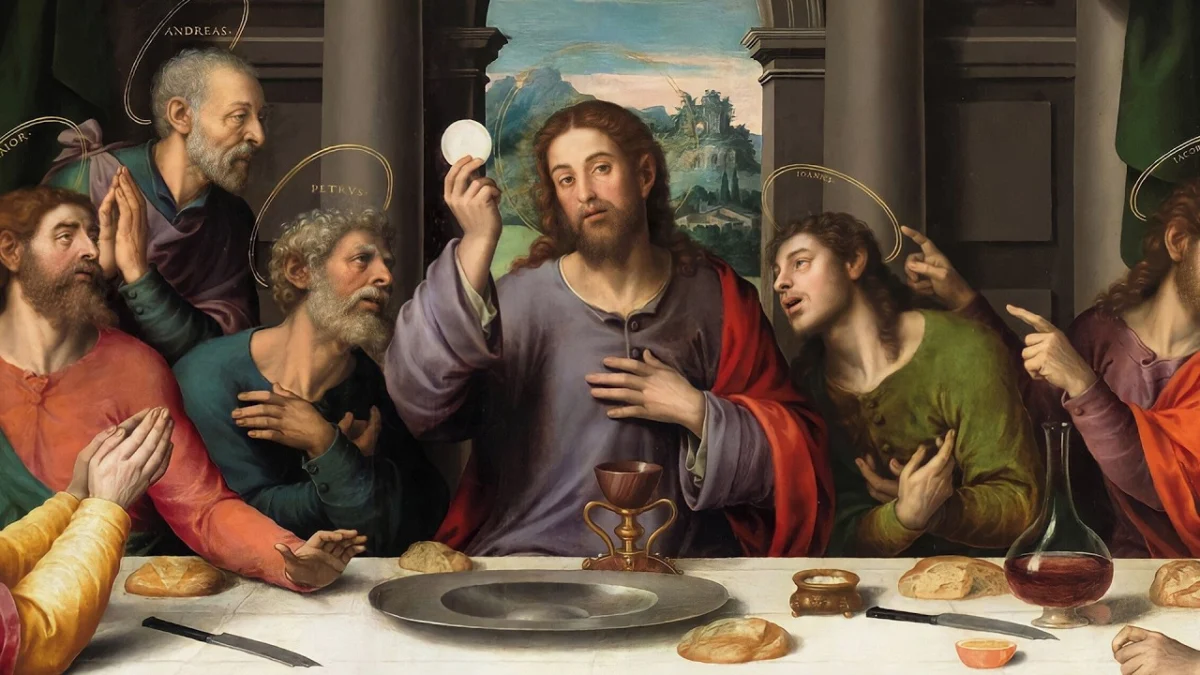
Among the most compelling of these figures are the twelve disciples of Jesus Christ. Their post-Gospel journeys, largely absent from popular cinematic depictions, are the subject of a recent video by Tommie Trelawny, the creator behind the YouTube channel Hochelaga. Trelawny’s exploration, accessible via the embedded video, delves into the historical and traditional accounts of these men, revealing a trajectory that, for many, was far from peaceful or triumphant. The reality, as Trelawny illustrates, is that the lives of Jesus’ closest followers were often marked by persecution, martyrdom, and a profound commitment that ultimately cost them dearly. This article aims to expand upon Trelawny’s findings, providing a comprehensive overview of the historical and legendary fates of the twelve apostles, examining their diverse journeys, the challenges they faced, and their enduring legacies.
The Shadow of the Cross: Early Persecution and Martyrdom
The period immediately following Jesus’ ascension was a time of immense upheaval and burgeoning faith. The early Christian movement, born in the volatile landscape of Roman Judea, was viewed with suspicion and often outright hostility by both Jewish authorities and the Roman Empire. The disciples, tasked with spreading Jesus’ teachings, found themselves at the forefront of this burgeoning, and often dangerous, movement.
H2: The Pillars of the Faith: Peter and the Roman Crucible
Among the twelve, Peter stands as arguably the most studied and influential figure. His journey, as depicted by Trelawny and corroborated by historical accounts, culminated in Rome. The rapid proliferation of Christianity in the first century AD, a testament to the disciples’ fervent evangelism, eventually triggered a severe crackdown from the ruling powers. Emperor Nero, in a desperate attempt to deflect blame for the devastating Great Fire of Rome in 64 AD, scapegoated the Christians. Peter, by then a recognized leader within the community and known as Saint Peter, became a victim of this brutal persecution.
Tradition holds that Peter was crucified upside down, a deliberate act of humiliation and suffering, as he felt unworthy to be crucified in the same manner as Jesus. His martyrdom in Rome solidified the city’s significance as a central hub for early Christianity and cemented Peter’s status as the first Pope in Catholic tradition, a testament to his leadership and sacrifice. His legacy is not only tied to his role as a disciple but also to his foundational impact on the structure and leadership of the early Church.
H3: Judas Iscariot: The Infamous Betrayer
Judas Iscariot remains one of the most controversial and enigmatic figures in all of Christianity. His act of betrayal, the pivotal moment that led to Jesus’ arrest and crucifixion, has echoed through centuries, fueling debates about his motivations and ultimate destiny. While his actions are undeniable, the precise reasons behind them remain shrouded in speculation. Was it greed, a misunderstanding of Jesus’ mission, or a complex interplay of political and religious pressures?
The biblical narrative offers a glimpse into Judas’s remorse. Overwhelmed by guilt, he returned the silver he had received for his betrayal and, according to the Gospel of Matthew, took his own life. The traditional site of his death is known as Akeldama, the "Field of Blood," purchased with the blood money he had cast aside. Further adding to his infamy, Dante Alighieri, in his epic Inferno, places Judas in the ninth circle of Hell, eternally gnawed by Lucifer, signifying the ultimate condemnation of his act. His story serves as a stark reminder of the temptations and moral quandaries faced even by those closest to Jesus.
Journeys to the Fringes: Apostles Who Traveled Far and Wide
While some disciples met their end in the immediate sphere of Roman persecution, others embarked on extensive missionary journeys, carrying the Gospel to distant lands and establishing nascent Christian communities. These voyages, often arduous and fraught with peril, underscore the immense dedication and faith that propelled their efforts.
H2: Doubting Thomas: The Apostle of the East
The Apostle Thomas, often remembered for his skepticism regarding Jesus’ resurrection – earning him the enduring epithet "doubting Thomas" – is, in Trelawny’s assessment, one of the most underrated disciples. His initial doubt, however, ultimately solidified his faith and contributed to a profound theological understanding of Jesus’ resurrection. This skepticism, ironically, has guaranteed him a form of eternal life through the popular expression.
According to various traditions, Thomas traveled farther than many of his fellow apostles. His missionary efforts are believed to have extended to India, where he followed existing Roman spice routes. It is said that he founded the Church of the Saint Thomas Christians in Kerala, India, a community that maintains a distinct Christian heritage with roots stretching back to the apostolic era. His journey highlights the far-reaching impact of the early Christian message, penetrating regions that were scarcely imagined by many in the West. The identification of his identity was further solidified by renowned artistic depictions, notably by Caravaggio, in works like "The Incredulity of Saint Thomas."
H3: Andrew: From Scythia to Scotland
The Apostle Andrew, brother of Peter, also undertook significant missionary travels. His journey led him to Scythia, a vast region in Eastern Europe, and from there to Greece. His eventual capture and crucifixion, a fate shared by many of his brethren, did not mark the end of his influence.
The scattering of his holy relics became a significant element in the spread of Christianity and the veneration of saints. Legends suggest that his relics eventually found their way to Scotland, a land that would later bear his name in the University of St. Andrews. The iconic St. Andrew’s Cross, a saltire, has become a powerful symbol, forming the main design element of Scotland’s national flag and a prominent feature of the Union Jack, a lasting testament to his far-reaching legacy.
The Unfolding Tapestry: Legacies and Lingering Questions
The stories of the twelve disciples are not merely tales of martyrdom and travel; they are interwoven with the very fabric of Western culture, their legacies manifesting in familiar symbols, institutions, and theological understandings. Trelawny’s video, while acknowledging the profound impact of figures like Peter and Thomas, also seeks to shed light on the fates of the remaining eight apostles, including John, Bartholomew, and Simon the Zealot.
H2: The Weight of Witness: The Perilous Path of Discipleship
As Trelawny notes, the lives of the disciples were characterized by an extraordinarily low survival rate. This grim reality underscores the perilous nature of early Christian evangelism. The path of discipleship, particularly in its nascent stages, was often synonymous with a life of hardship, persecution, and ultimately, a violent end.
Trelawny muses on the possibility of a mnemonic rhyme to encapsulate the fates of the remaining apostles, humorously lamenting the difficulty of finding rhymes for grim ends like being "flayed alive by Armenians." This dark humor, however, points to a significant historical reality: martyrdom was not merely an unfortunate consequence but a celebrated act of devotion in early Christianity. It was seen as a holy act, a demonstration of unwavering faith and a profound imitation of the Messiah’s own suffering and sacrifice. This element of martyrdom, while undoubtedly a testament to their commitment, also ensures that any biographical depiction of these disciples would likely be a gruesome viewing experience.
H3: Enduring Influence: Symbols, Saints, and Scholarship
The legacies of the disciples continue to resonate in myriad ways. Beyond the direct impact on the development of Christian doctrine and church structure, their stories have inspired art, literature, and scholarship for centuries. The works of artists like Caravaggio, who depicted scenes from the lives of Peter, Thomas, and Judas, have immortalized these figures for generations, offering visual interpretations that continue to provoke thought and discussion.
The ongoing scholarly exploration of early Christianity, including the Gnostic Gospels and the historical Jesus, further enriches our understanding of the context in which these disciples lived and operated. Questions about the nature of their teachings, their relationship with Jesus, and the evolution of Christian beliefs remain subjects of intense academic inquiry. Even the depiction of biblical angels, often rendered in comforting forms, is challenged by scholars who point to their more unsettling, monstrous portrayals in ancient texts, adding another layer of complexity to our understanding of the divine and its messengers.
Conclusion: The Unfinished Narrative
The stories of Jesus’ twelve disciples, as explored by Tommie Trelawny and elaborated upon here, offer a powerful counterpoint to the often sanitized or idealized portrayals of biblical figures in popular culture. They reveal a group of individuals who, despite facing immense adversity and often brutal ends, remained steadfast in their faith and dedicated to their mission. Their journeys, marked by both profound spiritual commitment and harrowing physical suffering, laid the groundwork for one of the world’s largest religions.
The absence of a definitive, universally accepted chronicle for each disciple’s final moments only adds to their mystique and the ongoing fascination with their lives. While the Bible provides the foundational narrative of their calling and Jesus’ ministry, the subsequent chapters of their lives are pieced together through historical accounts, theological traditions, and even artistic interpretations. This ongoing process of discovery and interpretation ensures that the stories of the twelve disciples, far from being concluded, continue to unfold, offering enduring lessons on faith, perseverance, and the profound cost of conviction. Their lives serve as a stark reminder that the pursuit of faith, particularly in its formative years, was a path fraught with danger, but also imbued with a power that continues to shape the world millennia later.




Leave a Comment