
Netflix Ventures into Dark Fantasy with "Barbaric," Tapping Vault Comics for Its Next Epic Saga
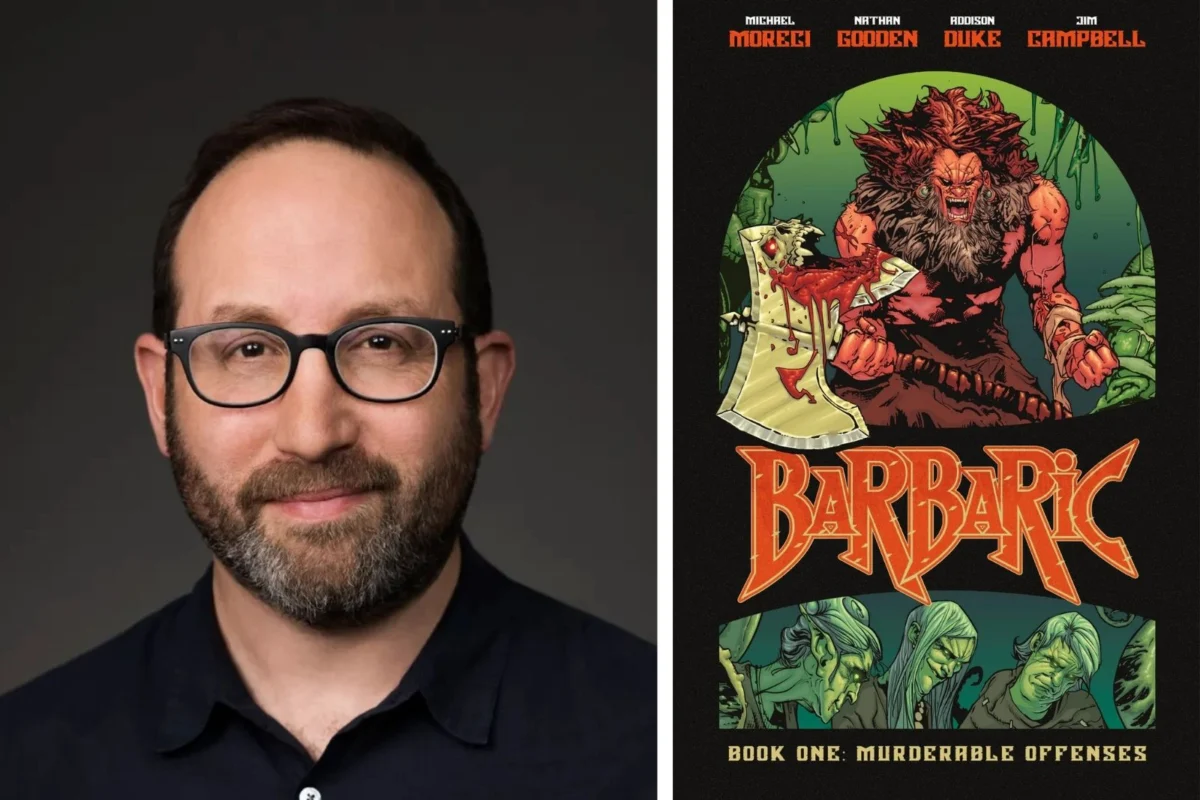
Los Angeles, CA – The annual "Upfront Week" is once again upon us, a pivotal period in the entertainment calendar where major networks and burgeoning streaming platforms unveil their ambitious slates for the coming seasons. Amidst a flurry of announcements designed to capture advertiser attention and viewer anticipation, Netflix made a significant splash today, confirming its commitment to expanding its genre offerings with the reveal of a new medieval fantasy series titled Barbaric. This adaptation, based on the critically acclaimed Vault Comics series created by Mike Moreci and Nathan Gooden, and edited by Adrian Wassel, promises a unique blend of visceral action and dark humor, potentially charting a new course for the streamer’s fantasy ambitions.
Netflix’s Chief Content Officer, Bela Bajaria, took center stage during the platform’s presentation, highlighting Barbaric as a strategic addition to its diverse content portfolio. While details regarding casting remain under wraps due to the project’s nascent stage, the announced creative team and the compelling premise offer a tantalizing glimpse into what could be Netflix’s next breakout fantasy hit.
Main Facts: A New Fantasy Epic for the Streaming Giant
The announcement of Barbaric signals Netflix’s continued investment in the lucrative fantasy genre, a space that has seen immense growth and competition across all streaming platforms. The series’ core concept immediately sets it apart, promising a narrative rich with both action and introspection, firmly rooted in the established world of its comic book progenitor.
The Core Premise: Violence for Good
At the heart of Barbaric lies an intriguing and morally complex premise, encapsulated in its official logline: "A ruthless and crass barbarian is cursed to only use his violence for good, which sends him, his talking axe, and a young witch on a road of self-discovery, redemption, and revenge." This setup introduces Owen the Barbarian, a character whose inherent brutality is paradoxically constrained by a magical curse, forcing him into a reluctant heroism. The inclusion of a sentient weapon—a talking axe—not only injects a distinctive element of dark humor and character dynamic but also provides a constant, often cynical, commentary on Owen’s forced journey.
Further enriching the character landscape is the introduction of a young witch, a companion whose presence is particularly noteworthy given Owen’s established strong dislike for witches in the original comic series. This inherent animosity creates a fertile ground for conflict, unexpected alliances, and profound character development as the trio navigates a treacherous world. The overarching themes of self-discovery, redemption, and revenge suggest a narrative arc that delves deep into the psychological and moral complexities of its protagonist, promising more than just a standard hack-and-slash adventure.
Source Material: Vault Comics’ Acclaimed Series
The foundation of the upcoming Netflix series is the celebrated Barbaric comic book series from Vault Comics. Vault, a relatively newer player in the independent comic book market, has rapidly garnered a reputation for publishing high-quality, creator-owned titles that often push the boundaries of genre conventions. Founded in 2016, Vault Comics has distinguished itself with a focus on fantasy, science fiction, and horror, championing unique voices and compelling storytelling.
Barbaric, crafted by writer Mike Moreci and artist Nathan Gooden, with editorial oversight by Adrian Wassel, exemplifies Vault’s commitment to distinctive narratives. The comic series, which first launched in June 2021, quickly earned critical praise for its sharp wit, dynamic artwork, and fresh take on barbarian tropes. It successfully blends gritty medieval fantasy with irreverent humor, crafting a world that feels both familiar and refreshingly new. Moreci’s nuanced writing and Gooden’s evocative art style bring Owen, his loquacious axe, and their unlikely companions to vivid life, resonating with readers who appreciate a blend of action, dark comedy, and genuine emotional depth. The decision to adapt this particular series underscores Netflix’s keen eye for acquiring compelling intellectual property from the vibrant independent comic book scene.
Creative Leadership and Production Powerhouse
The success of any ambitious fantasy adaptation hinges significantly on the creative team steering the project. Netflix has assembled an impressive roster of talent for Barbaric, combining seasoned filmmakers with experienced television showrunners.
Bela Bajaria, Netflix’s Chief Content Officer, played a crucial role in the announcement, symbolizing the platform’s strategic vision for its content slate. Bajaria oversees all of Netflix’s global content, and her endorsement of Barbaric highlights its perceived potential to resonate with a broad international audience.
The series will be co-showrun and co-written by Sheldon Turner, a screenwriter known for his work across diverse genres. Turner’s filmography includes the critically acclaimed Up In The Air, for which he received an Academy Award nomination for Best Adapted Screenplay, demonstrating his prowess in character-driven narratives. His credits also extend to the superhero genre with X-Men: First Class (co-writer) and the biographical drama Straight Outta Compton (story credit), showcasing his versatility and experience in developing engaging stories with broad appeal.
Joining Turner as co-showrunner is Robert Rovner, an executive producer with extensive experience in serialized television, particularly within the genre space. Rovner’s work on CW’s Supergirl highlights his capability to manage the intricate demands of a superhero series, including long-form storytelling, character arcs, and special effects. This combined experience suggests a showrunning team adept at balancing cinematic scope with episodic narrative coherence.
The executive producer team further bolsters the project’s credentials. Barry Jossen and Tana Jamieson represent A+E Studios, a prolific production house known for its diverse television output. Notably, Javier Grillo-Marxuach brings a direct connection to high-profile genre projects, having worked on the seminal mystery series Lost and, significantly, on Netflix’s own The Witcher. His experience on The Witcher will be invaluable in navigating the complexities of fantasy adaptation for the streaming giant. F.J. DeSanto, another executive producer, has a background in comics and genre projects, including adaptations. Damian Wassel, representing Vault Comics, ensures that the original creators maintain a close involvement in the adaptation process, a crucial factor for fans hoping for fidelity to the source material. Finally, Jennifer Klein, who runs 100% Productions with Robert Rovner, brings a wealth of production experience from films like Armageddon and Pearl Harbor, underscoring the project’s significant backing and potential for high production values. This collaborative leadership structure aims to harness diverse expertise to bring Barbaric to life on screen.
Chronology: From Comic Page to Streaming Screen
The journey of Barbaric from an independent comic book to a major Netflix series is a testament to the growing appetite for unique genre storytelling and the streamer’s proactive approach to intellectual property acquisition.
The Comic’s Genesis
The Barbaric comic series by Mike Moreci and Nathan Gooden made its debut in June 2021, published by Vault Comics. From its initial issues, the series quickly carved out a niche for itself within the crowded comic book market. It was lauded for its fresh take on the often-formulaic barbarian subgenre, injecting it with a self-aware humor and a distinctive visual style. Critics and readers alike praised its inventive premise—a barbarian cursed to do good—and the unexpected dynamic between Owen and his talking axe, "Axel." The comic’s blend of dark fantasy violence with genuine comedic beats resonated with a demographic seeking more nuanced and less conventional heroic narratives. Its rapid accumulation of positive reviews and a dedicated fanbase likely caught the attention of content scouts looking for compelling, adaptable stories.
The Adaptation Journey
The path from comic book to streaming series is often a multi-stage process, and for Barbaric, it appears to have moved with considerable speed given the comic’s relatively recent launch. Netflix, like many major studios, actively scouts for promising intellectual property across various mediums, including independent comics, to fuel its content pipeline. The rising popularity of dark fantasy, anti-heroes, and genre-bending stories would have made Barbaric a prime candidate.
The typical development process for a series of this caliber involves several key steps: securing the adaptation rights from Vault Comics, attaching key creative personnel such as showrunners and writers, developing initial script outlines and pilot scripts, and then formally pitching the project to Netflix executives for a green light. Given the announcement during Upfront Week, it’s clear that Barbaric has successfully navigated these initial stages.
The current status of the project being "in its early days" implies that while the series has been officially greenlit and the core creative team is in place, significant pre-production work is still ahead. This phase typically involves refining scripts, developing concept art for characters, creatures, and environments, and assembling a broader production team. Crucially, casting, which is often a lengthy and high-profile process for fantasy series, has yet to commence. The early announcement, however, generates significant buzz and allows for a longer lead time for development, ensuring that the creative vision for Barbaric can be fully realized.
Supporting Data: The Expanding Realm of Fantasy on Streaming
The arrival of Barbaric on Netflix’s slate is not an isolated event but rather a clear indicator of a broader trend within the streaming industry: the insatiable demand for high-quality fantasy content. Platforms are fiercely competing to establish their own flagship fantasy sagas, recognizing the genre’s power to attract and retain dedicated global audiences.
Filling the "Witcher" Void and Beyond
One of the most immediate implications of Barbaric‘s announcement is its potential role in Netflix’s strategic positioning within the fantasy landscape. The article directly suggests it as "Netflix’s answer to filling the future gap left by The Witcher." This assessment is particularly pertinent in light of recent developments surrounding The Witcher, Netflix’s established fantasy tentpole. The highly publicized departure of lead actor Henry Cavill, who portrays Geralt of Rivia, and the subsequent recasting with Liam Hemsworth for Season 4, has introduced an element of uncertainty for the franchise. While The Witcher remains a popular series, the transition period presents an opportune moment for Netflix to introduce a fresh, complementary fantasy epic to its audience.
Beyond The Witcher, Netflix has demonstrated a consistent commitment to the fantasy genre. Its diverse offerings include adaptations like Shadow and Bone, the martial arts fantasy Warrior Nun, the post-apocalyptic fairy tale Sweet Tooth, and the highly anticipated live-action rendition of Avatar: The Last Airbender. This portfolio illustrates a strategy to cater to various subgenres and fanbases within fantasy.
The competitive landscape further highlights the importance of such investments. Amazon Prime Video has made a colossal bet on high fantasy with The Lord of the Rings: The Rings of Power, while HBO continues its reign with the successful House of the Dragon, a prequel to Game of Thrones. These high-budget productions have set a new benchmark for visual spectacle and intricate world-building, compelling other streamers like Netflix to continually innovate and expand their own fantasy universes. Barbaric, with its distinct tone and compelling premise, is positioned to contribute significantly to Netflix’s ongoing effort to dominate this highly coveted genre space.
The Appeal of Dark Fantasy and Anti-Heroes
The choice to adapt Barbaric also speaks to the enduring and growing appeal of dark fantasy and anti-hero narratives among modern audiences. Viewers are increasingly drawn to characters who exist in moral gray areas, whose motivations are complex, and whose journeys involve significant internal struggle. Owen the Barbarian, cursed to do good despite his ruthless nature, perfectly embodies this archetype.
The success of characters like Geralt of Rivia in The Witcher, who operates outside conventional morality while often doing the right thing, demonstrates this audience preference. Similarly, the popularity of anti-heroes in other genres, from Marvel’s Punisher to DC’s John Constantine, underscores a desire for protagonists who challenge traditional notions of heroism, offering gritty realism and relatable flaws. Barbaric‘s logline explicitly mentions "self-discovery, redemption, and revenge," themes that resonate deeply with audiences who appreciate narratives exploring the human condition through a fantastical lens.
Furthermore, the "talking axe" element provides a unique selling proposition, setting Barbaric apart from more straightforward fantasy epics. This distinctive companion adds a layer of irreverent humor and an externalized conscience for Owen, allowing for comedic relief and philosophical debate amidst the violence. This tonal versatility—the ability to seamlessly blend dark fantasy with moments of genuine levity—is a hallmark of successful modern genre storytelling and could be a key factor in Barbaric‘s potential to capture a broad viewership looking for something both action-packed and distinctively witty.
Official Responses: Netflix’s Strategic Vision
While direct quotes from Netflix executives regarding Barbaric are not extensively detailed in the initial announcement, the context of Upfront Week and the strategic choices made offer clear insights into the platform’s motivations and overarching content philosophy.
Bela Bajaria’s Statement (Implied)
Bela Bajaria’s presentation of Barbaric during Upfront Week itself serves as an implied statement of Netflix’s strategic intent. As Chief Content Officer, her role is to curate a slate that is both creatively compelling and commercially viable, attracting new subscribers while retaining existing ones. The selection of Barbaric suggests several key objectives for Netflix:
- Securing Strong, Unique IP: Netflix is constantly seeking original and distinctive intellectual property to differentiate itself in the crowded streaming market. Barbaric‘s unique premise, blending dark fantasy with humor and an anti-hero protagonist, positions it as a fresh take on a popular genre, moving beyond traditional high fantasy.
- Diversifying Fantasy Offerings: While The Witcher caters to a specific brand of dark fantasy, Barbaric offers a different tonal flavor, potentially appealing to a broader segment of fantasy fans, including those who appreciate more comedic or morally ambiguous narratives. This diversification reduces reliance on a single flagship franchise.
- Catering to a Growing Audience Segment: The global demand for fantasy content is undeniable. By investing in series like Barbaric, Netflix is actively responding to this demand, aiming to capture viewers who are drawn to epic adventures, intricate world-building, and complex characters.
- Leveraging Comic Book Adaptations: Netflix has a proven track record with comic book adaptations, from The Umbrella Academy to Sweet Tooth and Warrior Nun. This strategy allows them to tap into existing fanbases and visual storytelling blueprints, often resulting in compelling series that resonate with both comic readers and new audiences. The choice of an acclaimed independent comic like Barbaric further showcases Netflix’s commitment to exploring a wide array of source materials beyond mainstream superhero fare.
Creators’ Perspective (Hypothetical/General)
While official statements from Mike Moreci and Nathan Gooden regarding the Netflix adaptation have yet to be released, the typical sentiments of comic creators seeing their work adapted to a major screen platform can be inferred. For independent comic creators, such an adaptation is often a dream realized, offering an unparalleled opportunity to:
- Reach a Wider Audience: A Netflix series can expose Barbaric to millions of viewers globally, far beyond the readership of the comic book. This expansion of reach is invaluable for creators hoping their stories resonate with a broad public.
- Ensure Creative Fidelity: The involvement of Damian Wassel from Vault Comics as an executive producer suggests a commitment to maintaining the spirit and core elements of the original series. Creators often hope for adaptations that respect their original vision, characters, and thematic intentions, rather than simply using the IP as a loose framework.
- Validate Their Work: A major studio adaptation serves as a significant validation of the comic’s quality and its storytelling potential. It highlights the strength of independent comics as a source of compelling narratives for mainstream entertainment.
The anticipation from both Netflix and the comic’s creators likely revolves around translating the unique charm, brutal action, and dark humor of Barbaric faithfully and effectively for the streaming medium, hoping to craft a series that becomes a beloved addition to the global fantasy canon.
Implications: What "Barbaric" Means for Netflix and Fantasy Fans
The announcement of Barbaric carries significant implications, not just for Netflix’s immediate content strategy but also for the broader landscape of the fantasy genre in the competitive streaming ecosystem.
Potential Impact on Netflix’s Content Strategy
For Netflix, Barbaric represents a multi-faceted strategic move. Firstly, it strengthens its already robust genre slate, ensuring a continuous flow of diverse fantasy content. As subscriber growth becomes increasingly challenging, offering a wide array of high-quality, distinctive shows is crucial for both acquisition and retention. Barbaric‘s unique premise could attract a niche audience that appreciates its specific blend of dark humor and anti-heroics, while also having broader appeal for general fantasy fans.
Secondly, the adaptation of an independent comic from Vault Comics highlights Netflix’s commitment to exploring varied intellectual property sources. This approach allows them to discover fresh narratives that may not have the mainstream recognition of a Marvel or DC property but possess immense creative potential and passionate existing fanbases. This strategy is more cost-effective than developing entirely original IP from scratch and often comes with a built-in narrative blueprint and loyal readership.
Finally, Barbaric could serve as a testing ground for new creative partnerships and storytelling approaches within Netflix’s fantasy division. The blend of Sheldon Turner’s cinematic background with Robert Rovner’s television expertise, combined with a strong executive producer team, suggests an intention to push creative boundaries and potentially establish a new aesthetic for Netflix’s fantasy offerings.
The Future of the Fantasy Genre on Streaming
The addition of Barbaric underscores the relentless evolution and heightened competition within the streaming fantasy genre. Audiences have grown accustomed to high production values, complex narratives, and nuanced character development, largely thanks to pioneers like Game of Thrones and subsequent large-scale investments from streamers.
Barbaric‘s distinct tone—its blend of grim fantasy with overt humor—positions it as a potentially refreshing counterpoint to more somber or epic fantasy narratives. This diversification is vital for the genre’s longevity, demonstrating that fantasy is not a monolithic entity but a broad church capable of accommodating various styles and sensibilities. As more platforms invest heavily, the expectation for originality and quality will only increase, pushing creators to innovate further. Barbaric, with its talking axe and morally conflicted protagonist, is poised to contribute to this ongoing narrative of genre expansion and refinement, suggesting that the era of cookie-cutter fantasy is rapidly drawing to a close.
Challenges and Opportunities
While the prospects for Barbaric are exciting, the project also faces inherent challenges typical of any major adaptation. High audience expectations, particularly from fans of the comic, will demand a faithful yet accessible translation of the source material. The execution of its unique visual style, special effects for fantastical elements, and the delicate balance between dark themes and comedic beats will require meticulous attention. Furthermore, the absence of casting news means the crucial task of finding the right actors to embody Owen, his axe, and the young witch lies ahead—performances that will be central to the show’s success.
However, the opportunities far outweigh these challenges. The distinctive premise of a barbarian cursed to do good, coupled with a sentient, wisecracking weapon, provides a strong unique selling proposition that can attract viewers seeking novelty. The established fanbase of the comic provides a ready audience, while the experienced creative team brings a wealth of knowledge in crafting compelling narratives and managing large-scale productions. If Barbaric successfully captures the irreverent spirit and surprising depth of its comic book origins, it has the potential to become a breakout hit, further cementing Netflix’s position as a premier destination for innovative fantasy storytelling and proving that sometimes, a talking axe really does speak in a show’s favor.


Leave a Comment