
The Architect of Chaos: How ‘Absolute Batman’ Subverts the Burton Twist to Redefine the Dark Knight
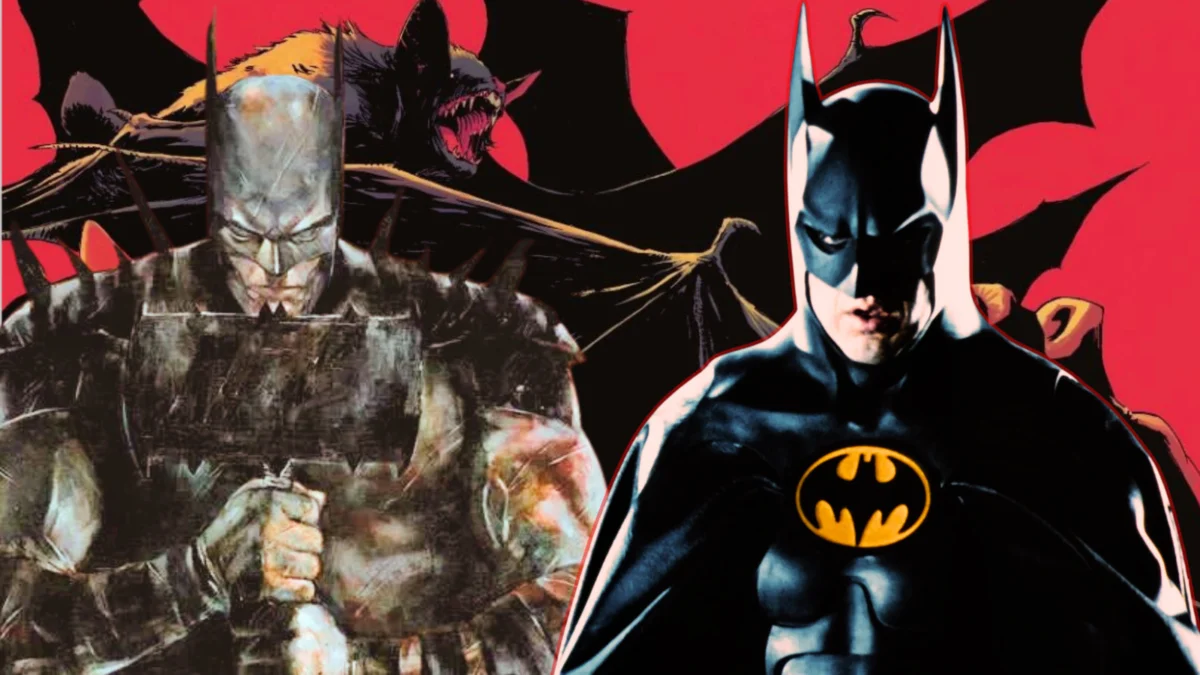
The landscape of DC Comics has undergone a seismic shift with the introduction of the "Absolute" Universe, a bold reimagining of iconic heroes under the "All-In" initiative. At the forefront of this movement is Absolute Batman, a collaboration between superstar writer Scott Snyder and visionary artist Nick Dragotta. While the series initially garnered headlines for its radical reimagining of Bruce Wayne as a working-class powerhouse rather than a billionaire socialite, it is the revelation in issue #20 that has sent shockwaves through the fandom.
In a narrative pivot that mirrors—and arguably improves upon—one of the most controversial decisions in cinematic history, Absolute Batman #20 reveals that the tragedy defining Bruce Wayne’s life was not a random act of violence, but a calculated "joke" orchestrated by his greatest nemesis. By linking the Joker directly to Batman’s origin, Snyder and Dragotta have revisited the territory explored in Tim Burton’s 1989 Batman, but with a thematic depth that aligns with modern anxieties.
Main Facts: The Revelation of ‘Project: Batman’
The "Straw Man" story arc has reached a fever pitch in Absolute Batman #20. Following the tragic murder of former Mayor Jim Gordon in the preceding issue, Bruce Wayne finds himself in possession of a digital inheritance: a series of encrypted files labeled "Project: Batman." Gordon, who spent his final moments trying to protect Gotham from a burgeoning darkness, left these files as a roadmap for Bruce to uncover the truth behind his father’s death.
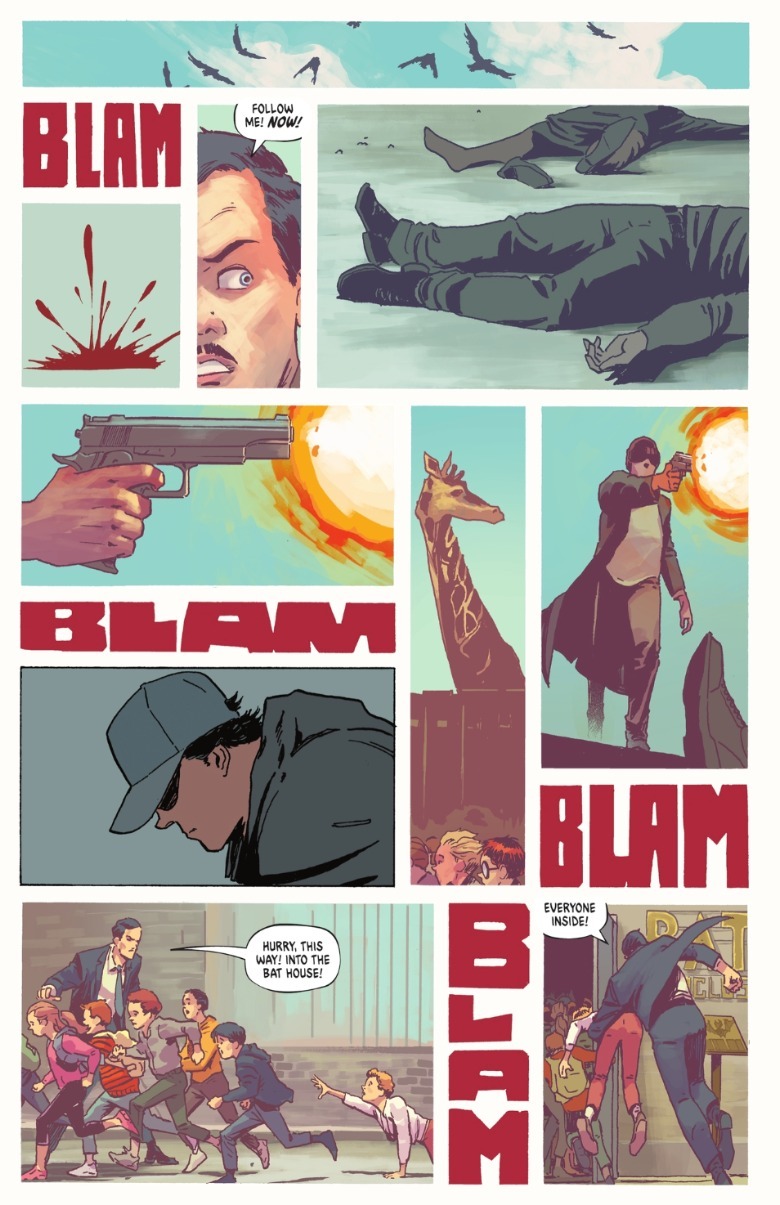
In this universe, the origin of Batman began not in a dark alley behind a theater, but during a horrific mass shooting at the Gotham City Zoo. For years, Bruce believed his father, Thomas Wayne, was a victim of a senseless, random tragedy. However, upon infiltrating Blackgate Prison to confront the shooter, Joe Chill, Bruce finds a different monster waiting for him: Jonathan Crane, the Scarecrow.
The revelation is multi-layered and devastating:
- The Target: Thomas Wayne was not the intended target. The shooter was sent to kill Martha Wayne, who, in a radical departure from canon, is still alive in this universe.
- The Coercion: Joe Chill did not act of his own volition. He was manipulated by Scarecrow’s Fear Toxin, acting as a puppet for a higher power.
- The Mastermind: The entire event was orchestrated by Jack Grimm, the "Absolute" version of the Joker.
- The Motivation: Martha Wayne was revealed to be a former member of the Court of Owls—depicted here as a guerrilla resistance group. Grimm’s decision to destroy her family was a cruel "joke" designed to see if he could turn her son into a "bat," the natural predator of the owl.
Chronology: The Path to the Zoo
To understand the weight of this twist, one must trace the meticulously laid breadcrumbs across the first twenty issues of the series. Snyder and Dragotta have been playing a long game, embedding clues that only become visible in hindsight.
- Issue #1: The series opens with a visceral flashback to the Gotham Zoo. While the focus is on the trauma and the immediate violence, the background art by Dragotta features a murder of crows circling the area—a subtle nod to Scarecrow’s presence that readers initially dismissed as atmospheric.
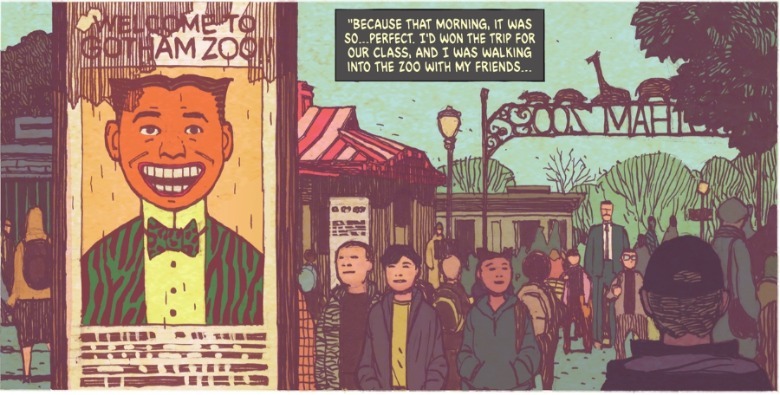
- Issue #4: During another flashback to the day of the shooting, a welcome sign at the zoo features a stylized, grinning figure reminiscent of a clown. This early hint suggested that the Joker’s influence preceded his formal debut in the series.
- Issue #19: The stakes escalate when Scarecrow murders Jim Gordon. Before his death, Gordon passes the "Project: Batman" files to Bruce, signaling that the conspiracy goes deeper than the corrupt GCPD or the local mob.
- Issue #20: The confrontation at Blackgate serves as the climax of this investigative thread. Scarecrow confirms that he has "supernatural" control over crows in this reality, using them as his eyes and ears, and confirms that he was present at the zoo to ensure Grimm’s plan was executed.
This chronological progression demonstrates a shift from the "Abomination" arc, which focused on physical threats like Bane, to the "Straw Man" arc, which focuses on the psychological deconstruction of Bruce Wayne.
Supporting Data: Visual Foreshadowing and Thematic Symmetry
The success of this twist relies heavily on the visual storytelling of Nick Dragotta. Comic book historians often point to the "clues" in legendary runs like Watchmen or Snyder’s own Court of Owls saga. In Absolute Batman, the data supporting the Joker’s involvement is etched into the very architecture of Gotham.
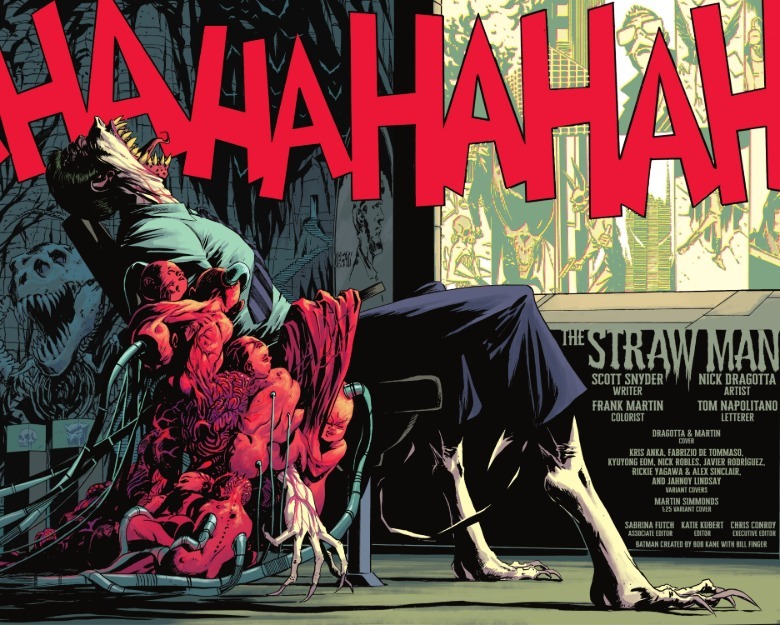
In Absolute Batman #20, the opening panels depict Jack Grimm laughing in his "cave" lair. Sharp-eyed readers noticed a trophy case in the background containing a Court of Owls mask. This suggests that Grimm has already dismantled the resistance group Martha Wayne belonged to, treating Bruce’s entire heroic journey as a "sequel" to a war he already won.
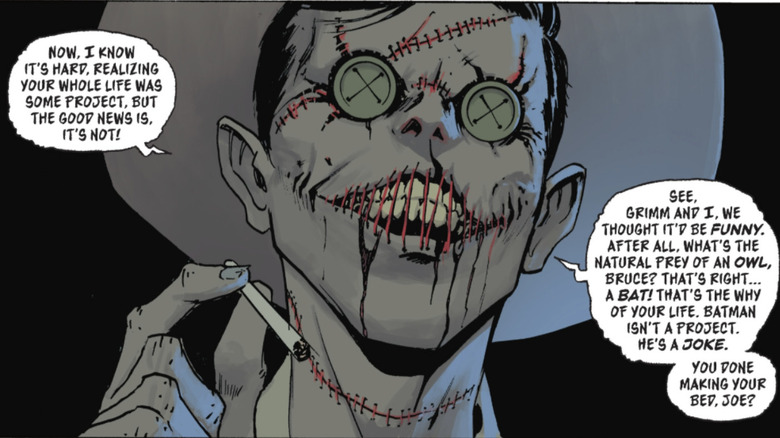
Furthermore, the "Absolute" Joker is depicted as a centuries-old, perhaps immortal, force of nature. This contrasts with the classic Joker, who is often a byproduct of Batman’s existence. By making Joker the "architect" and Batman the "result," the series flips the traditional causal relationship.
Snyder has used similar deceptive tactics before. In the 2016 Batman: Endgame arc, the Joker attempted to convince Batman he was an immortal demon using doctored historical photos. However, in the Absolute universe, the evidence suggests that this is not a ruse, but a fundamental truth of this world’s history.
Context and Official Responses: Improving on the Burton Legacy
The decision to make the Joker the killer of Bruce Wayne’s parents was first popularized by Tim Burton’s 1989 film. At the time, many comic book purists—including Batman creator Bob Kane—had mixed feelings. The argument against the change was that it made Batman’s mission too small; it turned a crusade for justice into a quest for personal revenge. If Batman kills the Joker, his reason for being disappears.
Scott Snyder addressed the philosophy behind the Absolute universe in a 2024 interview with Polygon. He noted that for Batman to be relevant to a new generation, he had to represent a response to systemic, overwhelming forces.
"In the 21st century, the things we fear are often massive, systemic, and beyond our control," Snyder explained. "I wanted a Batman who wasn’t just fighting a guy in a costume, but a hero who was fighting against a world that felt rigged from the start."
In this context, the "Project: Batman" twist works better than the Burton version because it isn’t just about a gunman in an alley. It is about the Joker representing a "corrupt order." In the Absolute universe, the Joker is the status quo—he is the one with the power, the history, and the control. Bruce Wayne, the working-class man with a massive axe and a DIY suit, represents the "chaos" that threatens to disrupt that corrupt system. This thematic inversion justifies the connection between their origins in a way the 1989 film did not.
Implications: A New Paradigm for Gotham City
The revelation in Absolute Batman #20 changes everything for the future of the series. The implications are both psychological and structural:
The Deconstruction of the Hero’s Journey
For Bruce Wayne, the knowledge that his life was "designed" by Jack Grimm is a existential threat. If Batman was created by the Joker to be a plaything, does Bruce have any true agency? The upcoming issues will likely focus on Bruce’s struggle to reclaim his identity from the narrative Grimm has written for him. He must prove that he is not a "bat" being hunted by "owls," but something entirely new that Grimm didn’t account for.
The Survival of Martha Wayne
The fact that Martha Wayne is alive and was part of a revolutionary group like the Court of Owls introduces a new dynamic to the Batman mythos. Typically, the Waynes are the pinnacle of Gotham’s elite. Here, they are targets of the elite. Martha’s survival provides Bruce with a link to his past that he has never had in any other iteration, potentially leading to a team-up or a ideological conflict between mother and son.
The Joker as "Order"
By positioning the Joker as the one who pulls the strings of the city’s history, Snyder has created the ultimate version of the character. This Joker doesn’t want to burn things down; he owns the matches and the fire department. This forces Batman to act as a revolutionary rather than a vigilante. His mission is no longer about maintaining the status quo, but about tearing it down.
The "Straw Man" and Beyond
As the "Straw Man" arc continues, the pressure on Bruce Wayne will only increase. With Scarecrow acting as Grimm’s lieutenant and the revelation of "Project: Batman" fresh in his mind, Bruce is at his most vulnerable. However, in the world of Absolute Batman, vulnerability is often the precursor to a more brutal, more determined form of justice.
In conclusion, Absolute Batman #20 is more than just a shocking issue; it is a manifesto for a new kind of Dark Knight. By borrowing Tim Burton’s most controversial twist and infusing it with socio-political weight and psychological horror, Snyder and Dragotta have ensured that this version of Batman is not just a retelling, but a necessary evolution of a legend. The "joke" may have been Grimm’s, but the punchline will undoubtedly belong to Batman.


Leave a Comment