
The Beijing Summit: Geopolitical Brinkmanship and the Erosion of Strategic Ambiguity
Main Facts: A High-Stakes Encounter in the Great Hall of the People
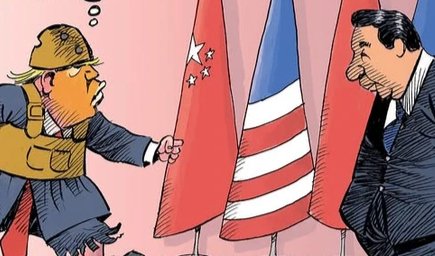
In a diplomatic encounter characterized by starkly contrasting styles and existential stakes, President Donald Trump recently arrived in Beijing for a high-level summit with Chinese President Xi Jinping. While the White House has characterized the meeting as a continuation of a "personal friendship" between the two leaders, international observers and geopolitical analysts describe a far more predatory dynamic. The summit comes at a time when the United States is grappling with the fallout of a protracted conflict in Iran and a domestic political landscape increasingly defined by executive unilateralism.
The central friction point of the summit remains the status of Taiwan. President Xi has issued a stern ultimatum, framing the island’s sovereignty as the "main barrier" to stable Sino-American relations. Concurrently, the Trump administration appears to be weighing the possibility of significant geopolitical concessions—potentially involving the withdrawal of support for Taiwan—in exchange for trade victories, specifically involving agricultural exports like soybeans and access to rare earth minerals.
This meeting is not merely a trade negotiation; it represents a fundamental test of the "Art of the Deal" philosophy against China’s centuries-long "Long Game." As the U.S. administration seeks a "win" to distract from military overextensions in the Middle East, Beijing appears poised to exploit American vulnerabilities to reshape the Pacific power structure.
Chronology: From Venezuelan Success to the Iranian Quagmire
To understand the current state of American vulnerability at the Beijing summit, one must trace the trajectory of the administration’s foreign policy over the past several years.
The Venezuelan Precedent
The administration’s current sense of invulnerability is widely traced back to its intervention in Venezuela. What was initially viewed as a high-risk gamble resulted in a swift collapse of the previous regime, providing the White House with an "easy success." However, historians now argue that this victory was a "disaster in disguise." It fostered a sense of hubris within the executive branch, leading to the belief that complex geopolitical knots could be severed with a single stroke of American military and economic might.
The Iranian Escalation
Emboldened by the Venezuelan outcome, the administration pivoted toward a policy of "maximum pressure" on Tehran. Unlike the South American theater, however, Iran proved to be a resilient and deeply entrenched adversary. The resulting "Iran War"—a series of kinetic engagements and proxy battles—has drained the U.S. Treasury and exhausted the military’s operational tempo. This conflict has left the U.S. in a "vulnerable position," blundering into a strategic trap of its own making.
The Tariff Wars and Economic Isolation
Parallel to these military ventures, the administration’s aggressive tariff policy against China was intended to force a restructuring of the global trade order. While it caused short-term disruption in Chinese markets, the long-term effect has been the hardening of Beijing’s resolve. China, an "old culture" with a historical perspective spanning millennia, has utilized this period to diversify its own supply chains, leaving the U.S. more isolated from its traditional allies in Western Europe.
Supporting Data: The Asymmetry of Patience and Power
Data from the summit’s opening days suggest a significant asymmetry in the bargaining positions of the two superpowers. Analysts have focused on three primary metrics: economic resilience, historical duration, and the "narcissism index" of the negotiations.
Economic Resilience
While the U.S. remains the world’s largest economy, its susceptibility to impulsive policy changes has created market volatility that Beijing is better equipped to absorb. China’s centralized control over its financial systems allows it to "absorb a few blows" from American tariffs in a way that Western democracies, sensitive to quarterly earnings and election cycles, cannot.
The Taiwan-Soybean Trade-off
The most alarming data point emerging from the summit is the potential for a "rare earth pottage" deal. Intelligence reports suggest that China is offering to purchase hundreds of millions of tons of American soybeans—a vital lifeline for the U.S. agricultural sector—in exchange for a "proper handling" of the Taiwan issue. For the Trump administration, this offers a tangible economic victory to present to the domestic electorate. For Xi Jinping, it represents the potential removal of the final barrier to regional hegemony.
The Erosion of Checks and Balances
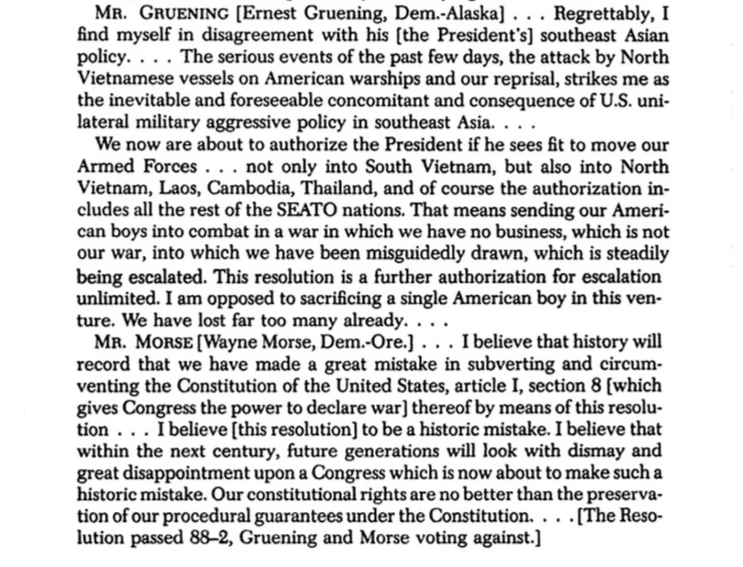
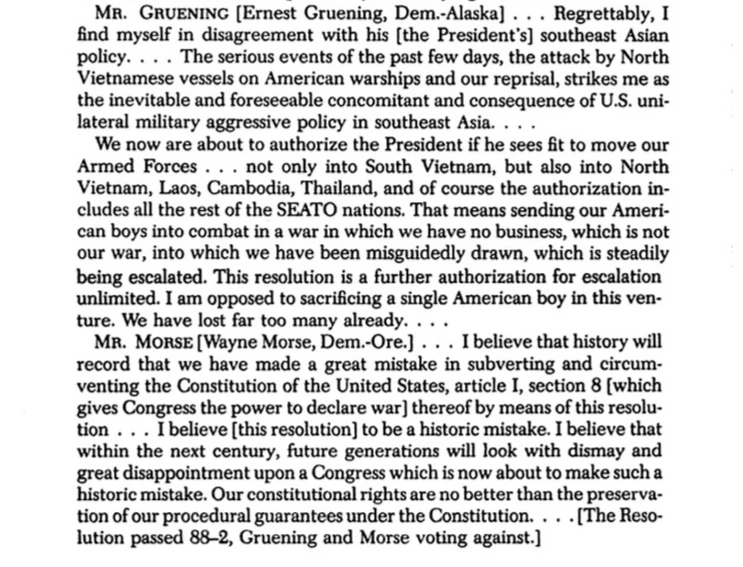
A critical factor in this diplomatic dance is the current state of American governance. Unlike the Vietnam era, where the Gulf of Tonkin Resolution—though based on flawed intelligence—was at least debated and approved by a near-unanimous Congress, modern foreign policy has become increasingly decoupled from legislative oversight. The "Pentagon Papers" of the 1970s revealed a government that misled the public, but it was a government that still recognized the existence of three independent branches. Critics argue that the current administration’s "self-deception" has allowed for a succession of foreign policy failures to be rebranded as successes without any institutional mechanism to provide a course correction.
Official Responses: Reading the Tea Leaves
The official rhetoric from both capitals provides a study in diplomatic opacity.
The White House Stance
President Trump has maintained a cheerful, defiant public persona, frequently taking to social media to praise his "great relationship" with President Xi. The administration’s official line is that the U.S. is negotiating from a position of "unprecedented strength" and that a "historic deal" is imminent. Spokespeople have dismissed concerns regarding Taiwan as "alarmist," insisting that any agreement will protect American interests while stabilizing global markets.
The Beijing Narrative
The Chinese Ministry of Foreign Affairs has been more calculated. In official statements, Beijing has emphasized "mutual respect" and "sovereignty." However, the subtext is clear: China views the U.S. as a declining power led by an "undisciplined" negotiator. State-run media has depicted the U.S. President as a "bloviating Goliath" whose focus on short-term profits makes him susceptible to a "David-style" strategic defeat. Xi Jinping’s warning that a failure to handle Taiwan could lead to "clashes and conflicts" is seen by experts as a credible threat intended to test the resolve of an administration already bogged down in the Middle East.
European and Global Reactions
In Western Europe, the reaction has been one of quiet horror. Diplomatic sources in Brussels and Paris compare the current U.S. approach to an "undisciplined five-year-old" in a room full of delicate antiques. There is a growing fear that if the U.S. is willing to abandon Taiwan for trade concessions, it may similarly abandon Ukraine and the rest of Eastern Europe to Russian influence in exchange for minor diplomatic or economic gains.
Implications: The Long-Sighted Predator and the Global Fringe
The implications of the Beijing summit extend far beyond the immediate trade balance. They point toward a fundamental shift in the global order.
The Fate of Taiwan and Ukraine
If the "Art of the Deal" succeeds in the way Beijing hopes, the world may witness the end of American-backed sovereignty for smaller democratic nations. A U.S. retreat from Taiwan would signal to Vladimir Putin that the "tottering empire" of Russia could similarly expand its borders without fear of American intervention. The "Constitutional clock," which many hope will reset the U.S. trajectory in 2028, may run out before these strategic shifts can be reversed.
The Rise of Fringe Separatism: The Alberta Case
The perceived weakness and instability of the central American and Canadian governments have begun to fuel fringe movements across North America. A notable example is the "Centurion Project" in Alberta, Canada. This separatist group, which advocates for Alberta to leave the Canadian Confederation and potentially join the United States as the 51st state, recently made headlines following a voter-roll leak.
While the movement is often dismissed as "smoke without fire," recent investigations by the CBC suggest a more sinister undercurrent. Many of the most vocal advocates for Alberta separatism appear to be "fake Canadians"—foreign actors or non-politically motivated entities using digital misinformation to sow discord. This highlights a broader implication of the current geopolitical climate: as the traditional "policemen of the world" falter, the vacuum is being filled not just by rival superpowers like China, but by digital actors seeking to destabilize Western democracies from within.
Conclusion: The Moment to Pounce
The Beijing summit serves as a reminder that in the arena of international relations, "friendship" is a dangerous illusion. As President Xi Jinping watches the "clown shoes" under the opposite table, he recognizes a narcissism and a focus on profit that can be easily exploited. The mouse has blundered into the trap, not because it was lured, but because it believed it was the smartest player in the room.
The "Art of the Deal" may result in a few more tons of soybeans being shipped to Chinese ports, but the price may be the very architecture of global security that has persisted since the end of the Second World War. As the summit concludes, the world watches to see if the "long-sighted" Xi will finally find the moment to pounce, or if the American system has enough resilience left to recognize the trap before it snaps shut.



Leave a Comment