
Latvian Prime Minister Evika Siliņa Resigns Amidst Security Concerns and Political Fallout
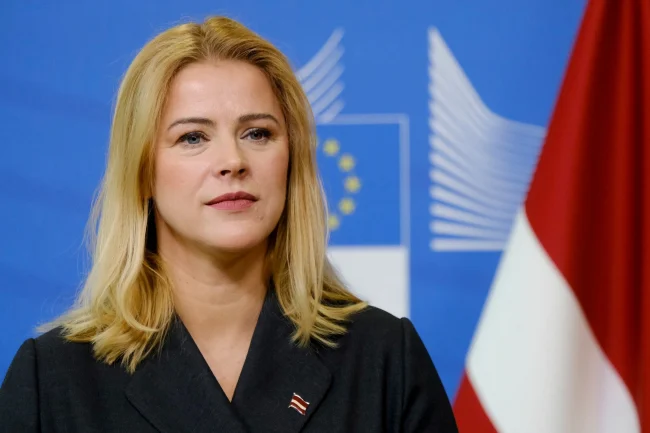
Riga, Latvia – In a significant political development, Prime Minister Evika Siliņa of Latvia announced her immediate resignation on [Insert Date, e.g., Monday, May 20, 2024], just months before the nation’s scheduled parliamentary elections in October. The unexpected decision follows a security breach that saw two stray Ukrainian drones crash into Latvian territory last week, striking an oil storage facility and raising critical questions about the country’s air defense capabilities.
The incident, which occurred on [Insert Date of Drone Incident], triggered a swift and decisive response from the Prime Minister. Blaming a perceived lack of preparedness and inadequate anti-drone systems, Siliņa promptly dismissed Defense Minister Andris Spruds. This move, however, proved to be the catalyst for a wider political crisis, leading to the withdrawal of support from the ruling coalition by Spruds’ own party, the Progressives. Stripped of her parliamentary majority, Siliņa found herself with little recourse but to tender her resignation, averting a potential vote of no confidence.
In a pointed statement following her resignation, Siliņa expressed her deep disappointment with the political maneuvering that she believes undermined her government’s ability to address the crisis effectively. "At this moment, political envy and narrow party interests have taken precedence over responsibility," she declared, lamenting that "political empty talkers chose not a solution, but a crisis" by rejecting her proposition for a new Defense Minister. This statement underscores the deep divisions that have emerged within the Latvian political landscape in the wake of the drone incident.
Siliņa, a member of the center-right New Unity party, assumed office in August 2023. She led a three-party coalition government tasked with succeeding Krisjanis Kariņš, also from New Unity. Her tenure, though relatively short, was marked by efforts to navigate complex domestic and international challenges, including the ongoing geopolitical tensions stemming from Russia’s full-scale invasion of Ukraine.
The Latvian President, Edgars Rinkēvičs, is now tasked with initiating consultations to appoint a new Prime Minister, a constitutional mandate he is expected to fulfill starting next Friday. The coming days will be crucial as Latvia grapples with this political upheaval and seeks to re-establish stability in its leadership.
The Drone Incident: A Breach of National Security
The precipitating event for Prime Minister Siliņa’s resignation was the undetected presence and subsequent crash of two Ukrainian drones within Latvian borders. The drones, which were reportedly operating in the vicinity of the Ukrainian conflict zone, veered off course and ultimately impacted an oil storage facility in [Insert Specific Location if known, otherwise state "a Latvian locality"]. While the exact circumstances leading to the drones’ trajectory into Latvian airspace remain under investigation, the incident has exposed significant vulnerabilities in the nation’s air defense network.
The immediate aftermath of the crash saw an emergency response to contain any potential environmental hazards and to secure the crash sites. Fortunately, initial reports indicated that there were no casualties directly attributed to the drone impacts. However, the material damage to the oil storage facility, coupled with the profound security implications, necessitated a swift governmental response.
The fact that these drones were able to penetrate Latvian airspace undetected has sent shockwaves through the country’s security apparatus. Latvia, as a member of NATO and a frontline state bordering Russia, places a paramount emphasis on its defense capabilities. The failure of its military to intercept or even detect these incoming threats has raised serious questions about the efficacy of its surveillance and anti-drone systems.
A Cascade of Political Consequences: From Defense Minister to Prime Minister’s Downfall
Prime Minister Siliņa’s decision to dismiss Defense Minister Andris Spruds was a direct consequence of the perceived failure in air defense. In her public statements, Siliņa explicitly held Spruds accountable for not developing and implementing more robust anti-drone systems that could have prevented the incident. This move, while intended to demonstrate decisive leadership, inadvertently triggered a political domino effect.
The Progressives party, a key partner in Siliņa’s ruling coalition and the political home of Minister Spruds, reacted strongly to his dismissal. Perceiving the action as an unfair scapegoating and a betrayal of their coalition’s collaborative spirit, the Progressives announced their withdrawal of support for the government. This withdrawal was critical, as it immediately deprived Siliņa of the necessary parliamentary majority to govern effectively.
The loss of a majority meant that Siliņa’s government was vulnerable to a vote of no confidence. Faced with the imminent prospect of being ousted by Parliament, the Prime Minister made the strategic decision to resign proactively. This move, while perhaps personally difficult, allowed her to frame the narrative and avoid the political ignominy of being formally removed from office.
Prime Minister Siliņa’s Parting Words: A Critique of Political Opportunism
In her resignation address, Prime Minister Siliņa did not mince words in her criticism of the political forces she believed contributed to her government’s collapse. Her quote, "At this moment, political envy and narrow party interests have taken precedence over responsibility," points towards a deep-seated dissatisfaction with what she perceived as partisan maneuvering over national security concerns.
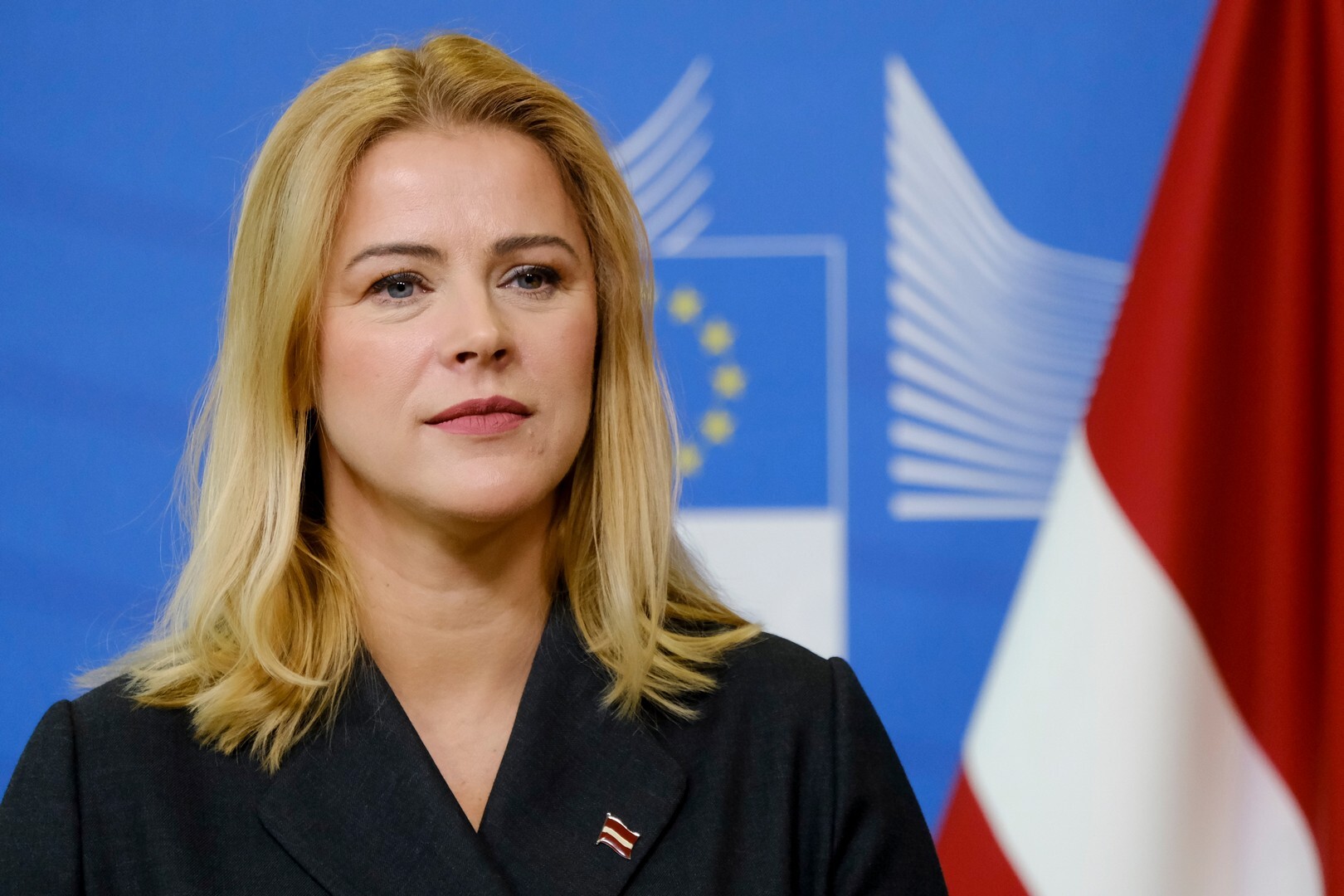
She further elaborated on this sentiment, stating that "political empty talkers chose not a solution, but a crisis." This suggests that Siliņa felt that instead of engaging in constructive dialogue and seeking practical solutions to the security challenges, other political actors resorted to rhetoric and obstructionism. The rejection of her proposal for a new Defense Minister, in particular, appears to have been a pivotal moment, highlighting the impasse she faced.
Siliņa’s remarks paint a picture of a leader frustrated by the inability to effectively govern and address critical issues due to internal political discord. Her resignation, therefore, can be seen not just as a response to the drone incident, but also as a consequence of a fractured political environment that hampered her administration’s ability to function.
The Road Ahead: Presidential Consultations and the Search for a New Leader
Evika Siliņa’s tenure as Prime Minister began in August 2023, when she took the helm of a three-party coalition government. Her appointment followed the resignation of Krisjanis Kariņš, also a member of the New Unity party, marking a significant leadership transition within the country’s political sphere. Siliņa, a seasoned politician, had previously held various ministerial portfolios, including Deputy Prime Minister and Minister of Welfare, bringing a wealth of experience to the highest office.
Her government’s focus had been on navigating the complexities of the post-pandemic economic recovery, bolstering national security in the face of regional instability, and implementing social reforms. The drone incident, however, tragically overshadowed these efforts and ultimately led to her premature departure.
As per the Latvian Constitution, the responsibility for initiating the process of forming a new government now falls upon President Edgars Rinkēvičs. The President is constitutionally mandated to begin consultations with parliamentary parties to identify a suitable candidate for the position of Prime Minister. These consultations are scheduled to commence next Friday, marking the official start of the process to select a successor to Siliņa.
The coming weeks will be a period of intense political negotiation and deliberation. President Rinkēvičs will likely engage in a series of meetings with party leaders to gauge their willingness to form a new coalition and to assess potential candidates for the premiership. The stability of the next government will depend on the ability of these parties to find common ground and forge a consensus amidst the current political climate.
Broader Implications: Regional Security, NATO Solidarity, and Public Trust
The resignation of Prime Minister Siliņa and the circumstances surrounding it carry significant implications that extend beyond Latvia’s domestic politics.
Regional Security and NATO: Latvia’s position as a Baltic state bordering Russia and Belarus makes its security posture a matter of considerable importance for the entire North Atlantic Treaty Organization (NATO). The undetected incursion of drones, even if stray, highlights potential gaps in the collective defense capabilities of the alliance in the eastern flank. This incident will undoubtedly prompt a re-evaluation of air defense strategies, surveillance technologies, and response protocols across NATO member states. The emphasis on strengthening air defense systems and intelligence sharing will likely intensify.
The War in Ukraine: The fact that the drones originated from the conflict zone in Ukraine adds another layer of complexity. While Ukraine is a victim of aggression, the accidental or unintentional straying of military assets into neighboring sovereign territory raises delicate diplomatic and security questions. It underscores the unpredictable nature of modern warfare and the potential for unintended consequences that can spill over borders. Latvia’s position as a staunch supporter of Ukraine will be tested as it balances its solidarity with the need to maintain its own national security.
Public Trust and Governance: The political fallout in Latvia, culminating in the Prime Minister’s resignation, raises concerns about public trust in governmental institutions and their ability to effectively manage crises. The perception that political infighting took precedence over national security could erode public confidence. For any incoming government, rebuilding and maintaining this trust will be a paramount challenge. The transparency and decisiveness with which the current situation is handled will be crucial in shaping public opinion.
The Future of Latvian Politics: The upcoming parliamentary elections, now accelerated by this political upheaval, will be keenly watched. Voters will be presented with a landscape shaped by the recent security incident and the subsequent political instability. The performance of parties in addressing these concerns and presenting credible solutions will likely influence electoral outcomes. The formation of a stable and effective coalition government will be essential for Latvia to navigate the challenging geopolitical and economic environment it faces.
The resignation of Evika Siliņa marks a pivotal moment for Latvia. As the nation embarks on the search for a new leader, the lessons learned from this crisis – the importance of robust defense, the perils of political division, and the imperative of maintaining public trust – will undoubtedly shape its future trajectory.



Leave a Comment