The Architecture of Virtual Societies: Raph Koster’s Retrospective on the Evolution of Online Worlds
In the landscape of digital architecture and game design, few names carry as much weight as Raph Koster. As the lead designer of Ultima Online and the creative director behind Star Wars Galaxies, Koster’s fingerprints are found on the foundational DNA of every modern massively multiplayer online role-playing game (MMORPG). Recently, Koster provided a comprehensive update to his long-standing body of work, offering a synthesis of historical debunking, technical analysis, and a roadmap for the future of virtual worlds through his latest project, Stars Reach.
This retrospective not only serves as a catalog of his recent contributions to the industry—including his 2024 Game Developers Conference (GDC) presentation—but also addresses a persistent myth regarding the "failed" ecology of the 1990s’ most influential virtual world. As the industry grapples with the nebulous concept of the "metaverse," Koster’s insights provide a much-needed tether to the practical realities of server performance, player behavior, and economic sustainability.
I. Main Facts: Debunking the "Locust" Myth and Defining the Future
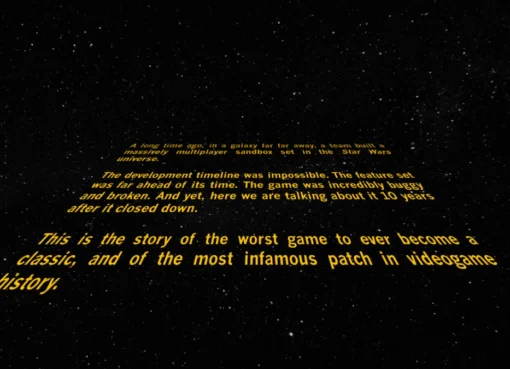
The centerpiece of Koster’s recent updates is a definitive clarification regarding Ultima Online’s (UO) original ecology system. For over two decades, a narrative persisted within the game design community: that UO’s ambitious simulated ecosystem—where wolves ate rabbits and players influenced the food chain—collapsed because players were "locusts" who slaughtered every creature in sight, causing a systemic breakdown.
While Koster acknowledges that player bloodlust was indeed a factor, he clarifies that the system’s removal prior to the game’s 1997 launch was driven by two far more pragmatic factors: economic instability and computational performance.
The Technical Reality of 1997
The original UO ecology was a closed-loop system. If a player killed a deer, the "resource" of that deer was supposed to cycle back into the world. However, the overhead required for the server to track thousands of individual creature AI states, their hunger levels, and their reproductive cycles was immense. In an era of dial-up modems and limited server CPU cycles, the "virtual ecology" became a liability that threatened the stability of the entire game world.
The Economic Imbalance
Furthermore, the system failed to account for the velocity of player interaction. In a simulated world, if players harvest resources faster than the simulation can regenerate them, the economy grinds to a halt. Koster’s recent synthesis of these "snippets" of history provides a masterclass in why "simulation for simulation’s sake" often fails when it meets the chaotic variable of a live human audience.
II. Chronology: A Trajectory of Innovation (2022–2025)
To understand Koster’s current trajectory, one must look at the timeline of his recent public discourse, which marks a transition from reflecting on the past to building the "living worlds" of the future.
- June 2022 – Late 2023: The Metaverse Fever. During this period, Koster participated in an extensive series of interviews and panels. As the tech industry pivoted toward the "Metaverse," Koster became a vital voice of reason, reminding developers that "virtual worlds" had existed for thirty years and that the challenges of governance, social friction, and persistence were not new problems.
- March 2024: GDC Talk – "Revisiting Fun." Marking the 20th anniversary of his seminal book, A Theory of Fun for Game Design, Koster returned to the Game Developers Conference. He explored how our understanding of "fun" has evolved in an era of algorithmic engagement and predatory monetization.
- Late 2024: The Evolution of Online Worlds. Koster delivered a major presentation tracing the lineage of online spaces from text-based MUDs (Multi-User Dungeons) to the high-fidelity, simulated environments currently in development.
- Present Day: The Stars Reach Era. Koster’s focus has shifted toward Stars Reach, a new title from his studio, Playable Worlds. This project aims to finally realize the "simulated world" dreams that were technically impossible during the development of Ultima Online.
III. Supporting Data: The Pillars of Simulation and Emulation
Koster’s recent updates aren’t merely anecdotal; they are backed by a deep archive of technical resources that he has made available to the public. This data serves as a bridge between the "retro" era of computing and the future of cloud-native gaming.
1. The Emulation Archives
Koster has dedicated significant effort to digital preservation. His "Emulation" page now hosts resources for:
- Vectrex Overlays: Preserving the visual fidelity of the 1982 vector-based console.
- Microvision Support: Technical guides for the first handheld game console to use interchangeable cartridges.
- Atari 8-bit Documentation: Helping modern developers understand the constraints of early 8-bit computing, which Koster argues is essential for learning "elegant" coding.
2. The "Evolution of Online Worlds" Video and Slides
In his most recent major talk, Koster provided a data-driven look at how player density and world persistence affect social bonding. He argues that the "room-based" architecture of modern games (like Lobby—> Match) has eroded the "third place" feel of early MMOs. His slides provide a roadmap for returning to "world-based" architectures where player actions have permanent, visible consequences on the environment.
IV. Official Responses: The Philosophy of Playable Worlds
As the CEO of Playable Worlds, Koster’s "official response" to the current state of the industry is the development of Stars Reach. In his blog update, he expresses a degree of self-reproach for not sharing more frequent updates on the project, but the underlying message is clear: the studio is focused on building, not just talking.
The "Living World" Philosophy
In Stars Reach, Koster is attempting to solve the "UO Ecology" problem using modern cloud computing. Unlike the 1997 version, where the server struggled to track a few thousand animals, modern cloud architecture allows for a "fully simulated" planet.
- Official Stance on Player Agency: Koster maintains that players should be able to "change the map." If players cut down a forest, the forest should stay gone until replanted or naturally regrown.
- Addressing the "Locust" Behavior: Instead of removing the system when players over-harvest, Stars Reach is designed to treat that harvest as a legitimate gameplay mechanic. The "Official Response" from the developers is to build a system robust enough to handle human nature, rather than trying to suppress it.
V. Implications: What This Means for the Future of the Industry
Raph Koster’s move to catalog his life’s work and provide context for his past "failures" has significant implications for the next generation of game designers and "metaverse" architects.
1. The End of the "Theme Park" Era?
For the last two decades, the MMORPG genre has been dominated by the "Theme Park" model (pioneered by World of Warcraft), where players follow scripted paths and the world is static. Koster’s resurgence signals a return to the "Sandbox" or "Virtual World" model. The implication is that the industry is reaching a saturation point with scripted content and is looking toward emergent gameplay—where the players create the stories themselves.
2. The Necessity of Historical Literacy
By publishing his findings on the UO ecology and Atari emulation, Koster is making a plea for historical literacy. He argues that many of the "innovations" claimed by Web3 and Metaverse startups are actually solved problems from the 1990s. Designers who ignore the lessons of Ultima Online are doomed to repeat the performance and economic collapses that Koster documented.
3. Sustainability in Game Design
Finally, Koster’s focus on "The Theory of Fun" 20 years later suggests a shift toward more ethical game design. As the industry faces criticism over loot boxes and "dark patterns," Koster’s work emphasizes that "fun" is a cognitive process of learning and mastery, not just a dopamine loop.
Conclusion
Raph Koster remains a pivotal figure because he sits at the intersection of "what was" and "what could be." By debunking the myths of the past—such as the player-driven collapse of the UO ecology—he clears the brush for a new era of simulation. As Stars Reach moves closer to reality, the industry will see if the lessons learned over a thirty-year career can finally produce a virtual world that is as resilient as it is ambitious. For now, his blog remains a vital repository for anyone interested in the soul of the machine.