
A Seismic Shift: UK Elections Signal Global Cultural Realignment, Analysts Say
London, UK – May 8, 2026 – A dramatic upheaval in British politics, with Reform UK surging to unprecedented gains and traditional powerhouses Labour and the Conservatives suffering significant losses, is being interpreted by analysts as a powerful symptom of a broader global cultural realignment. The results of local council elections across England, Scotland, and Wales, alongside polls for the Scottish Parliament and Welsh Senedd on May 7th, have sent shockwaves through the political establishment, mirroring trends observed in other Western democracies.
Reform UK, a party previously on the fringes of British politics, has made sweeping gains, securing hundreds of council seats and seizing control of several local authorities. Conversely, the Labour Party, a historical cornerstone of British governance, has endured a devastating defeat, losing a substantial number of seats and key councils, including traditional heartlands. The Conservative Party, also known as the Tories, has likewise experienced considerable losses.
This electoral earthquake in the UK is being viewed not merely as a localized political event, but as a potent indicator of a fundamental shift in voter sentiment, driven by cultural identity and a rejection of what is perceived as a homogenized globalist agenda.
The Winds of Change: Electoral Tsunami in the UK
The results of the May 7th elections paint a stark picture of a fractured political landscape. Reform UK has emerged as a dominant force, gaining an astonishing 873 council seats to bring their total to 936. This surge has propelled them to control of seven councils, including significant victories in Sunderland, Havering, Essex, Suffolk, Thurrock, and Wakefield. Their national equivalent vote share stood at an impressive 27%, according to Sky News analysis, a figure that dwarfs the performance of the established parties.
Labour’s fortunes have plummeted, with the party losing a net 595 seats. Their control has dwindled to just 22 councils, a dramatic fall from grace. Crucially, Labour has surrendered key authorities in its traditional strongholds, such as Tameside, Hartlepool, Wigan, Birmingham, and Sunderland, indicating a profound erosion of its base. The Conservative Party, while also losing ground, fared slightly better than Labour in terms of seat numbers, but still registered a net loss of 303 seats and relinquished control of councils including Essex, Suffolk, and Hampshire. The Liberal Democrats and the Green Party managed to gain seats in targeted areas, but were largely overshadowed by the seismic shifts elsewhere.
The scale of Labour’s defeat in Wales has been particularly historic. The party suffered its worst electoral performance in over a century, with First Minister Eluned Morgan losing her seat. Labour’s representation in the Welsh Senedd has been reduced to a mere 10 seats, placing them in third position.
These electoral outcomes are being widely compared to a hypothetical scenario in the United States where the Democratic and Republican parties were to be supplanted as the dominant political forces. The traditional binary of British politics, largely defined by the Labour-Conservative rivalry since the mid-20th century, appears to have been irrevocably altered.
A Global Pattern of Disruption
The electoral turbulence in the UK is not an isolated incident. Analysts point to a consistent pattern of disruption unfolding across the globe, suggesting a profound cultural realignment is underway.
In Germany, the Alternative for Germany (AfD) has seen a significant surge in support, challenging the established order and particularly targeting the Green Party, which is often perceived as the embodiment of globalist priorities concerning climate change, migration, and supranational governance.
The United States, too, exhibits this phenomenon. Within the Democratic Party, progressive factions, exemplified by figures like newly elected New York City Mayor Zohran Mamdani, are pushing a more radical, internationalist vision, displacing traditional Democrats. Simultaneously, the MAGA movement has reshaped the Republican Party, supplanting its old guard with an unapologetically "America First" agenda. This echo of nationalist sentiment is also evident in Japan, where Prime Minister Sanae Takaichi and her Liberal Democratic Party (LDP) secured a historic landslide victory on February 8, 2026. The LDP’s triumph, capturing 316 of 465 seats – a two-thirds supermajority not seen in the postwar era – was driven by a platform of national pride, constitutional revision for stronger self-defense, tougher stances on China and immigration, and economic policies prioritizing Japanese interests.
This global trend, according to observers, is not primarily an economic struggle, but a battle over culture and identity. A core tenet of this argument is the perceived clash between globalist aspirations for a borderless, homogenized, and progressive monoculture, often promoted through diversity initiatives, and nationalist assertions of regional and national identities.
The Cultural Divide: Immigration and Identity at the Forefront
At the heart of this cultural conflict lies immigration. While past political debates often centered on economic implications, the contemporary discourse is increasingly framed around cultural preservation and national identity. Globalists often champion "diversity is our strength," a sentiment that nationalists perceive as a threat to their distinct cultural heritage.
Newer political movements like Reform UK, the AfD, and MAGA are not merely campaigning against illegal immigration; they are advocating for a cessation of all immigration. This stance extends to more extreme factions, such as Restore UK, which propose not only to halt immigration but also to deport existing immigrant populations.
This cultural divide helps to explain a range of phenomena that might otherwise appear perplexing. The article posits that movements like "Gays for Palestine" are less about genuine support for Hamas and more about leveraging non-Western groups as a counterpoint to dominant local cultures. The observed camaraderie between Japanese and American nationalists on social media platforms like X, united by a shared rejection of what they term "gay communism" and a perceived dilution of their cultures, is another manifestation. The article further suggests that the nature of racism itself has evolved; rather than asserting racial superiority, it now often manifests as a preference for a specific culture over a homogenized global one. Even in the realm of entertainment, the casting choices in major productions, such as Christopher Nolan’s upcoming "The Odyssey" reportedly featuring no Greek actors in key roles, are cited as examples of cultural erasure disguised as inclusivity.
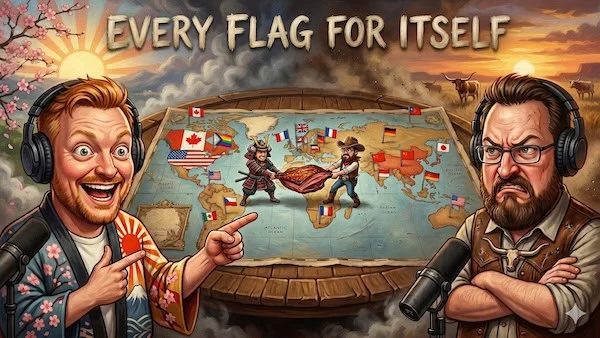
The Global Pattern: Flags and Factions Emerge
The electoral results in the UK serve as a potent microcosm of this global phenomenon. Reform UK’s rise is seen as the party supplanting the traditional Conservatives as the standard-bearer for national sovereignty. In parallel, the Green Party and Muslim independent candidates are reportedly making inroads into Labour’s historical strongholds, illustrating a fragmentation where established parties lose ground to forces advocating for distinct identities.
Thomas, a commentator featured in the article, draws parallels between the UK’s electoral shifts and those in Germany and the United States. He highlights the AfD’s challenge to the Christian Democrats in Germany and the rise of figures like Zohran Mamdani within the US Democratic Party, alongside the MAGA movement’s dominance within the Republican Party. The assertion is that these emerging factions are driven by a desire to preserve and assert specific cultural identities against what they perceive as a homogenizing globalist force.
The symbolism of national flags is also presented as a visual representation of this cultural divide. Globalist movements are often associated with the rainbow pride flag, while nationalist movements rally behind national flags such as the American flag, the Japanese Rising Sun, or the Union Jack.

Jonathan, another voice in the discussion, recalls a time when carrying an American flag was often perceived as a sign of nationalism and, by extension, anti-other sentiments. This contrasts with the current dynamic where national symbols are being reclaimed and fiercely defended by nationalist movements.
The article suggests that globalists often display a disdain for national symbols, historical figures, and monuments. This is exemplified by the calls for the removal of statues of figures like Thomas Jefferson and Christopher Columbus, which are seen as attempts to erase elements of national history and pride.
Ultimately, the central argument is that the current political battles are fundamentally cultural, with immigration serving as the primary catalyst. The emerging parties are positioned as champions of national culture and identity, offering a counter-narrative to the perceived homogenization of global culture.
Cross-Cultural Bonding Through Technology and Shared Grievances
The digital age, particularly platforms like X, has facilitated unexpected cross-cultural alliances. The article highlights the bonding between Japanese and American nationalists, united by their opposition to what they describe as "gay communism" and the perceived dilution of their respective cultures. This connection is enabled by translation tools that allow for direct interaction between individuals who previously lacked such a medium.
The case of American influencer Johnny Somali in South Korea is cited as an example of the intense backlash against perceived disrespect for local culture. The swift and severe response from Korean authorities, coupled with the solidarity shown by American nationalists who viewed the incident as a validation of their own concerns about cultural disrespect, underscores the shared sentiment of cultural defense.
This shared experience of perceived cultural disrespect, whether by individuals or through broader societal trends, is presented as a potent force for connection. The article posits that the new form of "racism" is not about asserting superiority, but about a deep-seated preference for one’s own specific culture over a globally standardized one.
Storytelling and the Shifting Landscape of Diversity
The article delves into the implications of this cultural shift for storytelling and media. The traditional narrative of a diverse group challenging a monolithic empire, once a powerful trope, is now being re-evaluated. The argument is made that "diversity" itself has become a tool of the perceived empire, used to dismantle and homogenize local cultures.
George Lucas’s original vision for diversity in Star Wars, utilizing aliens as metaphors for underrepresented groups, is contrasted with the remakes, which are criticized for pushing diversity into a more homogenized form, representing a specific cultural milieu rather than the original intent.
Writing for the Underserved: Tapping into a Growing Demand
The emergence of strong nationalist and cultural identity movements has created a significant, yet underserved, audience for content that reflects these sentiments. The article encourages creators to cater to this demand, suggesting that there is considerable financial opportunity in producing content that boldly expresses local cultures in opposition to global homogenization.
The example of an Indian influencer creating a "God-and-country, guns-and-Bibles" persona, which garnered significant financial success, illustrates this point. The underlying message is that there is a deep-seated longing for authentic representation of regional cultures, and creators who can meet this need will find a receptive audience.
Jonathan, a contributor, emphasizes the importance of specificity in writing, drawing a parallel to military fiction where distinct branches of the armed forces have their own internal narratives and humor. He advocates for writers to embrace their own cultural backgrounds and to write authentically for their specific "Timothy" – an ideal reader. This approach, he argues, leads to more resonant and impactful storytelling.
Canadian Separatism and the Alberta Movement
The phenomenon of cultural realignment is also evident in Canada, where a distinct form of anti-globalist sentiment is manifesting as separatism, particularly in Alberta. The province’s burgeoning movement to leave Canada is fueled by a perceived cultural alignment with regions like Texas, rather than with the perceived globalist influence of Toronto. Alberta’s desire for economic ties with the United States, while maintaining its independence from American laws, highlights a complex interplay of national and regional aspirations.
Canada’s cultural fragmentation, with Quebec’s long-standing separatist aspirations and the geographical isolation of its major cities from one another, is presented as a fertile ground for such movements. The absence of a distinctly developed Canadian cuisine, beyond dishes like poutine, is cited as an indicator of a less robust national cultural identity compared to regions like Texas with its unique Tex-Mex heritage.
The Longing for Belonging: Tribes, Hockey Romance, and Identity
The article concludes by exploring the underlying human need for belonging in an increasingly globalized and potentially isolating world. The popularity of "hockey romance" is seen as a manifestation of this longing for tribal identity and connection. These narratives, steeped in the strong team identity of hockey, offer readers a sense of belonging and cultural immersion.
This desire for a "tribe" – a group of like-minded individuals who offer acceptance and camaraderie – is presented as a direct response to the homogenizing effects of global culture. Whether through sports teams, book clubs, or other forms of community, people are actively seeking spaces where they can feel understood and connected.
In essence, the electoral shifts in the UK and the broader global trends discussed point to a powerful resurgence of cultural identity and a rejection of perceived homogenization. The battle lines are being drawn not solely on economic policies, but on the fundamental questions of who we are, where we come from, and what future we envision for our distinct cultures. The implications for political discourse, social movements, and creative expression are profound and will likely continue to shape the global landscape for years to come.



Leave a Comment