The Architect of Time and Language: Why Ted Chiang’s Favorite Film Adaptation Transcends Science Fiction
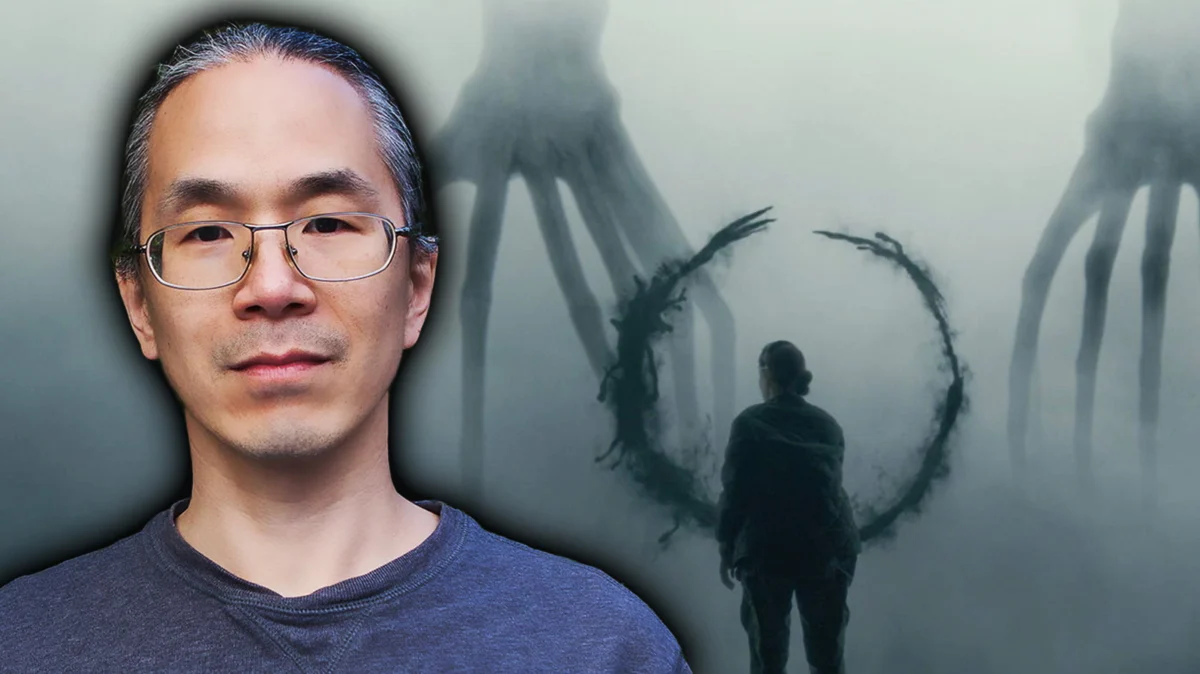
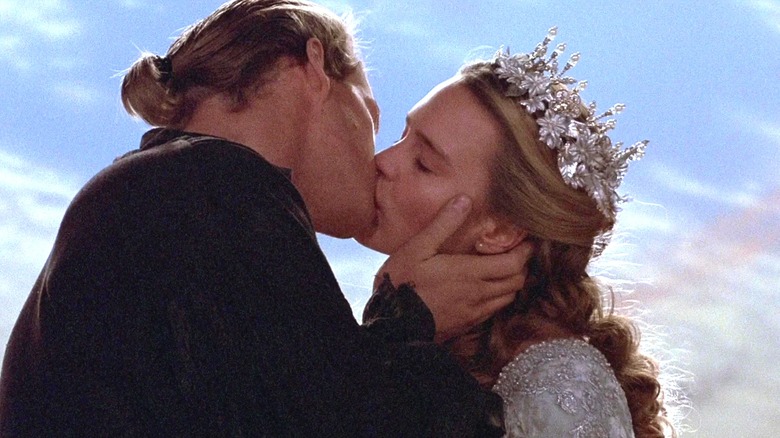
In the contemporary landscape of speculative fiction, few names command as much intellectual reverence as Ted Chiang. A writer who produces work at a meticulous, almost glacial pace, Chiang has earned a reputation for transforming complex scientific and philosophical concepts into deeply moving human narratives. While he is most widely recognized by the general public as the mind behind the 2016 cinematic masterpiece Arrival, Chiang’s own tastes in film adaptation lean away from the high-concept vistas of science fiction and toward a seminal piece of 1980s fantasy-comedy: Rob Reiner’s The Princess Bride.
The revelation that one of the most rigorous "hard" science fiction writers of the 21st century favors a whimsical, swashbuckling metafiction over more traditional genre fare offers a profound insight into the nature of storytelling and the difficult art of the screenplay.
Main Facts: The Intersection of Prose and Cinema
Ted Chiang’s literary footprint is defined by quality over quantity. Since his debut with "Tower of Babylon" in 1990, he has published only two collections of short stories—Stories of Your Life and Others and Exhalation—yet he has swept the Hugo, Nebula, and Locus Awards multiple times. His work often explores the "Sapir-Whorf hypothesis" (the idea that language shapes reality), the theological implications of physics, and the ethics of artificial intelligence.
However, it was the 2016 adaptation of his 1998 novella, "Story of Your Life," that propelled him into the cinematic zeitgeist. Retitled Arrival and directed by Denis Villeneuve, the film was a critical and commercial juggernaut, earning eight Academy Award nominations. Despite the success of Arrival, Chiang has remained humble regarding his influence on the film industry, often expressing a detached admiration for the grueling process of screenwriting.
In a landmark interview with Literary Hub, Chiang identified William Goldman’s 1987 adaptation of The Princess Bride as the gold standard for book-to-film transitions. His reasoning centers on a singular, elusive quality: the ability to capture the "essence" of a literary work rather than its literal, beat-for-beat plot points.
Chronology: From the Page to the Silver Screen
To understand Chiang’s perspective, one must look at the timeline of both his own adaptation and that of his favorite film.
1973–1987: The Birth of a Metafictional Classic
William Goldman, already a legendary screenwriter (Butch Cassidy and the Sundance Kid), published The Princess Bride in 1973. The book was a complex piece of metafiction, presented as an "abridged" version of a historical text by the fictional S. Morgenstern. For over a decade, it was considered "unfilmable" due to its satirical tone and layered narrative structure. In 1987, Goldman adapted his own novel for director Rob Reiner, creating a film that became a cultural touchstone.
1998–2016: The Journey of "Story of Your Life"
Chiang published "Story of Your Life" in 1998. The story, written in a non-linear fashion to mirror the protagonist’s burgeoning perception of time, was deemed a literary masterpiece but a cinematic impossibility. It took screenwriter Eric Heisserer five years and nearly 100 drafts to find a visual language for Chiang’s linguistic theories. The resulting film, Arrival, was released in 2016 to universal acclaim.
2016–Present: The Commentary on AI and Art
Following the success of Arrival, Chiang has used his platform to comment on the evolution of narrative. In 2024, he penned a viral essay for The New Yorker titled "Why A.I. Isn’t Going to Make Art," arguing that art is the result of a series of intentional choices made by a conscious being—a philosophy that aligns with his admiration for the deliberate, human-centric adaptation of The Princess Bride.
Supporting Data: The Mechanics of Adaptation
The difficulty of adaptation lies in the fundamental differences between the medium of the page and the medium of the screen. In prose, internal monologue and abstract concepts (like the heptapod language in Arrival) can be explored through descriptive density. Cinema, conversely, is an external medium; it requires action, dialogue, and visual cues.
The "Princess Bride" Model
Chiang’s appreciation for The Princess Bride stems from how William Goldman handled the "unfilmable" aspects of his novel. The book’s core gimmick—the author interrupting the story to complain about the "original" S. Morgenstern text—could not be filmed literally. Instead, Goldman invented the framing device of a grandfather (Peter Falk) reading to his grandson (Fred Savage).
This move preserved the essence of the book—the idea of a story being passed down and commented upon—without requiring a literal translation of the book’s footnotes. Chiang notes that this captures the "spirit" of the source material, which is the highest achievement an adaptation can reach.
The "Arrival" Statistics
The adaptation of Chiang’s own work serves as a secondary data point for this theory. Screenwriter Eric Heisserer famously faced rejection from every major studio when pitching Arrival. The "supporting data" of the film’s production highlights the labor-intensive nature of the craft:
- Drafts: Approximately 100 unique iterations of the script.
- Timeframe: Five years of development.
- Result: A 94% "Certified Fresh" rating on Rotten Tomatoes and over $200 million in global box office.
Official Responses: Chiang on the Screenwriting Process
Ted Chiang’s official stance on screenwriting is one of profound respect mixed with personal avoidance. While many authors fight for control over their film adaptations, Chiang was content to remain in an advisory role during the production of Arrival.
"I’m not a screenwriter, and the development process sounds exhausting," Chiang told Literary Hub. He expressed a specific relief that he was not tasked with the revisions Heisserer endured. Chiang’s experience on the set of Arrival further cemented his view of filmmaking as a fragmented, almost alien process. He recalled visiting the set in Montreal and observing Denis Villeneuve film a single line of dialogue repeatedly, unable to see how the disjointed pieces would eventually form a cohesive whole.
Furthermore, Chiang noted the extreme secrecy of the production. Even as the creator of the source material, he was initially barred from seeing the designs of the "heptapods" and their spacecraft. This detachment allowed him to view the final product almost as a fan, leading to his eventual praise of the film as a successful reimagining of his themes.
Implications: What This Means for the Future of Storytelling
Chiang’s preference for The Princess Bride and his commentary on Arrival suggest several key implications for the future of the film industry and literary adaptations.
1. The Value of "Essence" Over "Accuracy"
The primary implication is a rejection of "literalism." In an era of "fandom" where audiences often demand frame-by-frame accuracy to the source material (often seen in comic book and anime adaptations), Chiang argues for the opposite. He suggests that the best adaptations are those that understand the thematic core of a work and are willing to change the plot to protect that core.
2. The Human Element vs. Algorithmic Creation
Chiang’s recent critiques of Artificial Intelligence reinforce his views on adaptation. If art is a "series of choices," then a great adaptation is a series of new choices made by a second artist (the screenwriter) in conversation with the first (the author). This "human-in-the-loop" process is what gives The Princess Bride its enduring warmth—a quality that an AI, which merely predicts the next likely word or image, could never replicate.
3. The "Unfilmable" No Longer Exists
The success of Arrival and the enduring legacy of The Princess Bride prove that no concept is too abstract for the screen if the right "visual metaphor" is found. Whether it is a grandfather’s bedside story or a linguist’s encounter with non-linear time, the bridge between prose and cinema is built on emotion rather than technicality.
Conclusion
Ted Chiang’s endorsement of The Princess Bride is more than a trivial "fun fact" about a famous author. It is a testament to his belief in the power of narrative structure and the necessity of creative evolution. For Chiang, a great movie isn’t a mirror held up to a book; it is a transformation that allows the story to live in a new dimension.
As Hollywood continues to mine literature for "intellectual property," directors and writers would do well to follow the Goldman-Heisserer-Chiang philosophy: don’t just film the plot; find the soul of the story and build a new world around it. Whether that world contains aliens in gravity-defying ships or "R.O.U.S.s" (Rodents of Unusual Size), the goal remains the same—to capture the essence of what it means to be human.